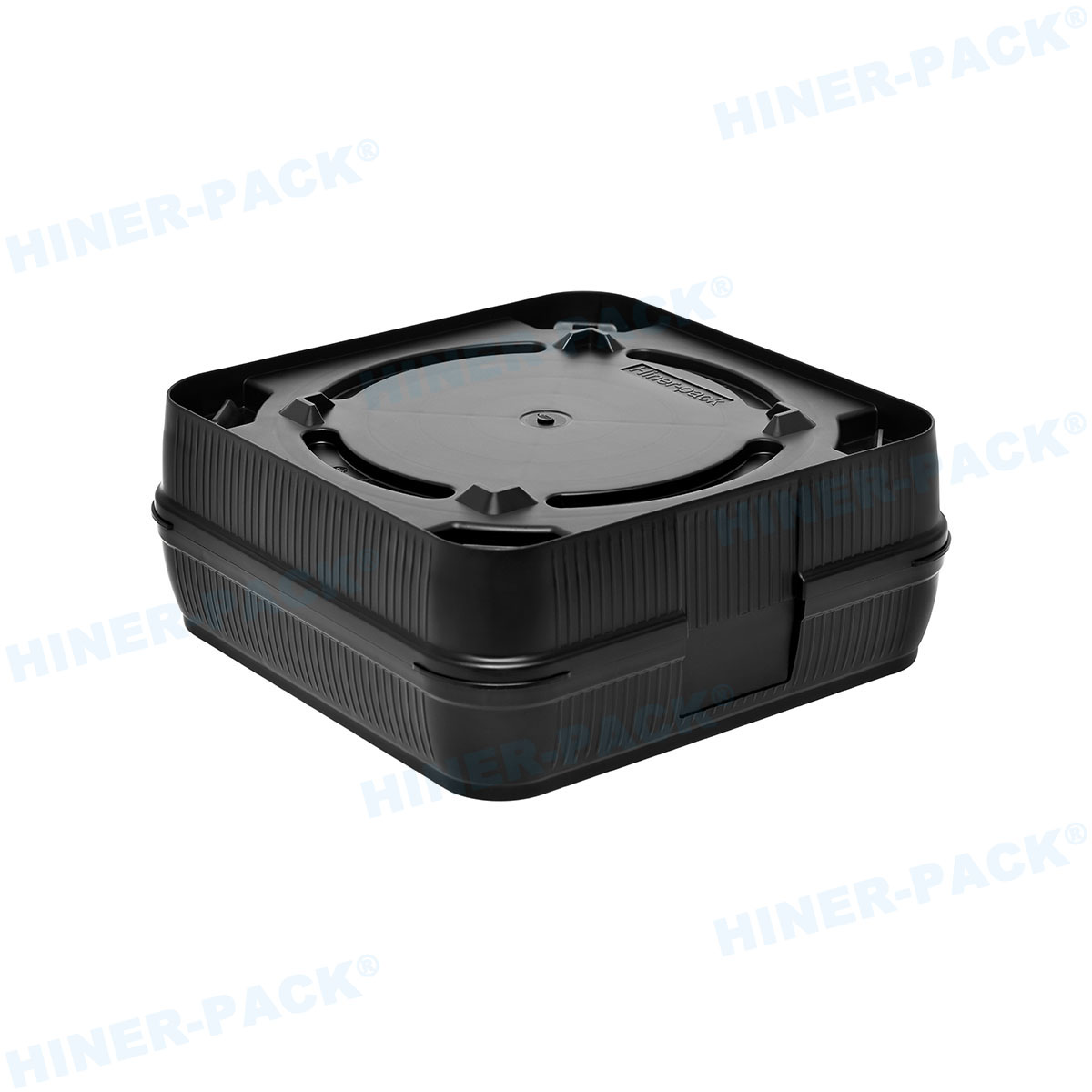
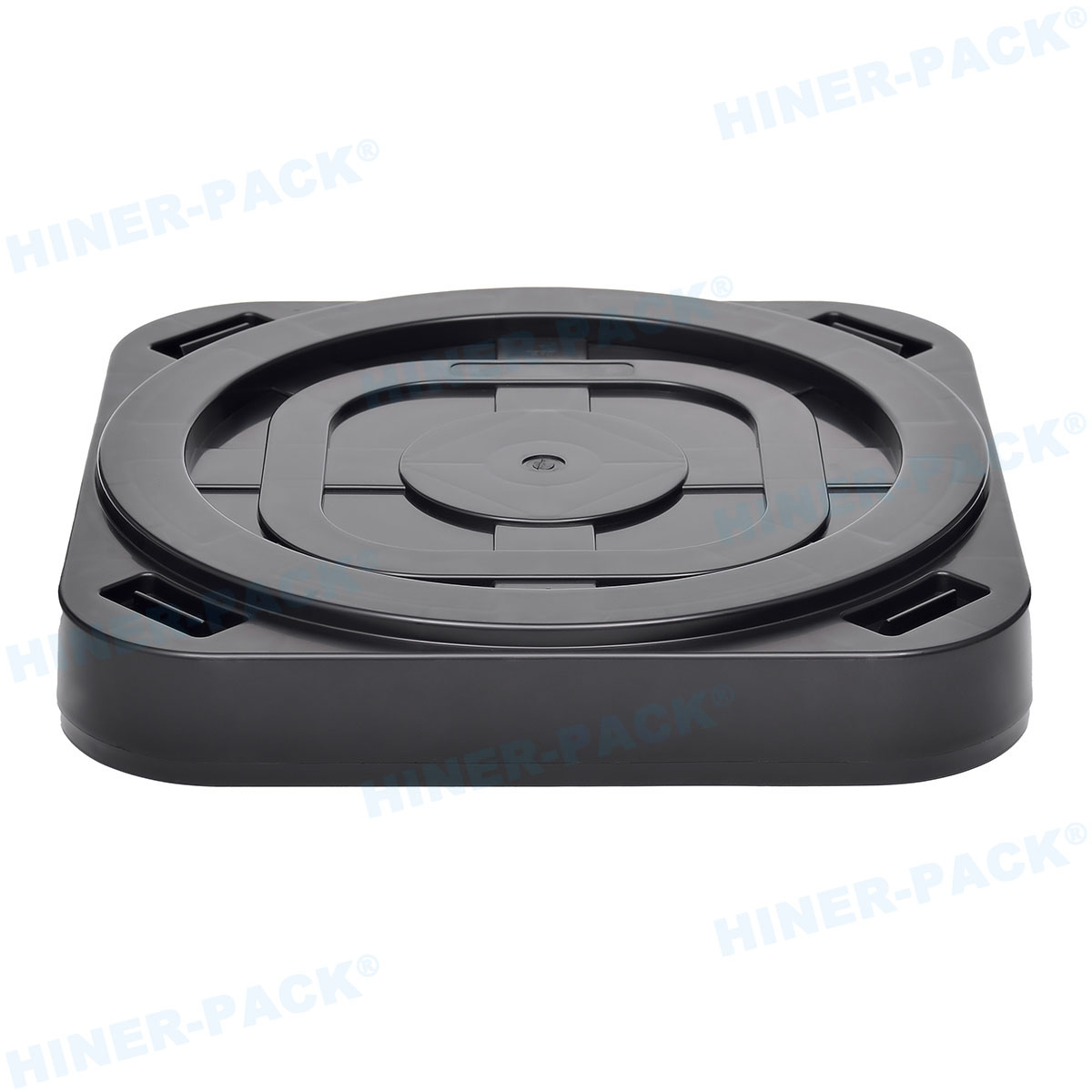
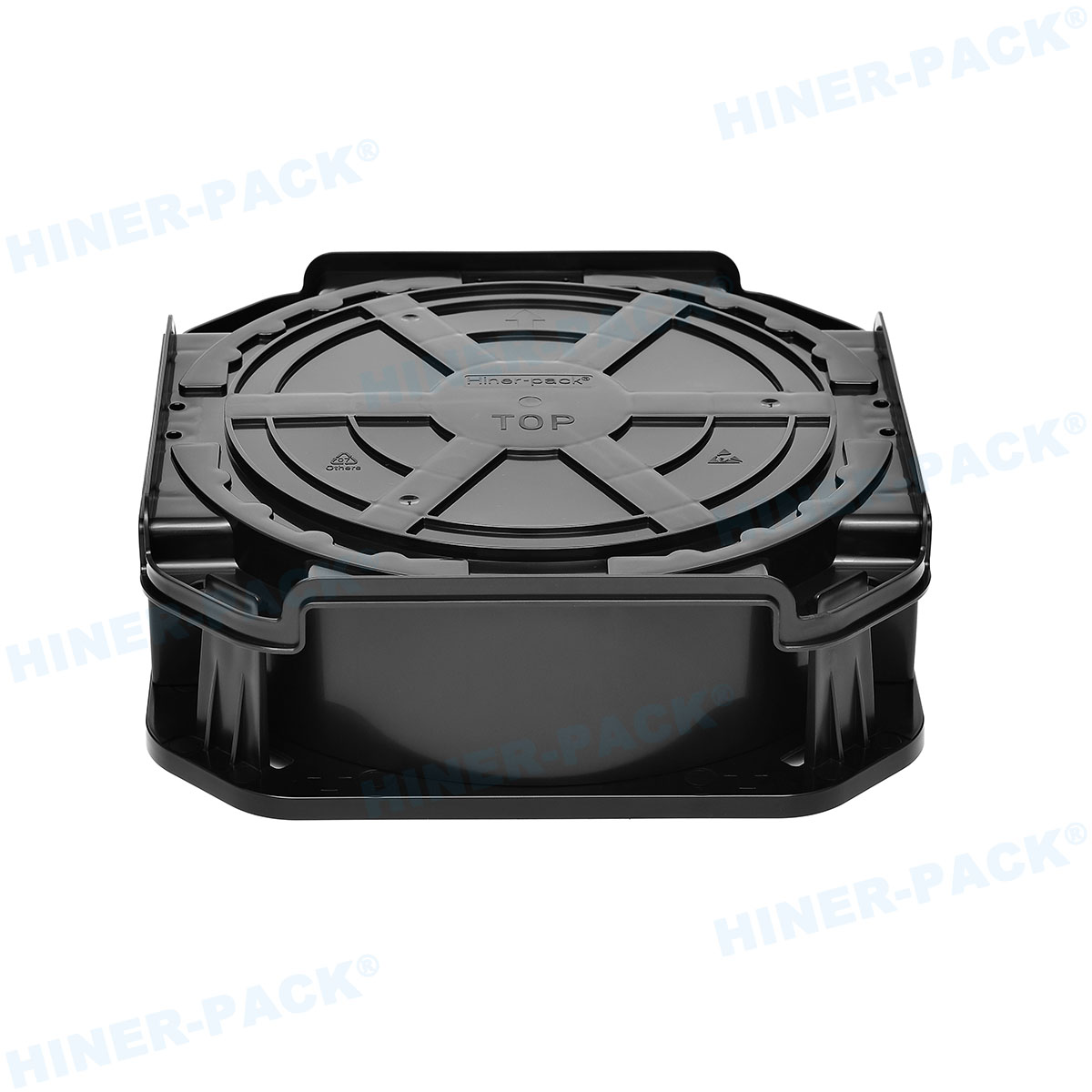
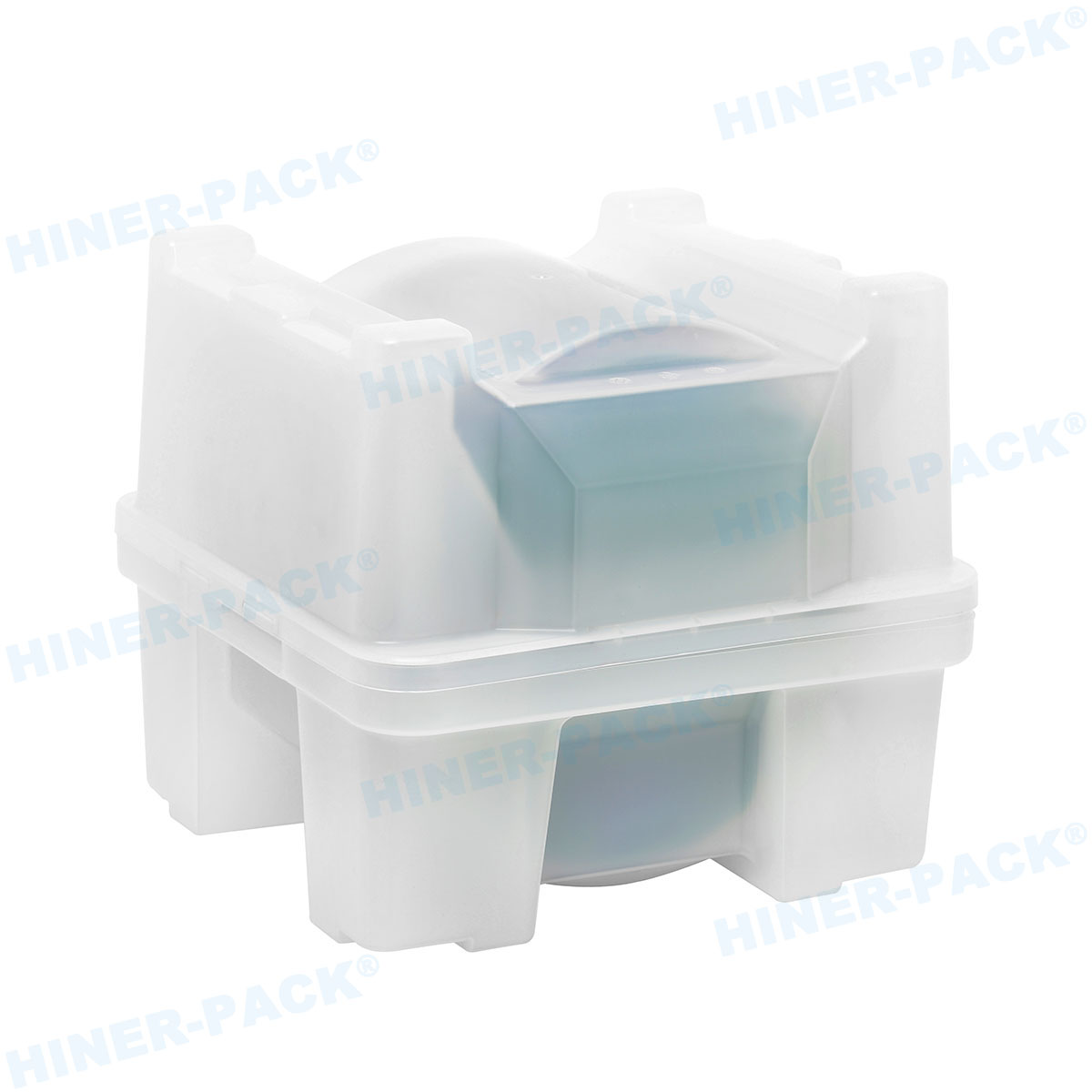
In high-volume semiconductor backend operations, the selection of material handling interfaces directly impacts yield, equipment uptime, and component reliability. For Ball Grid Array (BGA) packages, the standardized shipping, baking, and surface-mount feeding processes depend on precision-molded carriers known as BGA jedec matrix IC trays. These trays are not passive containers; they are engineered interfaces whose dimensional stability, electrical behavior, and thermal resistance determine whether a batch of fine-pitch BGAs survives reflow without coplanarity failure. This article provides a detailed technical examination of JEDEC matrix tray standards, material selection trade-offs, industry pain points, and validated solutions from Hiner-pack, a specialist in precision IC handling products.
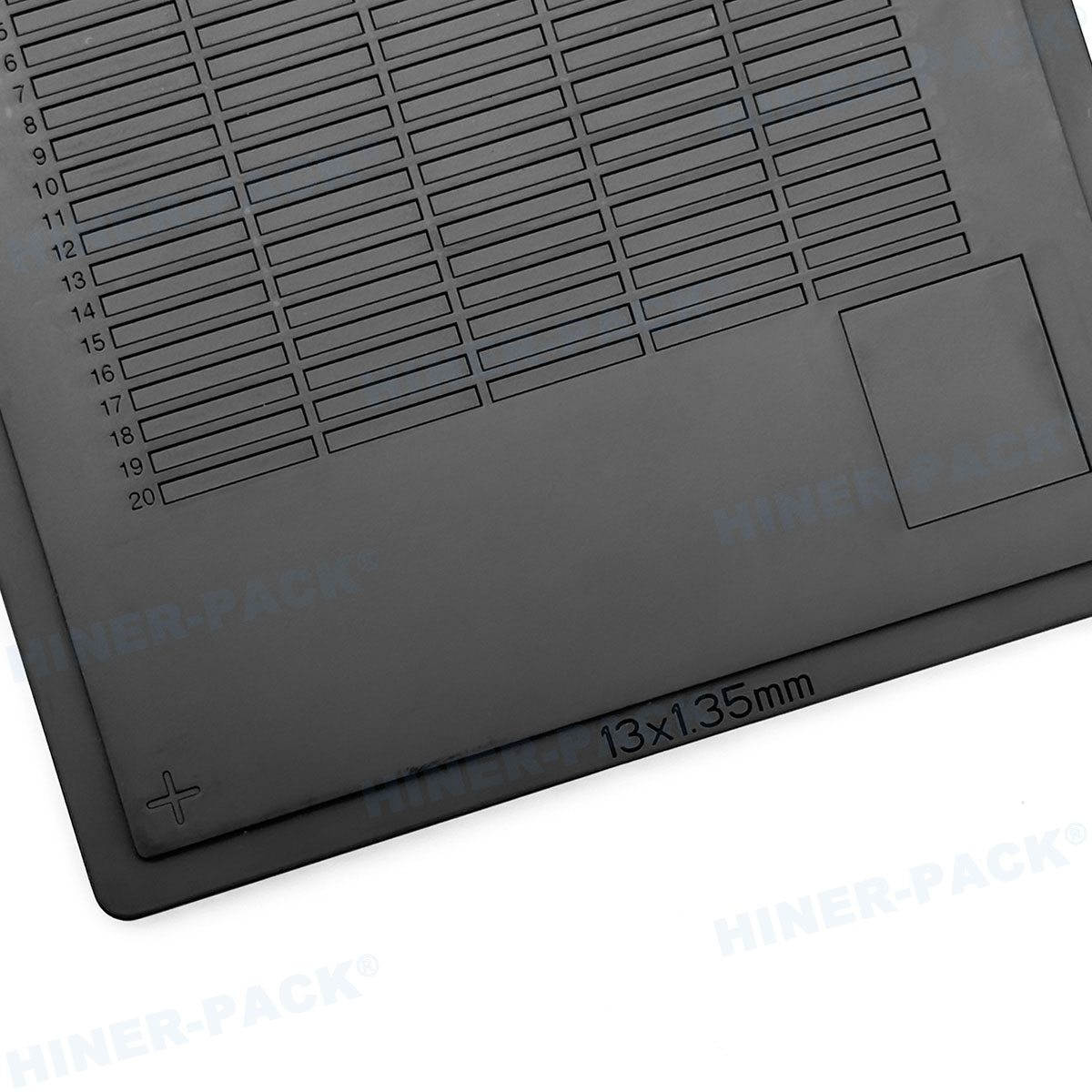
1. Defining JEDEC Matrix Trays: From Outline Drawings to Functional Verification
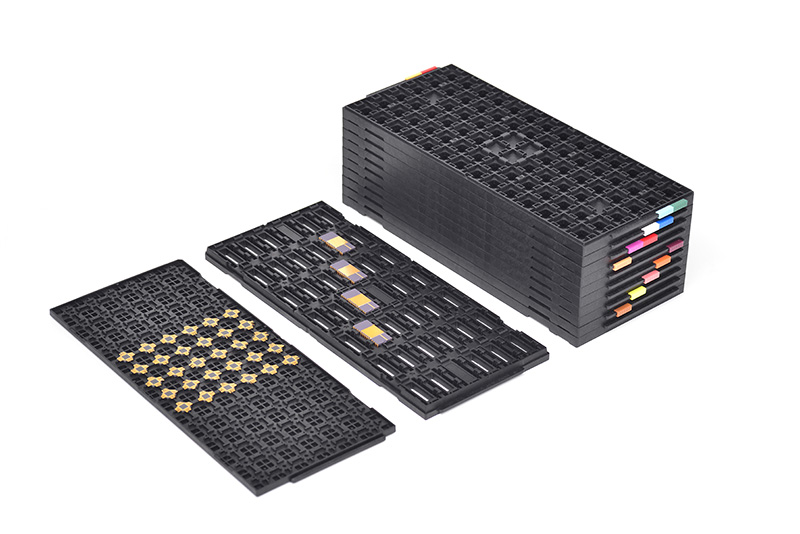
The term "matrix tray" refers to a rigid carrier with an array of cavities (pockets) designed to hold individual BGA components during transportation, dry-pack baking, tape-and-reel preparation, or direct placement into pick-and-place machines. BGA jedec matrix IC trays follow dimensional standards published by JEDEC Solid State Technology Association, primarily under JEDEC Publication 95 (Design Standard for Tray for Handling and Shipping of BGA and Other Surface-Mount Components). These standards specify key parameters: tray body dimensions (e.g., 322 mm × 135 mm or 322 mm × 139 mm), pocket pitch (distance between cavity centers), pocket depth, corner radius, and stackability features. A JEDEC-compliant matrix tray ensures that any tray from any qualified supplier fits seamlessly into existing dry-pack equipment, auto-tray feeders (such as those from Seiko Epson or Data I/O), and vacuum pick-up nozzles.
Beyond mechanical dimensions, JEDEC defines classification levels for moisture sensitivity (MSL) and recommends tray materials that withstand standard bake temperatures of 125°C for 24 hours without excessive warpage. However, many procurement specifications add further constraints: surface resistivity between 10⁴ and 10¹¹ Ω/sq (ESD control per ANSI/ESD S20.20), fluorine-free materials for wafer fabs, and low particle generation (ISO Class 5 or better cleanliness).
2. Critical Technical Parameters for BGA Jedec Matrix Tray Performance
Selecting BGA jedec matrix IC trays requires evaluating several interlinked metrics. Below are the key parameters that separate industrial-grade trays from commodity alternatives.
2.1 Pocket Geometry and Coplanarity Protection
Each pocket must restrain the BGA substrate without contacting or damaging the solder balls. As BGA pitches shrink to 0.65 mm, 0.5 mm, or even 0.35 mm, pocket dimensions must maintain a minimum clearance of 0.15 mm from the nearest ball row. A poorly designed pocket leads to solder ball scraping, ball deformation, or component rotation that causes feeder jams. Advanced trays employ tapered pocket walls (2°–5° draft angles) and stepped bottom designs to support the substrate’s edge rather than the balls.
2.2 Warpage Control Under Thermal Stress
During pre-reflow baking (typically 125°C for 24 hours, or 150°C for 4 hours for MSL 3 components), tray warpage can exceed 0.5 mm, causing nested trays to separate unevenly and potentially ejecting components. JEDEC limits warpage to ≤0.3 mm per 300 mm length after thermal conditioning. Material selection is decisive: glass-filled polyetherimide (PEI) offers a heat deflection temperature above 200°C, while conductive polycarbonate (PC) may warp above 120°C. Hiner-pack provides trays molded from high-flow PPS (polyphenylene sulfide) compounds that achieve warp values below 0.15 mm after 125°C/48-hour exposure.
2.3 ESD and Surface Resistivity Consistency
Static discharge through an unprotected BGA can cause latent junction damage or immediate failure. JEDEC trays are classified into three ESD categories: conductive (10²–10⁵ Ω/sq), static-dissipative (10⁵–10⁹ Ω/sq), and anti-static (10⁹–10¹¹ Ω/sq). Most leading OSATs (outsourced assembly and test providers) specify dissipative trays because they prevent rapid discharge while avoiding triboelectric charging. However, additives such as carbon fibers or inherently dissipative polymers (IDPs) must be distributed uniformly; otherwise, resistivity varies across the tray surface, creating ESD "blind spots." High-quality trays verify resistivity with a 10V/100V electrode array per ANSI/ESD STM11.11.
3. Application Scenarios: Where Matrix Trays Meet Process Requirements
Understanding where BGA jedec matrix IC trays are deployed helps engineers select the correct material grade and pocket configuration. Below are four primary use cases with distinct demands.
Incoming IC inspection and dry-pack storage: Trays must resist moisture absorption and survive vacuum sealing without crushing pockets. Low-hygroscopic materials like polypropylene (PP) with anti-static coating are common.
Pre-reflow baking (moisture removal): High-temperature trays (PEI, PEEK, or reinforced PPS) survive 125-150°C cycles. Warpage after 24 hours must remain below 0.2 mm to avoid singulation errors.
Automated SMT assembly (direct tray feeding): Compatibility with machine vision systems requires high-contrast tray surfaces (typically black or matte gray) and chamfered corner pockets for component orientation detection.
In-process transfer between rework stations: Frequent manual handling increases risk of edge scratches and particle generation. Trays with rounded external ribs and smooth pocket floors reduce contamination.
Each scenario imposes trade-offs. For instance, highly conductive trays (carbon-loaded) may shed carbon fibers, leading to particle contamination—a critical issue in automotive BGA assembly requiring ISO Class 6 cleanrooms. Many engineers now specify cleanroom-molded IC handling trays with low outgassing and no silicone residues.
4. Industry Pain Points and Solutions: Moving Beyond Data Sheet Specifications
Even when a tray meets JEDEC outline drawings, users report recurring issues that increase defect rates. Below are four common pain points and engineering countermeasures.
4.1 Pocket-to-Pocket Coplanarity Variation
Pain point: After several reflow cycles, some pockets warp
differently due to non-uniform wall thickness, causing BGAs to sit tilted.
Pick-up failures rise from 50 ppm to over 500 ppm.
Solution: Mold flow simulation during tool design ensures uniform cavity filling and
cooling. Hiner-pack employs dynamic
temperature control in injection molds, achieving pocket coplanarity within
±0.03 mm across all 336 pockets of a 12×28 matrix.
4.2 Tray stacking instability and component ejection
Pain point: Stacking interlock features (posts and sockets)
wear after 50 cleaning cycles, leading to tray tilt and BGA spillage during
conveyor transfer.
Solution: Using wear-resistant alloys in
stacking features or designing replaceable interlock inserts extends stack life
to >500 cycles. Also, tapered alignment edges guide trays automatically.
4.3 Particle contamination from tray abrasion
Pain point: BGAs slide against pocket walls during shipping,
generating sub-50 µm particles that migrate to solder balls, causing
head-in-pillow defects.
Solution: Molded-in lubricants
(e.g., PTFE-modified polymers) reduce coefficient of friction from 0.4 down to
0.15. Additionally, pocket floors with micro-dot texture raise the BGA substrate
slightly, minimizing contact area.
4.4 Mismatch with legacy auto-tray feeders
Pain point: New tray batches have slightly different edge
radii or stacking heights, causing feeder clutch
misfeeds.
Solution: Reverse engineering of original tray
geometry using 3D scanning and adjusting mold parameters to match existing
feeders. Many custom matrix trays from
specialized manufacturers offer ±0.1 mm tolerance on critical
datums.
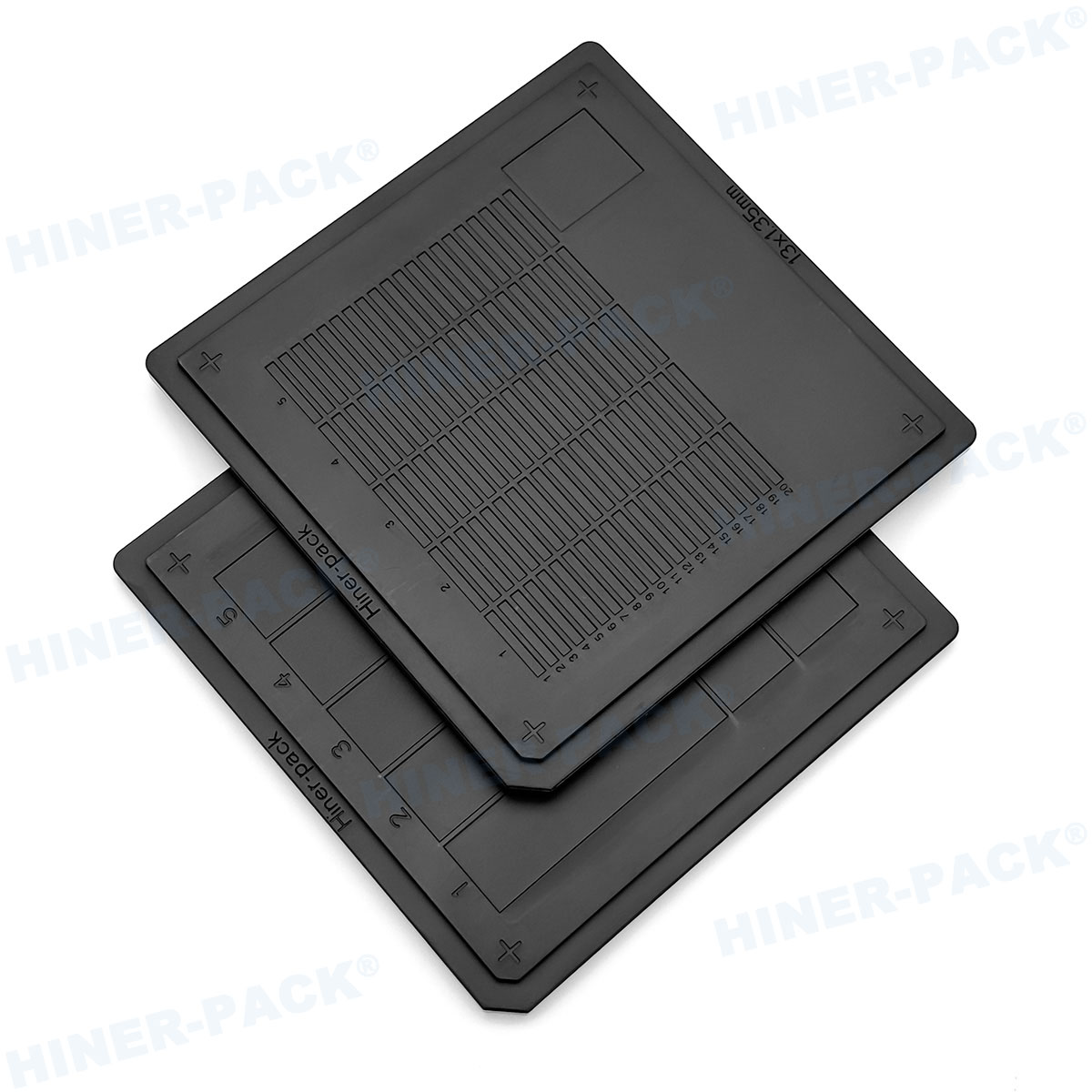
5. Material Engineering: Conductive, Dissipative, and Antistatic Trays Compared
Material choice affects cost, durability, ESD performance, and temperature range. The following table summarizes key differences (as textual comparison):
Polypropylene with antistatic coating: Low cost, good for dry storage at room temperature, but coating wears off after 30-50 washes. Coating resistivity drifts from 10⁹ to 10¹² Ω/sq over time.
Carbon-filled polycarbonate (PC): Dissipative (10⁶–10⁹ Ω/sq), temp resistance up to 110°C, but prone to warpage above 125°C. Suitable for automated assembly lines with ambient conditions.
Polyetherimide (PEI) with inherent dissipation: Stable up to 170°C, very low warpage, dissipative without fillers. Expensive, used for high-reliability BGA (automotive, medical).
Polyphenylene sulfide (PPS) with carbon fiber: Conductive range (10²–10⁵ Ω/sq), excellent chemical resistance, withstands 200°C short-term. Preferred for burn-in board trays. The main drawback is brittleness and high tooling wear.
A growing trend is the use of inherently dissipative polymer (IDP) blends, which do not rely on migratory antistatic agents and maintain resistivity across humidity changes. For most BGA applications with 0.8 mm pitch and above, carbon-loaded PC or PPS provides the best price-to-performance ratio.
6. Cleaning, Storage, and Lifecycle Management of JEDEC Matrix Trays
Maximizing tray reuse lowers packaging costs but introduces contamination risks. Standard industry practice includes:
Washing: Ultrasonic cleaning in deionized water with non-ionic detergents, followed by hot air drying at 60-70°C. Harsh solvents (acetone, IPA >70%) can extract antistatic agents.
ESD requalification: After 20 washes, measure surface resistivity again. If it exceeds 10¹¹ Ω (or specified limit), the batch should be downgraded to non-ESD sensitive components.
Warpage inspection: Using a granite plate and feeler gauge, check that tray flatness remains within 0.3 mm across diagonal corners. Replace trays exceeding limit.
Typical lifespan: A well-maintained tray made of filled PC or PEI lasts 200-300 wash cycles; carbon-PPS trays can exceed 500 cycles if handled gently. Hiner-pack offers tray recertification services where we measure and re-certify ESD/flatness parameters for a fraction of new tray cost.
7. Future Directions: High-Density and Ultra-Fine-Pitch BGA Trays
As 2.5D and 3D IC packages become more common, BGA ball pitches drop to 0.35 mm and even 0.3 mm. This creates two major challenges for matrix tray design:
Pocket wall thickness: With pitch below 0.5 mm, the wall between adjacent pockets may be less than 0.25 mm, risking breakage during molding. Advanced tooling with high-speed micro-milling and lubricated core pins solves this.
Solder ball contact avoidance: At 0.35 mm pitch, ball diameter is usually ~0.2 mm. Any pocket misalignment >0.05 mm can scrape balls. This demands mold alignment precision of ±0.01 mm, which is achievable with CNC-machined electrode manufacturing.
Additionally, embedded RFID tags in trays are being deployed by leading OSATs to track cycle count, bake history, and ownership. This smart tray concept, integrated with factory execution systems, reduces misplacement and improves traceability.
Frequently Asked Questions (FAQ)
Q1: What are the standard dimensions of a JEDEC matrix tray for BGA packages?
A1: The most common JEDEC tray outline is "Tray Type 1" with dimensions 322 mm × 135 mm (12.68" × 5.31"). Other variants include 322 mm × 139 mm and 322 mm × 148 mm, depending on pocket array (e.g., 12×21, 16×24). Always refer to JEDEC MO-xxx design files for exact pocket pitch and cavity depth, which vary by BGA body size and ball diameter.
Q2: Can I bake BGA components at 125°C directly inside the tray?
A2: Yes, but only if the tray material is rated for that temperature. Standard polycarbonate trays may warp permanently above 110°C. Use trays molded from PEI, PPS, or high-temperature PC compounds, and verify the manufacturer's continuous use temperature. Many bakeable IC trays from Hiner-pack specify 150°C/48h without loss of flatness.
Q3: How do I clean JEDEC trays without removing ESD properties?
A3: Clean using mild alkaline detergents (pH 7-9) or deionized water with ultrasonication, followed by forced air drying at 50-60°C. Avoid abrasive brushes, high-pressure jets, or solvents like toluene and MEK. After cleaning, perform a resistivity test per ANSI/ESD STM11.13; if values exceed 10¹¹ Ω/sq, apply topical antistatic spray or retire the tray.
Q4: What is the difference between "matrix tray" and "JEDEC tray"?
A4: "Matrix tray" describes any molded tray with an array of pockets. "JEDEC tray" specifically refers to a matrix tray that complies with the dimensional, material, and marking standards published by JEDEC. Therefore, all BGA jedec matrix IC trays are matrix trays, but not all matrix trays are JEDEC-compliant. Non-JEDEC trays may cause feeder compatibility issues.
Q5: How many times can a single tray be reused before it should be scrapped?
A5: Lifespan depends on material and process conditions. For carbon-filled PC trays in ambient temperatures (no baking), 150-200 cycles are typical. For high-temperature PEI trays undergoing frequent baking, 300-400 cycles. Scrapping criteria: warpage >0.4 mm, cracked pocket walls, or surface resistivity >10¹¹ Ω/sq. Many facilities requalify every 50 cycles using a sample inspection plan.
Selecting the Right BGA JEDEC Matrix Tray Partner
Engineers responsible for BGA handling should move beyond simple dimension checks and evaluate material behavior under actual process conditions—thermal aging, cleaning chemistry compatibility, and ESD stability after wear. The shift to finer-pitch BGAs and higher-temperature lead-free reflow processes demands trays that maintain sub-0.2 mm coplanarity and consistent resistivity through hundreds of cycles. Hiner-pack provides fully JEDEC-compliant BGA jedec matrix IC trays machined from wear-resistant, high-temperature polymers, with metrology reports for every batch. Our engineering team assists with pocket geometry optimization for non-standard BGA substrates and rapid tooling modifications.
For detailed technical datasheets, sample trays, or a consultation on reducing your BGA handling defects, please send your specification to our technical sales team. Request your quote or free contamination audit today – Hiner-pack ensures your ICs arrive at the placement machine in perfect condition.
Contact Hiner-pack for BGA JEDEC matrix tray inquiries: provide your BGA dimensions, MSL level, and automation feeder model – we will propose the optimized tray material and pocket design within 48 hours.