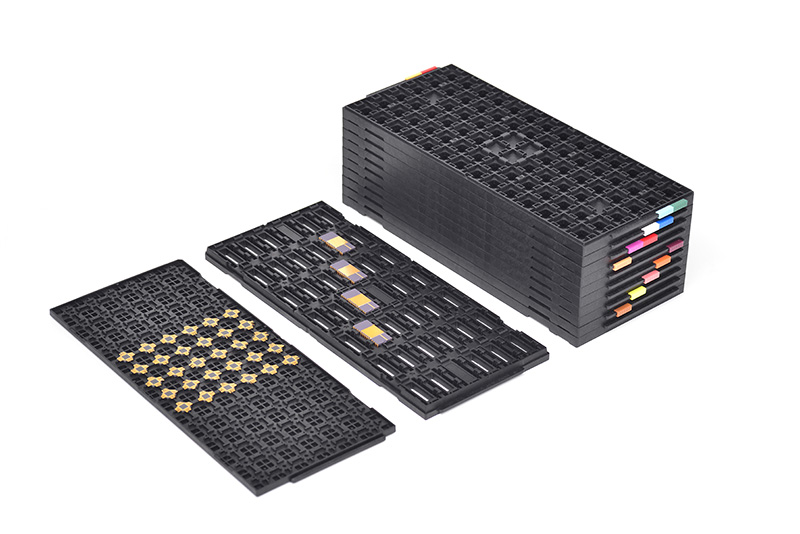
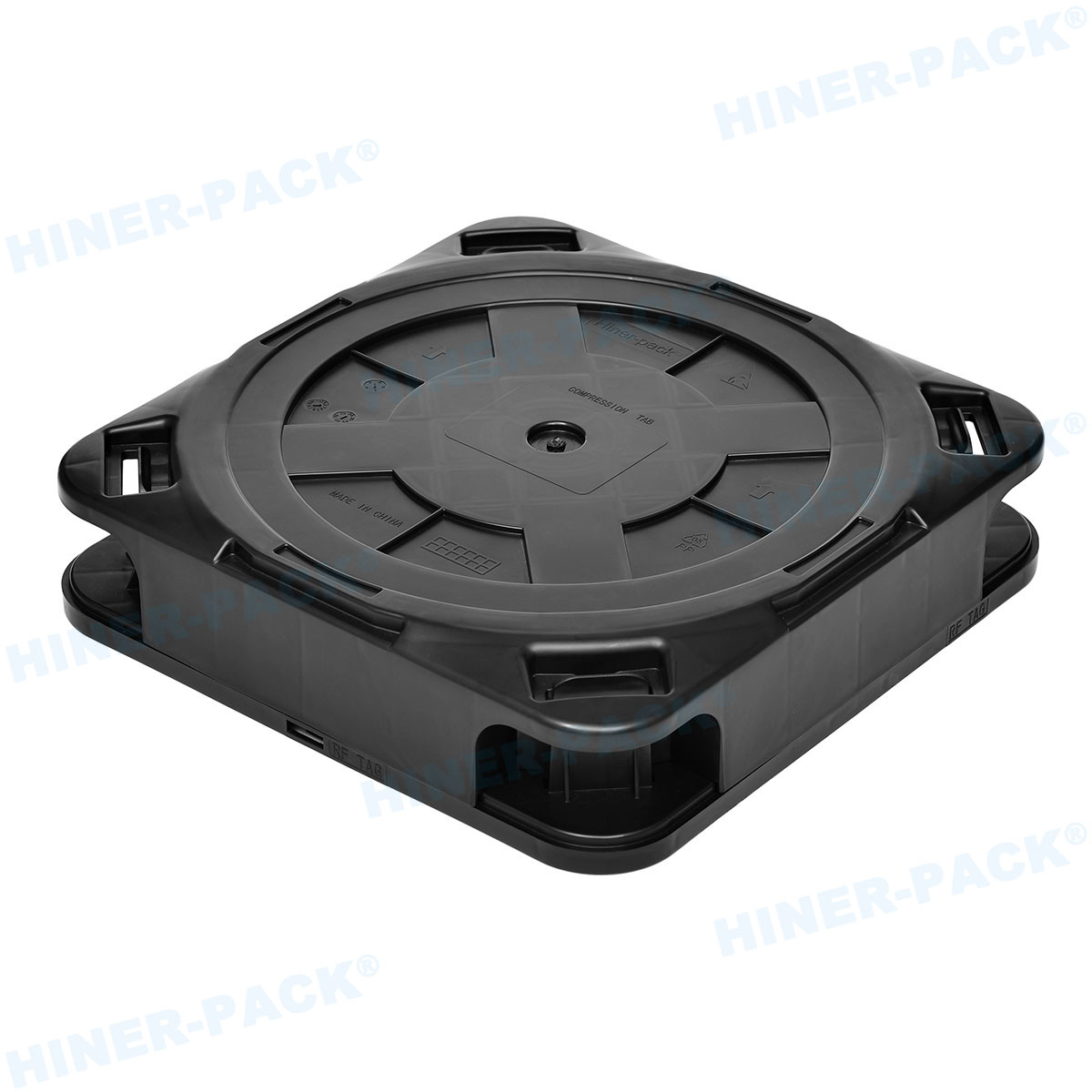
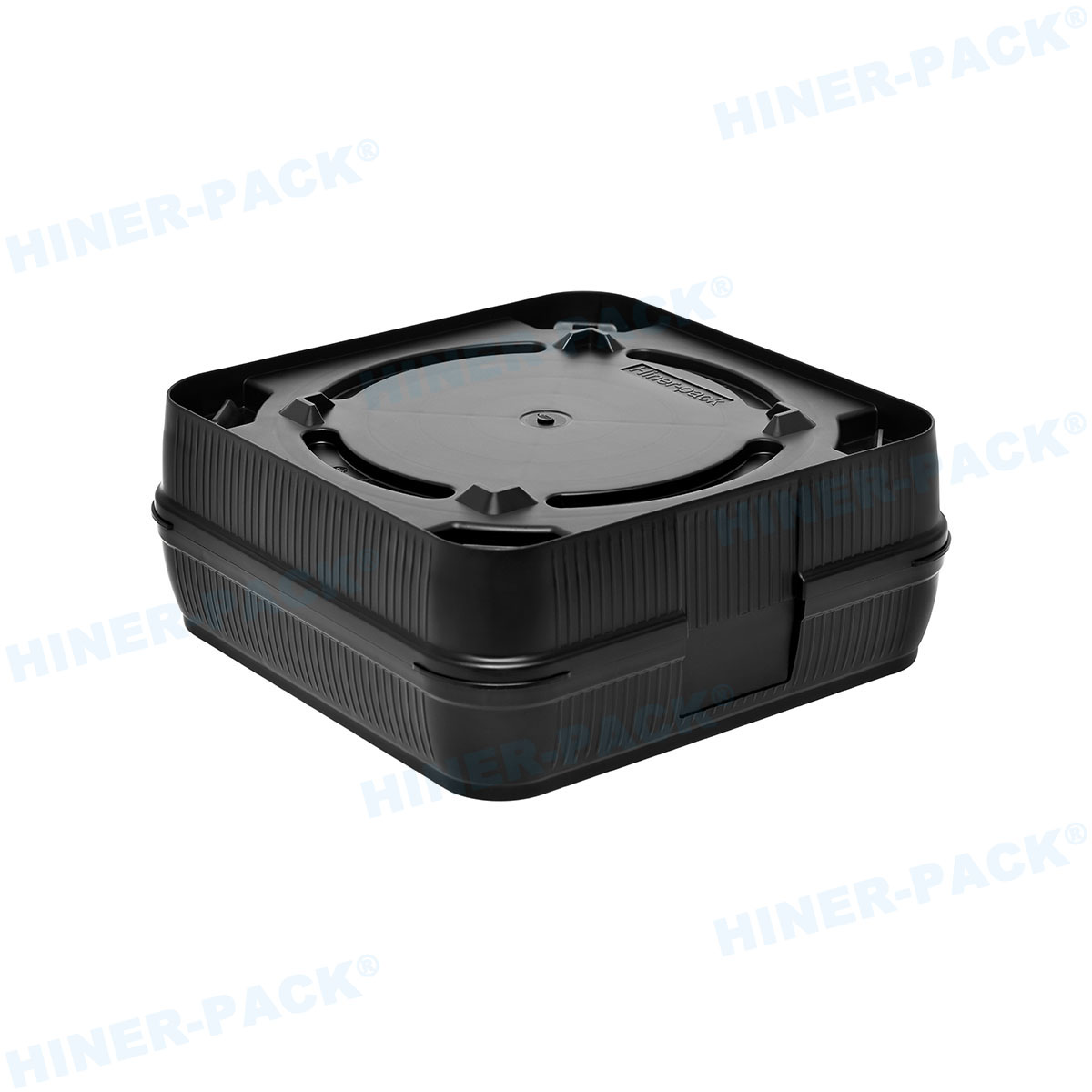
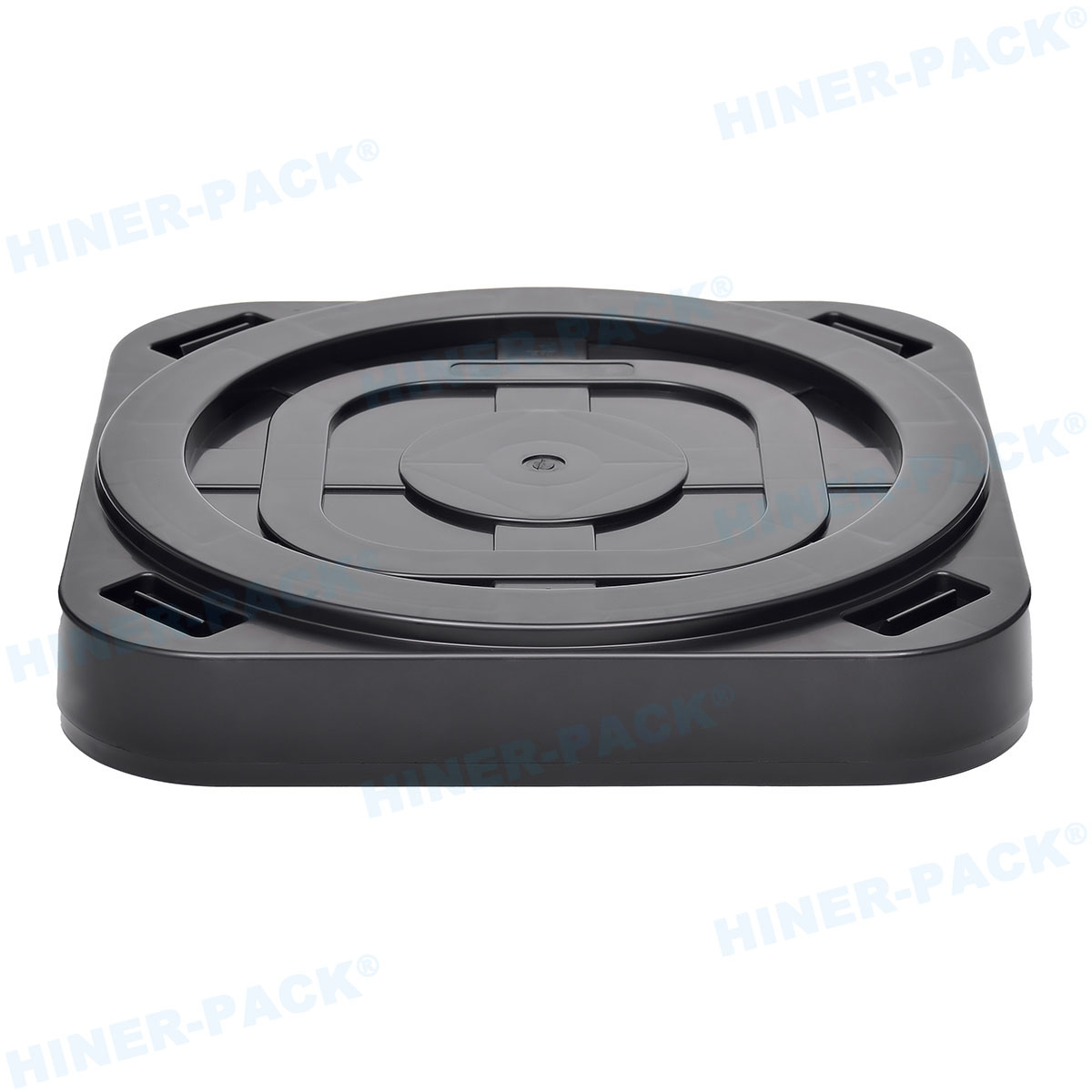
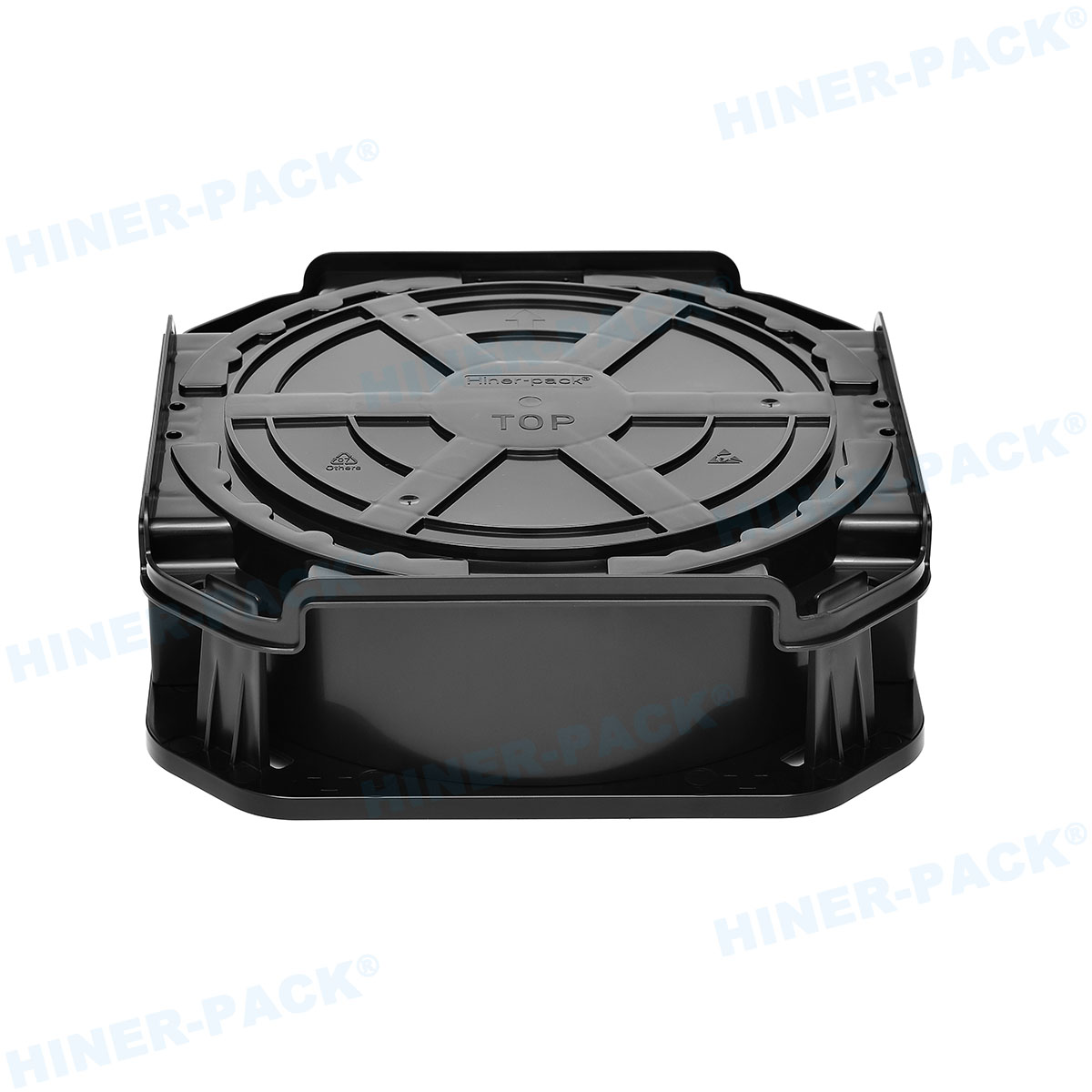
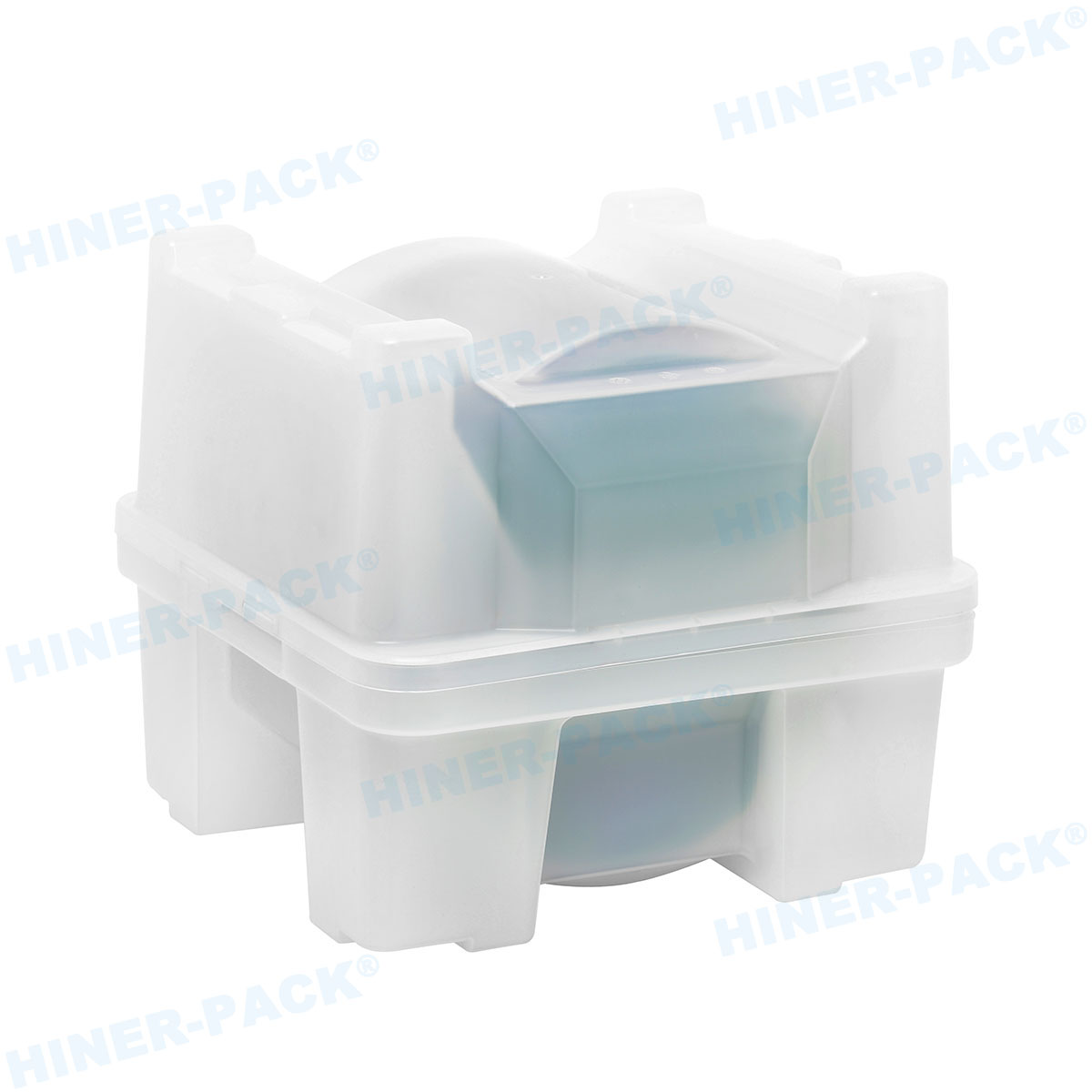
In semiconductor back-end operations, the JEDEC tray cover is a precision component that directly affects die protection during inter-facility transport, automated depalletizing, and long-term storage. JEDEC outlines (e.g., 322x226mm, 336x230mm) define tray pocket arrays, but the cover — often overlooked — must satisfy identical flatness, resistivity, and cleanliness criteria. Without a correctly specified cover, OSATs and IDMs face yield losses from ESD damage, particle contamination, and misaligned stacking in pick-and-place equipment. This guide provides semiconductor quality engineers and procurement specialists with actionable data on JEDEC tray cover material science, failure modes, and reusability protocols. Hiner-pack offers JEDEC-compatible tooling with full metrology traceability.
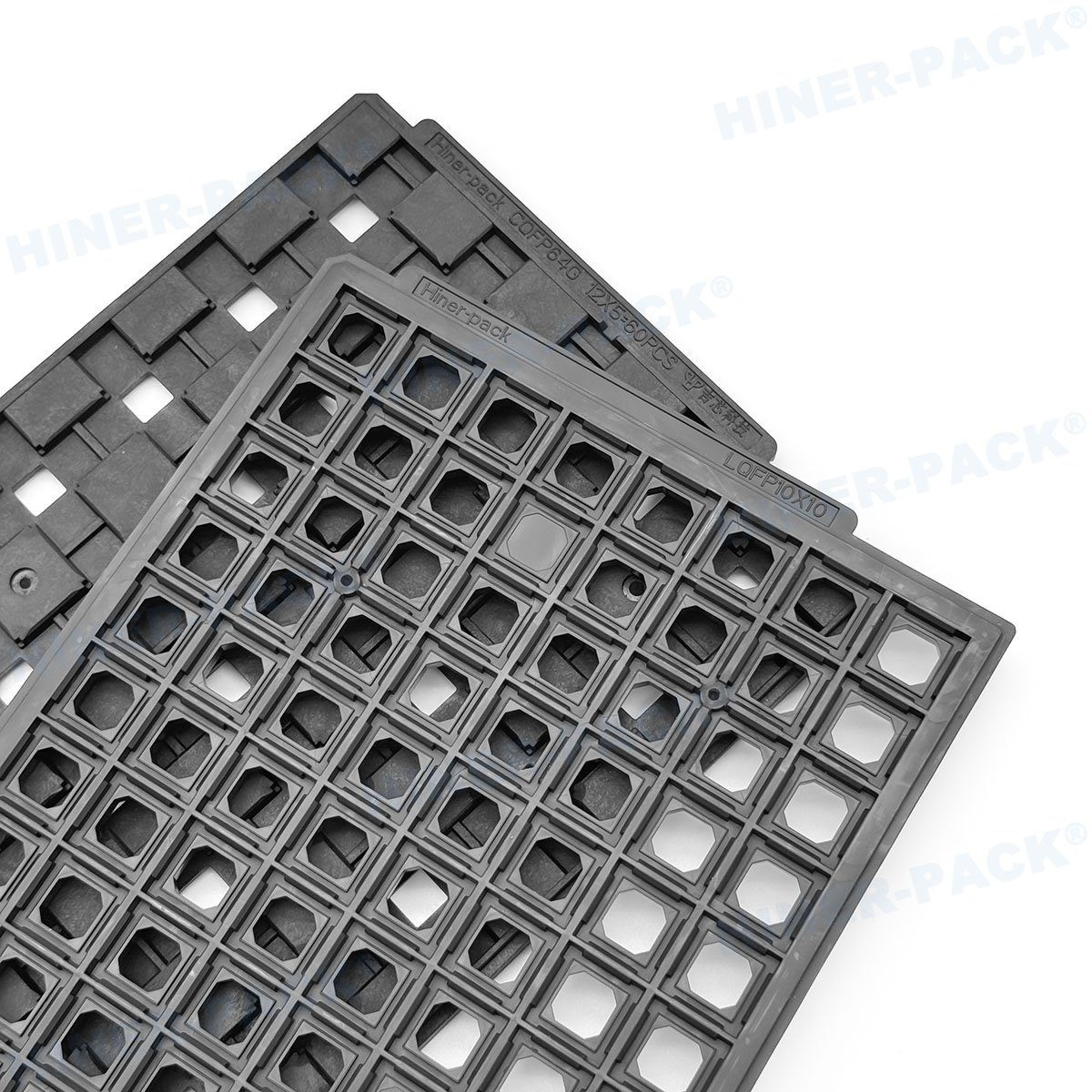
1. JEDEC Dimension Compliance and Mechanical Fit
A JEDEC tray cover must match the tray’s peripheral locking features, alignment ribs, and overall outline. Two common JEDEC formats are MS‑009 (322 mm x 226 mm) and MS‑012 (336 mm x 230 mm), but many custom variants exist. Critical dimensions include:
Overall width and length: Tolerance ±0.10 mm to avoid overhang or underhang that causes handling errors.
Corner radius and latch geometry: Mismatched latch angles (standard 2°–5° draft) lead to cover popping off during vibration.
Overall height (cover thickness): Typically 2.8–3.5 mm. Too thin leads to warpage; too thick blocks automated tray stackers.
Using non‑compliant lids forces manual rework. One ASEAN OSAT reported a 12% increase in equipment jams after switching to an unbranded cover with out‑of‑spec locating pins. A proper JEDEC tray cover undergoes 100% optical measurement for these features. Hiner-pack supplies covers with a CMM report per batch, including datums A, B, and C per ASME Y14.5.
2. Material Science: Conductive vs. Dissipative vs. Antistatic Grades
Selecting the right polymer for a JEDEC tray cover requires balancing surface resistivity, mechanical rigidity, and ionic contamination limits. Below are three industry-proven options and their suitability:
Conductive Polycarbonate (carbon fiber or carbon nanotube loaded): Resistivity 10³–10⁵ Ω/sq, fast charge decay. Preferred for high-speed automation where tribocharge from cover removal must stay below 100V. Slightly higher cost and potential carbon shedding.
Dissipative ABS/PC blend (permanent antistatic agent): Resistivity 10⁶–10⁹ Ω/sq. Offers good impact strength and lower particle generation. Suitable for cleanroom class 10,000 applications.
Antistatic PET or PET-G (topical or migrated agent): Resistivity 10⁹–10¹¹ Ω/sq. Low cost but prone to agent migration after multiple washes; flatness degrades above 70°C.
For advanced nodes (<28nm), choose a JEDEC tray cover that passes outgassing tests per SEMI F57 (no siloxanes, amides, or plasticizers above 0.1 µg/g). Hiner-pack uses mineral‑filled PC with inherent dissipation, eliminating carbon black shedding while maintaining 10⁸–10¹⁰ Ω/sq even after 20 cleanings.
3. Key Performance Metrics for Supplier Validation
Engineers should request five quantifiable test results for each JEDEC tray cover batch:
Flatness (warpage) measured on a granite surface plate: Maximum deviation ≤0.20 mm over 300 mm length. Higher warpage creates vacuum leak during die pickup.
Surface resistivity per ANSI/ESD STM11.11: At least five points, recorded after 50% RH conditioning. Acceptable range depends on ESD control plan (typically 10⁵–10¹¹ Ω/sq).
Tribocharge generation (cover separation from tray): Measured with Faraday cup and electrometer. Peak voltage should not exceed 200V for Class 0 devices.
Retention force of locking clips: Average 20–35 N per latch, with less than 15% variation across all latches.
Liquid particle count (LPC) per IEST-RP-CC004.3: ≤200 particles >0.5 µm per 100 cm² after standard cleaning.
Suppliers that cannot provide raw data for these metrics typically lack process control. One automotive Tier‑1 replaced their incumbent after discovering 38% of delivered covers failed flatness >0.35 mm, leading to wire sweep incidents.
4. Failure Mechanisms and Engineered Solutions
Field data from three European assembly subcontractors isolates four common failures tied to poor JEDEC tray cover design or material instability:
Failure: Cover warpage after 85°C/85% RH storage (JEDEC JESD22‑A101). Leads to tray stack tilting and ICs falling out of pockets.
Solution: Use annealed polycarbonate with 20% glass fiber. Preheat covers at 100°C for 2h before first use to relieve residual stress.Failure: Surface resistivity drift above 10¹² Ω/sq after isopropyl alcohol (IPA) wiping. Causes electrostatic attraction of airborne particles.
Solution: Specify inherently dissipative polymer (IDP) rather than topical antistatic coatings. IDP maintains resistivity after 100 IPA wipes.Failure: Locking clip breakage after 10 automation cycles. Fracture surfaces show brittle failure due to sharp corner radii.
Solution: Redesign latch with radius ≥0.4 mm and conduct FEA stress analysis. Hiner-pack applies a 0.5 mm radius and uses PC+ABS blend to improve ductility.Failure: Cover stick‑slip vibration during high-speed tray separation, generating false sensor triggers in test handlers.
Solution: Add micro‑textured contact ribs (0.1 mm height, 2 mm pitch) on the cover inner surface. This reduces friction coefficient from 0.55 to 0.32.
5. Cleanroom Integration and Reusability Protocol
For high‑mix fabs, reusing JEDEC tray covers reduces packaging costs by 30–45%, but only when a validated cleaning process exists. Recommended workflow:
Incoming inspection: Reject any cover with visible flash, sink marks, or surface scratches >0.2 mm width.
Washing parameters: Ultrasonic bath (40 kHz, 50°C) using 2% alkaline detergent (pH 11) for 10 min, followed by three DI water rinses (18 MΩ·cm). Drying in HEPA‑filtered oven at 55°C for 1.5h.
Re‑qualification after each 10 cycles: Measure flatness, resistivity, and inspect latches with 10× magnification. Discard if warpage exceeds 0.25 mm or any latch crack detected.
Using a validated cleaning protocol, a well‑designed JEDEC tray cover can survive 25 cycles without performance degradation. Hiner-pack provides a wash‑validation service to certify cover lifetime under customer‑specific detergents.
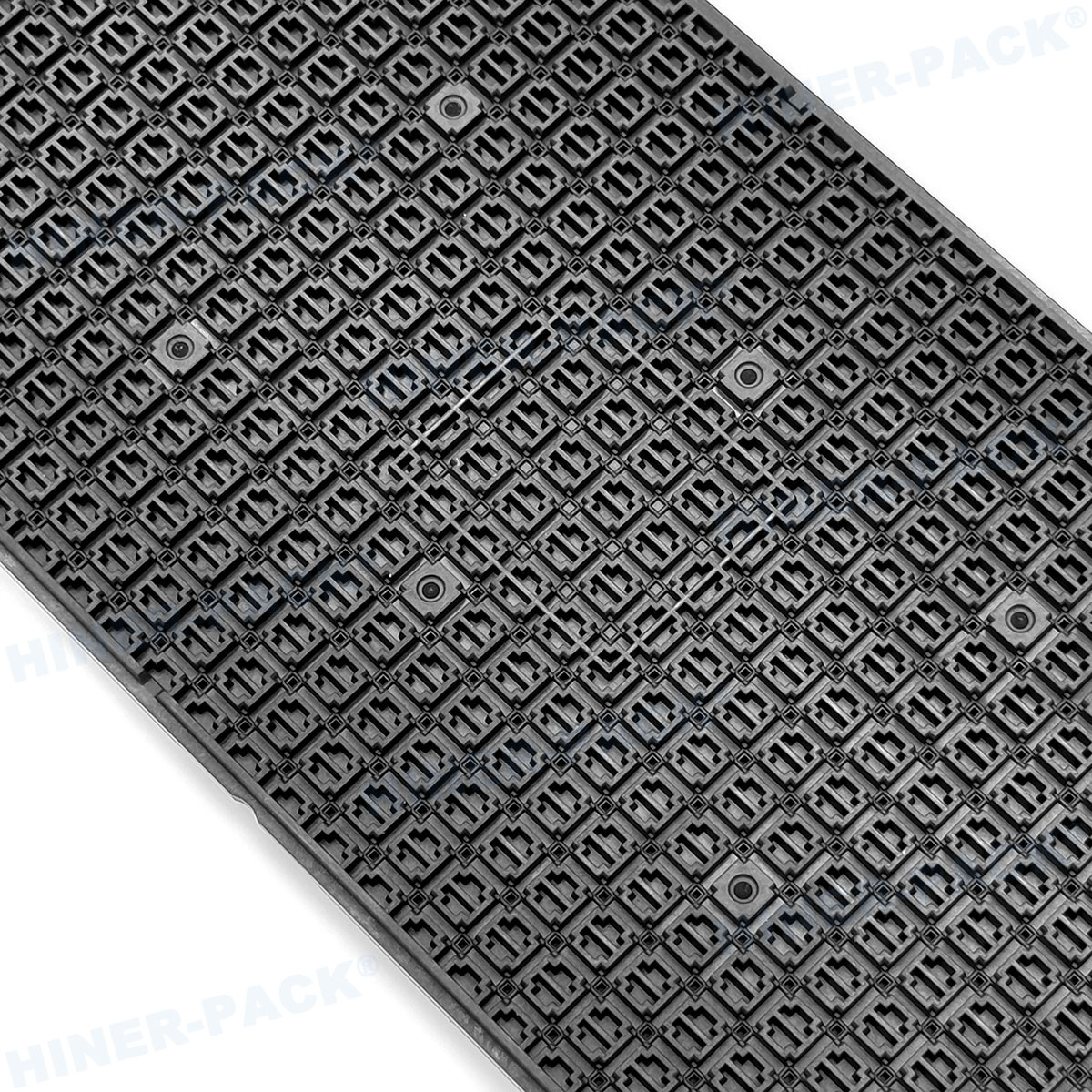
6. Automated Handling Compatibility – Pick & Place and Tray Stackers
Modern surface mount lines use tray stackers that automatically feed magazines or destack individual trays with covers. For error‑free operation, the JEDEC tray cover must satisfy:
Robotic grip features: Uniform side-wall texture (Ra 1.2–1.5 µm) for vacuum gripper adherence.
Cover deflection under stack pressure: At 10 trays stacked (total ~5 kg load), deflection should stay below 0.3 mm to maintain device clearance.
Magnetic or metal‑free compatibility: Some high‑frequency test environments require non‑magnetic covers. Use stainless steel‑free polymer or full plastic.
Three major pick‑and‑place OEMs (Fuji, Siemens, Hanwha) publish tray stacker clearance specifications: cover height variation ±0.15 mm maximum. A warped or over‑thick cover causes misfeeds and machine alarms, reducing throughput by 15–20%.
7. Supplier Auditing: Seven Critical Questions
Before qualifying a vendor for JEDEC tray cover supply, procurement teams should request evidence on:
In‑house mold flow simulation to predict weld‑line locations and sink marks on latching areas.
ESD testing under actual factory conditions (not just lab at 23°C). Demand tribocharge data at 10% RH and 50% RH.
Statistical process control (SPC) charts for flatness — Cpk ≥1.33 indicates stable molding.
Outgassing reports according to SEMI F57 or equivalent for cleanroom consumables.
Metal particle detection (ICP‑MS analysis of wash extract) for covers used in sensitive MEMS fabs.
Documented repeatability of cleaning cycles (same LPC results after 5, 10, 15 washes).
Fast changeover capability for custom JEDEC formats — lead time for new cover mold.
Hiner-pack maintains open access to all manufacturing records and offers a 48h sample service for standard JEDEC outlines.
8. Conclusion: From Generic Lid to Engineered Cover
Moving from a generic film or poorly molded lid to a qualified JEDEC tray cover yields measurable improvements: reduced ESD field failures (up to 60% drop), lower particle contamination (improved bond pad yield), and fewer machine jams. The initial cost of a high‑grade cover is offset by reusability and defect reduction. For OSATs and IDMs, specifying flatness, resistivity range, and latch retention force in procurement contracts is now industry best practice. Suppliers like Hiner-pack provide full documentation, ensuring compliance with automotive IATF 16949 and SEMI standards.
Frequently Asked Questions (FAQ) About JEDEC Tray Cover
Q1: What exactly makes a tray cover “JEDEC
compliant”?
A1: A JEDEC-compliant tray cover matches the outer form
factor, mounting hole pattern, and latch positions defined in a JEDEC
publication (e.g., MS‑009, MS‑012). It must also pass dimensional checks per
JEDEC JEP95 for tray-related features. However, JEDEC does not dictate material
or ESD properties — those are customer specifications.
Q2: Can I use the same JEDEC tray cover for both shipping and in‑fab
storage?
A2: Yes, but check two factors: cover thickness must allow
automated stacker clearance, and material must withstand repeated deionized
water cleaning. Many shipping‑only covers use low‑cost PET that warps after one
wash. For dual use, specify polycarbonate or ABS/PC with ≤0.15% moisture
absorption.
Q3: How do I measure cover warpage without expensive
equipment?
A3: Place the cover on a certified granite surface plate
(grade AA) and use a dial indicator mounted on a stand. Measure deflection at
nine grid points (center, four edges, four corners). Acceptable max difference:
0.20 mm over the longest dimension. For quick checks, a feeler gauge under a
straight edge can indicate severe warpage >0.3 mm.
Q4: What surface resistivity range is recommended for covers used
with highly sensitive CMOS devices (≤14nm)?
A4: For devices with
gate oxide breakdown voltage below 10V, use a cover with surface resistivity
between 10⁵ Ω/sq and 10⁸ Ω/sq, and ensure charge decay time <0.2 seconds from
1000V to 100V. Higher resistivity (10⁹–10¹¹ Ω/sq) may still generate damaging
triboelectric charges during rapid cover removal. Consult ANSI/ESD SP10.1 for
handling extremely ESD‑sensitive components.
Q5: Can Hiner-pack produce a JEDEC tray cover with custom color
coding for different product families?
A5: Yes. Hiner-pack offers
color additives (blue, green, yellow, black) that do not alter surface
resistivity or outgassing profile. Minimum order quantity for custom color is
2,000 pieces. Color coding helps visual lot segregation and reduces mix‑ups
during manual rework.
Need a validated JEDEC tray cover for your specific package type and automation line? Provide your tray drawing (or JEDEC outline number) and ESD control plan. Hiner-pack delivers sample covers with flatness maps and tribocharge test results. For production orders, we supply fully traceable batches with CMM and LPC reports.
Request a quote or free evaluation sample → Visit our product page or contact our semiconductor packaging team. Click here for inquiry and mention “JEDEC tray cover guide” for priority engineering support.