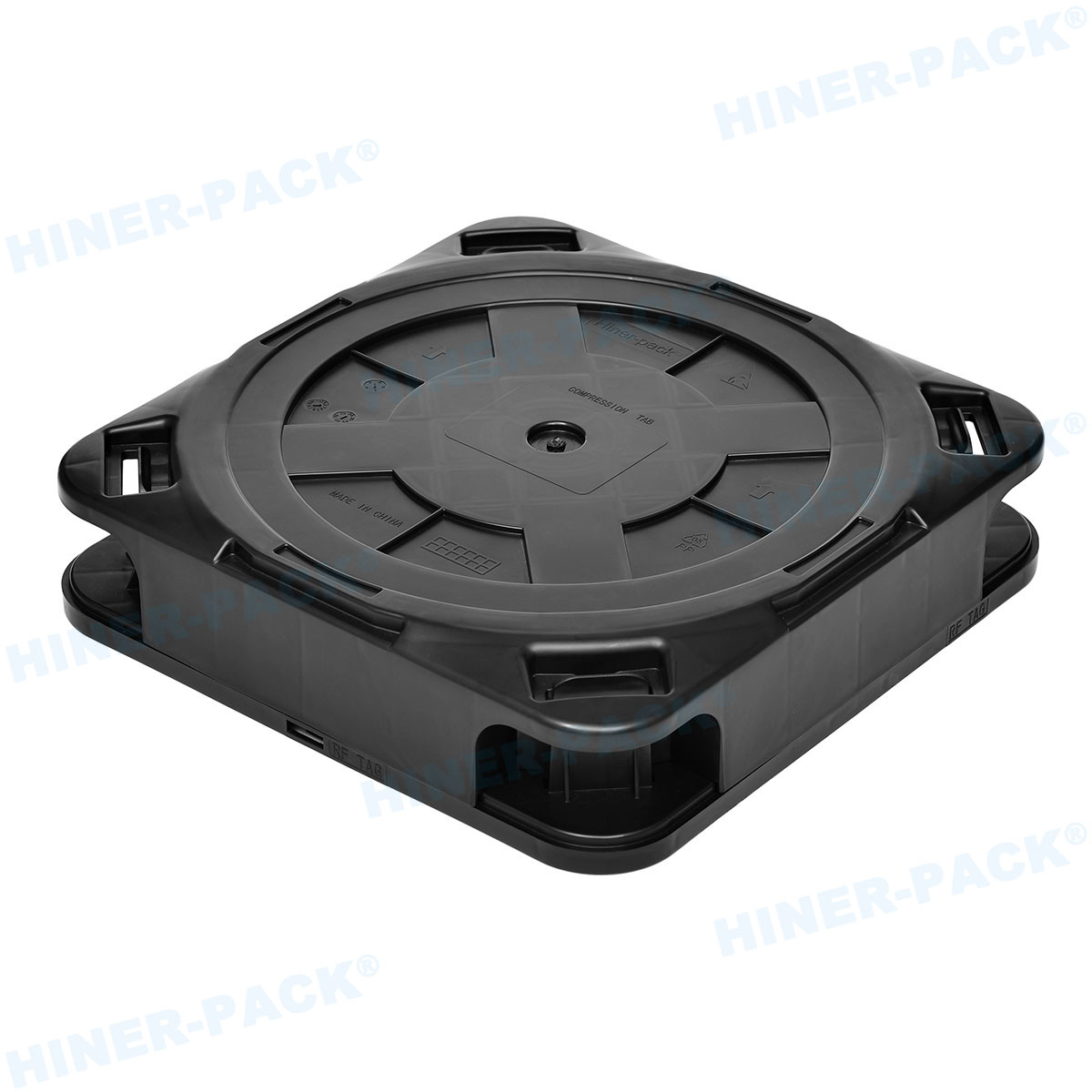
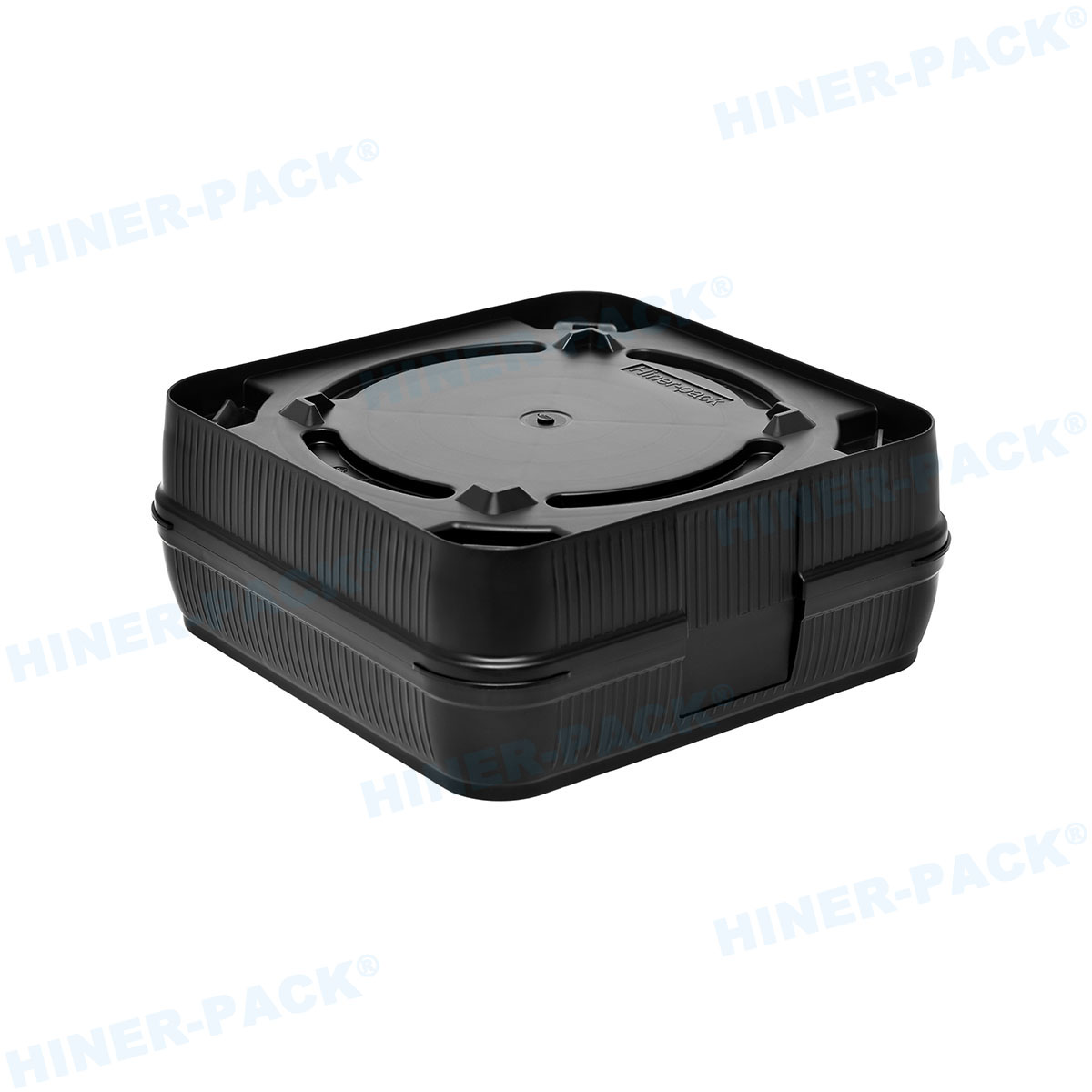
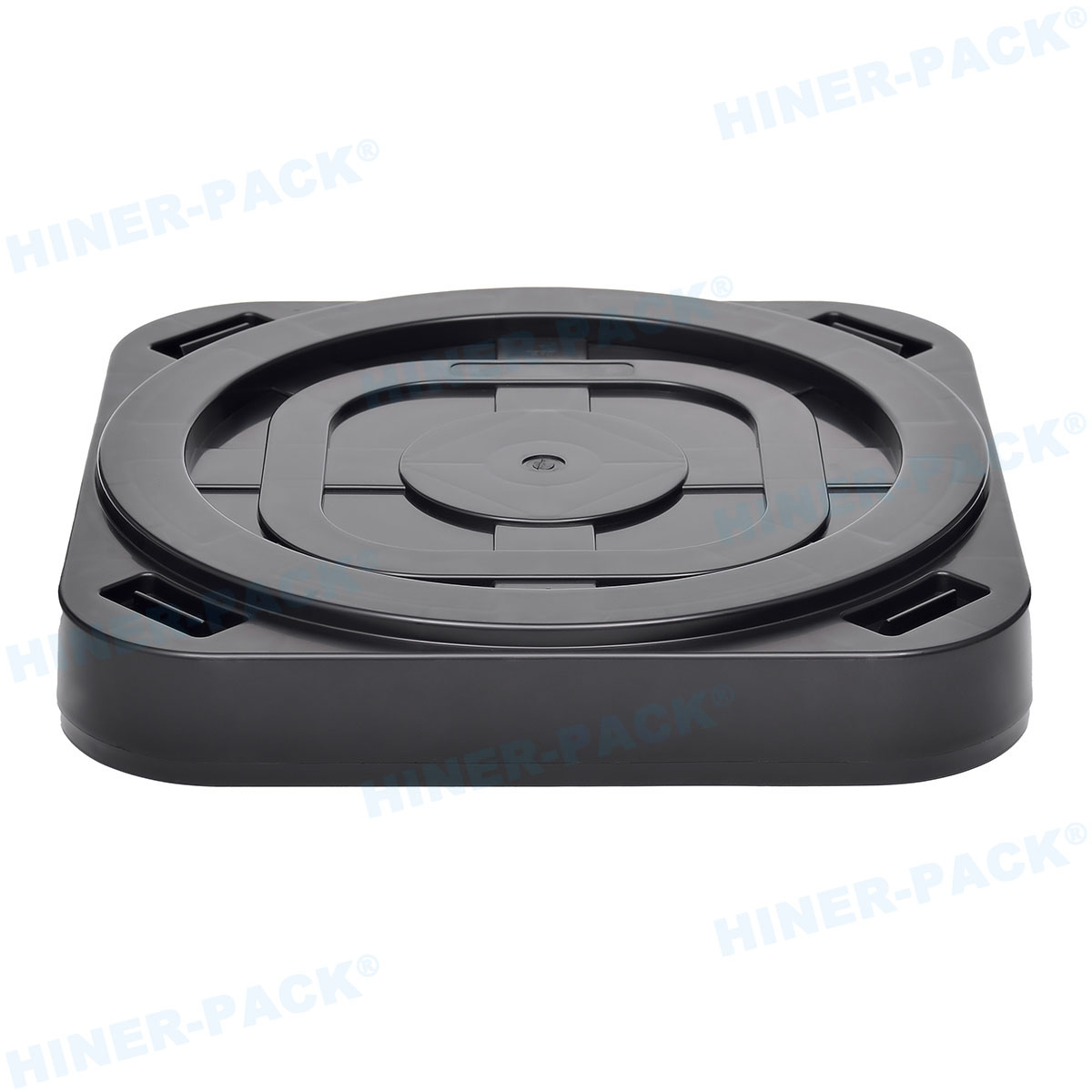
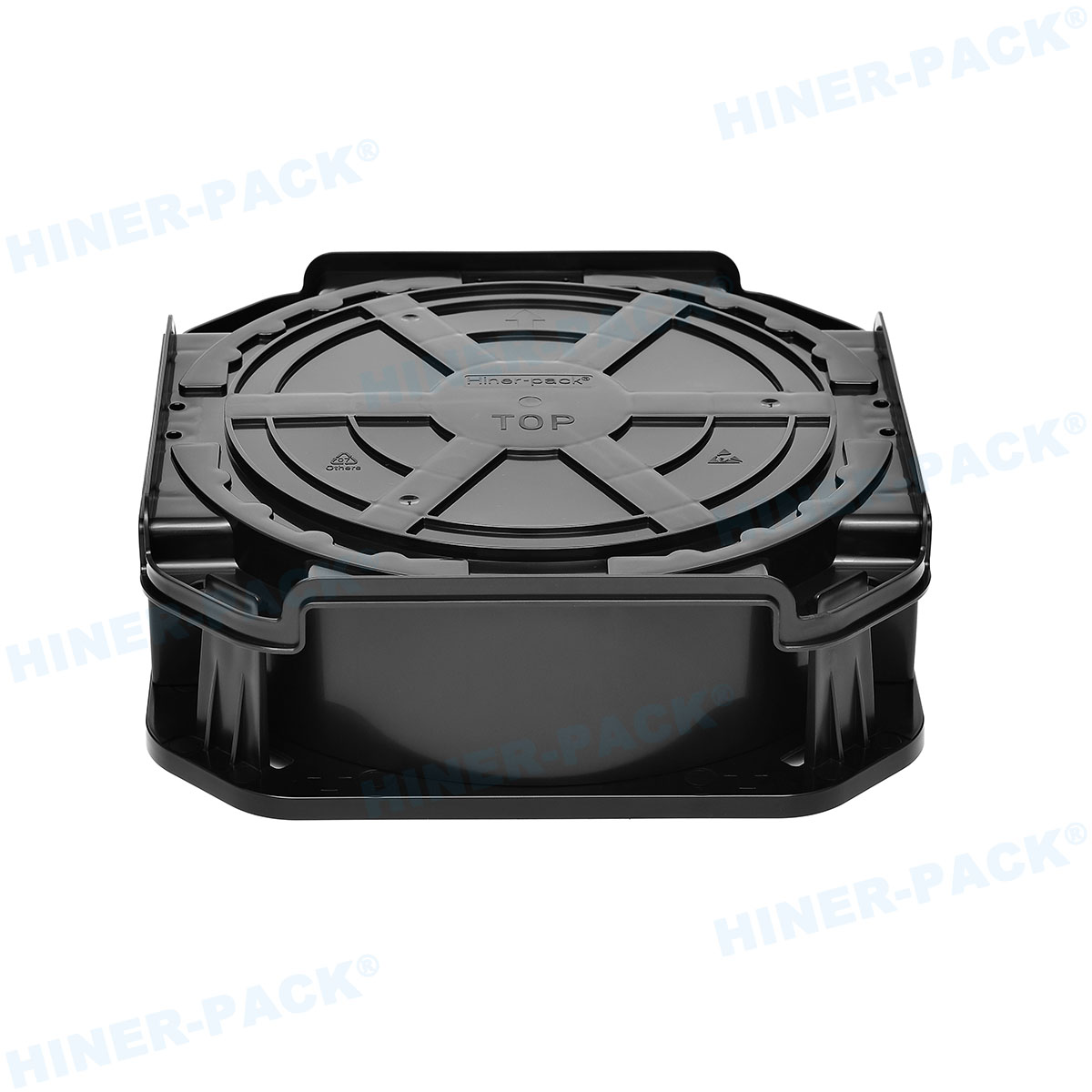
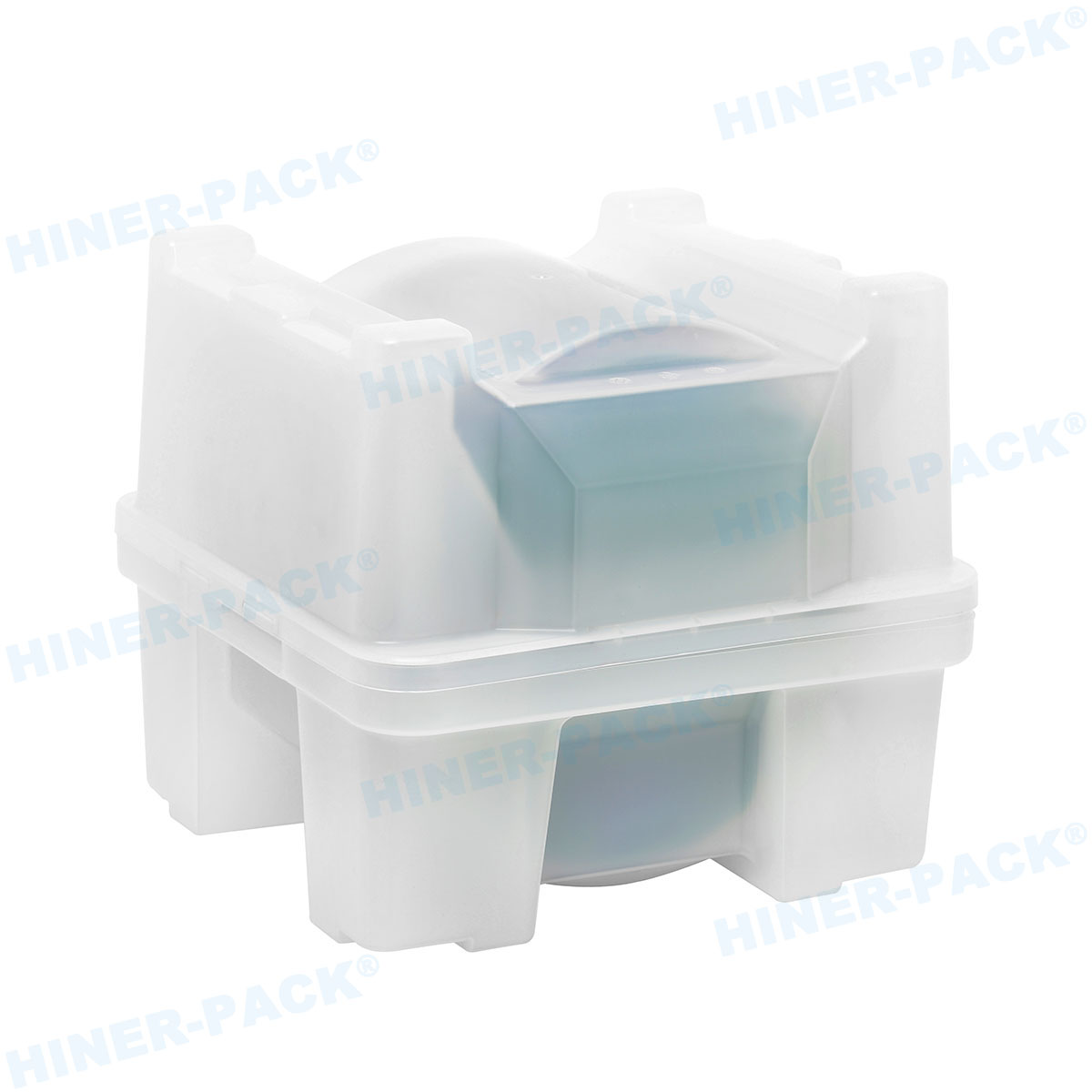
The semiconductor manufacturing process is built on precision, control, and relentless cost management. Every consumable that enters the cleanroom is scrutinized for its impact on yield and the bottom line. For decades, single-use wafer carriers have been a standard expense, a line item often accepted without question.
But a shift is happening. More fabs and OSAT providers are re-evaluating this model, turning their attention to durable, long-lasting alternatives. The focus is now on high-performance reusable waffle trays. This isn't just a sustainability story; it's a operational and financial strategy.
Moving from disposable containers to a managed fleet of reusable waffle trays requires an upfront change in mindset. The decision involves evaluating total cost of ownership, contamination control protocols, and logistical planning. Companies like Hiner-pack are at the forefront, engineering trays that are built not for a single journey, but for thousands of cycles under the most demanding conditions.
The Economic Argument: Beyond the Initial Price Tag
The sticker price of a single-use tray is lower. That's the first, and often only, comparison made. The real analysis begins with total cost of ownership (TCO).
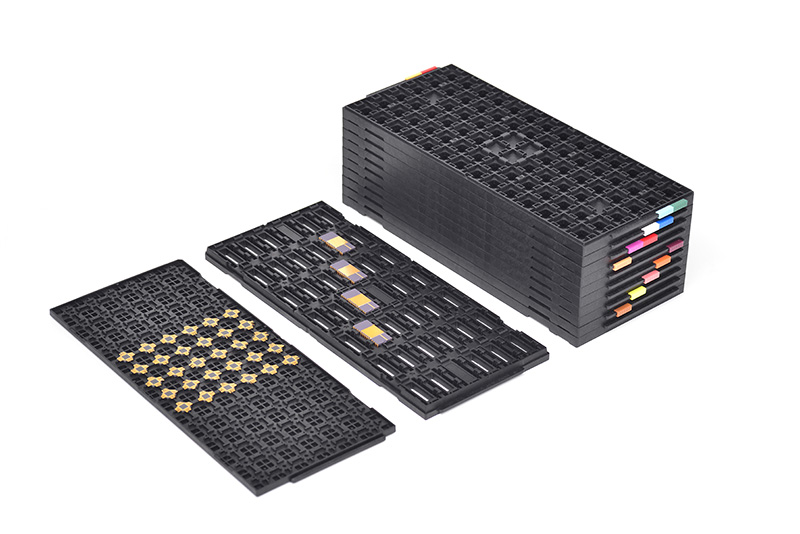
A reusable waffle tray from Hiner-pack is designed to withstand hundreds, often thousands, of process cycles. When you divide its higher initial cost over its entire service life, the per-use cost plummets dramatically. You eliminate the constant purchase order cycle for disposables, reduce administrative overhead, and minimize the inventory space needed for storing vast quantities of single-use items.
The economic model changes from a continuous cash outflow to a capital investment with a clear, declining cost curve.
Performance Under Pressure: Durability and Consistency
Disposable trays are molded for adequate one-time performance. Reusable trays are engineered for resilience. Hiner-pack constructs its trays from advanced, filled polymers that offer superior dimensional stability and resistance to warping.
This means the critical pocket dimensions, kinematic couplings, and sealing surfaces remain within specification cycle after cycle. You gain consistency in robotic handling and wafer positioning. There’s no risk of a weak or slightly out-of-spec disposable tray causing a mispick or wafer scrap. The mechanical reliability of a well-made reusable tray directly contributes to line stability.
Contamination Control: A Managed, Known Entity
A common concern is contamination. A disposable tray is, in theory, virgin and particle-free. A reusable tray’s cleanliness depends entirely on the established cleaning process. This is where control is actually enhanced.
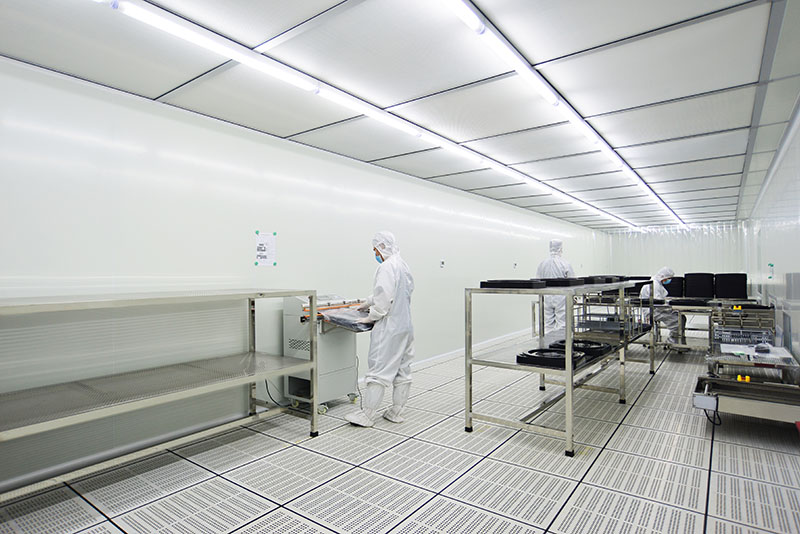
With a dedicated fleet of reusable waffle trays, you implement a rigorous, validated cleaning and inspection regimen. Each tray undergoes a documented process—often a combination of chemical baths, megasonic cleaning, and particle monitoring—before being released back into service. You have data on its history.
Conversely, every new disposable tray is an unknown variable from an external supplier, with its own handling and packaging history that could introduce surprises.
Environmental Impact and Corporate Responsibility
The semiconductor industry faces increasing scrutiny regarding its environmental footprint. The waste stream from millions of single-use plastic trays is significant. Adopting a reuse model drastically cuts solid waste generation.
It aligns with broader ESG (Environmental, Social, and Governance) goals. Reducing plastic consumables lowers the fab's Scope 3 indirect emissions associated with the production and transportation of those disposables. For companies publicly committed to sustainability, implementing reusable waffle trays is a tangible, measurable action that resonates with investors, customers, and regulators.
Logistics and Traceability: Gaining Visibility
Managing a pool of reusable assets introduces a new layer of logistical control. Each Hiner-pack tray can be serialized with a permanent laser mark or RFID tag. This allows for full lifecycle tracking.
You can trace a tray’s movement: which cleaning cycle it underwent, which process lot it carried, and its total number of uses. This data is invaluable for predictive maintenance, allowing you to retire trays based on actual wear rather than an estimated schedule. It also enhances lot traceability and quality control investigations.
The Partnership Model: Not Just a Product, But a System
Success with reusable trays isn't just about buying a more durable product. It requires a partnership with a supplier who understands the entire ecosystem. Hiner-pack works with customers on several critical system elements.
This includes defining the optimal tray fleet size for their operation, advising on cleaning protocol development, providing compatible transport and storage totes for the trays themselves, and establishing clear criteria for end-of-life management and recycling. The supplier becomes a part of your operational continuity.
Addressing the Perceived Challenges Head-On
The transition faces perceived hurdles. The upfront investment is higher. A robust cleaning infrastructure is needed. There is a risk of loss or damage in the logistics chain. These are valid concerns, but they are manageable.
The ROI calculation typically shows a break-even point within 12-18 months. Centralized or outsourced cleaning facilities are a common, efficient solution. And serialized tracking, combined with clear chain-of-custody agreements between fab and supplier, minimizes loss. The challenges are operational, not insurmountable.
In summary, the case for reusable waffle trays is built on a composite of financial savvy, performance reliability, and strategic responsibility. It represents a move from a consumable mindset to an asset management mindset. For fabs looking to tighten operational control and reduce long-term costs, the reusable path, supported by partners like Hiner-pack, offers a compelling and intelligent alternative.
Frequently Asked Questions (FAQ)
Q1: How many cycles can I realistically expect from a Hiner-pack reusable waffle tray?
A1: Lifespan varies based on wafer size, process environment (exposure to harsh chemicals), and handling rigor. For standard 200mm and 300mm trays in typical fab environments, Hiner-pack designs for a minimum of 500 cycles, with many trays exceeding 1000 cycles before reaching end-of-life criteria for dimensional or cosmetic wear.
Q2: Don’t reusable trays pose a higher cross-contamination risk between different process steps?
A2: This is mitigated by the cleaning protocol. A properly validated clean, potentially including steps for specific dopant or metal removal, resets the tray to a baseline “clean” state. Many fabs also manage dedicated fleets for specific process zones (e.g., front-end vs. back-end) as an extra precaution, a strategy Hiner-pack can help plan.
Q3: What happens to the trays when they finally wear out? Can they be recycled?
A3: Yes, a key advantage of the reusable model is responsible end-of-life management. Hiner-pack operates or partners with take-back programs. Worn-out trays, made of high-purity polymer, can be collected, granulated, and recycled into lower-grade plastic products, keeping them out of landfill and creating a closed-loop material flow.
Q4: How do we justify the capital expenditure (CapEx) for a reusable tray fleet versus operational expense (OpEx) for disposables?
A4: This requires a formal TCO analysis. Finance teams should compare the multi-year OpEx stream of disposable purchases against the one-time CapEx plus the ongoing OpEx for cleaning and management. The reduced per-use cost of the reusable fleet almost always wins over a 3-5 year period. Hiner-pack provides detailed models to support this business case.
Q5: Are reusable trays compatible with all standard front-opening unified pods (FOUPs) and automated material handling systems (AMHS)?
A5: Absolutely. Hiner-pack manufactures its reusable waffle trays to comply fully with relevant SEMI standards (E1.2, E1.9, etc.). Their critical form factor, including robotic flange dimensions and overall footprint, is identical to their disposable counterparts, ensuring seamless integration into existing FOUPs, load ports, and AMHS without any tooling modifications.