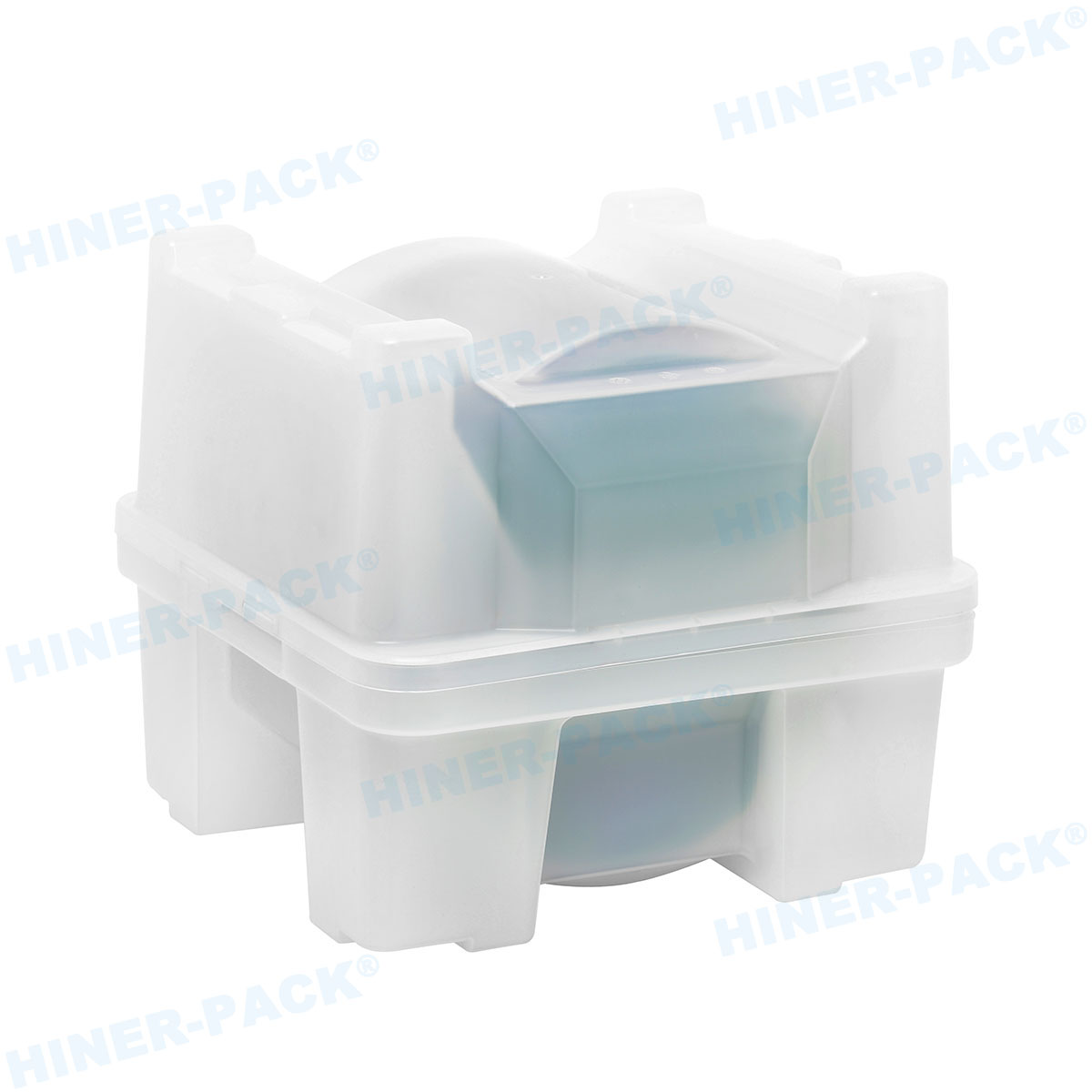
In semiconductor manufacturing, thermal processes such as oxidation, diffusion, annealing, and low-pressure chemical vapor deposition (LPCVD) are fundamental to device fabrication. The high-temperature wafer boats that support and transport wafers inside furnace tubes must withstand extreme environments while maintaining dimensional stability and ultra-high purity. As device geometries shrink and new materials like silicon carbide (SiC) and gallium nitride (GaN) gain prominence, the demands on these carriers intensify. This article examines the critical engineering parameters that define performance and reliability of high-temperature wafer boats, offering process and integration engineers a comprehensive decision framework.
1. Material Science: Quartz, Silicon Carbide, and Silicon
The choice of boat material directly impacts thermal budget, contamination levels, and operational lifetime. Three primary material classes dominate the market:
Fused quartz (SiO₂): Widely used for temperatures up to ~1200°C in oxidation and diffusion furnaces. Its low thermal expansion coefficient reduces stress, but quartz undergoes devitrification (crystallization) over time, leading to particle shedding. High-purity quartz with metal impurity levels below 10 ppm is required to prevent autodoping.
Silicon carbide (SiC): Preferred for LPCVD and high-temperature anneals (up to 1350°C). SiC offers superior thermal conductivity, mechanical strength, and resistance to plastic deformation. However, its higher cost and potential for sublimation in hydrogen ambients must be considered. Chemical vapor deposition (CVD) SiC coatings on graphite or sintered SiC are common.
Polysilicon or silicon: Used primarily in epitaxial reactors where silicon compatibility avoids contamination. Silicon boats are limited to temperatures below 1200°C and can suffer from slip generation due to thermal gradients.
Material data per SEMI standards (e.g., SEMI C7 for quartz) should be verified before selecting high-temperature wafer boats for critical applications.
2. Thermal Uniformity and Mechanical Stability
Temperature uniformity across the boat is essential for consistent film thickness and dopant profiles. Non-uniform heating can induce wafer slip, dislocations, and bow. Key design factors influencing thermal behavior include:
Slot pitch and geometry: Wider pitch improves gas flow and thermal symmetry but reduces wafer capacity. Optimized designs use tapered or notched slots to minimize contact area and thermal shadowing.
Support ribs and mass distribution: Thin ribs reduce thermal mass, allowing faster ramping, while maintaining structural rigidity.
Material thermal conductivity: SiC boats transfer heat more uniformly than quartz, reducing radial temperature gradients.
Finite element analysis (FEA) models predict stress and deformation under cyclic thermal loads. For advanced nodes, manufacturers such as Hiner-pack employ simulation to optimize boat designs for 300mm vertical furnaces, ensuring warpage below 0.5mm after 1000 thermal cycles.
3. Contamination Control and Purity Specifications
Metallic and particulate contamination from boats can ruin device yields. Stringent purity requirements are outlined in the ITRS roadmap. Critical parameters include:
Bulk metal impurities: For quartz, sodium, potassium, and iron must be <1 ppm to prevent mobile ion drift. SiC boats require total metal content below 10 ppb for advanced logic.
Surface roughness: Smoother surfaces (Ra < 0.5 μm) reduce particle adhesion and facilitate cleaning. Polished SiC boats are now standard for sub-10nm nodes.
Outgassing and desorption: At high temperatures, adsorbed species (moisture, organics) can desorb and react with wafers. Pre-baking boats in vacuum or inert gas is recommended.
Regular cleaning protocols (RCA, diluted HF, or specialized acid mixtures) must be compatible with the boat material to avoid etching or surface degradation.
4. Design Configurations for Horizontal and Vertical Furnaces
The evolution from horizontal to vertical furnaces has reshaped boat architecture. High-temperature wafer boats must seamlessly integrate with automated handling systems:
Horizontal boats: Typically used for 100-200mm wafers, featuring two or four support rods with precision-cut slots. They require manual loading or simple automation.
Vertical boats (wafer towers): Designed for 300mm and emerging 450mm fabs, these boats hold up to 150 wafers in a compact footprint. Kinematic coupling interfaces ensure repeatable alignment on load stations.
Hybrid designs: Some advanced boats incorporate removable rings or cassettes to facilitate batch transfers without touching wafers.
Hiner-pack offers customized configurations that comply with SEMI E180 (for 300mm vertical boats) and support Industry 4.0 integration with RFID tags embedded in the boat handle.
5. Lifecycle Management and Wear Mechanisms
Thermal cycling, chemical attack, and mechanical handling gradually degrade boat performance. Common failure modes include:
Quartz devitrification: Prolonged exposure to high temperatures transforms amorphous quartz into crystalline cristobalite, causing microcracks and particle release. Typical quartz boat lifetime is 6–18 months depending on usage.
SiC oxidation: In oxidizing ambients, a thin SiO₂ layer forms on SiC. While protective, repeated growth and spalling can lead to material loss. SiC boats generally last 3–5 years.
Mechanical wear: Automated tweezers and robotic arms can abrade boat surfaces, creating particles. Hard coatings (diamond-like carbon) are being explored to mitigate this.
Regular inspection using optical profilometry and particle counters is recommended. Replacement schedules should be based on empirical data from similar processes.
6. Application-Specific Requirements
Different thermal processes impose distinct demands on high-temperature wafer boats:
Oxidation and diffusion: Require boats with minimal metal contamination to avoid doping anomalies. Quartz or SiC boats with high-purity coatings are preferred.
LPCVD (polysilicon, nitride, oxides): Films deposit on the boat itself, changing its dimensions and potentially flaking. Boats must be periodically stripped in wet etch baths. SiC boats resist etching better than quartz.
Rapid thermal processing (RTP): Extremely fast ramps (up to 250°C/s) demand boats with very low thermal mass and high thermal shock resistance. Thin SiC or quartz boats with minimal contact points are used.
SiC epitaxy: Temperatures exceeding 1600°C require specialized boats made from sintered SiC or TaC-coated graphite.
7. Future Trends: Advanced Materials and Coatings
As power devices and wide-bandgap semiconductors expand, the thermal limits of conventional materials are being pushed. Emerging solutions include:
Coated graphite: Graphite boats with SiC or pyrolytic carbon coatings offer extreme temperature capability and low cost, but coating integrity is critical to avoid graphite outgassing.
Refractory metals: Molybdenum and tungsten boats are used in specialized ultra-high temperature processes (e.g., SiC sublimation growth), but they require reducing atmospheres to prevent oxidation.
Additive manufacturing: 3D-printed SiC boats with complex internal cooling channels are being researched to improve temperature uniformity.
Hiner-pack collaborates with research institutes to bring these innovations to production, ensuring that next-generation high-temperature wafer boats meet the rigorous demands of 450mm and GaN-on-SiC fabs.
Selecting the right high-temperature wafer boats is a multi-dimensional engineering decision that impacts yield, throughput, and cost of ownership. From material purity and thermal stability to design integration and lifecycle management, each factor must be evaluated against process specifics. Suppliers like Hiner-pack combine deep materials expertise with precision manufacturing to deliver boats that perform reliably under the most demanding thermal budgets. As semiconductor technology continues its march toward smaller nodes and new materials, the humble wafer boat remains a critical enabler of progress.
Frequently Asked Questions (FAQ)
Q1: How do I choose between quartz and silicon carbide
high-temperature wafer boats?
A1: The decision depends on process
temperature, chemical environment, and purity requirements. Quartz is
cost-effective for standard oxidation/diffusion up to 1200°C, but suffers from
devitrification. SiC is essential for LPCVD and processes above 1200°C, offering
longer life and better thermal uniformity. For advanced nodes (sub-28nm), SiC is
strongly recommended due to lower metal contamination.
Q2: What is the typical cleaning procedure for used high-temperature
wafer boats?
A2: Cleaning methods vary by material. Quartz boats are
often cleaned in a diluted HF (1-5%) bath followed by DI water rinse, but care
must be taken to avoid over-etching. SiC boats can withstand more aggressive
cleaning, including RCA SC-1/SC-2 and even piranha solutions. Always consult the
manufacturer's guidelines—Hiner-pack provides
detailed cleaning protocols for their products.
Q3: How can I detect thermal deformation or warpage in a wafer
boat?
A3: Visual inspection under high-intensity light can reveal
gross distortions. For quantitative assessment, use a coordinate measuring
machine (CMM) or optical profilometer to measure slot positions and overall
flatness. In-situ monitoring of wafer non-coplanarity during processing can also
indicate boat deformation.
Q4: Does the slot pitch in a high-temperature wafer boat affect
process uniformity?
A4: Yes, significantly. Narrower pitch increases
wafer density but restricts gas flow and can create temperature non-uniformity
across the batch. For critical thickness uniformity requirements (e.g., gate
oxide), a wider pitch (e.g., 10mm vs 6.35mm for 300mm) is preferred despite
lower throughput. Process simulation using computational fluid dynamics (CFD)
can optimize pitch for specific furnaces.
Q5: Are there special boat designs for handling thin or warped
wafers?
A5: Yes. For thinned wafers (<200µm) used in 3D
integration, boats with soft contact materials (e.g., PTFE-coated slots) or
edge-grip mechanisms minimize stress. However, high-temperature processes
require all components to withstand thermal cycles, so edge-grip SiC boats with
minimal contact area are employed. Some designs feature adjustable slots to
accommodate wafer bow.
Q6: What is the expected lifetime of a high-temperature wafer boat,
and what factors shorten it?
A6: Quartz boats typically last 6–18
months depending on temperature and cleaning frequency. SiC boats can last 3–5
years. Factors accelerating wear include: high peak temperatures, rapid thermal
ramps, frequent wet cleans (especially HF for quartz), and mechanical impacts
from automation. Regular inspection and tracking of process trends help predict
end-of-life.
Q7: Can the same boat be used for both oxidation and LPCVD
polysilicon deposition?
A7: While physically possible, it is not
recommended without thorough cleaning between processes. Polysilicon deposited
on the boat during LPCVD can flake off during oxidation, causing particles.
Additionally, residual dopants from previous runs may outgas. Best practice is
to dedicate boats to specific process types, or ensure rigorous cleaning cycles
are validated.