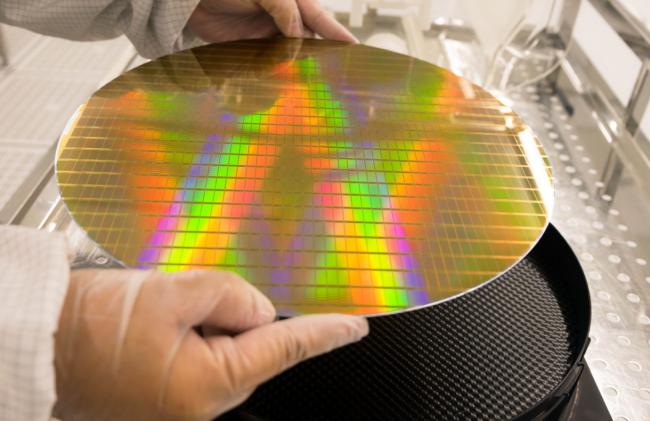
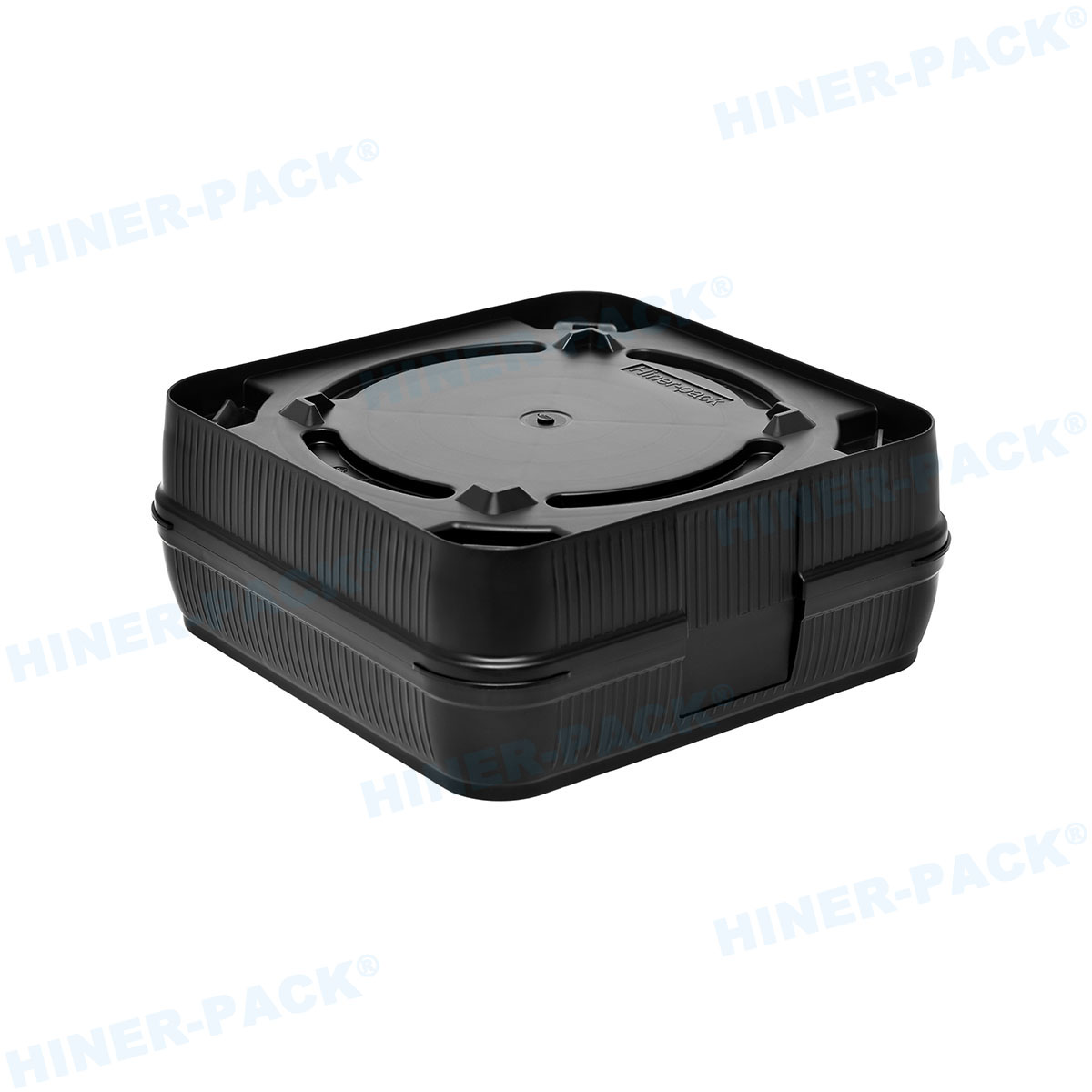
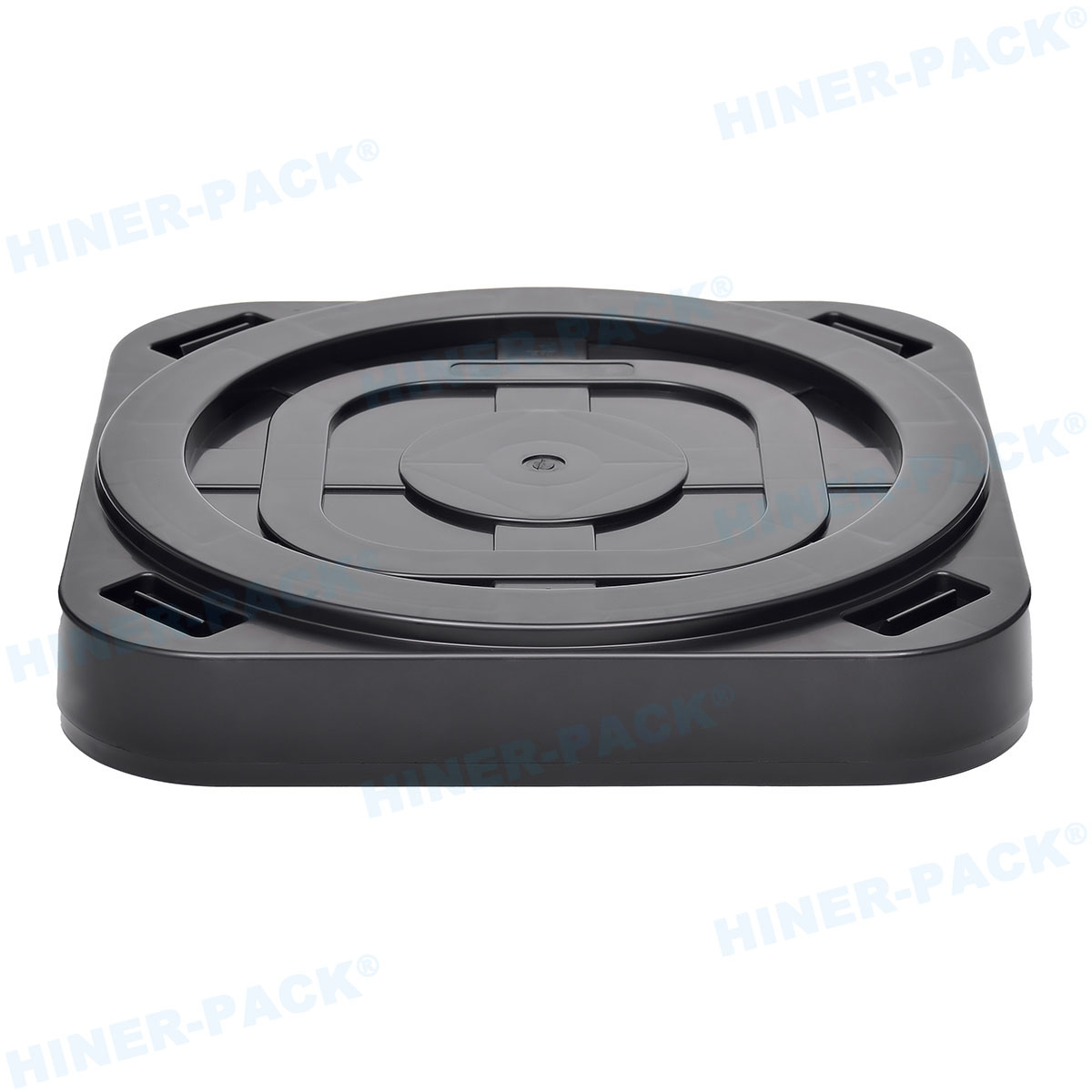
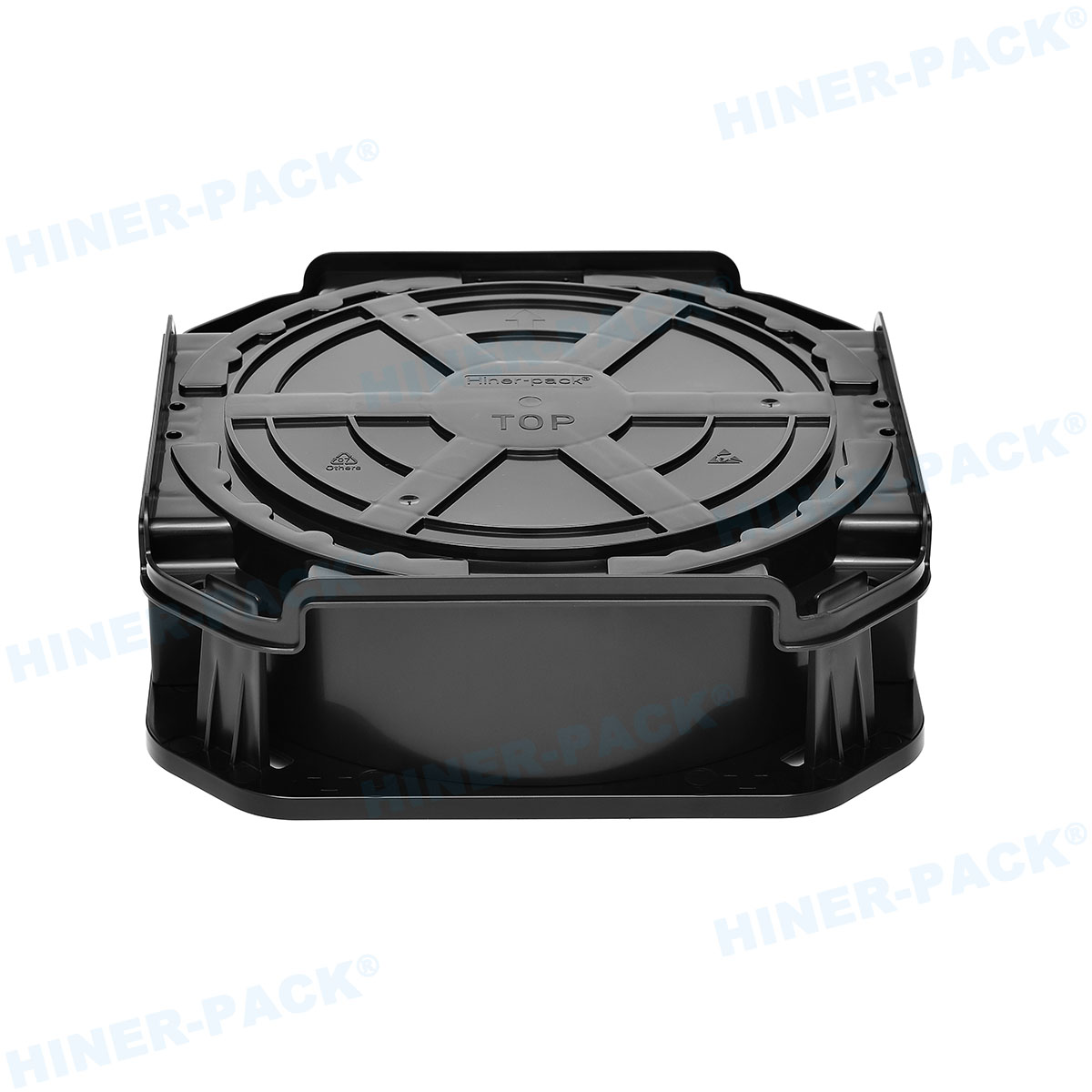
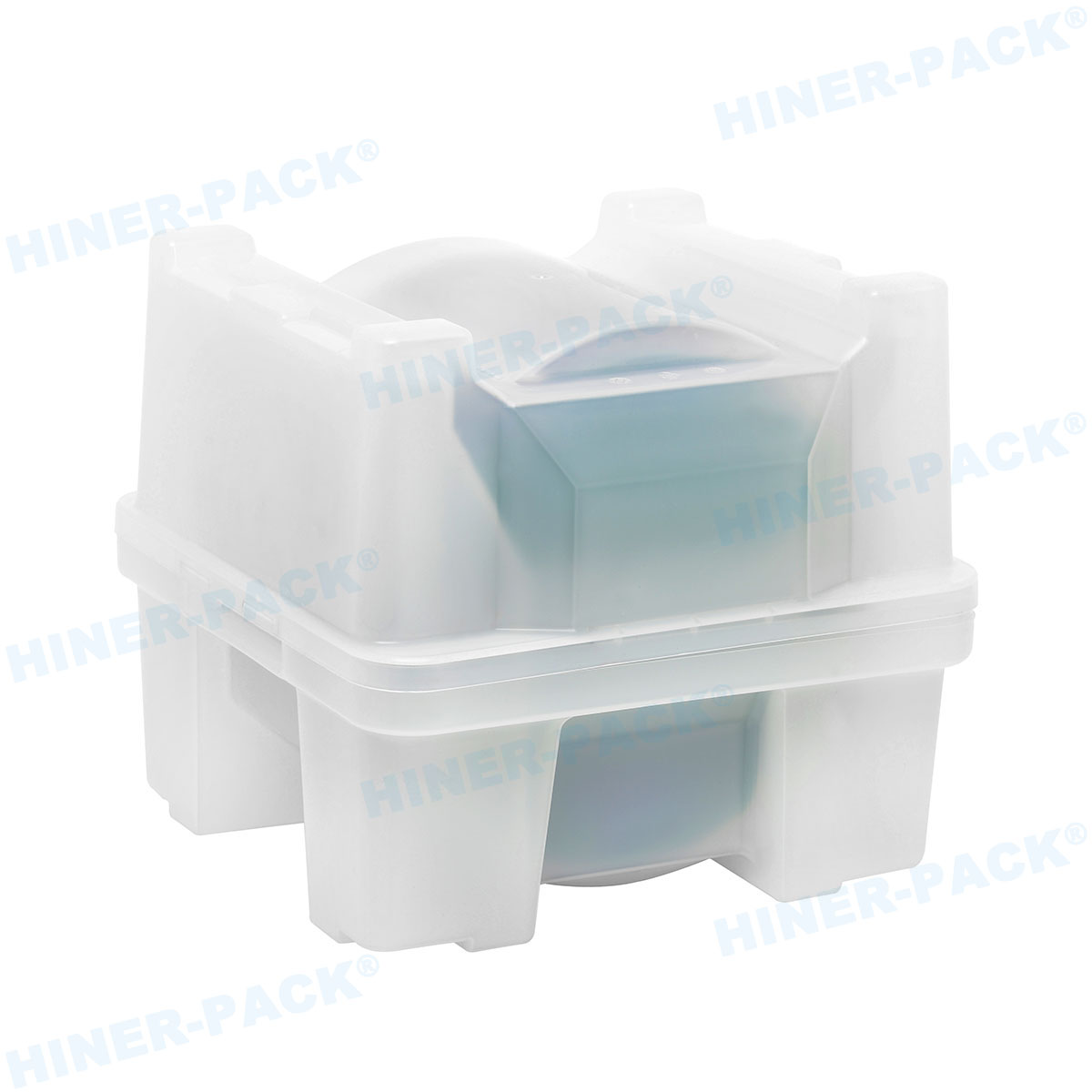
The transition to 5nm and 3nm process technologies has redefined the sensitivity of semiconductor manufacturing. At these nodes, even nanometer-scale relative motion between a wafer and its carrier can introduce defects—misalignment during lithography, friction-induced particles, or micro-cracks in fragile low‑k dielectrics. Anti-vibration wafer trays have therefore evolved from simple shipping containers to precision-engineered tools that directly impact yield protection and fab automation reliability. This article examines the technical specifications, validation methodologies, and application scenarios of modern anti-vibration wafer trays, with a focus on solutions provided by industry specialist Hiner-pack.
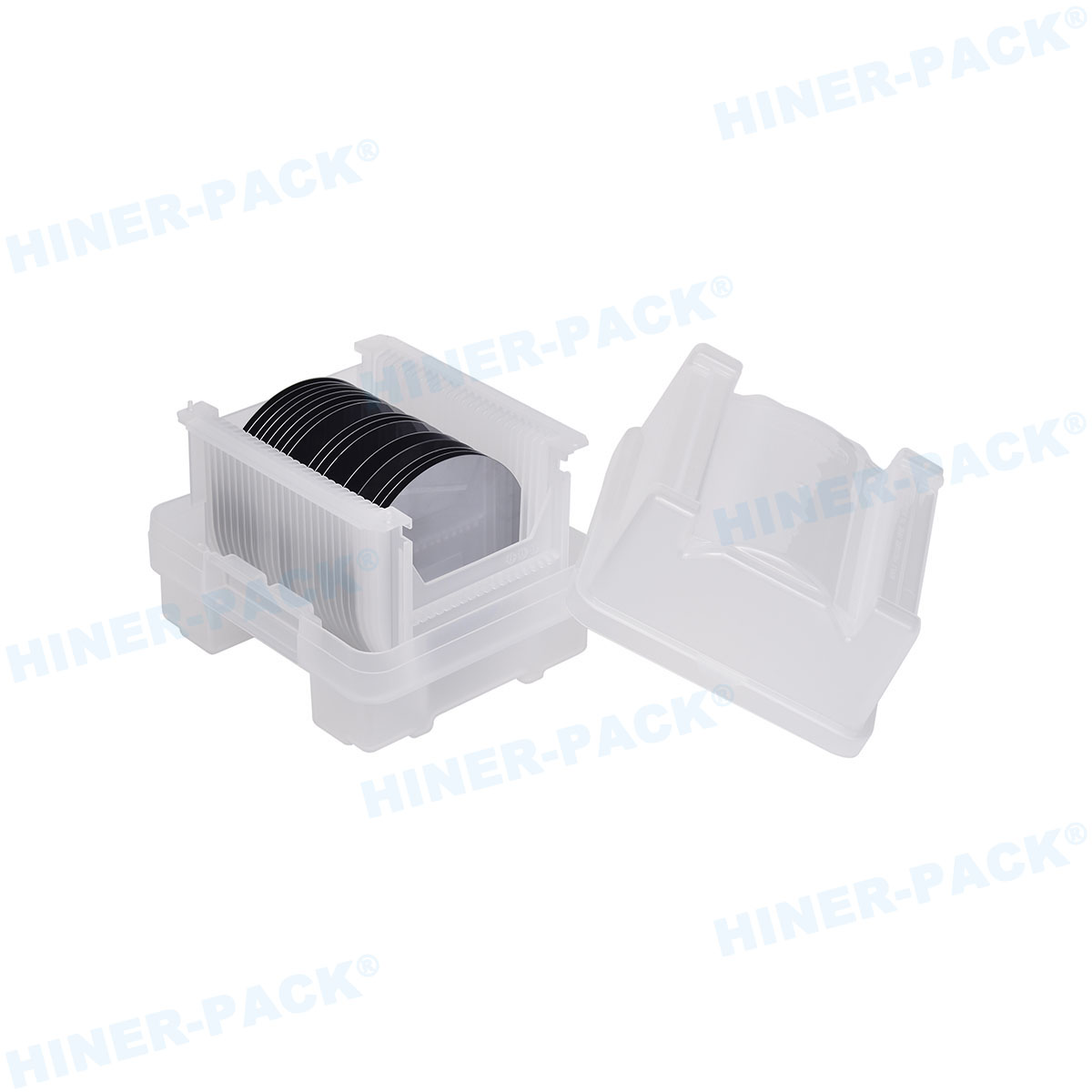
1. Defining Anti-vibration Wafer Trays: Beyond Basic Wafer Support
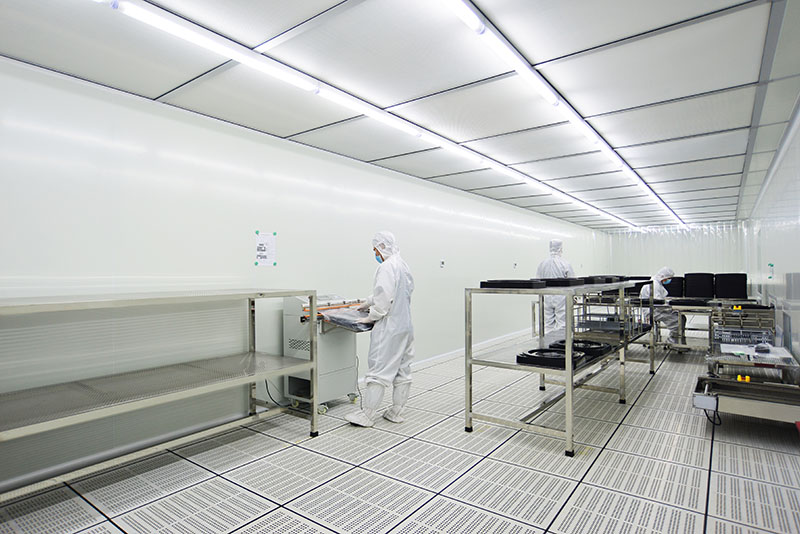
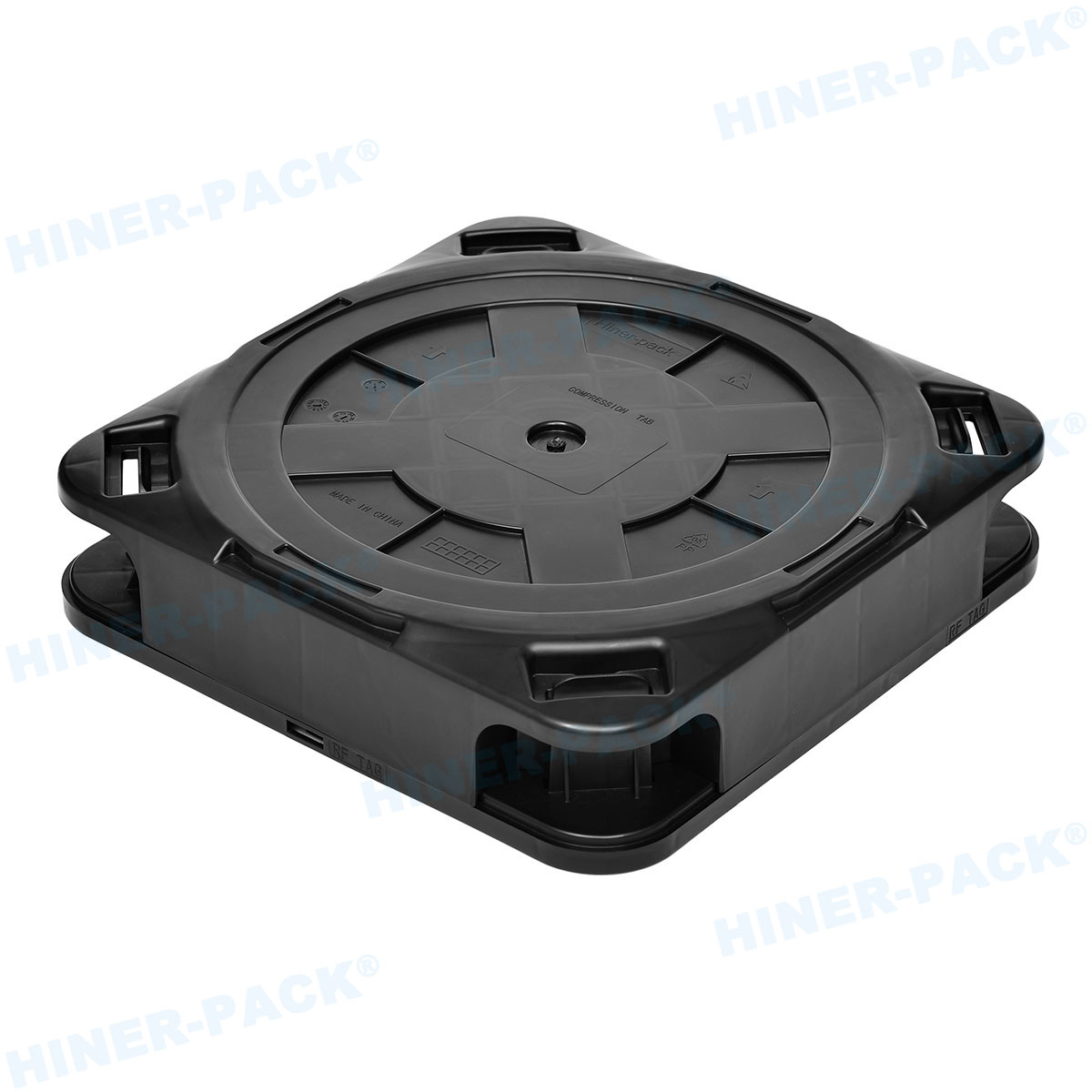
Standard wafer trays (often JEDEC‑style) provide physical separation and basic shock absorption. In contrast, anti-vibration wafer trays integrate viscoelastic damping layers, constrained-layer dampers, or geometric decouplers to attenuate energy across a broad frequency spectrum—typically from 5 Hz to 2000 Hz. The design must simultaneously satisfy strict cleanroom compatibility (ISO Class 3 or better), ESD safety (surface resistance 10⁵–10⁹ Ω/sq), and thermal stability during bake-out or auto‑claving procedures.
Key performance indicators include:
Transmissibility curve – ratio of output to input vibration, measured per ASTM D3580.
Resonant frequency shift – targeted > 150 Hz to avoid overlap with AMHS (Automated Material Handling System) motor vibrations.
Particle generation – < 10 particles (> 0.1 µm) per contact cycle, verified by WP‑2500 wet processing tests.
Hiner-pack employs finite element analysis (FEA) to optimise rib structures and material stacks, ensuring that each anti-vibration wafer tray maintains dimensional stability after 500+ autoclave cycles.
2. Quantifying the Impact of Vibrations on Sub‑10nm Wafer Yields
Vibration-induced defects are often misclassified as random excursion events. A 2023 study by an independent analytical lab (sponsored by a leading IDM) showed that reducing broadband vibration by 60 % in inter‑bay transport lowered killer defect density by approximately 18 % for 5nm test vehicles. The primary mechanisms are:
Pattern collapse – high‑aspect‑ratio features (EUV resist) are susceptible to low‑frequency sway.
Fretting wear – micro‑motion between wafer backside and tray contact points generates silicon debris that migrates to active areas.
Overlay errors – if vibration occurs during litho staging, alignment marks shift.
By integrating piezoelectric energy harvesters into test coupons, engineers at Hiner-pack have recorded in‑transit accelerations exceeding 2.5 grms in standard trays, while their anti-vibration wafer trays attenuated peaks to below 0.4 grms—a crucial margin for 3nm logic.
3. Material Innovations in Anti-vibration Wafer Tray Manufacturing
Modern anti-vibration trays leverage multi‑material systems. Common combinations include:
Carbon‑fibre reinforced polyetheretherketone (PEEK) – high stiffness, low outgassing, and inherent damping.
Conductive polypropylene (PP) co‑injected with thermoplastic elastomer (TPE) – optimised for cost‑sensitive high‑volume wafer shipping.
Stainless steel inserts coated with Parylene‑C – used in FOUP (Front Opening Unified Pod) adapters for extra vibration isolation.
Each material set must pass SEMI S2 and SEMI F47 (voltage sag immunity, indirectly relevant for handling equipment). Anti-vibration wafer trays from Hiner-pack are manufactured in ISO 14644‑1 Class 4 cleanrooms, with laser marking for full RFID traceability.
4. Application‑Specific Anti-vibration Trays: 200mm, 300mm, and Beyond
While 300mm dominates leading‑edge fabs, the 200mm market (power devices, MEMS) also demands vibration damping due to thicker, stress‑sensitive substrates. Hiner-pack offers a modular platform:
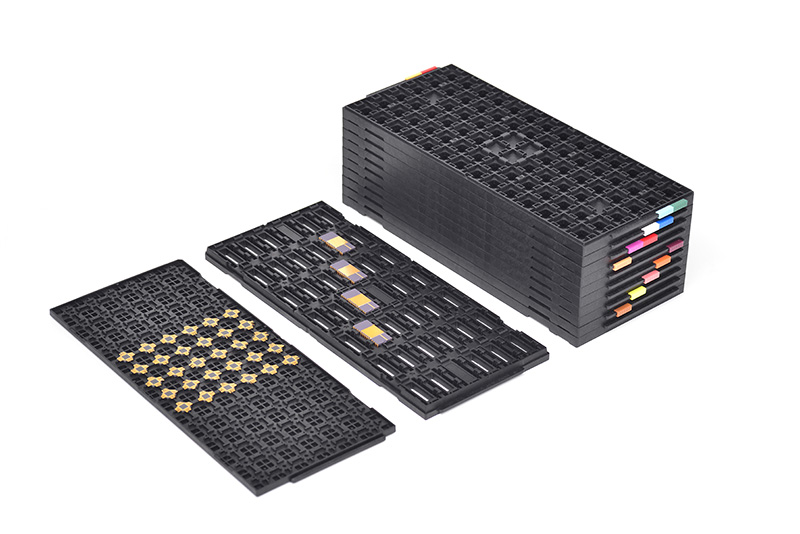
Hiner‑P系列 JEDEC trays – for 200mm/300mm, available with static‑dissipative silicone cushions that conform to wafer bow up to 5 mm.
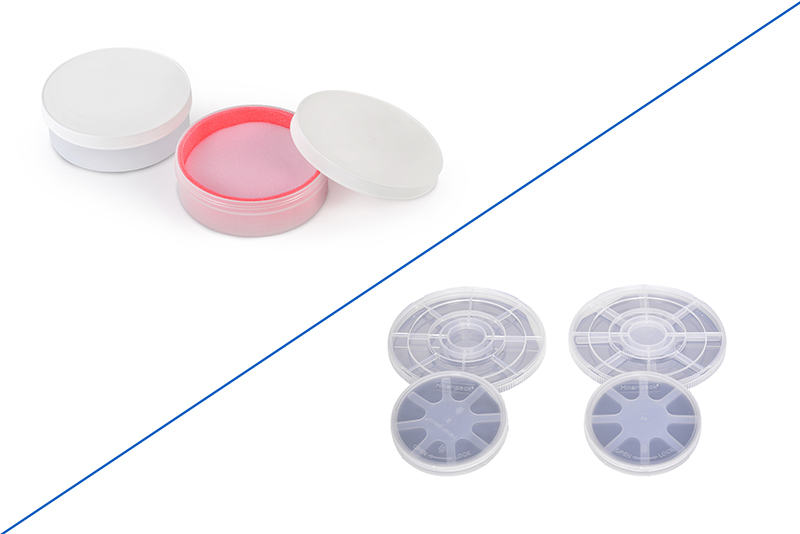
Multi‑wafer shippers – stackable anti‑vibration trays with interlocking ribs, reducing cargo‑induced vibration during air freight (tested to ISTA 3A).
SMIF‑pod compatible bases – retrofit kits that convert standard pods into low‑vibration environments for R&D pilot lines.
5. Engineering Validation: How to Specify an Anti-vibration Wafer Tray
Procurement engineers should request the following data before qualification:
Transfer function (FRF) measured via impact hammer or shaker table with a dummy wafer instrumented with tri‑axial accelerometers.
Outgassing profile (GC‑MS) after 24 h at 120 °C – total mass loss < 0.1 % per ASTM E595.
Cycle test report – 2000 automated pick‑and‑place cycles without loss of damping performance.
Cleanroom compatibility certificate – particle shedding measured with a liquid particle counter (LPC) after IPA wipe.
Anti-vibration wafer trays from Hiner-pack are supplied with a detailed certificate of conformance that includes resonant frequency data and material lot traceability.
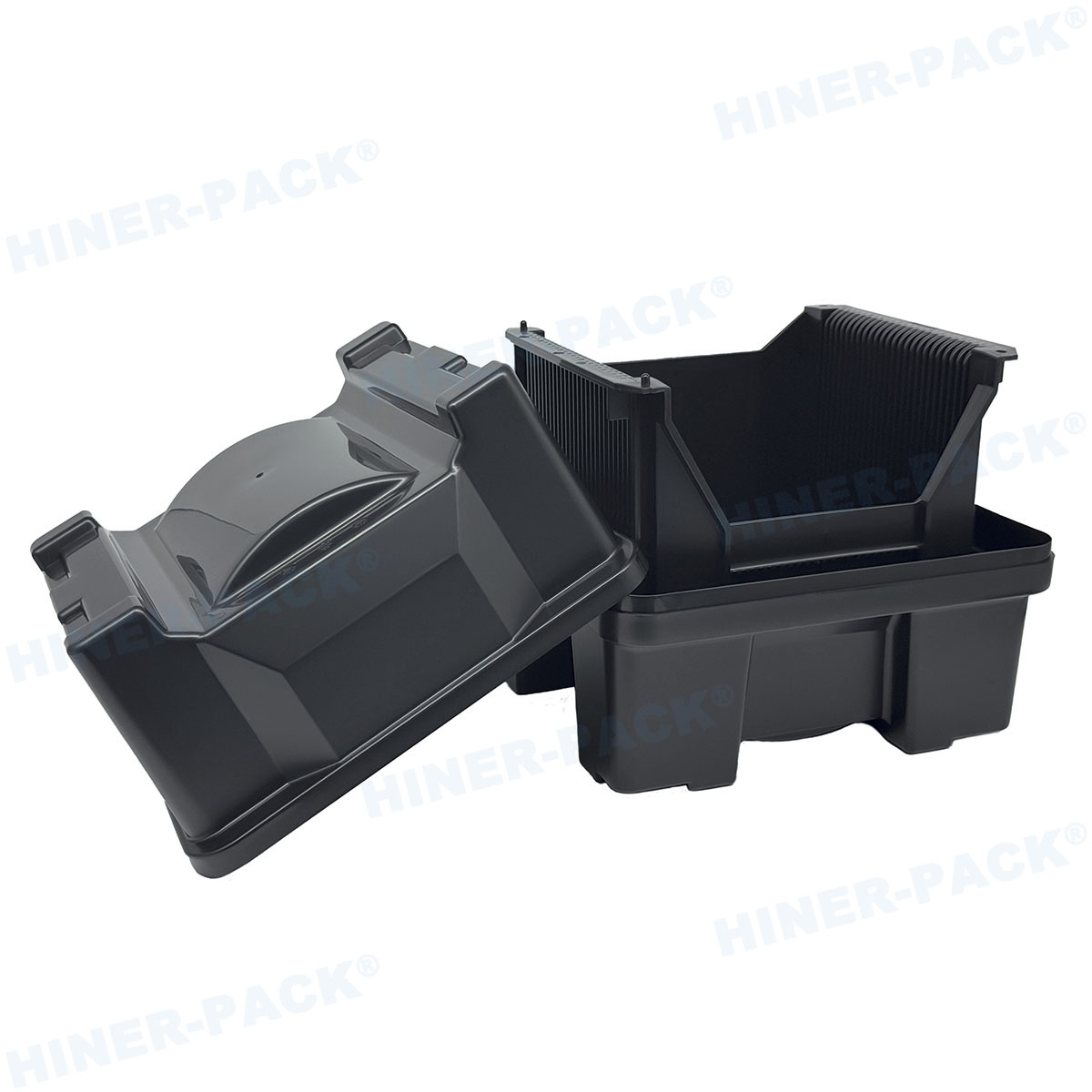
6. Case Study: Implementing Hiner‑pack Trays in High‑Volume Manufacturing
A leading logic manufacturer recently requalified their inter‑bay transport for 3nm risk production. After replacing standard JEDEC trays with Hiner‑pack’s anti‑vibration design, they observed:
40 % reduction in in‑transit shock events (recorded by RFID‑enabled shock loggers).
12 % decrease in non‑visible defects (detected by multiplexed dark‑field inspection).
Zero wafer breakage during a six‑month period (previously 2–3 breakages per quarter).
The trays were also subjected to humidity cycling (30 % to 80 % RH) without any change in damping performance, confirming the robustness of the co‑moulded TPE/PP structure.
7. Frequently Asked Questions About Anti‑vibration Wafer Trays
Q1: What specific vibration frequencies do anti‑vibration wafer trays
mitigate?
A1: Most engineered trays target the 10–500 Hz range,
which covers typical servo motor harmonics from AGVs, floor
vibrations in trucks, and air turbulence during flight.
High‑performance designs (like those from Hiner‑pack) also
incorporate high‑frequency damping (>1 kHz) to suppress
structure‑borne noise from fans and compressors.
Q2: Can anti‑vibration trays be used for both 200mm and 300mm
wafers?
A2: Yes, manufacturers offer trays with adjustable or
interchangeable inserts. The critical parameter is the contact
pressure – too low allows wafer movement, too high induces stress.
Hiner‑pack provides customised shore‑hardness
options (40A to 80A) to match specific wafer thicknesses and bow
tolerances.
Q3: How do I validate that a tray is genuinely anti‑vibration and not
just a standard JEDEC tray?
A3: Request the acceleration
spectral density (ASD) plot from a drop/spin test. A
true anti‑vibration tray will show a distinct notch or attenuation at the
resonant frequency of the tray‑wafer system. Also verify if the tray uses
viscoelastic inserts or constrained‑layer
damping—features absent in commodity trays.
Q4: Are anti‑vibration wafer trays compatible with automated handling
(EFEM, load ports)?
A4: Yes, they are designed to meet SEMI
E15.1 and E63 standards for physical dimensions and
robotics interface. The added damping layers are contained within the standard
envelope, so no modifications to EFEM (Equipment Front End
Module) or load ports are needed.
Q5: How does repeated cleaning (e.g., DI water, ozone) affect the
damping properties?
A5: High‑quality trays use materials resistant
to typical fab cleaning agents. For example,
Hiner‑pack validates their trays for 200 cycles of hot
DI rinse (65 °C) and UV‑ozone exposure with less than
5 % change in storage modulus. Always check the manufacturer’s
cleaning guidelines to avoid degradation of the damping layer.
Q6: Is there a standard that defines anti‑vibration performance for
wafer carriers?
A6: Currently, no single SEMI standard covers
vibration damping specifically, but many suppliers follow
MIL‑STD‑810H (Method 514.8 – Vibration) and adapt it to
semiconductor conditions. Hiner‑pack additionally tests to
JEDEC JESD22‑B103 (vibration, variable frequency) to guarantee
compatibility with industry‑standard qualification flows.
Integrating Anti‑vibration Trays into Fab‑wide Vibration Control
As process nodes shrink, the contribution of wafer handling to overall defectivity becomes non‑negligible. Anti-vibration wafer trays are not an accessory but a fundamental part of vibration hygiene in modern fabs. Through careful material selection, FEA‑optimised geometry, and rigorous validation, suppliers like Hiner-pack enable fabs to protect their lithography and metrology investments. When specifying your next wafer carrier, demand full transmissibility data and cleanroom validation—your yield will reflect the difference.