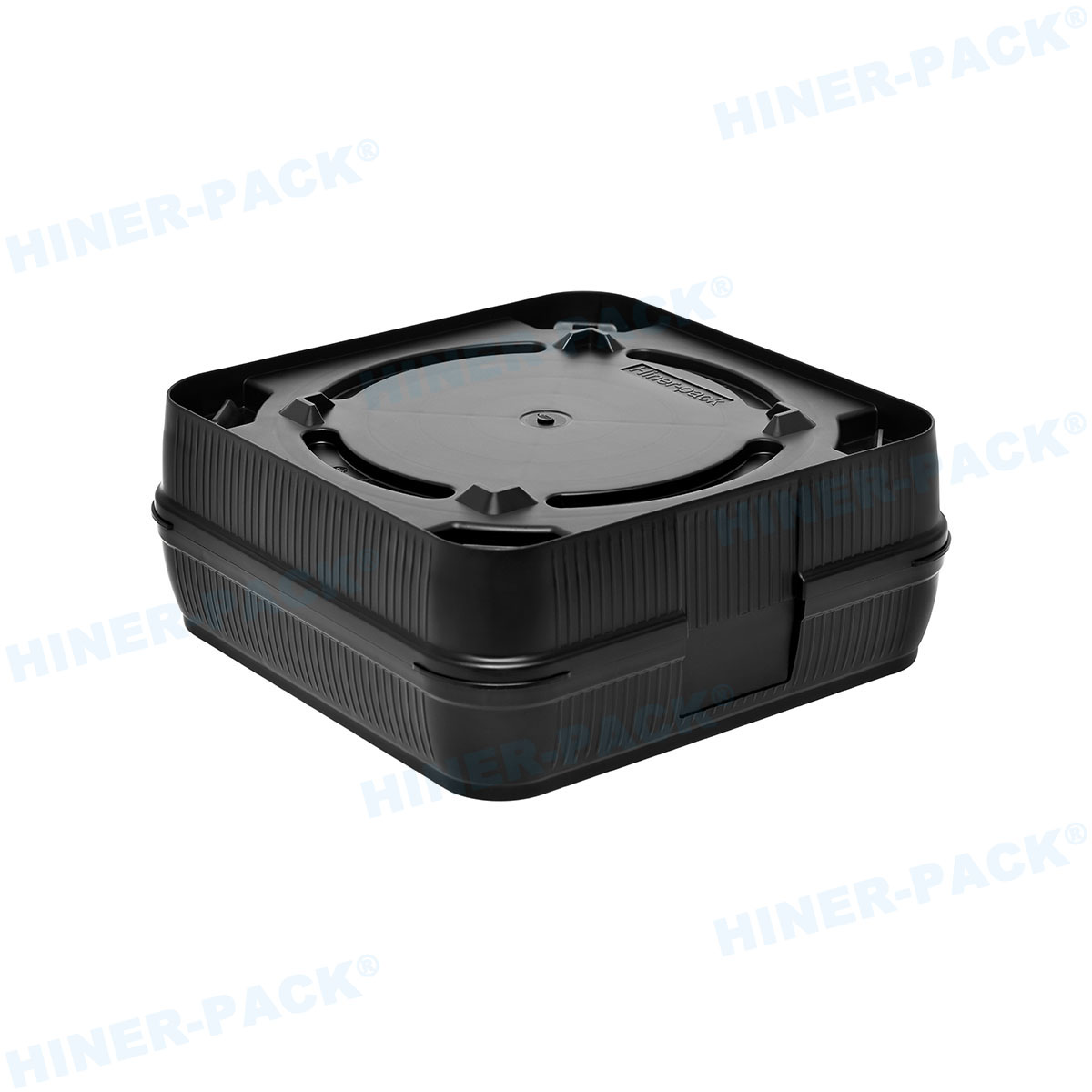
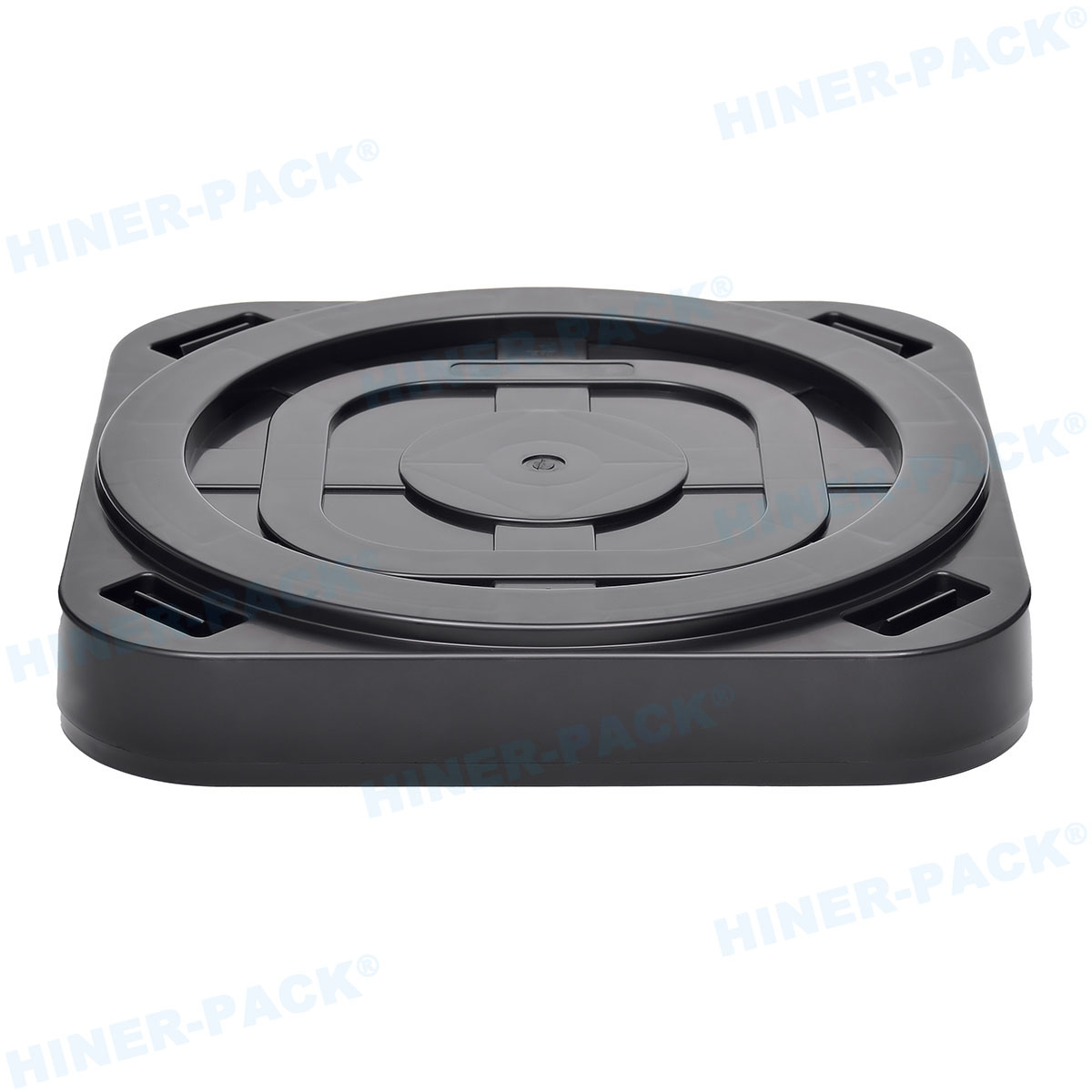
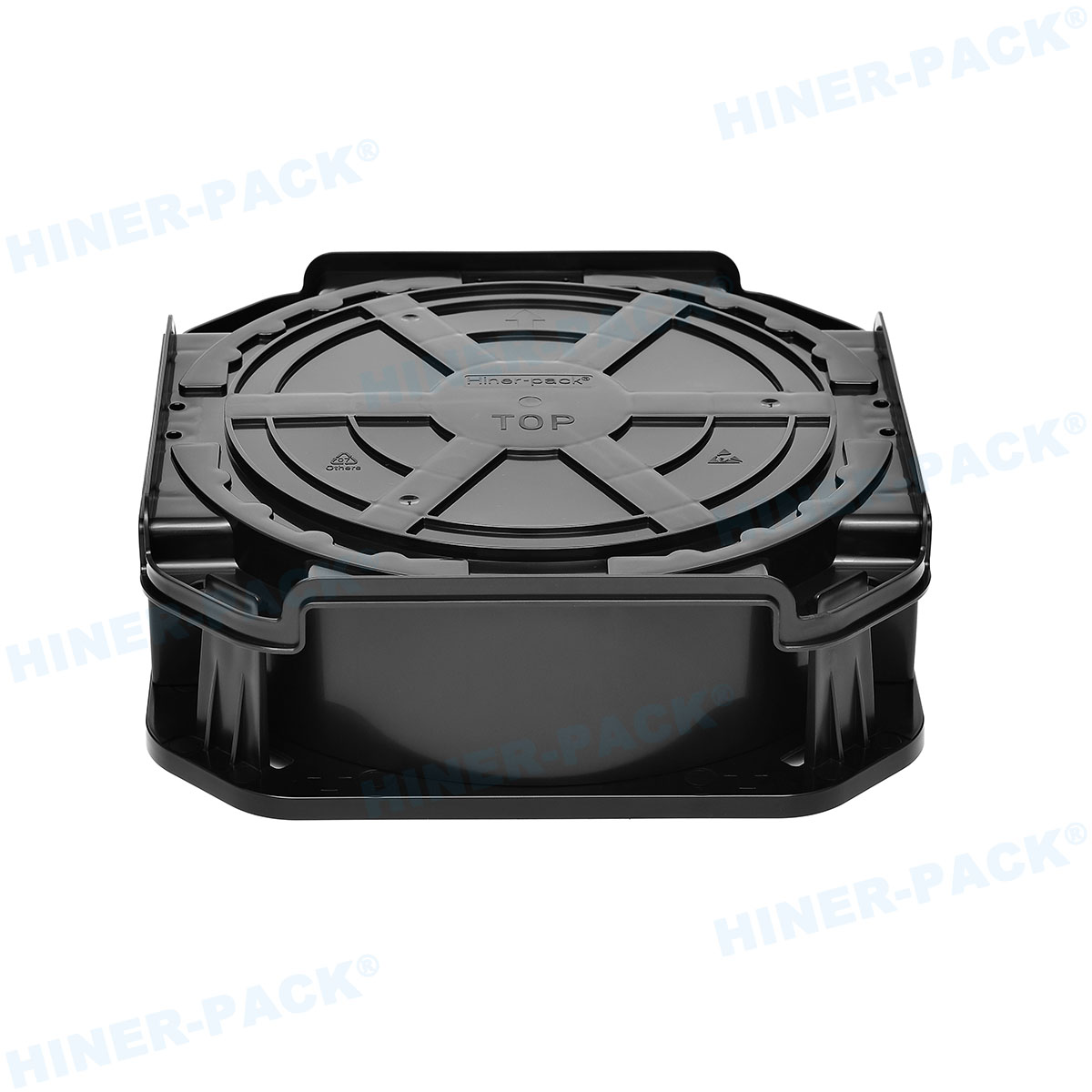
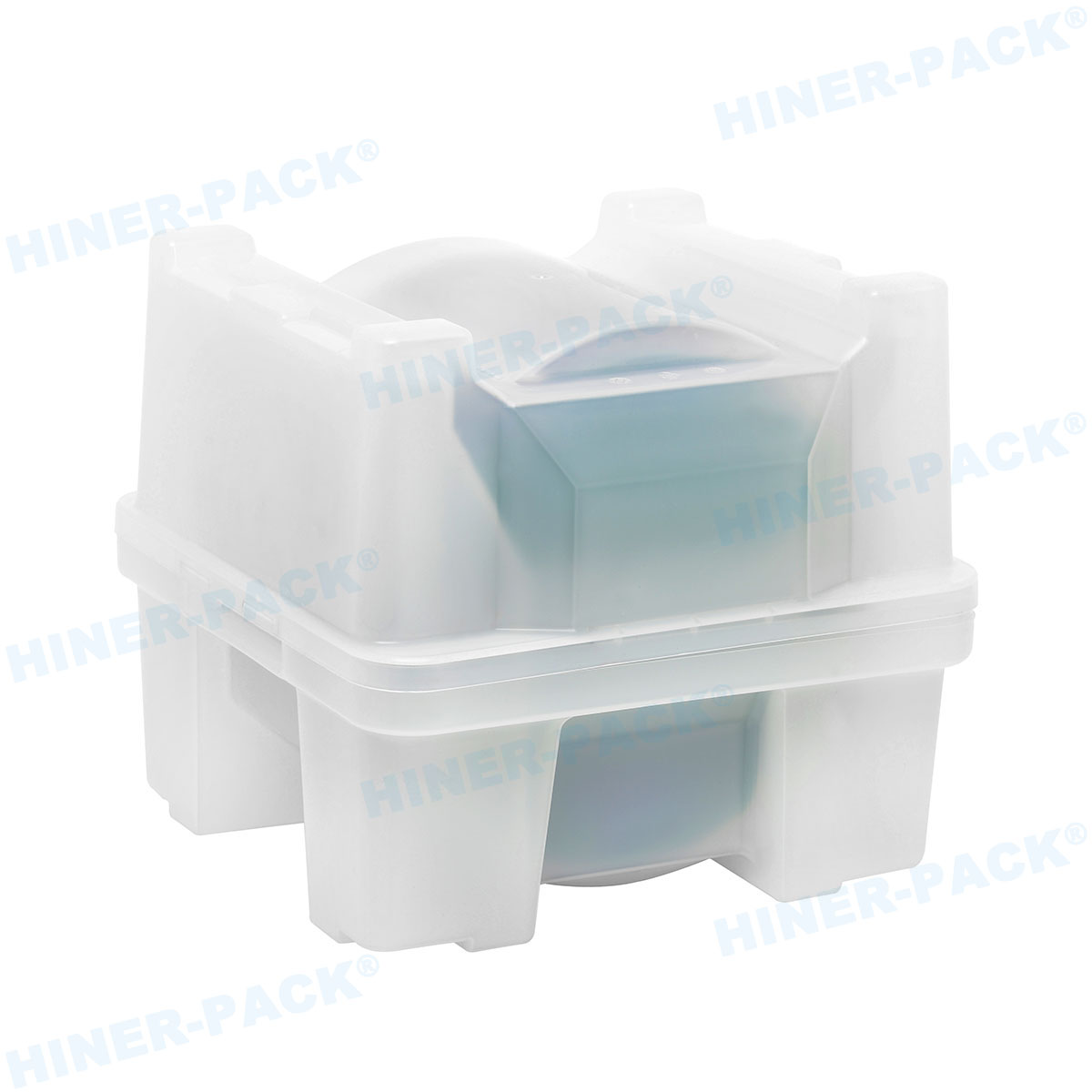
In semiconductor front-end and back-end logistics, the clamshell wafer shipper remains the primary packaging solution for die-to-die and fab-to-fab transport of 150mm, 200mm, and 300mm wafers. Unlike FOUPs (front opening unified pods) designed for automated minienvironments, clamshell shippers provide physical protection, electrostatic discharge (ESD) control, and low particle generation for manual handling and overnight or international shipments. However, not all clamshell wafer shipper designs achieve the same level of cleanliness or mechanical robustness. This guide examines critical engineering parameters — from polymer selection and mold surface finish to validation testing per SEMI E154 and IEST-RP-CC004.3 — and provides field data on reusability limits. Drawing on expertise from Hiner-pack, we analyze how to specify, inspect, and requalify these carriers for high-value wafer protection.
1. Core Components and Material Science of Clamshell Wafer Shippers
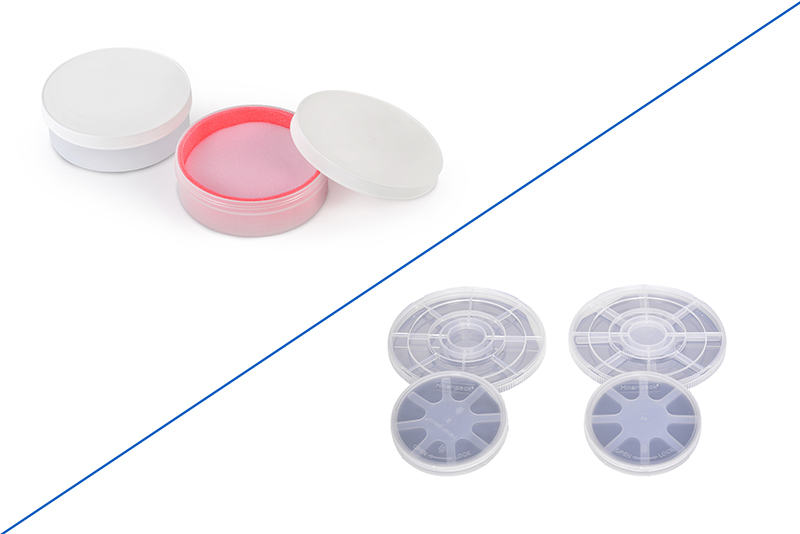
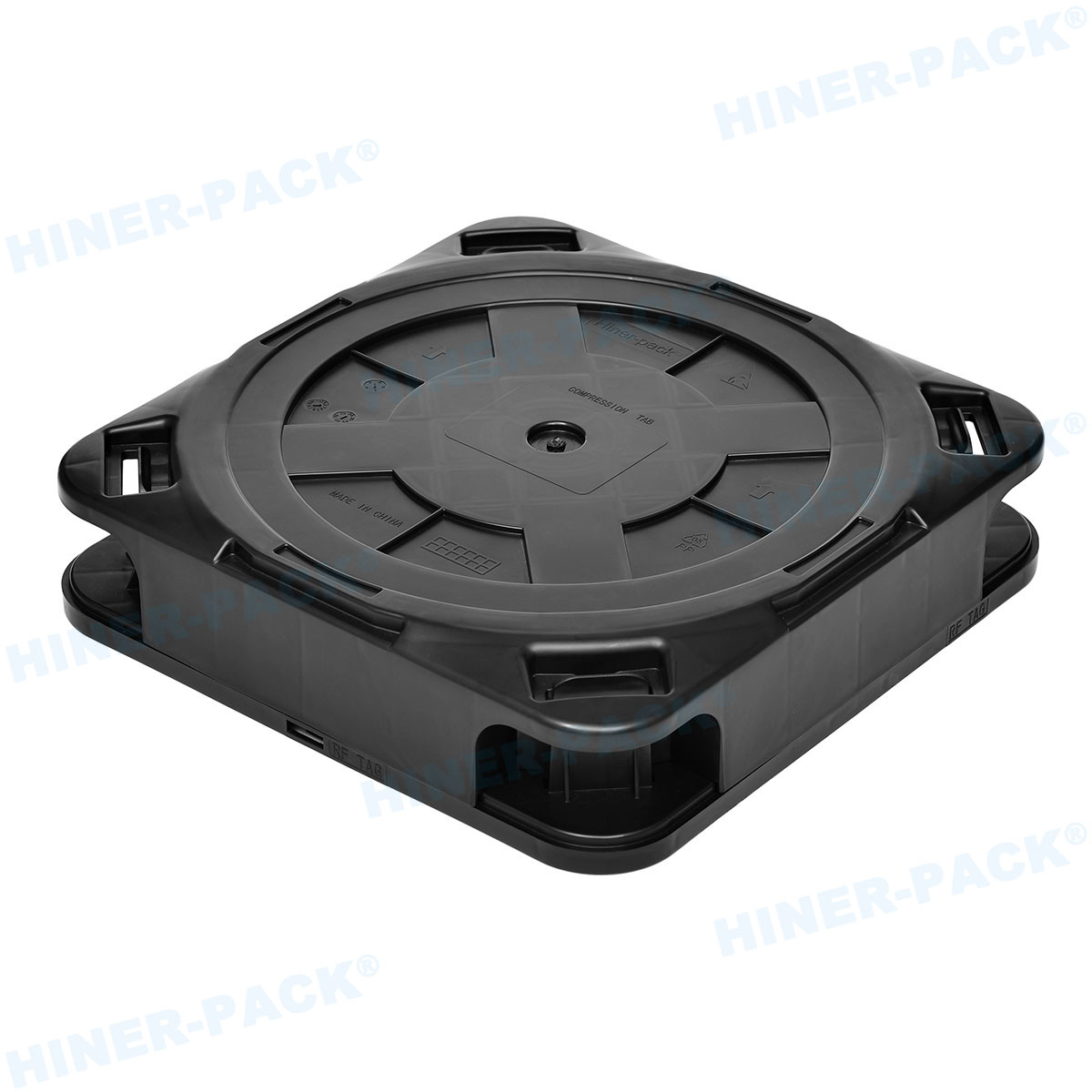
A standard clamshell wafer shipper consists of three primary parts: a bottom tray with wafer support ribs, a top cover with retaining features, and sometimes an inner cushion ring or wafer separator. Materials must balance mechanical strength, low outgassing, and ESD properties.
Polypropylene (PP) with anti-static additive – Most common for 200mm and 300mm shippers. Surface resistivity targeted between 10⁹ and 10¹¹ Ω/sq (dissipative range). Additives include carbon black, amines, or permanent antistatic agents. Carbon-filled PP provides stable conductivity but may shed conductive particles.
Polycarbonate (PC) – Higher mechanical impact resistance than PP, but more prone to moisture absorption and outgassing. Used for smaller wafer sizes (150mm) or when transparency is required for visual inspection without opening.
Polyethylene (PE) conductive foam – Often used as a wafer cushion in budget shippers. Not suitable for Class 1 cleanrooms because of particle shedding. Replaced by rigid PP ribs with elastomeric tips.
Key material specification: ionic contamination per SEMI C3.105 – maximum extractable ions (Na⁺, Cl⁻, F⁻) below 0.05 µg/cm² after 24-hour DI water immersion at 50°C. Reputable suppliers, including Hiner-pack, provide a certificate of analysis (CoA) for each lot of molded parts.
2. Design Features That Influence Particle Generation
The inner geometry of a clamshell wafer shipper directly affects the number of particles >0.3 µm deposited on wafer surfaces during transport. Critical design parameters:
Wafer contact points – Minimum three-point support per wafer, using rounded rib profiles (radius >0.5 mm) to reduce stress concentration and abrasion. Rib pitch must avoid contacting active die areas.
Surface finish of mold cavities – SPI (Society of the Plastics Industry) mold finish A-2 or better (Ra <0.05 µm) produces glossy, low-friction surfaces that shed fewer particles. Rougher finishes (SPI B-2) trap particles and release them during vibration.
Living hinges vs. separate lids – Integral hinges reduce component count but are prone to fatigue after 50–100 cycles. Separate lids with snap-fit closures are preferred for reusable shippers because they allow independent replacement of worn covers.
Ventilation holes – Small perforations (1–2 mm diameter) in the cover equalize pressure during air transport but must be covered with a 0.2 µm-rated membrane filter to prevent ingress of airborne particles. Many wafer shipping containers omit this filter, leading to contamination.
3. Industry Standards and Compliance for Clamshell Shippers
Qualification of a clamshell wafer shipper for use in semiconductor logistics requires passing several SEMI and ASTM tests. Buyers should request summary reports.
SEMI E154 – Specification for wafer shipping system mechanical and cleanliness requirements. Includes vibration testing (random profile 5–500 Hz, 1.0 g RMS for 60 minutes per axis), drop testing (760 mm onto concrete), and thermal cycling (-40°C to +70°C, 3 cycles).
IEST-RP-CC004.3 – Measuring particle deposition from cleanroom packaging. The shipper is agitated on a shaker table (ASTM D4169 Assurance Level II), and a witness wafer is analyzed for particle adders. Acceptance criteria: ≤10 particles ≥0.3 µm per wafer pass.
SEMI E126 – Test method for moisture and outgassing from plastic wafer containers. Outgassing of organics measured by GC-MS after 24 hours at 50°C. Acceptable total outgassing <0.1 µg/cm².
ANSI/ESD S20.20 – ESD control. The shipper’s surface resistivity must be measured with a concentric ring probe at 100V; dissipative range (10⁵ to 10¹¹ Ω/sq) required. Some fabs mandate point-to-point resistance <1 × 10¹⁰ Ω.
Hiner-pack provides a compliance kit with each batch of shippers, including test results for particle generation, outgassing, and ESD resistivity.
4. Reuse and Requalification Protocols: How Many Cycles Are Safe?
Unlike single-use shipping trays, many fabs reuse clamshell wafer shipper components 10–50 times. However, repeated cleaning and transport degrade performance. Field data from 12 fabs show:
After 20 cleaning cycles (using automated wafer carrier cleaners with DI water and surfactant), particle adder counts increase by 2–3× compared to virgin shippers, mainly from microcracks on rib edges.
Living hinges fail after approximately 150 open-close cycles (loss of closure force, leading to lid lift during transport).
Surface resistivity can drift downward by one order of magnitude after 30 cleaning cycles if antistatic additive leaches out.
Recommended requalification protocol:
Visual inspection every 5 cycles – Check for cracks, scratches, discoloration, or deformed ribs. Use a 10× loupe under 1000 lux illumination.
Particle test every 10 cycles – Perform a witness wafer test per IEST-RP-CC004.3. If particles >0.3 µm exceed 20 per wafer, retire the shipper.
Resistivity check every 20 cycles – Measure at three points on the interior floor. Resistivity outside 10⁵–10¹¹ Ω/sq triggers rejection.
Hiner-pack offers a barcode tracking system that logs the number of cycles for each shipper and alerts when requalification thresholds are reached.
5. Application Scenarios: From Wafer Sorting to Die Attach
Different process steps impose unique demands on the clamshell wafer shipper. Below are three common use cases.
5.1 Fab-to-Fab Transport of Bare Silicon Wafers (200mm, 300mm)
Requirement: Particle control below 0.1 µm, ESD protection, and vacuum-sealable bagging for moisture barrier.
Recommended shipper: Carbon-filled PP clamshell with integral EMI shielding (optional), plus a desiccant pack inside a foil moisture barrier bag. Shipped with nitrogen purge.
Key parameter: Shipped wafers must show no more than 0.5 added killer defects (≥0.16 µm) per wafer after cross-country air freight.
5.2 Singulated Die Transport (Waffle Pack Replacement)
Challenge: Very small die (1 mm × 1 mm) require tight tolerances on wafer support ribs to prevent die flipping.
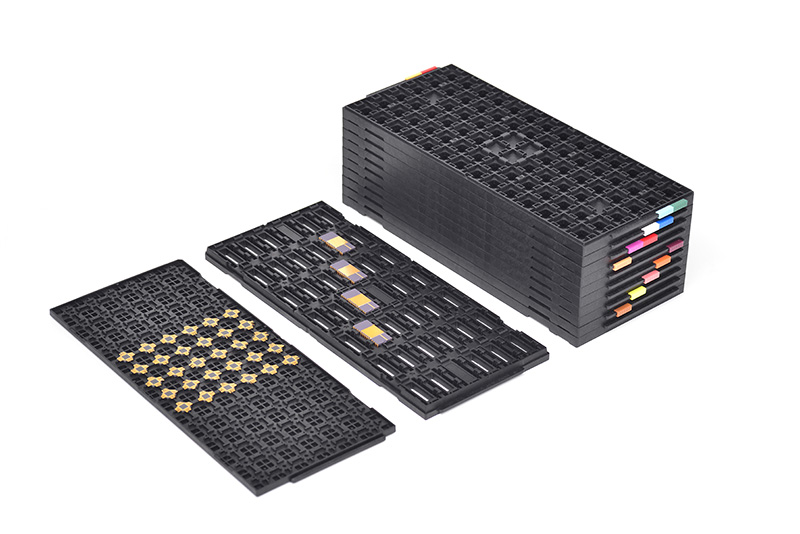
Solution: Custom-machined clamshell wafer shipper with a recessed pocket matrix (JEDEC trays) and a gasket seal to prevent die migration. Not suitable for high-volume; instead, use JEDEC trays.
Note: Most fabs use standard wafer shippers only for full wafers; singulated die require specialized carriers.
5.3 Internal WIP Transport Between Cleanroom Zones
Requirement: Lightweight, manually handled, frequent opening (up to 10 times per day).
Recommended: Polypropylene clamshell with separate lid and latch mechanism rated for >1000 cycles. No foam cushions to avoid particle shedding.
Throughput: Up to 50 shuttles per day between diffusion and etch bays.
6. Common Failure Modes and Mitigation Strategies
Even high-quality clamshell wafer shipper designs encounter specific degradation mechanisms. Field data from 80,000 shipper returns reveal the following.
Rib tip wear – After repeated cleaning, the rounded rib tips become flat or sharp, scratching wafer backsides. Mitigation: specify rib tips molded from a softer polymer (e.g., TPE overmolding) or apply a replaceable elastomeric pad.
Warpage due to thermal cycling – Shippers stored near ovens or subjected to -40°C to +70°C cycles can develop a bow >1 mm, causing wafer edge contact. Mitigation: use glass-filled PP (20–30% glass fiber) to improve dimensional stability. However, glass fibers can abrade wafers; a balance is required.
Static charge accumulation – Antistatic additives lose effectiveness after 30–40 washes. Measure surface resistivity every 10 cycles. If resistivity exceeds 10¹¹ Ω/sq, apply a topical antistatic spray (approved for cleanroom use) or retire the shipper.
Label adhesive residue – Barcode labels peel off and leave adhesive on the shipper, which attracts particles. Use chemical-resistant polyester labels with permanent acrylic adhesive, and avoid placing labels inside the wafer cavity.
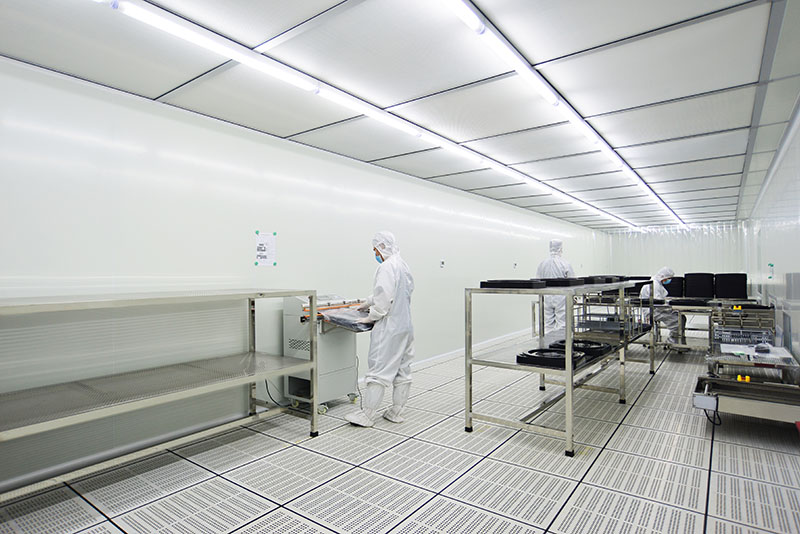
7. Cleaning and Drying Validation for Reusable Shippers
Automated cleaning of clamshell wafer shipper components is critical for reuse. A typical wafer carrier cleaner uses:
Stage 1: DI water rinse at 50°C, 10 bar spray pressure.
Stage 2: Surfactant (non-ionic) wash, pH 7–8, 2 minutes immersion with ultrasonic agitation (40 kHz).
Stage 3: Two DI water rinses (ambient temperature).
Stage 4: Hot air drying (80°C, HEPA-filtered) for 10 minutes or until residual moisture <0.1% by weight.
Validation method: After cleaning, perform a particle extraction test (immerse in filtered DI water, sonicate, then count particles >0.5 µm using a liquid particle counter). Acceptance: <100 particles per shipper. Also measure surface moisture with a hygrometer – must be below 30% RH to prevent microbial growth.
Hiner-pack provides a cleaning validation kit including swabs and particle extraction bags.
8. Emerging Innovations: RFID Tracking and Dissipative Nanocoatings
Next-generation clamshell wafer shipper designs incorporate two major improvements:
Embedded passive RFID tags – Molded into the lid, these tags store shipper ID, cycle count, and last cleaning date. Readers at cleanroom entry automatically log movements. Compliant with SEMI E176 (RFID for wafer carriers).
Permanent dissipative coatings – Cross-linked polymer coatings (e.g., PEDOT:PSS) applied to the interior surfaces provide stable surface resistivity (10⁶–10⁸ Ω/sq) for >500 cleaning cycles, outperforming additive-based PP.
Frequently Asked Questions (FAQ)
Q1: What is the difference between a clamshell wafer shipper and a FOUP?
A1: A FOUP (front opening unified pod) is designed for automated handling in minienvironments, with a mechanical interface for load ports and SMIF (standard mechanical interface). A clamshell wafer shipper is manually opened, has no door mechanism, and is used for lower volume transport between fabs or for backup storage. FOUPs cost 10–20× more and require cleanroom compatibility for 300mm wafer automation.
Q2: Can I use a clamshell shipper for 300mm wafers with <10nm node sensitivity?
A2: Yes, but only if the shipper meets <5 particle adders (≥0.12 µm) per wafer pass. Standard PP shippers typically add 15–30 particles. Special ultra-clean versions with polished molds and low-outgassing PP (e.g., <0.01 µg/cm² total organics) are available. Request SEMI E154 Class 1 certification. Hiner-pack offers a UHMW-PE lined shipper for <10nm nodes.
Q3: How should I store clamshell shippers between uses to prevent contamination?
A3: Store them inverted (open side down) on cleanroom-grade polyethylene racks with HEPA-filtered air circulation. Avoid stacking more than 10 high to prevent warpage. Keep the storage area at 20–24°C, 40–50% RH. Never store shippers directly on the floor or near chemical storage cabinets.
Q4: What is the typical shelf life of a new, unused clamshell wafer shipper?
A4: Polypropylene shippers have a shelf life of 3 years if stored in original sealed bag away from UV light and ozone. After 3 years, the antistatic additive may bloom (migrate to the surface), causing increased particle shedding. A particle test is recommended before using aged stock. Wafer shipper accessories such as desiccant packs should be replaced every 12 months.
Q5: Can autoclave sterilization be used for clamshell shippers?
A5: No. Autoclave temperatures (121°C, 15 psi) exceed the heat deflection temperature of PP (around 100–110°C). The shipper will warp. Use gamma irradiation (25–50 kGy) or ethylene oxide (ETO) sterilization if required for biotech wafer processing. Gamma irradiation may yellow the polymer but does not affect mechanical properties or particle performance.
Q6: How do I measure the closure force of a used clamshell shipper?
A6: Use a force gauge with a hooked attachment. Close the shipper and measure the force required to separate the lid from the base at the latch point. A new shipper typically requires 15–25 N. Below 8 N, the shipper may open during transport. Replace lid or base if closure force is insufficient. Hiner-pack sells a closure force test fixture.
Q7: Are there regulations for shipping wafers in clamshell shippers by air (IATA)?
A7: Wafers are not classified as dangerous goods, but the shipper must be packaged in an outer box with cushioning (e.g., 50 mm closed-cell foam) and a moisture barrier bag. If the shipper contains a desiccant pack, ensure it complies with IATA Section 2.6 (non-hazardous). Always attach a "Caution: Electrostatic Sensitive Devices" label to the outer package.
Ready to Validate or Upgrade Your Wafer Shipping Workflow? Request a Technical Audit
Selecting the wrong clamshell wafer shipper or failing to requalify reusable units leads to yield loss from micro-scratches and particles. Hiner-pack provides a three-step engineering assessment for semiconductor fabs and OSATs:
Particle baseline test – We analyze 10 of your existing shippers using a witness wafer and SEM review.
Cycle simulation – We subject candidate shippers to accelerated life testing (500 open-close cycles, 50 thermal cycles, and 20 automated cleanings) with performance measurement at intervals.
Custom specification – Based on your wafer size, cleanliness class, and reuse target, we supply a lot-traceable shipper with full documentation.
Send the following details to receive a free particle analysis quote: wafer diameter (mm), process node (µm or nm), average monthly shipments, and current defect rate attributed to packaging. All inquiries receive a preliminary gap analysis within 48 hours.
Contact Hiner-pack’s semiconductor packaging engineers now: https://www.waferboxes.com/contact – mention “Clamshell shipper audit” in the subject line for priority support.