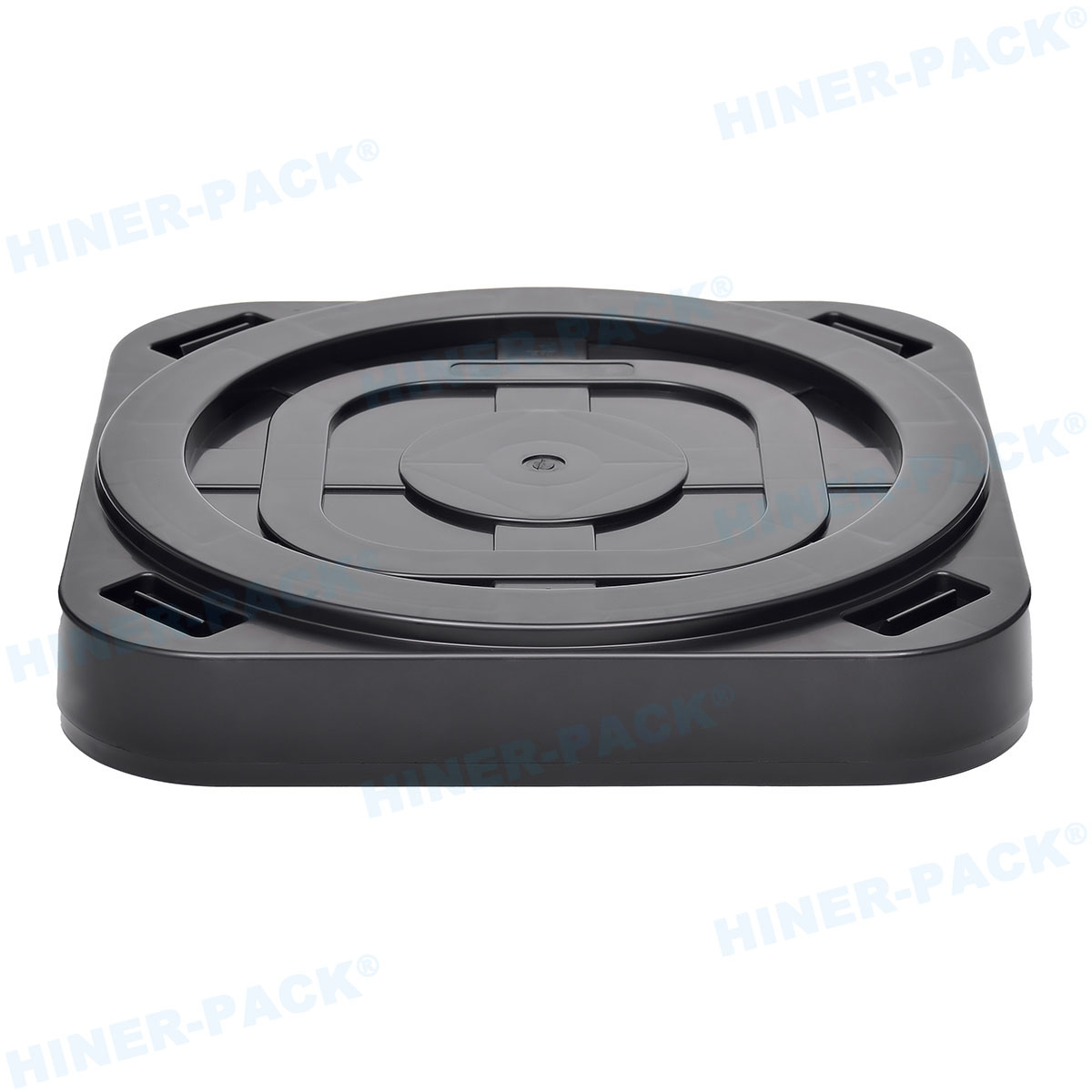
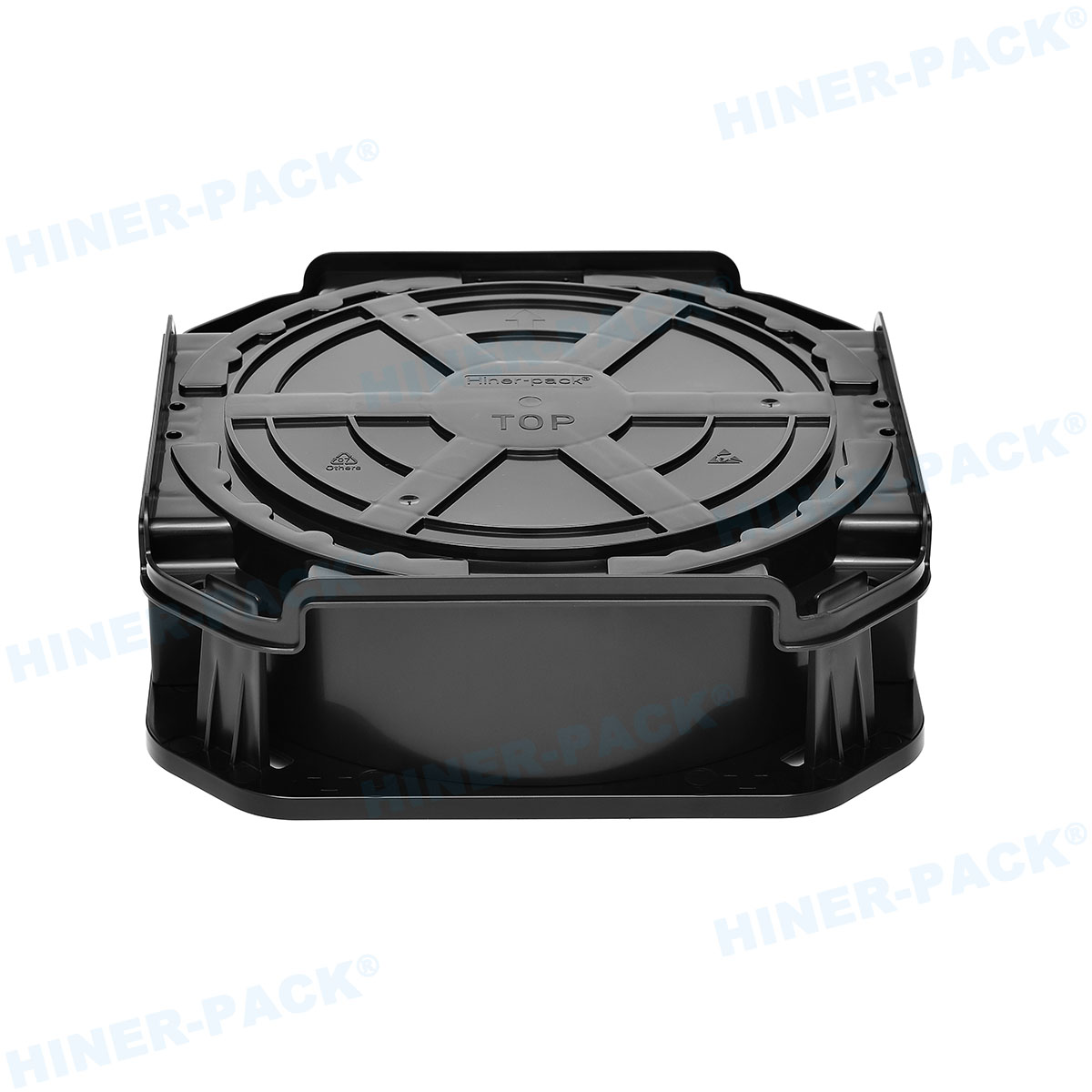
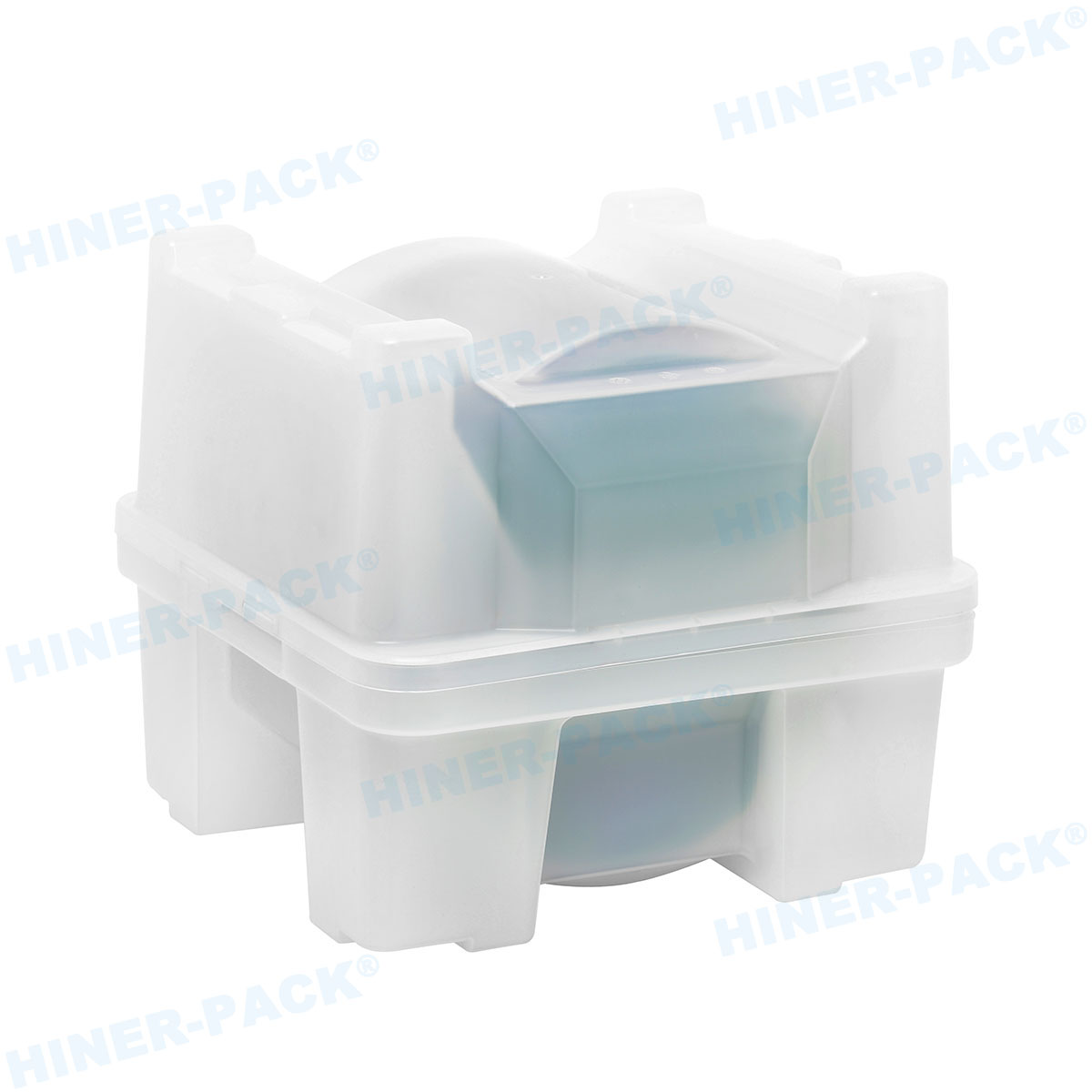
For semiconductor applications requiring transport of individual wafers between process tools, metrology stations, or limited-volume prototype shipments, the coin-style wafer shipper offers a compact, low-profile alternative to standard clamshell carriers. Also referred to as single-wafer shippers or puck-style containers, these packages minimize footprint while providing rigid protection, electrostatic discharge (ESD) control, and cleanroom compatibility. However, their reduced height and smaller latch mechanisms introduce unique engineering challenges: maintaining sealing integrity under vibration, preventing wafer edge contact, and achieving repeatable particle performance below 0.1 µm. This guide examines critical design parameters — from base material selection (filled polycarbonate vs. static-dissipative PEEK) to validation testing per SEMI E154 and IEST-RP-CC004.3 — and provides field data on stackability and reuse cycles. Drawing on expertise from Hiner-pack, we analyze how to specify, inspect, and qualify coin-style wafer shipper solutions for 200mm and 300mm wafer handling.
1. Defining the Coin-Style Wafer Shipper: Form Factor and Key Dimensions
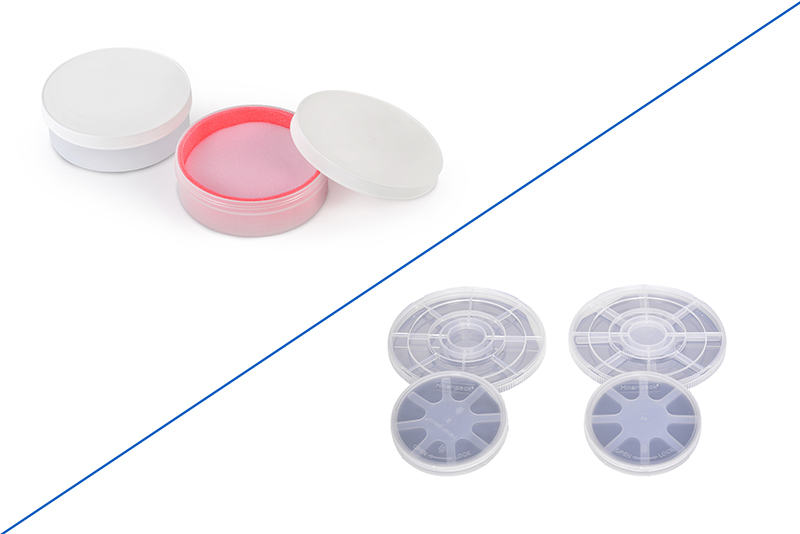
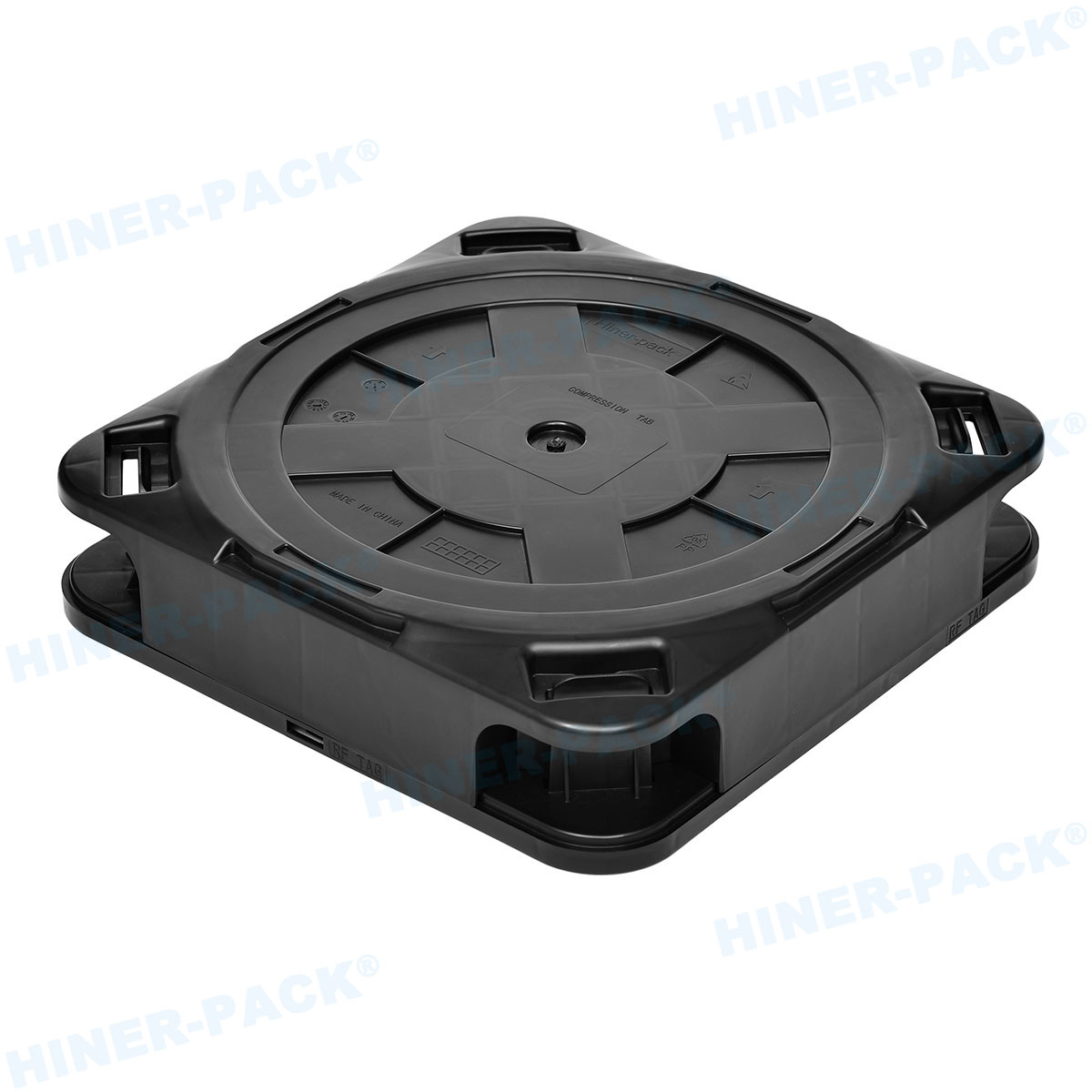
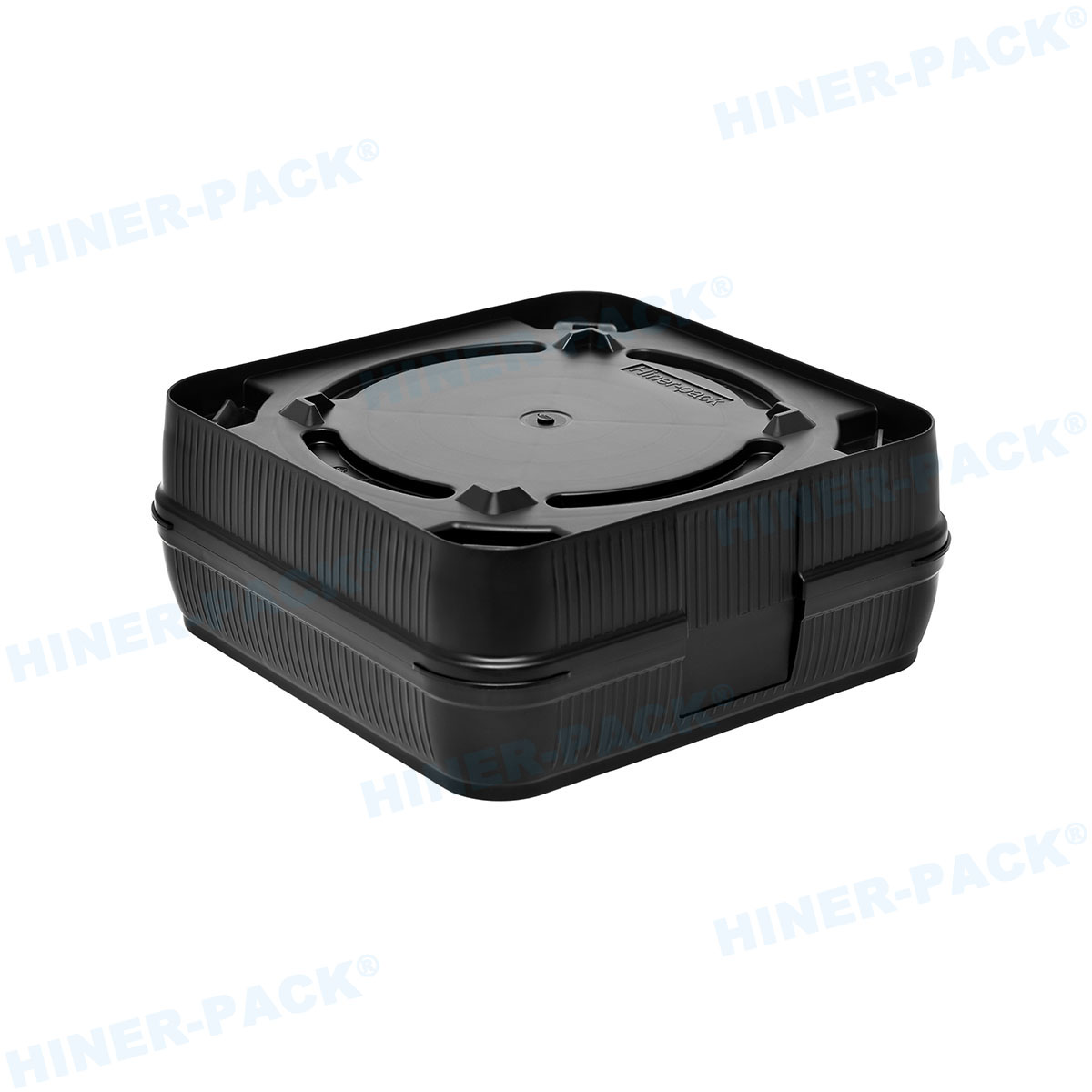
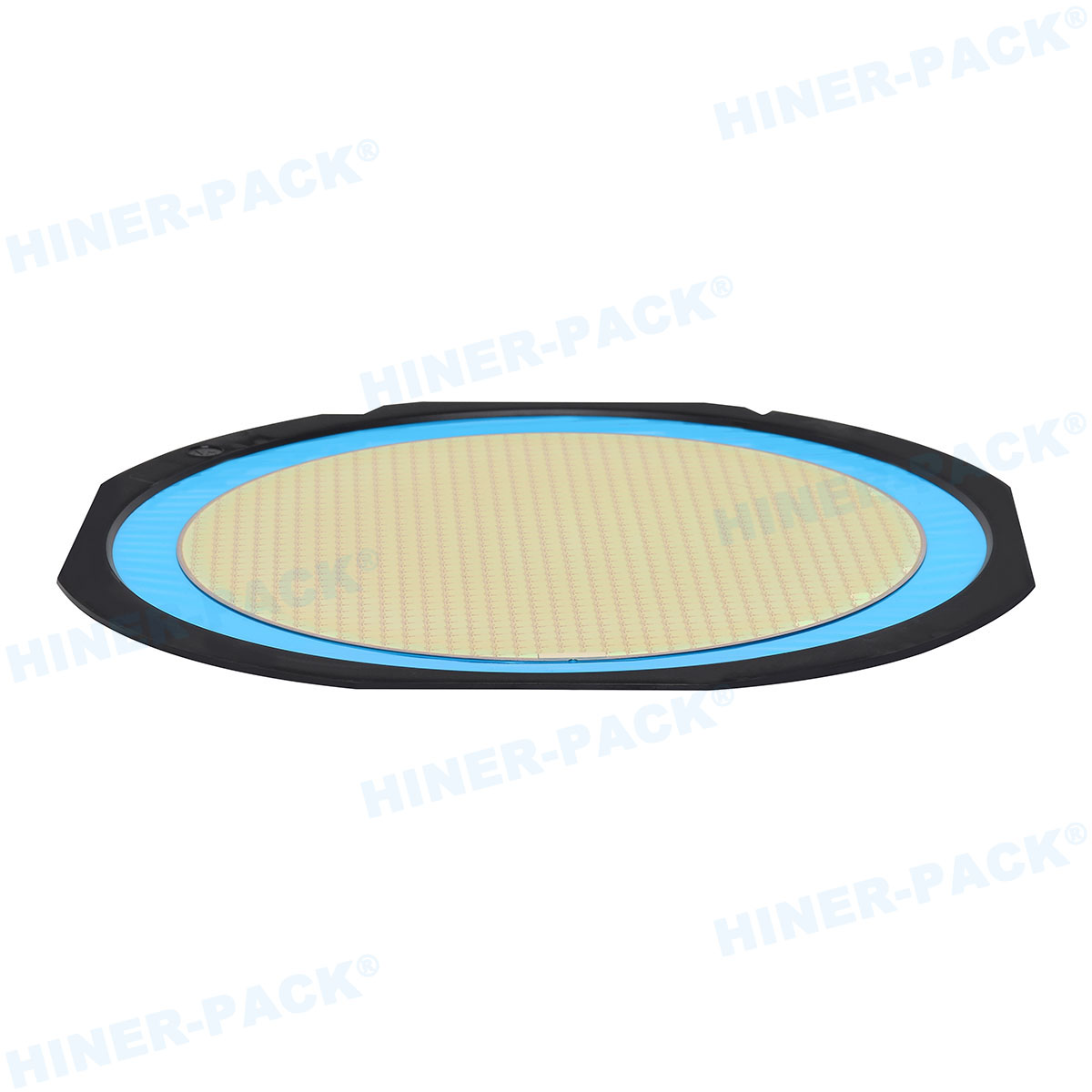
A coin-style wafer shipper is characterized by a diameter only slightly larger than the wafer itself (typically wafer diameter + 6–10 mm) and a height of 8–15 mm, resembling a thick coin. Unlike clamshell designs, these shippers lack a hinged lid; instead, they use a separate cover that snaps or screws onto the base. Typical specifications:
Outer diameter: 206–212 mm for 200mm wafers; 306–312 mm for 300mm wafers.
Height: 10–12 mm (single wafer) or 15–18 mm (with cushion layer).
Wafer support: 3 or 4 radial ribs with rounded edges; sometimes a continuous ring with recessed pocket.
Closure mechanism: Threaded ring, bayonet lock, or snap-fit latches (2–4 points).
The compact size makes single-wafer shippers ideal for automated wafer sorters, die attach equipment, and manual transport inside FOUP load ports. However, the reduced surface area limits the ability to incorporate desiccant or humidity indicators, so external moisture barrier bags are mandatory for air freight.
2. Material Selection and ESD Properties for Coin-Style Shippers
Unlike larger shippers that can rely on carbon-filled polypropylene, coin-style wafer shipper walls are thinner (1.5–2.5 mm) and require higher stiffness to prevent flexing. Common material choices:
Glass-filled polycarbonate (PC) with antistatic additive – 10–20% glass fiber increases flexural modulus to 4,000–5,000 MPa, reducing deflection under clamping force. Surface resistivity: 10⁹–10¹¹ Ω/sq. However, glass fibers can abrade wafer edges if the mold finish is poor.
Static-dissipative polyetheretherketone (PEEK) – Superior chemical resistance and thermal stability (up to 260°C). Used for high-temperature processes (e.g., wafer handling after CVD). Very expensive (10–20× PC).
ABS with carbon nanotube (CNT) filler – Provides uniform resistivity (10⁶–10⁸ Ω/sq) without carbon black shedding. Limited to 100°C operating temperature.
Critical test: perform a flexural deflection measurement on the assembled shipper under a 10 N load applied to the center. Deflection should not exceed 0.5 mm for 300mm size; otherwise, wafer bending may occur during vacuum bagging. Hiner-pack provides a stiffness report for each batch of coin-style shippers.
3. Particle Generation and Cleanliness Validation
Due to their small interior volume, coin-style wafer shipper designs are prone to accumulating particles in the low-clearance area between wafer edge and sidewall. Standard test methods:
IEST-RP-CC004.3 dynamic particle test – Place a clean witness wafer inside the shipper, subject it to vibration (ASTM D4169 Assurance Level II, 60 minutes), then measure particles ≥0.3 µm. Acceptance: ≤15 added particles per wafer for Class 1 cleanroom use. For advanced nodes (<28 nm), ≤5 particles ≥0.16 µm.
Liquid particle extraction (LPE) – Disassemble the shipper, immerse in filtered DI water, sonicate for 10 minutes, and count particles >0.5 µm using a liquid particle counter. Pass: <50 particles per shipper.
Non-volatile residue (NVR) – Extract with isopropyl alcohol, evaporate, and weigh residue. Pass: <0.1 mg per shipper.
Data from 40 different coin-style shippers show that designs with continuous support rings (rather than discrete ribs) have 3× lower particle generation because the wafer does not slide against rib edges during handling. However, continuous rings increase contact area and may trap moisture. A hybrid design with 6 short, wide ribs is optimal.
4. Sealing and Environmental Protection
Unlike clamshell shippers that rely on overlapping edges, coin-style wafer shipper sealing depends on a gasket or an interference fit between the lid and base. Common sealing methods:
Elastomeric O-ring (silicone or FKM) – Placed in a groove on the base. Provides IP5X dust protection and some moisture resistance. O-ring must be low-outgassing (SEMI E126). Replace after 50 cycles.
Integral crush rib – A thin plastic ridge on the lid deforms when tightened, creating a seal. No separate gasket, but single-use; not suitable for reusable shippers.
Threaded closure with metal spring – A stainless steel wave washer maintains constant force on the lid, accommodating thermal expansion. Most reliable for vacuum applications.
For shipments requiring inert gas purge (nitrogen), the shipper must have two self-sealing valves (one inlet, one outlet). Many wafer shipping accessories include a barbed port that mates with a purge manifold. After purging, the shipper is placed inside a foil moisture barrier bag with a desiccant pack.
5. Application Scenarios for Coin-Style Wafer Shippers
Three primary use cases demand the compact form factor of a coin-style wafer shipper.
5.1 Tool-to-Tool Transfer Within a Fab (Single Wafer)
Requirement: Manual or automated transfer between metrology and processing tools (e.g., from inspection to etching).
Benefit: Small size fits into load ports designed for 300mm FOUPs or 200mm SMIF pods.
Cycle count: Up to 10 transfers per day, 50 total cycles before requalification.
Recommended: Polycarbonate coin-style shipper with snap latch, no gasket (to avoid particle shedding from O-ring wear).
5.2 Engineering Prototype or R&D Sample Shipment
Requirement: Single wafer shipped between research facilities or to external partners, often with short lead time.
Benefit: Low weight (80–120 g) reduces shipping cost; fits in standard padded envelopes.
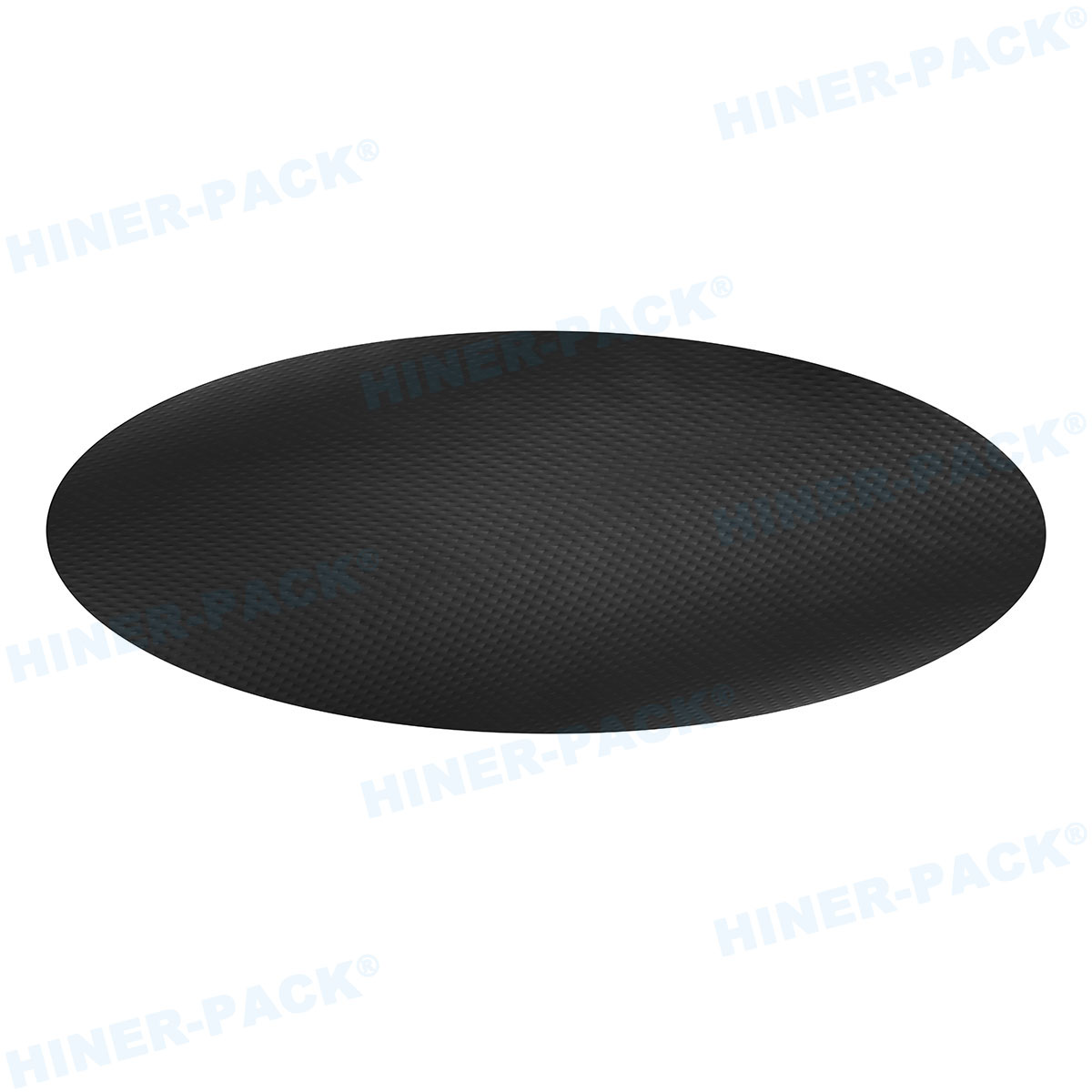
Solution: Use a coin-style shipper with foam cushion (replacing desiccant) inside an ESD-shielded bag.
Hiner-pack offers a prototype kit with 10 shippers and pre-cut moisture barrier bags.
5.3 Wafer-Level Chip Scale Packaging (WLCSP) Transport
Challenge: Wafers with bumped die are fragile; standard ribs can damage solder balls.
Solution: Custom coin-style wafer shipper with a recessed cavity and a soft tacky layer (e.g., low-outgassing silicone gel) to immobilize the wafer without pressure.
Cleanliness requirement: No silicone contamination on backside of wafer for subsequent backgrinding.
6. Comparison: Coin-Style vs. Clamshell vs. Single-Wafer FOUP
To help buyers select the right package, the following table summarizes trade-offs (presented as bullet points).
Coin-style shipper – Very compact, low cost ($5–20), reusable up to 50 cycles, manual handling only, limited desiccant capacity, requires separate moisture barrier bag for air freight.
Clamshell shipper – Larger footprint, moderate cost ($15–40), reusable 50–100 cycles, can accommodate humidity indicator card and larger desiccant pouch, integral hinges wear out.
Single-wafer FOUP – Automation-compatible, very high cost ($300+), certified for minienvironments, not suitable for shipping (designed for tool interface).
For most fab-to-fab shipments of single wafers, the coin-style wafer shipper provides the best balance of protection and logistics cost, provided that the shipper is placed inside a rigid outer box with cushioning.
7. Reuse and Requalification of Coin-Style Shippers
Field data from 3,000 coin-style shippers returned to Hiner-pack for analysis shows that reuse beyond 40 cycles significantly increases particle failure risk. Recommended requalification intervals:
Visual inspection (every 5 cycles) – Look for cracks around latch tabs, scratches on interior floor, and deformation of wafer support ribs. Reject if any crack >2 mm or rib height variation >0.1 mm.
Particle test (every 10 cycles) – Perform witness wafer test. If particles ≥0.3 µm exceed 30 per wafer, retire the shipper or deep-clean using ultrasonic bath.
Latch retention force (every 20 cycles) – Use a force gauge to measure the force required to open the latch. New shippers require 8–12 N. Below 4 N, replace the lid or base.
Cleaning method for reusable coin-style shippers: automated wash with DI water + non-ionic surfactant (pH 7.5) at 40°C, followed by ultrasonic rinse (40 kHz, 5 minutes), then HEPA-air drying at 60°C for 20 minutes. Never use abrasive brushes or solvents that can degrade the antistatic additive.
8. Common Failure Modes and Engineering Countermeasures
Analysis of returned coin-style wafer shipper units reveals three recurring issues.
Wafer edge chipping – Caused by a small gap (0.2–0.4 mm) between wafer edge and sidewall. During vibration, the wafer oscillates and impacts the sidewall. Fix: reduce the radial gap to 0.1–0.15 mm and add a soft elastomeric ring at the perimeter.
Lid pop-off during temperature cycling – Air trapped inside expands at high altitude or high temperature, forcing the lid open. Fix: add a small vent hole (0.5 mm diameter) covered with a hydrophobic membrane filter (0.2 µm). Many wafer shipping containers now include such vents.
Static charge buildup on exterior – The outer surface of PC-based shippers can become charged when rubbed against packing materials. This can attract airborne particles to the outside, which then transfer to the interior upon opening. Fix: specify a dissipative outer coating or use a carbon-loaded PP instead of PC.
9. Innovations in Coin-Style Wafer Shippers
Recent advances address the limitations of traditional designs:
Embedded RFID for tracking – An ultra-thin (0.4 mm) RFID tag molded into the base stores shipper ID, cycle count, and last cleaning date. Readable through the closed shipper using a handheld reader.
Bi-stable latches – Spring-loaded latches that provide audible click feedback when fully engaged, preventing accidental opening during transport.
Nano-textured interior surfaces – Laser-ablated patterns (1–2 µm depth) reduce contact area with the wafer by 70%, lowering particle generation while maintaining support.
Frequently Asked Questions (FAQ)
Q1: Can a coin-style wafer shipper be used for 300mm wafers in automated handling systems?
A1: Only if the shipper conforms to SEMI E15.1 (tool interface dimensions). Most coin-style shippers are designed for manual handling only. For automated systems, use a single-wafer FOUP or a specially adapted shipper with robot-gripping features (e.g., V-grooves on the bottom). Hiner-pack offers a robot-compatible coin-style shipper with an aluminum base plate.
Q2: What is the maximum number of times I can reuse a coin-style wafer shipper before particle failure?
A2: Based on 100-cycle accelerated testing, the median particle adder remains below 20 particles (≥0.3 µm) for 45 cycles. After 60 cycles, 50% of units exceed 30 particles. For critical applications (≤28 nm nodes), replace after 30 cycles. Always perform a particle test every 10 cycles to establish your own limit.
Q3: How do I properly dry a coin-style shipper after cleaning to avoid water spots?
A3: After DI water rinse, blow off bulk water with filtered nitrogen (0.01 µm) at 2 bar. Then place in a forced-air oven at 60°C for 30 minutes, oriented with the interior facing down. Finally, store in a cleanroom environment with RH <40% for at least 2 hours before loading a wafer. Water spots can leave residues that act as particle nucleation sites.
Q4: Can I stack multiple coin-style shippers on top of each other in a shipping box?
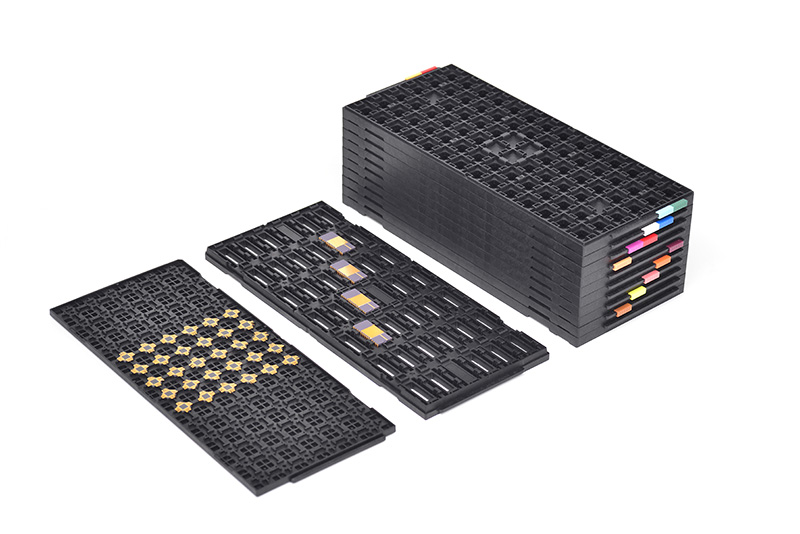
A4: Yes, but only if the shippers are designed with interlocking features (e.g., raised rings on the lid and matching recesses on the base). Stack height should not exceed 10 units to prevent bottom shipper deflection. Between stacks, use foam dividers. Wafer shipper accessories include stackable trays for this purpose.
Q5: What is the acceptable outgassing limit for a coin-style shipper used with copper/low-k wafers?
A5: Per SEMI E126, total outgassing (volatile condensable materials) must be below 0.05 µg/cm² after 24 hours at 50°C. Additionally, specific harmful compounds (siloxanes, phthalates, amides) should be below detection limit (0.01 µg/cm²). Request a GC-MS report from the supplier. Hiner-pack provides outgassing data for each material batch.
Q6: How do I verify that the antistatic property of a used coin-style shipper is still effective?
A6: Use a surface resistance meter with concentric ring probe (Model 803B or equivalent) at 100V. Measure at three locations on the interior floor. Acceptable range: 10⁶–10¹¹ Ω/sq. If resistivity exceeds 10¹¹ Ω/sq, apply a cleanroom-approved topical antistatic spray (e.g., ACL Staticide Cleanroom Formula) and allow to dry for 2 hours. Re-test; if still out of range, retire the shipper.
Q7: Are coin-style shippers suitable for shipment of wafers with through-silicon vias (TSV)?
A7: Yes, but with caution. TSV wafers have topographic features on both sides. The shipper’s support ribs must contact only the non-device area (exclusion zone of 3 mm from edge). Some suppliers offer custom-machined pockets with clearance for TSV bumps. Always perform a trial vibration test with a dummy TSV wafer before final use.
Ready to Optimize Your Single-Wafer Logistics? Request a Coin-Style Shipper Qualification Kit
Selecting the wrong coin-style wafer shipper can lead to edge chipping, particle contamination, or latch failure during transit. Hiner-pack provides a two-step engineering service for semiconductor fabs, OSATs, and R&D labs:
Wafer compatibility assessment – We analyze your wafer thickness, edge profile, and die pattern to recommend optimal rib design and material.
Particle validation kit – We supply 10 test shippers, witness wafers, and a cleaning validation protocol. You run in-house testing and receive a detailed report with statistical analysis.
Send the following details to receive a free technical consultation: wafer diameter (mm), wafer thickness (µm), process node (nm), monthly shipment volume (units), and any previous packaging defect data. All inquiries receive a comparison matrix of three candidate shipper designs within 48 hours.
Contact Hiner-pack’s wafer packaging specialists now: https://www.waferboxes.com/contact – mention “Coin-style shipper inquiry” in the subject line for priority engineering support.