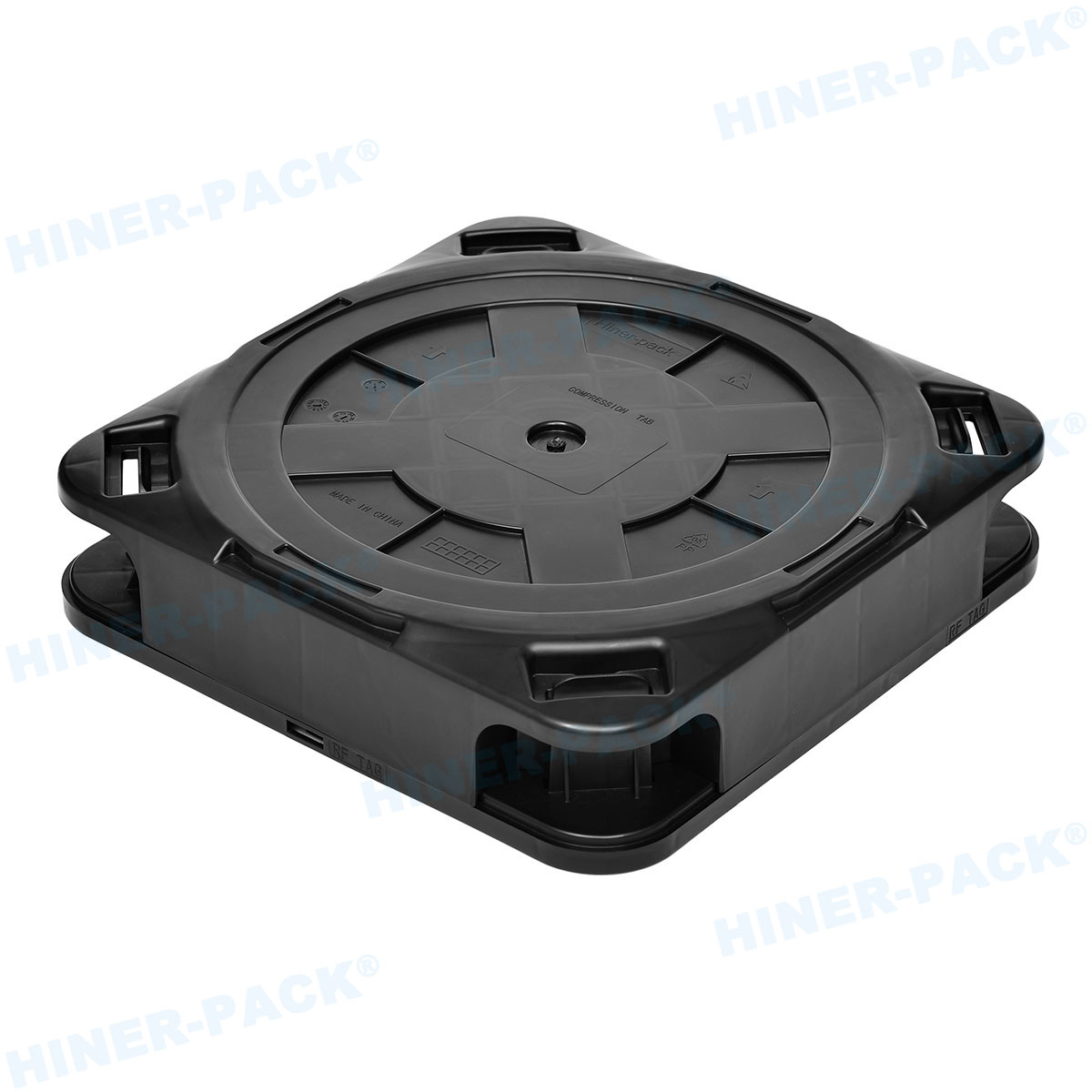
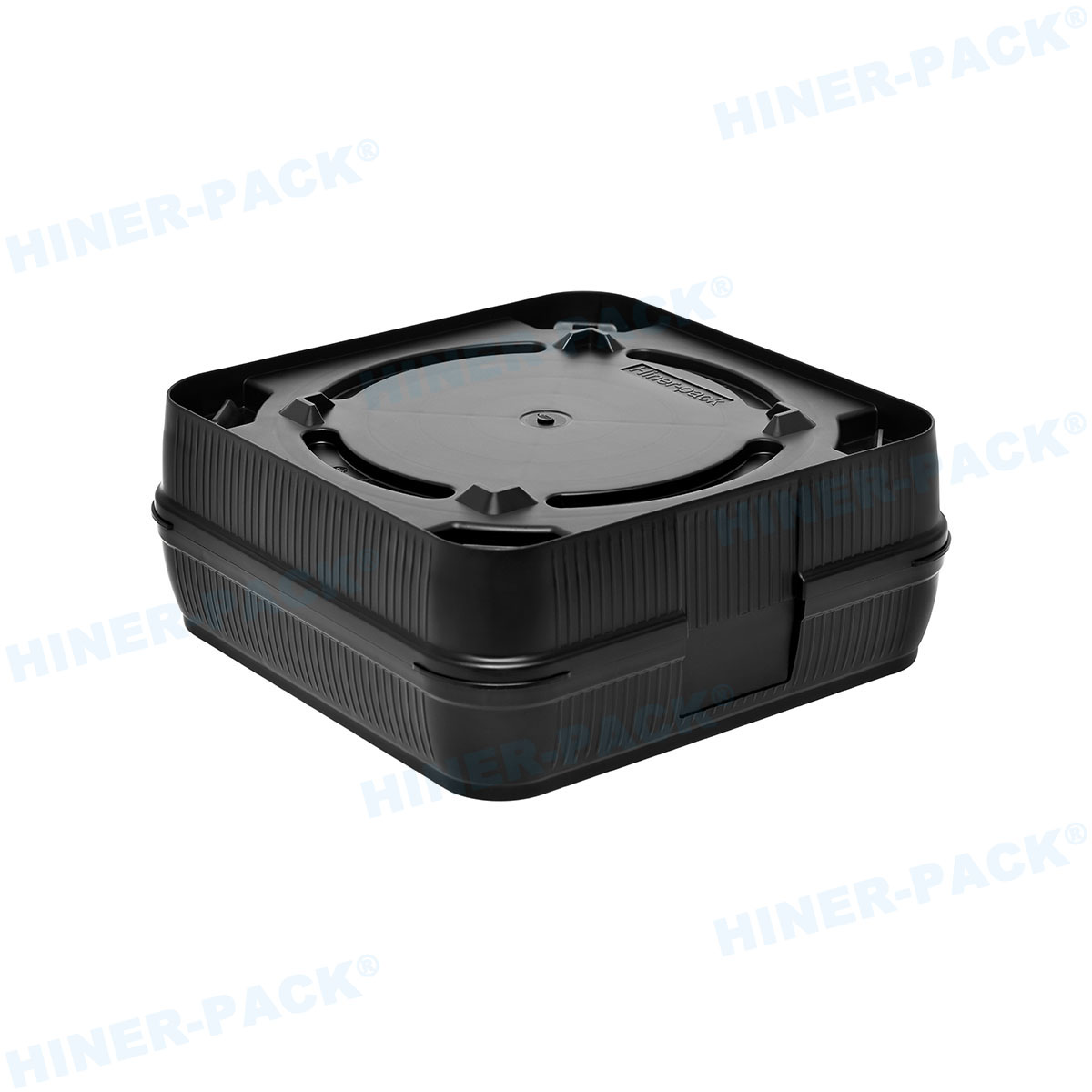
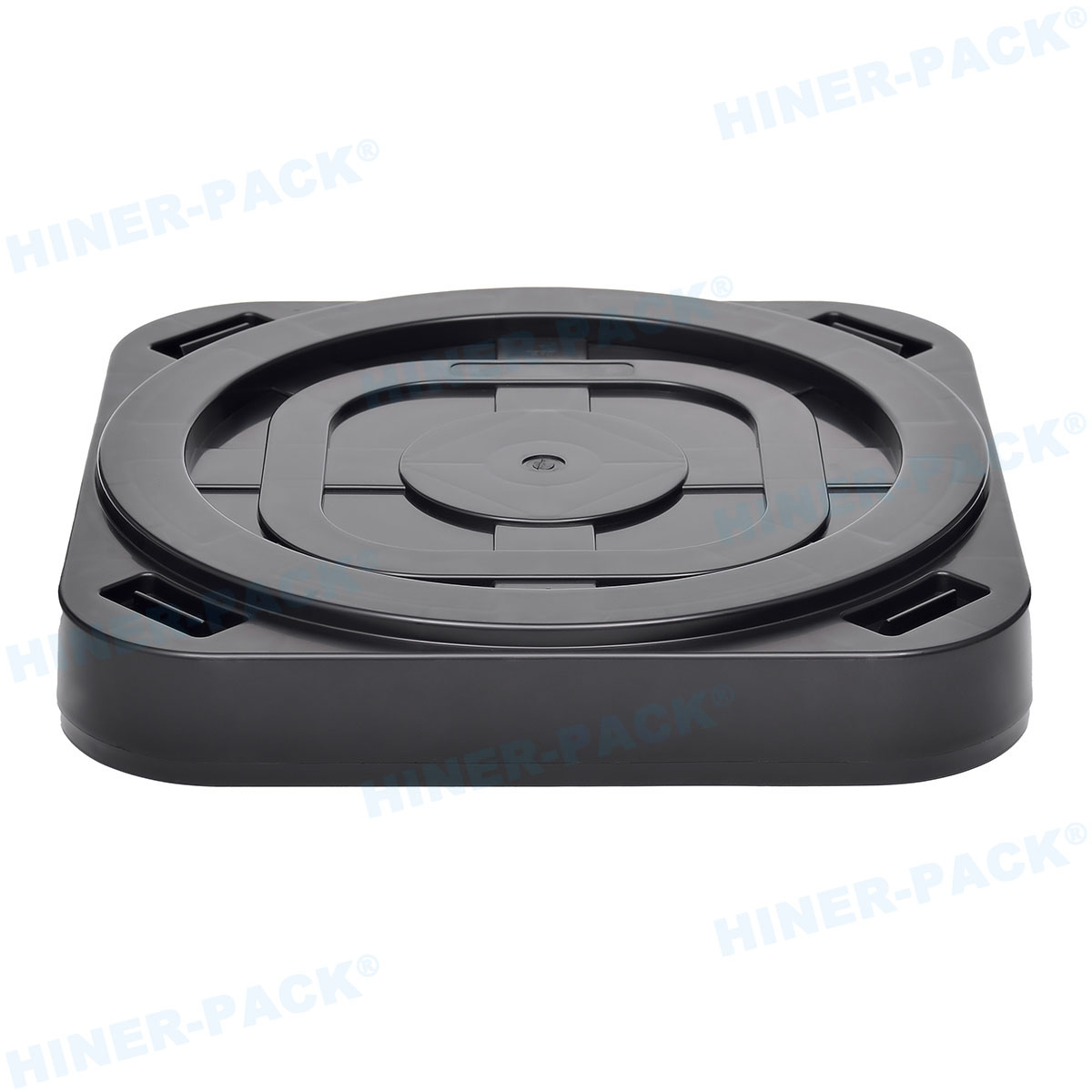
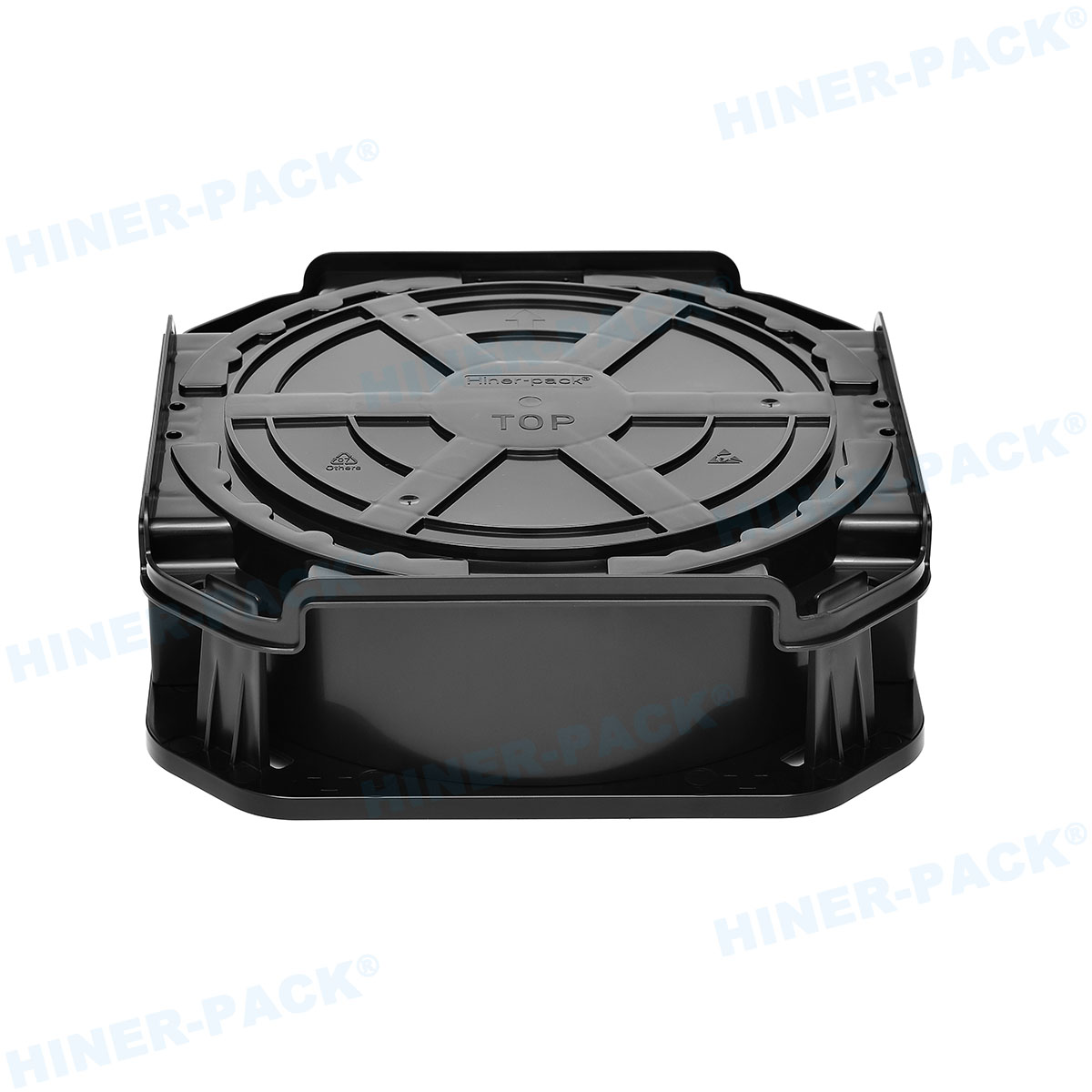
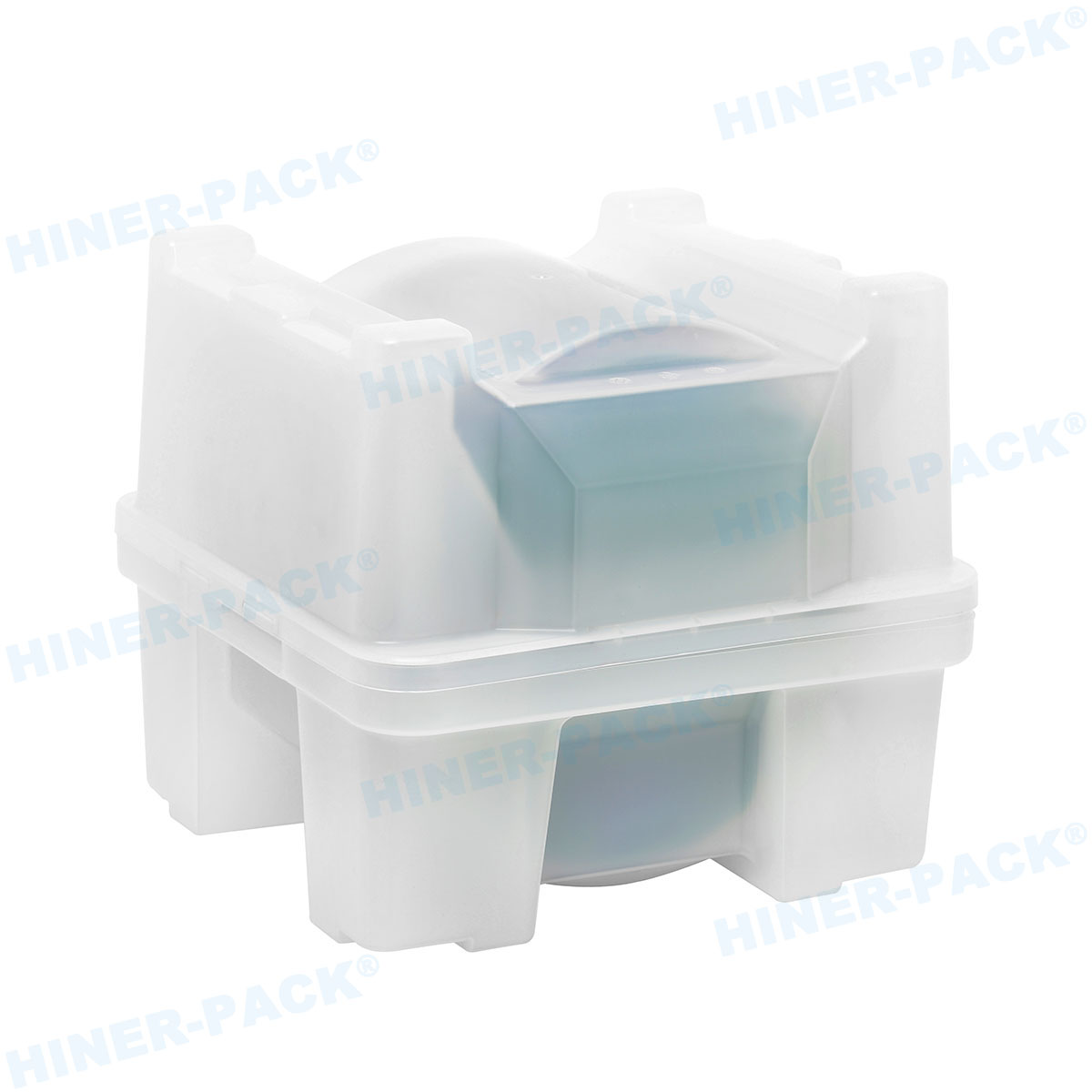
In semiconductor assembly, test, and shipping, the choice of carrier for singulated dies or packaged integrated circuits directly impacts yield, equipment uptime, and device integrity. Two of the most common carrier systems—flexible, adhesive-based carriers and rigid, standardized polymer trays—serve fundamentally different purposes. Understanding the technical distinctions between a Gel Pak vs JEDEC trays is essential for process engineers and supply chain managers. This article provides a data-driven comparison of their material properties, application suitability, automation compatibility, and impact on sensitive device geometries, helping you make an informed decision for your specific manufacturing flow.

1. Defining the Contenders: Material Science and Core Function
Before analyzing application scenarios, we must establish the fundamental engineering principles behind each carrier type. The choice between a Gel Pak vs JEDEC trays begins with understanding how they physically interact with components.
1.1. JEDEC Trays: The Standard for Rigid, High-Volume Transport
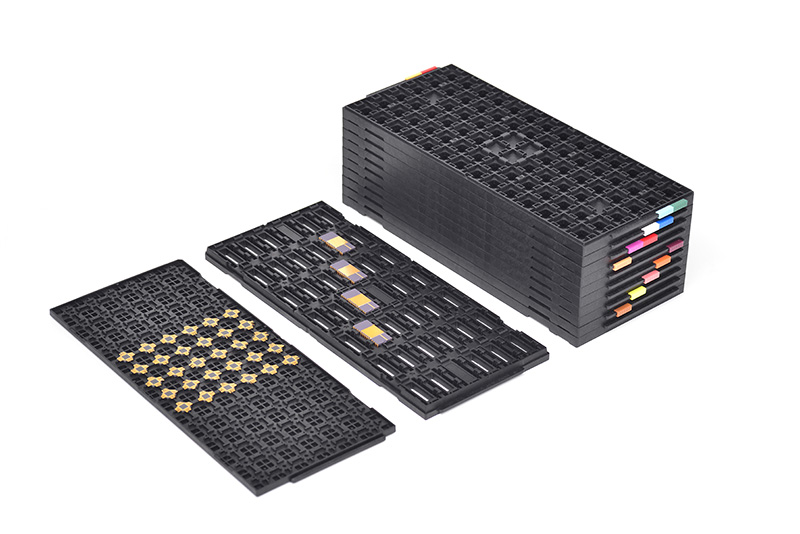
JEDEC trays (Joint Electron Device Engineering Council standard trays), also known as matrix trays, are rigid injection-molded carriers made from engineered polymers like PPS (Polyphenylene Sulfide) or PEI (Polyetherimide), often with carbon fiber or other fillers for ESD protection. Their defining characteristic is a precise pocket matrix designed to hold devices securely by their body, leaving leads or bumps untouched. Key properties include:
Dimensional Precision: Pocket dimensions are held to tight tolerances to prevent device movement during shipping and to ensure reliable pick-and-place by vacuum collets.
Stackability: Designed with interlocking features for secure stacking, maximizing throughput in automated handling and reducing storage footprint.
ESD Control: Surface resistivity typically ranges from 10^5 to 10^11 ohms/sq, providing a static-safe environment.
Reusability: High-temperature resistance allows for repeated washing and autoclave cycles, making them economical for high-volume manufacturing (HVM).
1.2. Gel Paks: The Solution for Fragile and Delicate Components
Gel Paks (often referred to as gel trays or elastomeric carriers) represent a completely different philosophy. They consist of a rigid carrier frame containing a cavity filled with a proprietary, ultra-clean, silicone-based elastomer gel. This gel exhibits viscoelastic properties: it is tacky enough to hold components gently, yet conforms to their shape to minimize point stress. The magic lies in the gel's "release" mechanism:
Controlled Adhesion: The gel's surface tack can be engineered to specific levels. When a vacuum pick-up tool applies a vertical force, the device releases cleanly without leaving residue.
Shock and Vibration Damping: The elastomeric material absorbs mechanical shocks and dampens high-frequency vibration during transit, protecting sensitive microstructures.
Conformal Support: The gel flows around delicate features like air bridges, MEMS structures, or gold bumps, supporting the entire device underside and preventing die fracture.
2. Application Scenarios: Matching Carrier to Component Vulnerability
The decision matrix for selecting a carrier is dominated by device fragility, geometry, and the required level of protection. Comparing Gel Pak vs JEDEC trays in specific use cases clarifies their domains.
2.1. MEMS, Sensors, and Optoelectronic Devices
Scenario: A MEMS microphone die with a movable membrane, a pressure sensor with a thin diaphragm, or a VCSEL (Vertical-Cavity Surface-Emitting Laser) array.
Analysis: These devices have fragile, often moving, top-side structures. Placing them in a rigid JEDEC pocket risks contact that could damage or stiction that could render the device inoperable. Airborne particles trapped in the pocket could also scratch sensitive optical surfaces.
Recommendation: Gel Pak is the preferred choice. The gel completely surrounds the device, supporting it without contacting fragile topologies. The conformal nature prevents stress concentration points. For shipping high-value MEMS or photonic components, the shock-absorbing properties of the gel are irreplaceable.
2.2. High-Volume SMT Packaged ICs (e.g., QFNs, BGAs, SOICs)
Scenario: Standard Quad Flat No-lead (QFN) packages or Ball Grid Arrays (BGA) after assembly and before surface-mount placement.
Analysis: These packages have robust molded bodies and are designed for automated handling. The primary requirements are secure positioning, protection of solder balls or leads, and compatibility with high-speed pick-and-place equipment. Stacking efficiency is crucial for throughput.
Recommendation: JEDEC trays are the industry standard. They offer the necessary pocket precision to protect leads/balls, are fully compatible with tube and tray feeders, and their stackability allows for efficient baking (to remove moisture) and automated loading. Using a Gel Pak here would be prohibitively slow and expensive.
2.3. Known Good Die (KGD) and Bare Die Handling
Scenario: Singulated bare dies, tested and known to be good, awaiting integration into a multi-chip module or system-in-package (SiP).
Analysis: Bare dies are extremely fragile, with brittle backside silicon and delicate front-side circuitry. They are also more susceptible to contamination than packaged parts. The carrier must protect all six sides.
Recommendation: This is a hybrid scenario. For extremely thin dies (<100µm) or those with sensitive bond pads/bumps, Gel Pak provides superior protection by cradling the die and preventing edge chipping. For slightly thicker, more robust dies in a well-controlled cleanroom environment, specialized JEDEC-style bare die trays with shallower, tighter-tolerance pockets are used. The choice often depends on die thickness and downstream handling equipment.
3. Automation and Throughput: The Cost of Handling
The operational efficiency of a carrier type is as important as its protective properties. The Gel Pak vs JEDEC trays debate has significant implications for manufacturing flow.
3.1. JEDEC Tray Automation: Speed and Standardization
JEDEC trays are designed from the ground up for automation. They adhere to standards like EIA-481 (for tape and reel, which interfaces with trays) and JEDEC Publication 95, ensuring they fit universally into:
Tray Stackers and Destackers: Automatically separate and feed trays to pick-up positions.
Tray Shuttles and Indexers: Move trays precisely under pick-and-place heads.
Automatic Tray Exchangers: Swap full/empty trays on assembly equipment.
This standardization enables extremely high throughput, often handling thousands of units per hour (UPH). The rigid nature of the tray ensures consistent pick height and location for every device.
3.2. Gel Pak Handling: Precision and Delicacy
Gel Paks, by contrast, are inherently slower to handle. The gel's adhesion requires a specific vertical "peel" force during pick-up, which can be slower than picking from a rigid pocket. Automation for Gel Paks often requires:
Controlled Z-Axis Motion: Precise control to overcome tack without "overshoot" that could damage the die or the tool.
Dedicated Tooling: End effectors may need to be compatible with the gel surface or the specific carrier frame.
Manual or Semi-Automatic Operation: For low-volume, high-mix production of sensitive devices, manual placement from a Gel Pak is still common.
The trade-off is clear: JEDEC trays for speed and volume; Gel Paks for ultimate protection of delicate components in lower-volume or engineering flows.
4. Technical Pain Points and Mitigation Strategies
Both carrier types present challenges that engineers must address to maintain yield and efficiency.
4.1. JEDEC Tray Challenges: Pocket Tolerance and Device "Swimming"
Pain Point: Tray pockets that are too tight can cause device hang-up during pick-up; pockets that are too loose allow devices to "swim" or shift, leading to mis-picks and potential collision damage. Over time, tray wear or contamination can exacerbate these issues.
Solution: Implementing a rigorous tray management program. This includes periodic inspection of pocket dimensions and cleanliness, using dedicated tray cleaning services, and selecting trays from reputable suppliers like Hiner-pack who guarantee compliance to original equipment manufacturer (OEM) specifications. Furthermore, using wafer shipper accessories such as protective lids or interleaf sheets can add an extra layer of security for sensitive devices within trays.
4.2. Gel Pak Challenges: Gel Contamination and Release Variability
Pain Point: Over time or with improper use, the gel surface can accumulate particles or its tackiness can change due to temperature or contamination. This can lead to incomplete release (device stuck) or residue transfer, both catastrophic for yield. The gel is also a consumable; its protective properties degrade with use.
Solution: Strict process control. This includes using cleanroom-grade Gel Paks, limiting the number of use cycles, storing them in controlled environments, and implementing pick-and-place parameters optimized for the specific gel type and device weight. Some advanced Gel Paks feature a "release liner" that protects the gel until point of use.
5. Cost Analysis and Lifecycle Considerations
A comprehensive comparison of Gel Pak vs JEDEC trays must include total cost of ownership (TCO).
JEDEC Trays: Higher initial tooling cost for the mold, but very low per-unit cost at high volumes. They are durable and reusable for hundreds of cycles if cleaned properly, making the TCO very low for HVM.
Gel Paks: Lower initial cost (no expensive mold), but higher per-unit cost. They are typically single-use or limited-use due to gel degradation. The TCO is higher per device, but this is justified by the yield protection they afford for high-value, fragile components. For example, protecting a single $500 optoelectronic die easily justifies the cost of a premium Gel Pak.
Conclusion: A Strategic, Not Binary, Choice
The decision between Gel Pak and JEDEC trays is not about which is "better," but which is the correct engineering solution for a specific device and its handling environment. JEDEC trays are the workhorses of high-volume SMT assembly, prized for their automation compatibility, standardization, and reusability. Gel Paks are the specialized tools for the most fragile and valuable components, providing unparalleled protection through conformal support and shock absorption. Leading suppliers like Hiner-pack understand this nuanced landscape, offering both standard JEDEC trays and specialized carriers, along with essential wafer shipper accessories, to support the full spectrum of semiconductor packaging and logistics needs. By carefully evaluating device geometry, process flow, and cost of failure, engineers can select the optimal carrier and safeguard both yield and productivity.
Frequently Asked Questions (FAQ)
Q1: What is the primary difference in how a device is secured in a Gel Pak versus a JEDEC tray?
A1: In a JEDEC tray, a device is held by mechanical constraint within a rigid pocket that matches its body outline. In a Gel Pak, the device is held by the controlled surface tack of a soft, conformal silicone gel that flows around and supports the entire component, including delicate features.
Q2: Can I use a Gel Pak on a standard SMT pick-and-place line?
A2: It is possible but not standard. While the carrier frame can be made to fit JEDEC tray dimensions, the pick process differs. Standard high-speed equipment may not be optimized for the vertical "peel" force required to release a device from the gel. It is more common to use Gel Paks in manual, semi-automated, or specialized die-bonding equipment designed for fragile components.
Q3: Are JEDEC trays clean enough for bare die handling?
A3: Standard JEDEC trays are not typically clean enough for direct bare die handling without additional measures. However, cleanroom-grade JEDEC trays are available. These are molded, packaged, and cleaned under strict contamination control to meet the low particle and ionic contamination levels required for bare die, especially for Known Good Die (KGD) applications.
Q4: What does "JEDEC" stand for in JEDEC trays, and why is it important?
A4: JEDEC stands for the Joint Electron Device Engineering Council, a global industry standards body for microelectronics. JEDEC standards define the critical external dimensions, pocket matrices, and stackability features of these trays. This standardization ensures that trays from different suppliers are mechanically interchangeable and compatible with all automated handling equipment built to the same standards, which is vital for supply chain flexibility.
Q5: My devices have very fragile gold wire bonds or air bridges. Which carrier should I choose?
A5: For devices with fragile top-side structures like air bridges or delicate wire bonds, a Gel Pak is the strongly recommended choice. The gel will support the device body without contacting these fragile structures. A rigid JEDEC pocket would almost certainly cause damage to such features during loading, transit, or unloading due to vibration or minor movement.
Q6: How do I dispose of or recycle used Gel Paks?
A6: Disposal depends on the specific gel material and any contamination it may have acquired. Many gel materials are silicone-based and can be considered non-hazardous solid waste, but you must check your local regulations. Some suppliers are beginning to offer take-back or recycling programs for used gel carriers. It is best to consult the material safety data sheet (MSDS) from the Gel Pak manufacturer and your environmental compliance team.