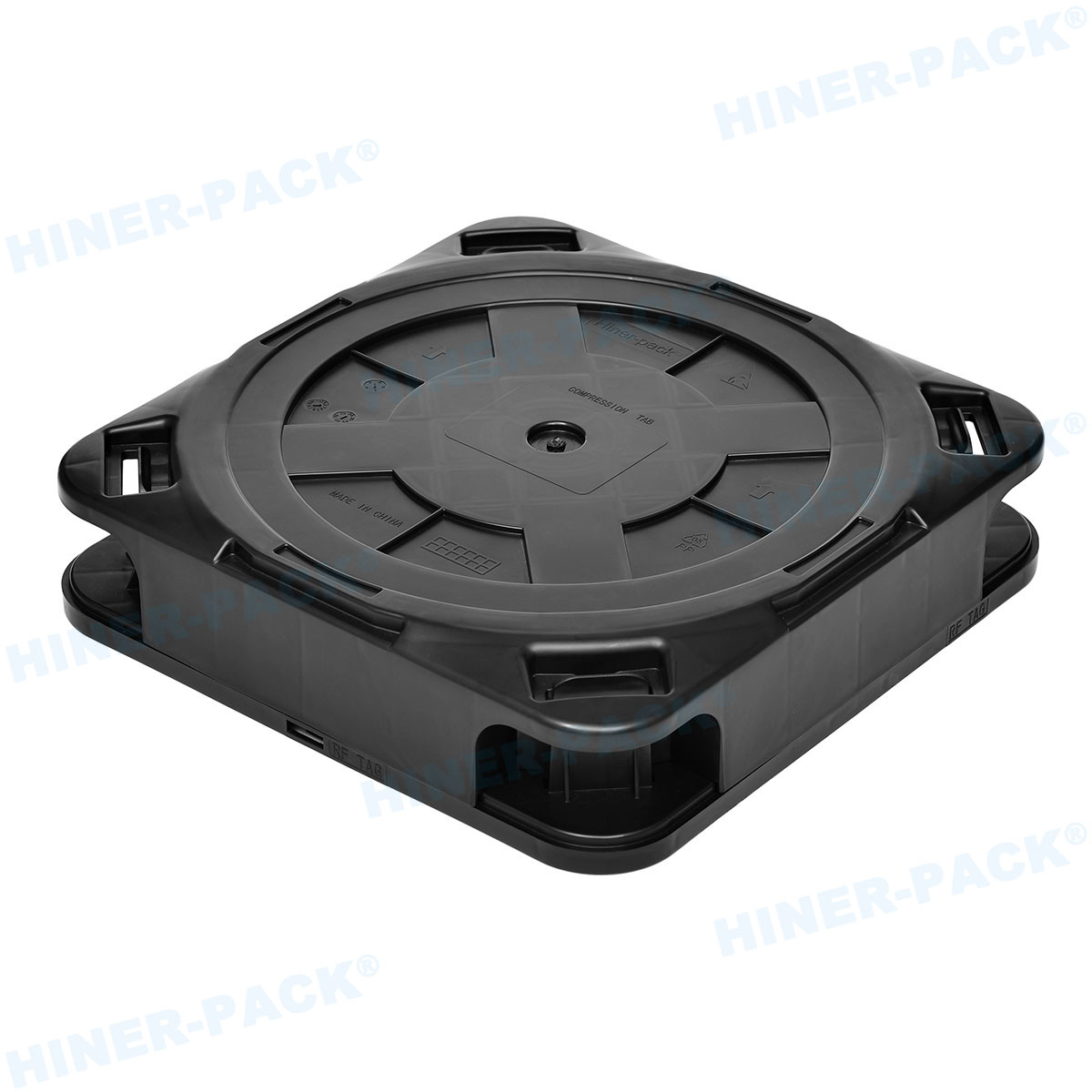
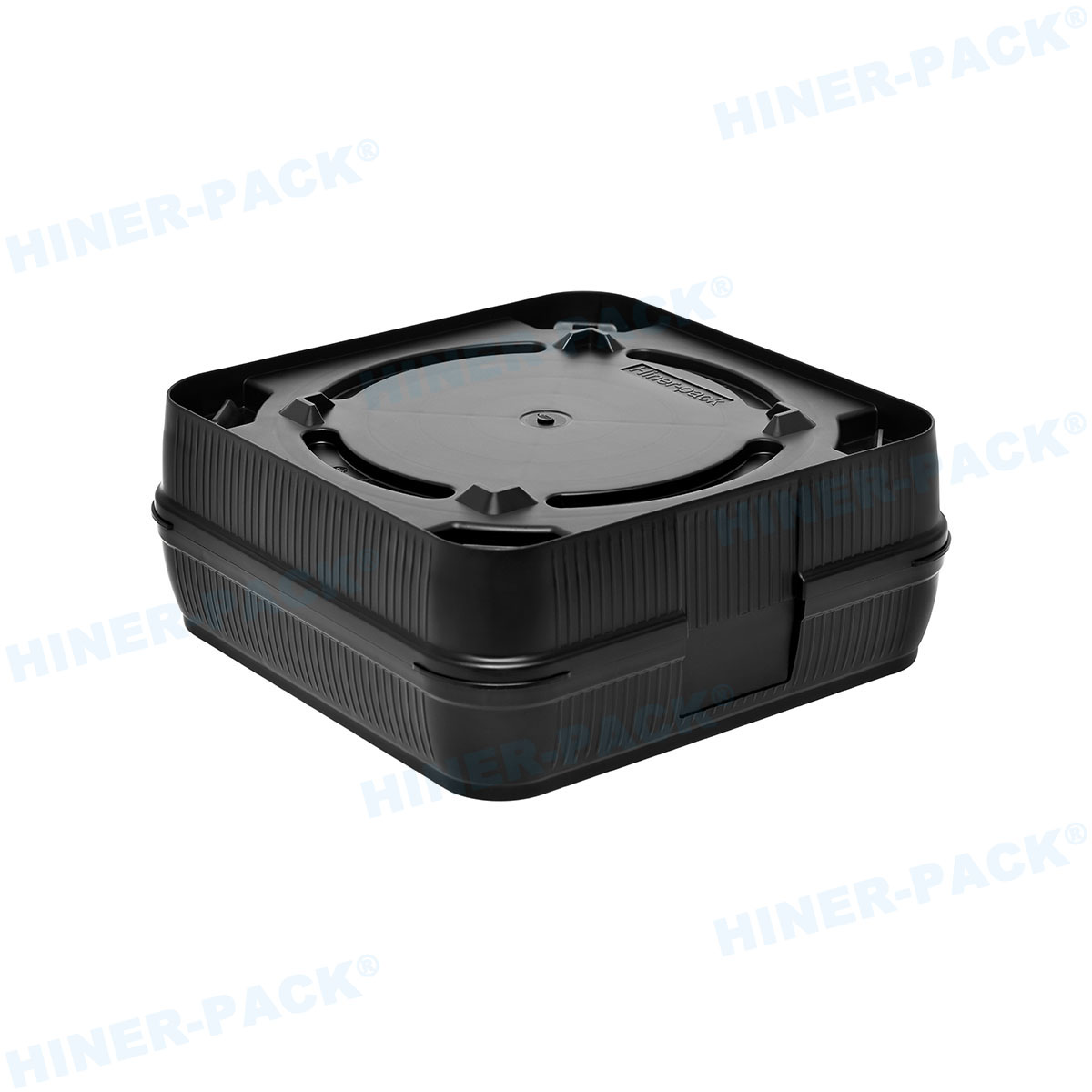
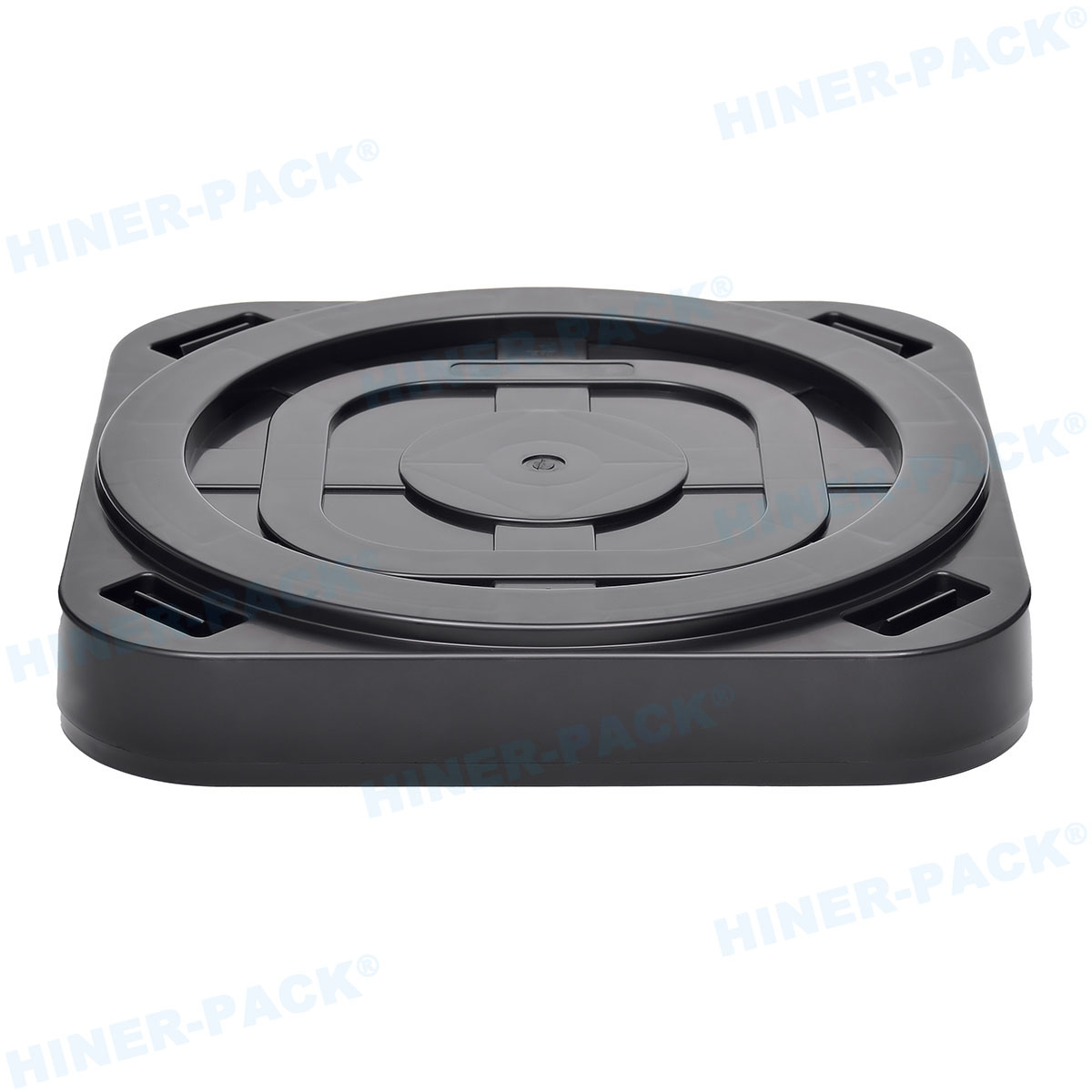
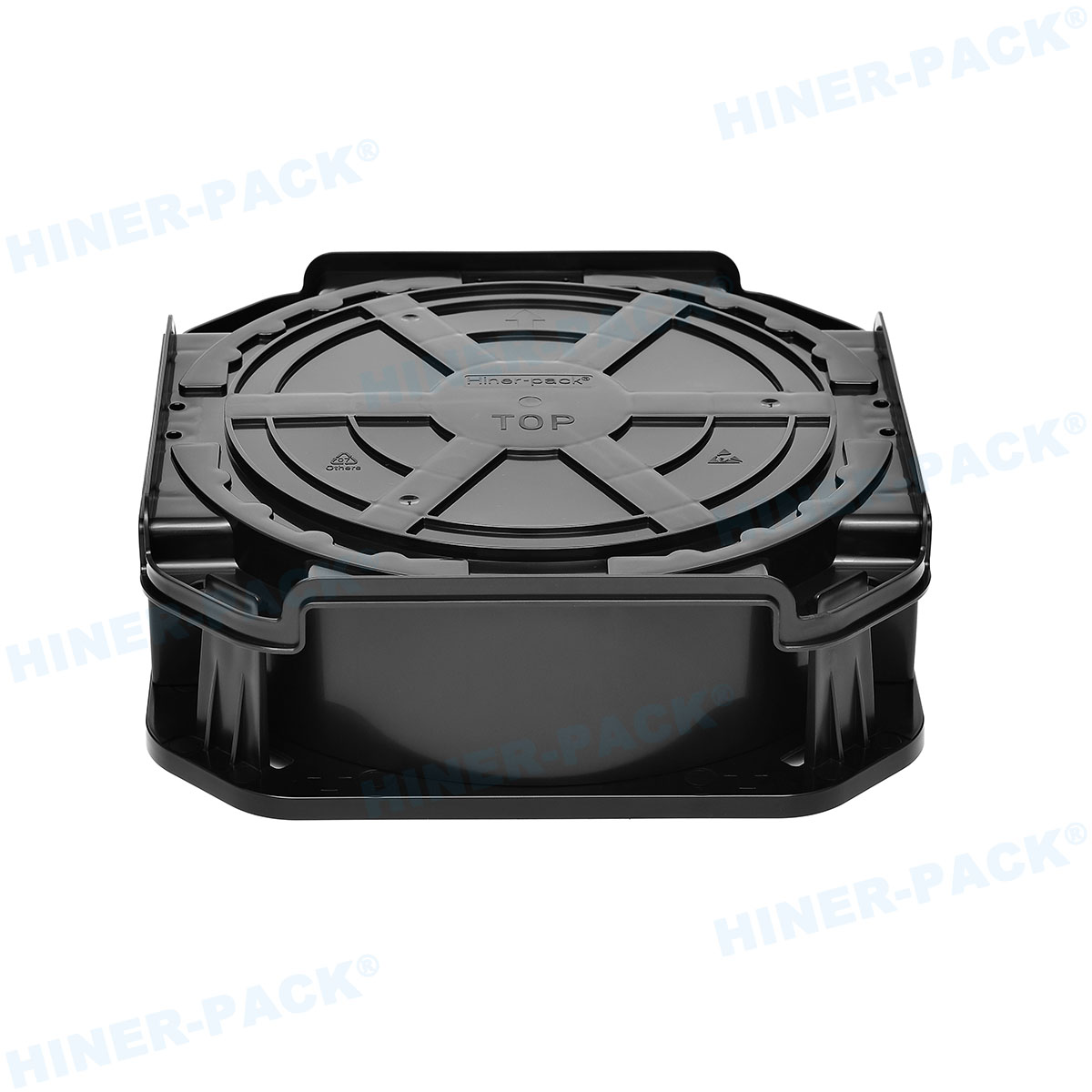
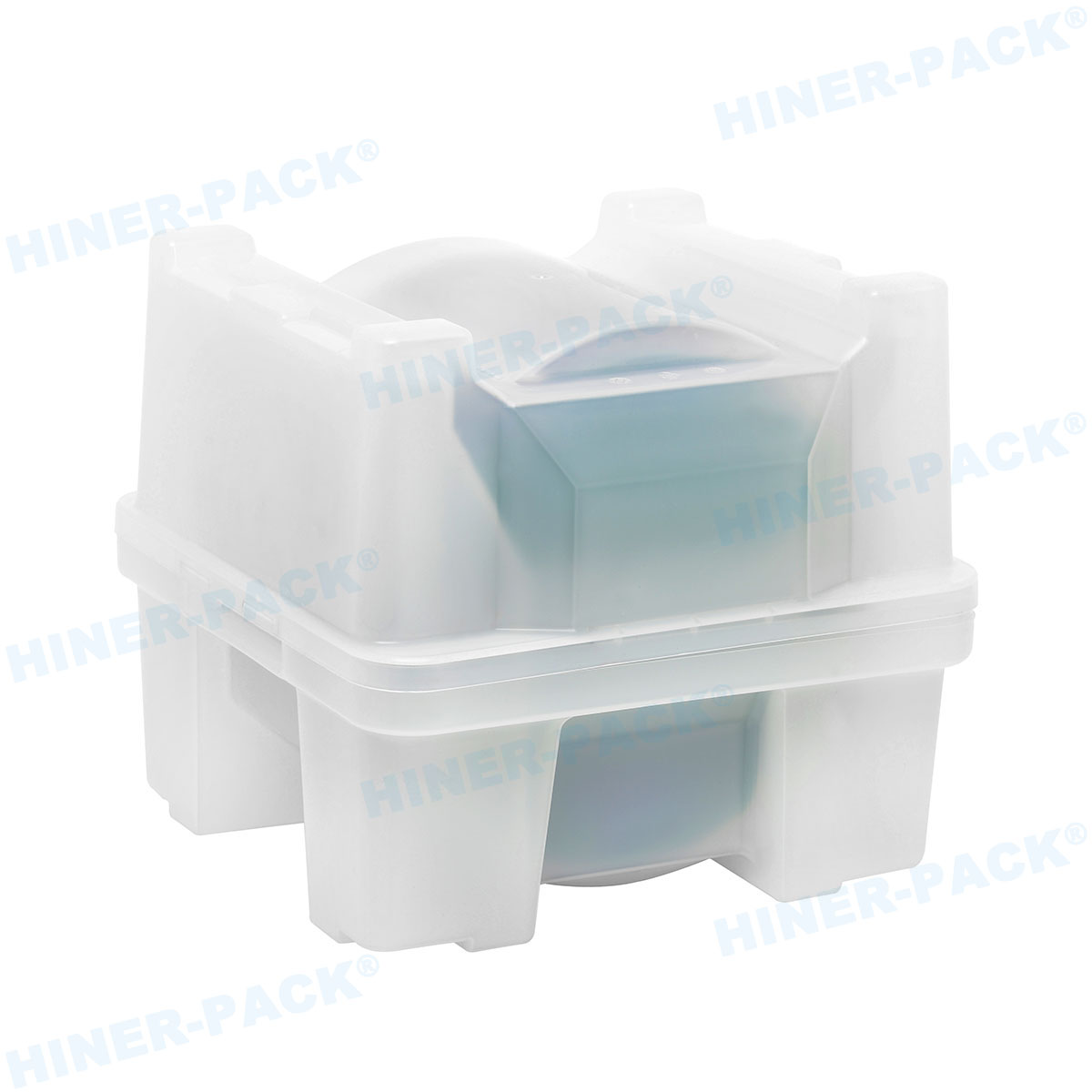
In diffusion, oxidation, and LPCVD (low-pressure chemical vapor deposition) furnaces, the wafer boat is a critical carrier that supports wafers during extended high-temperature cycles. Unlike standard shipping or handling trays, these boats must withstand repeated thermal ramps from 300°C to over 1200°C without warping, shedding particles, or inducing slip dislocations. This technical deep dive examines material degradation modes, load-induced creep, and cleanroom integration. Hiner-pack has engineered quartz and silicon carbide (SiC) boats for over 20 years, delivering documented particle reduction of 35% in 200mm vertical furnaces.
1. Material Science of Wafer Boats: Quartz, SiC, and Advanced Ceramics
The selection of a wafer boat directly determines process stability and equipment uptime. Three material families dominate the market, each with distinct thermal, mechanical, and purity profiles.
Fused quartz (SiO₂): Cost-effective for temperatures up to 1150°C. Excellent thermal shock resistance (ΔT ~ 500°C) but suffers from devitrification (crystallization) after ~1000 hours at 1100°C. Devitrified quartz flakes generate particles > 0.3 µm, causing gate oxide defects. High purity (SEMI Grade 1) quartz boats have < 10 ppb each of Al, Ca, Fe.
Sintered silicon carbide (SiC): Withstands 1350°C continuous, 3× higher thermal conductivity than quartz, eliminating hot spots. SiC wafer boat surfaces resist oxidation and have 10× lower particle generation after 500 cycles. However, cost is 5–8× higher than quartz, and SiC can react with chlorine-based clean gases.
Porous alumina (Al₂O₃): Used in specialized high-k dielectric processes where SiC or quartz cause metallic contamination. Alumina boats are fragile and require careful handling.
Quantitative data from a 300mm DRAM fab: After 800 oxidation cycles at 1050°C, a quartz wafer boat showed 0.7 mm bow across 300 mm length, causing wafer edge contact with tube walls in 4% of runs. Switching to a SiC boat reduced bow to 0.08 mm and eliminated edge contact failures. The SiC boat also reduced particle adders from 0.12 to 0.03 defects/cm², improving die yield by 1.2%.
2. Mechanical Creep and Load-Induced Deformation
At temperatures above 900°C, quartz exhibits viscoelastic creep under the weight of 25–50 wafers (total load 1.5–3 kg). The sag rate follows an Arrhenius relationship: doubling every 50°C beyond 1000°C. A typical 200mm quartz wafer boat with 13mm rods will sag 2–3 mm after 2000 hours at 1100°C, leading to:
Non-uniform wafer spacing (pitch variation > 0.5 mm), causing gas flow turbulence and non-uniform film thickness (±8% vs. ±3% in rigid boats).
Wafer edge contact with boat slots, generating silicon particles and microcracks.
Difficulty in automated wafer transfer; end effectors collide with bent boat fingers.
To mitigate creep, modern wafer boat designs incorporate reinforcing ribs, thicker vertical struts, or composite structures (quartz rods with SiC end caps). Finite element analysis (FEA) optimization can reduce sag by 60% without increasing weight. Hiner-pack offers a proprietary "ThermaLock™" joint design for quartz boats that reduces sag to < 0.2 mm after 3000 hours at 1100°C, verified by laser profilometry.
3. Contamination Pathways: Metallic and Particle Sources
Beyond creep, wafer boats are a hidden source of mobile ion contamination (Na⁺, K⁺) and transition metals (Fe, Ni, Cu). Quartz boats fabricated with low-quality raw sand may contain 100–500 ppb of aluminum, which diffuses into silicon during oxidation, forming stacking faults. Similarly, SiC boats made from sintered powder can release residual free silicon particles.
Process engineers must require ICP-MS (inductively coupled plasma mass spectrometry) certification per SEMI F57. Acceptable limits for a wafer boat used in gate dielectric formation: each of Na, K, Fe, Ni < 5 ppb; Al < 20 ppb. For SiC boats, surface particle counts must meet ≤ 0.1 particles ≥ 0.2 µm/cm² after a standard clean.
A case study: A power device fab experienced 8% yield loss due to reverse leakage in field-stop IGBTs. Trace analysis traced Fe contamination (0.3 ppb) to a quartz wafer boat that had been repaired with impure welding rods. Replacing the boat and requalifying with SEMI F57 reduced Fe to < 0.05 ppb and restored yield.
4. Application-Specific Designs: Horizontal vs. Vertical Furnaces
Wafer boats are optimized for two furnace configurations, each with distinct geometric and handling requirements.
4.1 Horizontal Furnace Boats (Cantilever or Paddle Type)
In older 150mm and 200mm lines, boats rest on a cantilever paddle that pushes into a horizontal tube. These wafer boats must have low thermal mass to reduce heat-up time. Typically made of thin-wall quartz (1.5 mm thickness) with 3-point supports. Main failure mode: thermal shock cracks during wafer unloading when the paddle is still hot (300°C) and exposed to room air. Automated paddle systems with controlled cooling ramps (5°C/min) extend boat life by 400%.
4.2 Vertical Furnace Boats (Stacked or Cage Type)
Modern 300mm fabs use vertical furnaces where the wafer boat is a freestanding stack suspended from a top flange. Boats have 100–150 slots with precise pitch (4.76 mm standard for 300mm). Materials: SiC is preferred due to higher strength-to-weight ratio. Key challenge: vertical boats can twist under thermal gradients, causing wafers to contact the inner tube wall. Solution: anti-twist fins and finite-element optimized rib patterns. Hiner-pack has delivered over 500 vertical SiC boats with anti-twist geometry, achieving < 0.1 mm runout after 5000 cycles.
For both types, automated wafer handling requires boat slot position repeatability within ±0.1 mm. Any bent slot finger can cause robotic end effector crashes, damaging wafers and costing $50k/hour in downtime. Regular boat inspection using optical coordinate measurement machines (CMM) is recommended every 500 cycles.
5. Cleaning and Requalification Protocols for Wafer Boats
Accumulated films (polysilicon, oxide, nitride) on boat surfaces flake off during thermal cycles. Standard cleaning processes include:
Wet chemical baths: 10:1 HF dip for oxide removal (10–20 minutes), followed by SC-1 (NH₄OH:H₂O₂:H₂O) for particle lift-off. For SiC boats, avoid HF longer than 5 minutes to prevent grain boundary attack.
Dry plasma cleaning: NF₃ or CF₄/O₂ plasma in-situ etching inside the furnace, but this can damage quartz by fluorine attack. Recommended only for SiC boats.
High-pressure DI water jet (2000 psi) for loose particle removal without chemicals.
After cleaning, wafer boats must be requalified: visual inspection under 30x magnification for cracks, surface roughness measurement (Ra < 0.8 µm), and particle test using a wafer surface scanner on a dummy wafer. Frequency: every 25–50 runs for high-volume production. Data from an automotive MCU fab showed that implementing a strict 30-run cleaning cycle for quartz boats reduced random particle defects by 67%.
6. Thermal Uniformity and Gas Flow Dynamics
The wafer boat geometry directly affects temperature uniformity across wafers. Solid side walls create thermal shadows, causing edge-to-center temperature differences of ±5°C. Modern boats use open lattice designs with thin vertical struts (3–5 mm width) to allow radiative and convective heat transfer. Computational fluid dynamics (CFD) modeling of a SiC boat with 15% open area showed temperature uniformity improvement from ±4.2°C to ±1.1°C at 900°C.
Gas flow bypass is another concern. In LPCVD processes, reactant gases flow along the tube axis; a boat with large horizontal ribs can cause stagnation zones, resulting in film thickness non-uniformity > 5%. Optimized boat designs minimize horizontal surface area, using vertical stringers instead. One LPCVD supplier reported that switching from a standard quartz boat to an aerodynamically optimized SiC wafer boat reduced SiN thickness variation from 6.8% to 2.9% (3-sigma).
7. Automation and Retrofit Considerations for Existing Fabs
Many 200mm fabs continue to use legacy furnace equipment with manual boat loading. Retrofitting for automation requires wafer boats with precision alignment features: kinematic coupling pins (SEMI E15.1 compliant) and flat landing pads for robotic paddles. Hiner-pack offers conversion kits that adapt existing quartz boats to automated handling by adding bonded ceramic alignment dowels. In one project, a 200mm MEMS fab reduced boat handling breakage from 2.1% to 0.2% after retrofitting with Hiner-pack’s alignment-enhanced boats.
Furthermore, implementing RFID tags on each wafer boat enables tracking of cycle count, cleaning status, and film history. High-temperature RFID (rated to 250°C) embedded in SiC boats can survive furnace bake cycles, allowing real-time monitoring. A logic fab using RFID-tracked boats reduced preventive maintenance overruns by 45%.
8. Future Trends: Coated Boats and Predictive Maintenance
Next-generation wafer boats feature yttria (Y₂O₃) or diamond-like carbon (DLC) coatings to reduce particle shedding and resist halogen plasma. Coated SiC boats tested in 1200°C chlorine-based cleaning cycles showed 90% reduction in particle adders compared to uncoated versions. Additionally, embedded thin-film thermocouples and strain gauges are being developed for real-time sag monitoring. These smart boats will trigger cleaning or retirement algorithms before defects occur.
Yield improvement from such technologies: a pilot line using coated boats reported 0.9% higher average device yield across 10,000 wafers, translating to $2.3M annual savings for a mid-sized fab. Early adopters are moving toward boat-as-a-service models, where suppliers like Hiner-pack provide certified, cycle-managed boats with guaranteed particle performance.
Frequently Asked Questions (FAQ)
Q1: What is the maximum usable temperature for a quartz wafer boat versus a SiC wafer boat?
A1: High-purity fused quartz boats are rated for continuous use up to 1150°C, but devitrification accelerates above 1100°C. For processes at 1150–1200°C (e.g., thick gate oxidation), lifetime reduces to 200–300 hours. Silicon carbide boats can operate at 1350°C continuously, with no devitrification. For temperatures above 1250°C (SiC power device annealing), only SiC or coated SiC boats are viable.
Q2: How often should a wafer boat be cleaned, and what are the signs of overdue cleaning?
A2: Cleaning frequency depends on film deposition rate. For LPCVD nitride (100 nm/run), clean every 30–50 runs. Signs of overdue cleaning: visible white/pink flakes on boat surfaces, increased particle counts on monitor wafers (> 0.05 defects/cm² added), and slip lines on wafer edges due to uneven heat transfer through deposited films. Use a quartz crystal microbalance to measure film buildup; a mass increase of 5% over baseline signals cleaning required.
Q3: Can a warped wafer boat be repaired, or must it be replaced?
A3: Minor warpage (< 0.3 mm bow in 300 mm length) can sometimes be corrected by annealing quartz boats at 1200°C for 4 hours with a reverse bending fixture. However, success rate is below 40%, and annealed boats often re-warp faster. For SiC boats, repair is not possible due to the sintered material's brittleness. Replacement is recommended if bow exceeds 0.5 mm or if any slot finger is bent more than 0.2 mm from nominal position. Hiner-pack provides exchange programs for warped boats.
Q4: What are the typical particle contamination limits for a newly qualified wafer boat?
A4: Per SEMI E46-0617 and internal leading-edge fabs: after a standard clean, a 300mm wafer boat must add ≤ 0.02 particles ≥ 0.12 µm/cm² when tested with a blank silicon wafer in a non-process run (thermal cycle at 1000°C, 30 minutes). For 200mm boats, the limit is ≤ 0.05 particles ≥ 0.16 µm/cm². These limits are verified using a wafer surface scanner (e.g., KLA Surfscan SP5). Boats exceeding these limits after cleaning are requalified or scrapped.
Q5: How do I select between a cantilever-style boat and a vertical stack boat for a new furnace purchase?
A5: Cantilever boats are only recommended for 150mm and smaller wafers or legacy horizontal furnaces. For 200mm and 300mm, always choose vertical stack (cage) boats because: (1) they allow higher wafer density (up to 150 per boat), (2) thermal uniformity is superior (±1.5°C vs. ±4°C), (3) particle generation is lower (no sliding contact during loading). The only downside is higher initial cost (20–30% more for SiC vertical boats) but lower cost of ownership due to longer life. Hiner-pack provides consultation for furnace type and boat matching.
Q6: What is the effect of wafer boat material on metallic contamination for high-voltage devices?
A6: For IGBTs, superjunction MOSFETs, and SiC devices, lifetime killer metals (Cu, Fe, Ni, Cr) must be below 0.1 ppb on wafer surfaces. Quartz boats from low-grade sources can contain 50–200 ppb Al and 10–20 ppb Fe. SiC boats made from ultra-high purity powder (HP Grade) contain < 5 ppb total metals. In a 1200V SiC diode fab, switching from quartz to HP SiC boats reduced field failure rate from 340 ppm to 75 ppm due to lower Fe contamination. Always request an ICP-MS certificate from the boat supplier.
Selecting and maintaining a wafer boat is a high-stakes engineering decision that affects thermal uniformity, defect density, and equipment uptime. Material choice (quartz vs. SiC), creep management, cleaning protocols, and automation compatibility must be optimized for each process node. For validated boats with full traceability and performance guarantees, Hiner-pack supplies SEMI-certified quartz and SiC boats, along with retrofit alignment kits and RFID tracking. Review your current boat qualification data and thermal profiles—incremental improvements in boat design yield substantial yield gains.