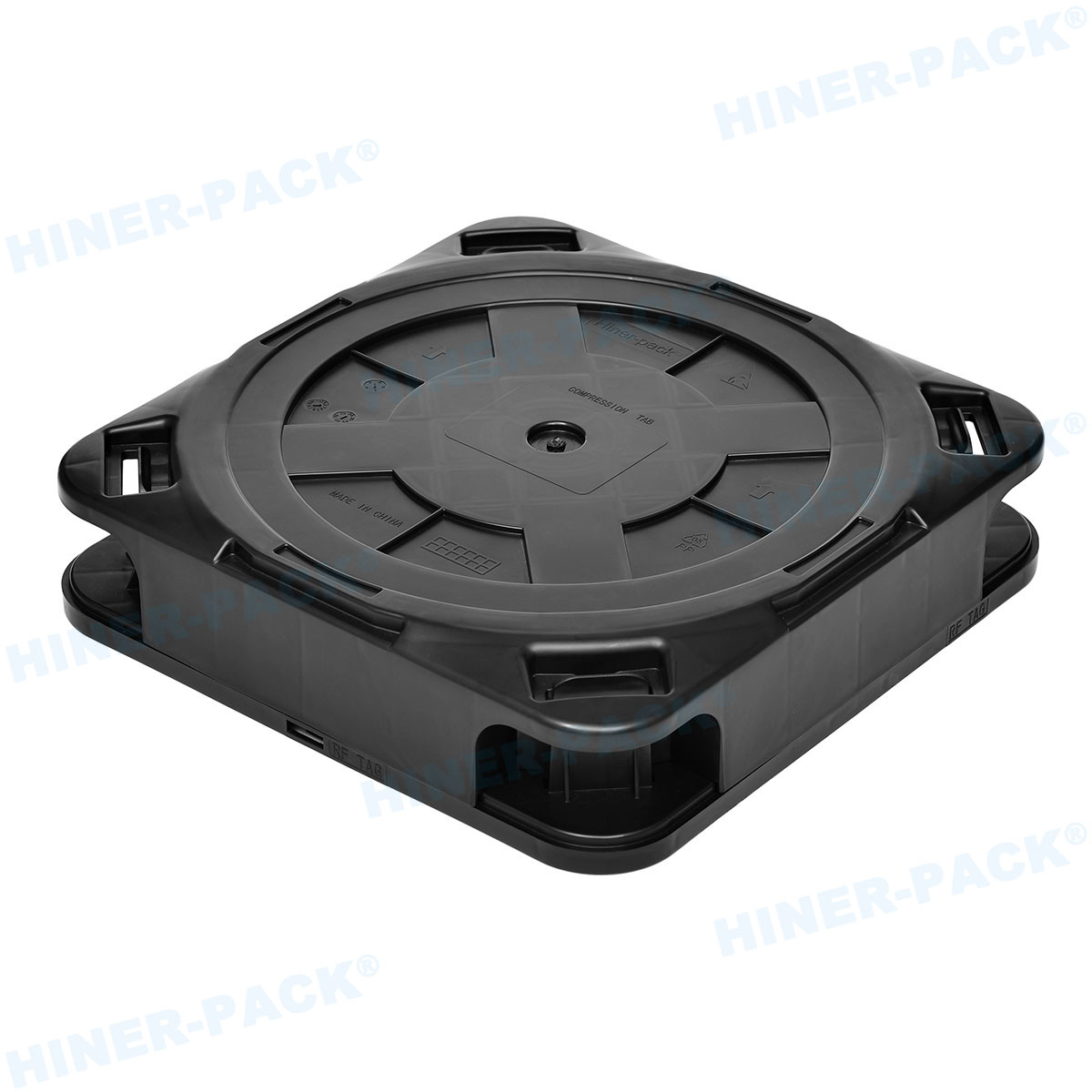
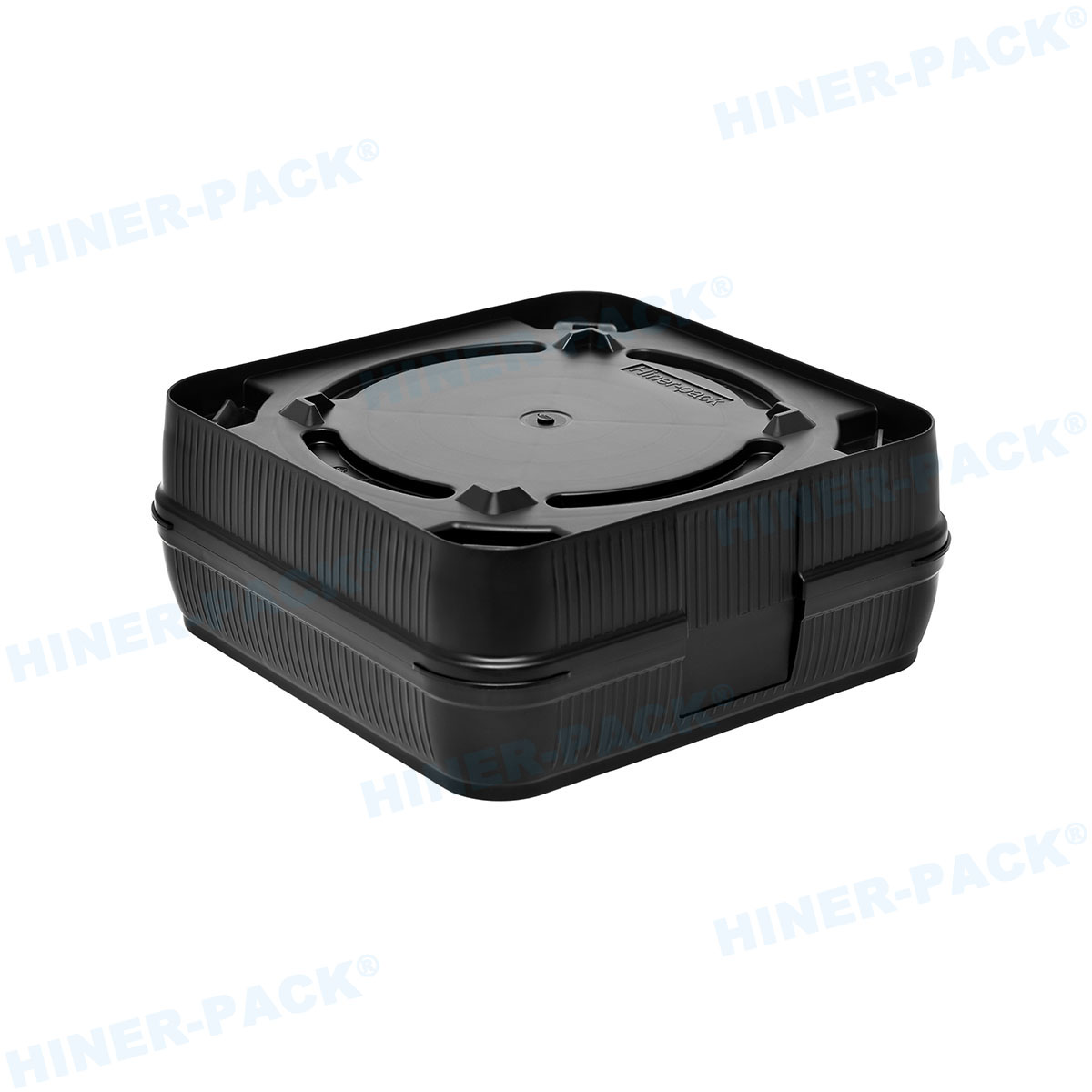
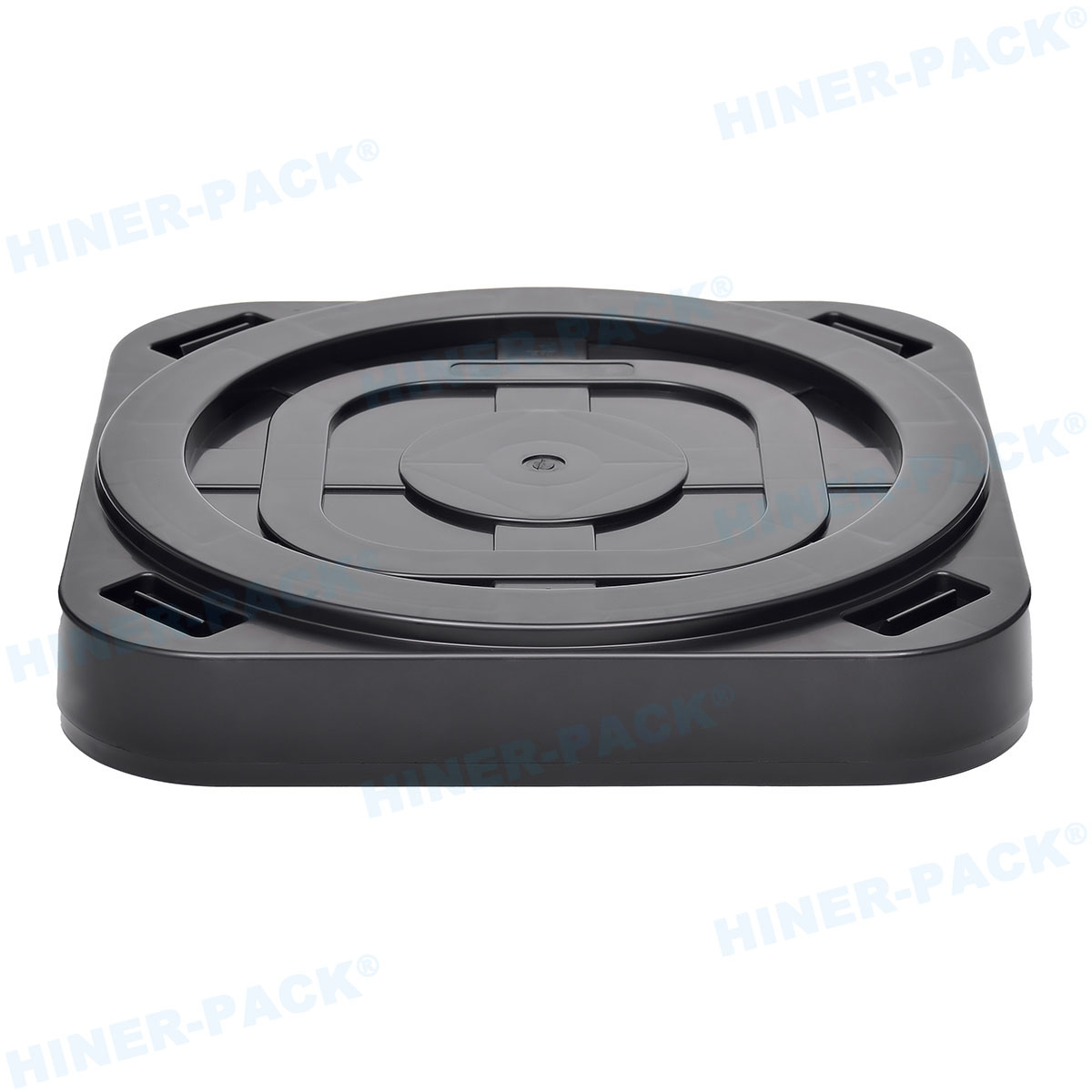
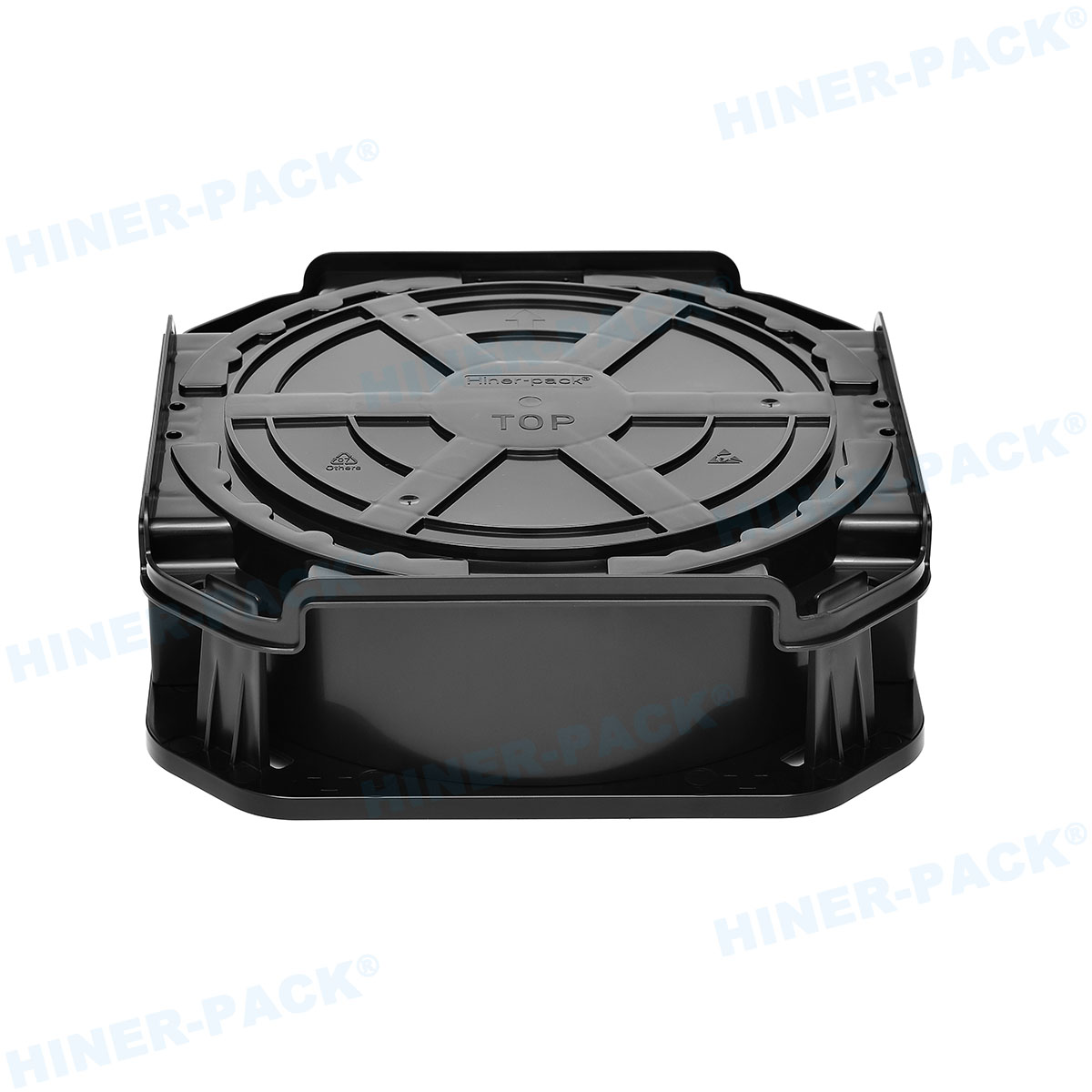
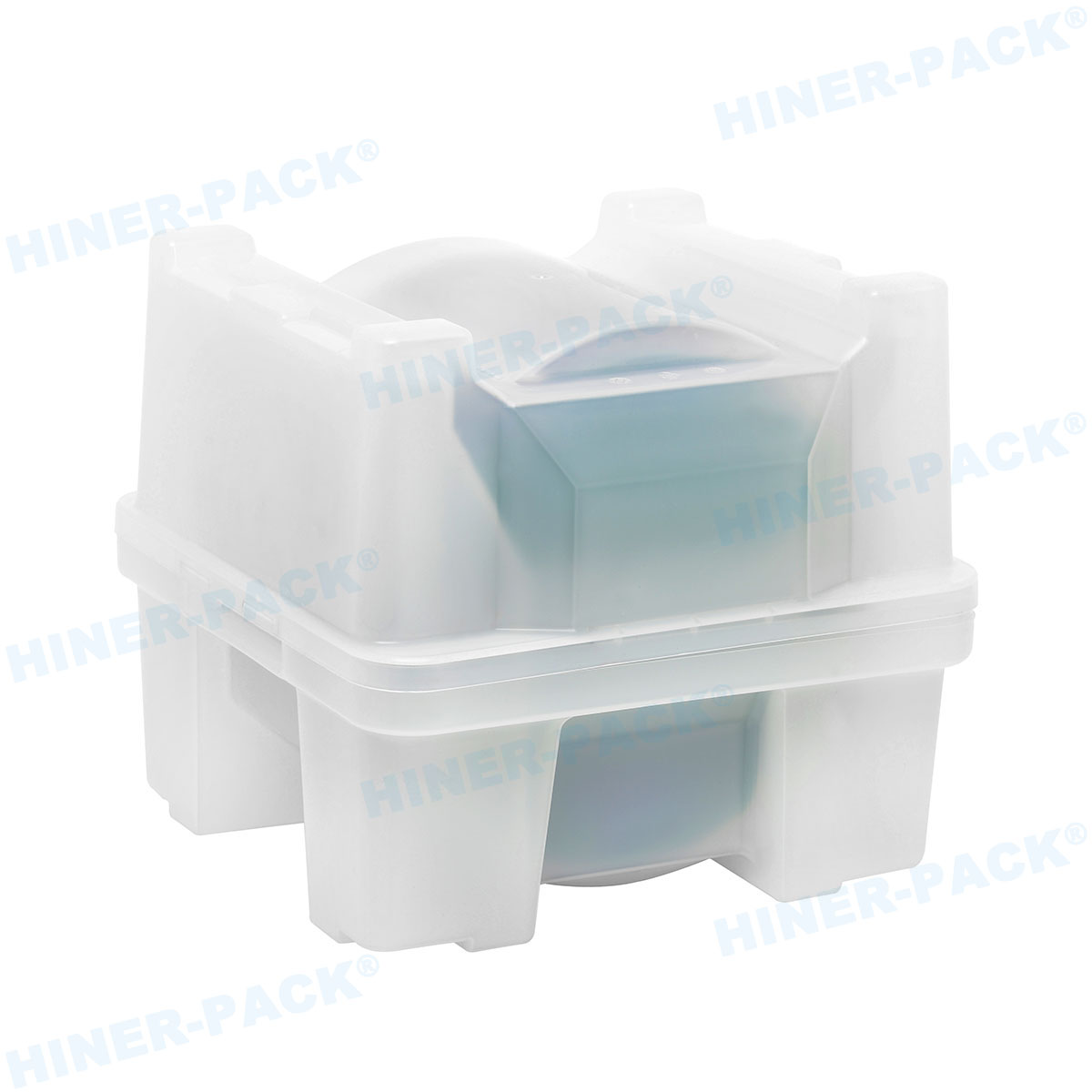
In the domain of advanced semiconductor packaging, the transition to Land Grid Array (LGA) packages presents distinct challenges for IC handling, transportation, and surface-mount assembly. Unlike leaded devices, LGA packages rely on planar gold-plated pads that demand absolute protection from physical contaminants and electrostatic discharge (ESD). The industry-standard solution for bulk processing, testing, and automated placement is the LGA JEDEC matrix IC trays. These precision-engineered carriers are not mere shipping containers; they are integral to yield management, process automation, and component reliability. This technical analysis, drawing on two decades of semiconductor supply chain expertise, dissects the architecture, materials, and application protocols governing JEDEC matrix trays specifically for LGA form factors.
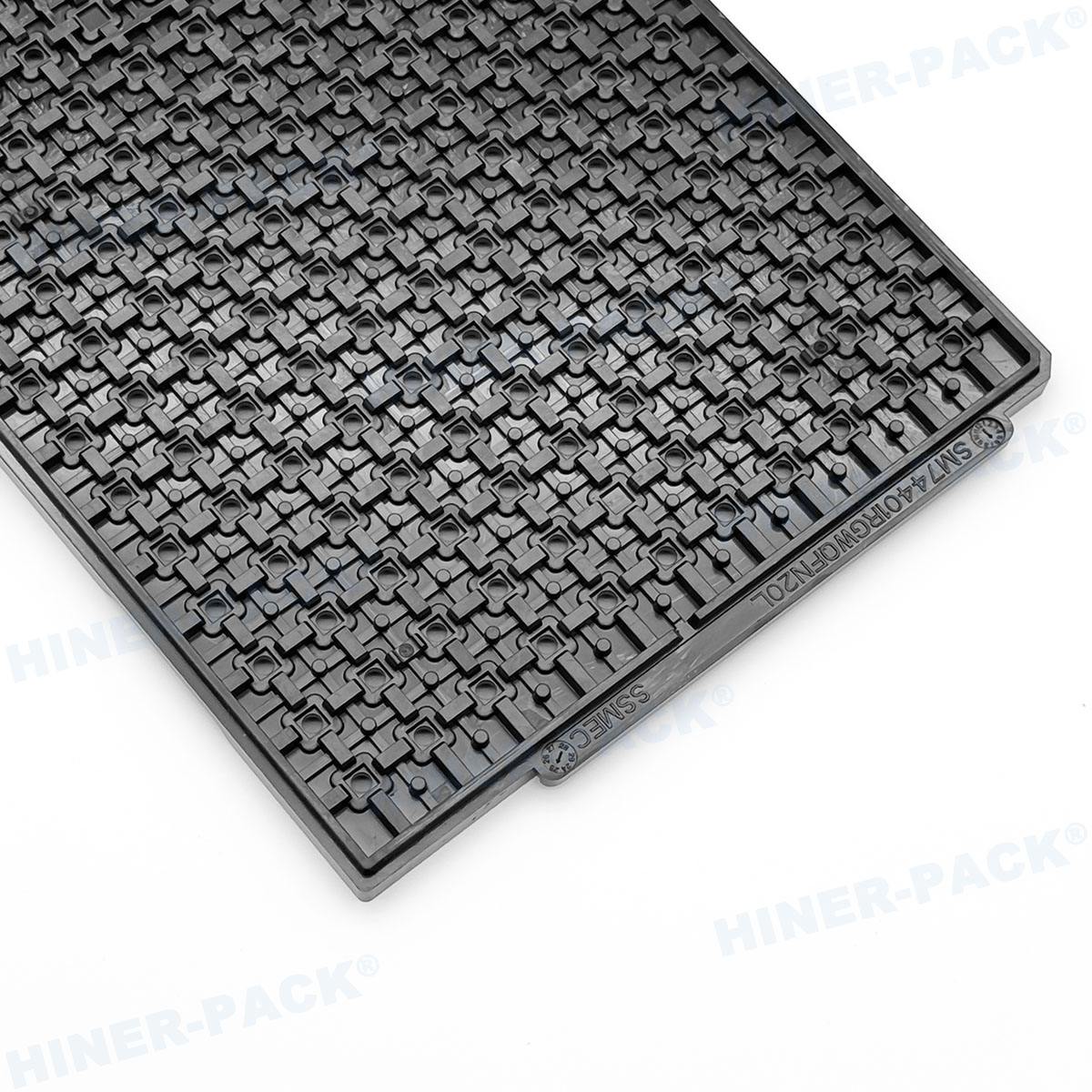
1. Decoding the LGA JEDEC matrix IC trays Standard: Dimensions, Cell Geometry, and Tray Stacking
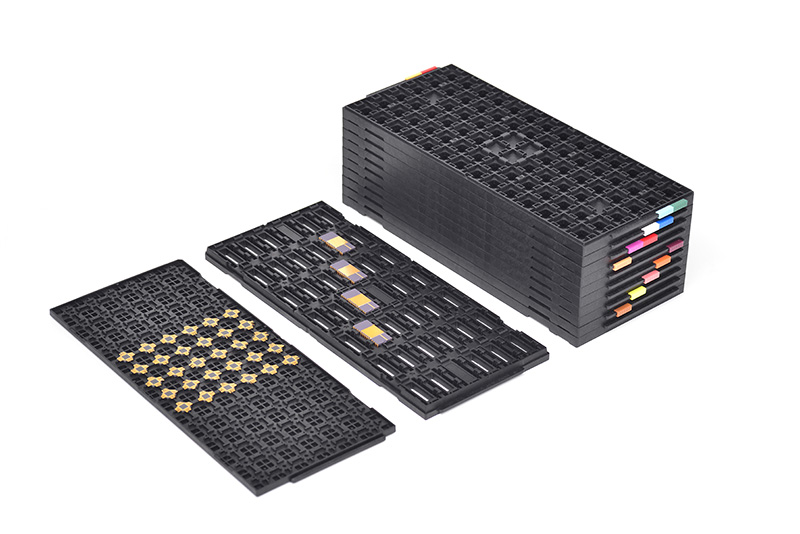
JEDEC Solid State Technology Association established the publication 95 (Design Standard for Trays for Handling and Shipping) to ensure interoperability across IC manufacturers, test houses, and assembly lines. LGA JEDEC matrix IC trays conform to specific tray outlines such as 322 mm x 322 mm (JEDEC standard outline for large matrices) or mini trays of 196 mm x 245 mm. The matrix cell array (commonly 4×24, 6×20, or 8×28) is engineered to match the body size of LGA packages, ranging from 10×10 mm to 50×50 mm for high-performance computing devices.
Key geometric characteristics include:
Cell pocket depth and draft angle: Designed to accommodate LGA package thickness (generally 0.8 mm to 3.5 mm) while providing a self-centering lead-free pocket.
Orientation features: Chamfered corner indicators and polarity notches that prevent misplacement in automated pick-and-place systems.
Stacking ribs and anti-nesting steps: Ensure stable stacking up to 25 trays without crushing underlying devices or inducing warp on LGA pad planarity.
Dimensional tolerance: ±0.05 mm for cell pitch and pocket depth to maintain coplanarity of LGA contacts – critical for avoiding reflow defects.
The matrix structure allows for maximum density (up to 540 units per tray), drastically reducing handling costs and floor space in IC burn-in and calibration stages.
2. Material Science and ESD Performance: Selecting Substrates for Static-Dissipative IC Packaging
LGA packages are highly susceptible to latent ESD damage because their contact pads are exposed and leadless. LGA JEDEC matrix IC trays must therefore provide controlled conductivity. The most widely adopted materials include:
Polyetherimide (PEI) with carbon-based additives: Offers a surface resistance range of 10³ to 10⁹ Ω/sq, high thermal stability (continuous use up to 170°C), and excellent chemical resistance to cleaning agents.
High-temperature Polyphenylene Sulfide (PPS): Suitable for post-mold curing processes (up to 200°C) and reflow-compatible tray applications.
Conductive Polycarbonate (PC) blends: Cost-effective for room temperature testing and logistics, but limited to ≤125°C applications.
Beyond static dissipation, the material must exhibit low outgassing (to prevent contamination of gold LGA pads) and consistent dimensional stability over humidity cycles. Hiner-pack provides fully characterized JEDEC trays with certified surface resistivity and maximum warpage ≤0.5 mm across the tray diagonal – a performance metric validated by optical measurement systems.
3. Critical Application Workflows Using JEDEC Matrix Trays for LGA Devices
3.1 IC Final Test and Burn-In
During high-temperature burn-in (typically 125°C to 150°C for 48 hours), the tray must withstand thermal cycling without losing flatness. Matrix trays designed with reinforced ribs and heat-stabilized polymers ensure contactors align properly with LGA pads. Hiner-pack offers custom-machined tray inserts that accommodate different LGA package heights while preserving cell-to-cell isolation.
3.2 Automated Optical Inspection (AOI) and Tape & Reel Prep
In high-speed IC handling lines, vacuum pickup compatibility is paramount. JEDEC matrix trays provide clear cell access with optimized pocket depth so that vacuum nozzles do not contact tray walls. This reduces nozzle wear by 30% and prevents skipped parts during pick-and-place.
3.3 In-Plant Logistics for SMT Assembly
Large EMS providers frequently integrate LGA trays directly into JEDEC-standard tray loaders or auto tray magazines. The tray’s stack alignment features (corner stops and side rail recesses) enable seamless feeding to placement machines like Siemens SIPLACE or Fuji NXT, reducing changeover time.
4. Industry Pain Points and Engineered Solutions for LGA Tray Handling
Despite rigorous standards, four persistent challenges affect yields in LGA packaging lines:
Warpage-induced contact coplanarity failure: When trays warp beyond 0.8 mm, LGA pads may tilt during SMT solder paste printing, causing open joints. The solution is a flatness-verified tray with peripheral stiffening bridges and edge clips.
Tray-to-tray cell misalignment in stackers: Stack misalignment leads to device chipping at edges. Precision-molded stacking pins with ±0.025 mm positioning eliminate this risk.
Triboelectric charging during tray sliding: High-speed conveyor friction can generate surface charges exceeding 2 kV. Using dissipative materials (surface resistivity 10⁶–10⁹ Ω) with anti-static additives neutralizes charges.
Contamination from recycled trays: Reusing trays without proper cleaning introduces particles >0.5 µm on LGA pads. Hiner-pack implements a closed-loop cleaning and static verification service, ensuring returned trays meet ISO Class 5 cleanliness standards.
By addressing these pain points with design optimization and material upgrades, the industry has reduced LGA field failure rates by nearly 40% when using qualified matrix trays.
5. Engineering Selection Guide: Specifying LGA JEDEC matrix IC trays for Production Lines
When procuring trays for LGA-based modules, engineers must evaluate the following parameters:
Tray outline compatibility: Identify JEDEC Outline Code (e.g., Tray-4-2416 or T-322-25) matching existing handlers.
Matrix pitch vs LGA body size: Cell X/Y pitch = LGA length + 0.5~1.0 mm (clearance for thermal expansion).
Temperature profile: For inline processing, select trays rated for 5 full cycles of –40°C to +150°C with less than 0.3% irreversible shrinkage.
ESD classification: Per ANSI/ESD S20.20, require trays with static-dissipative properties (1×10⁵ to 1×10¹² Ω).
Tray stackability and ID marking: 2D barcode cavities for automated scanning and traceability from wafer sort to board assembly.
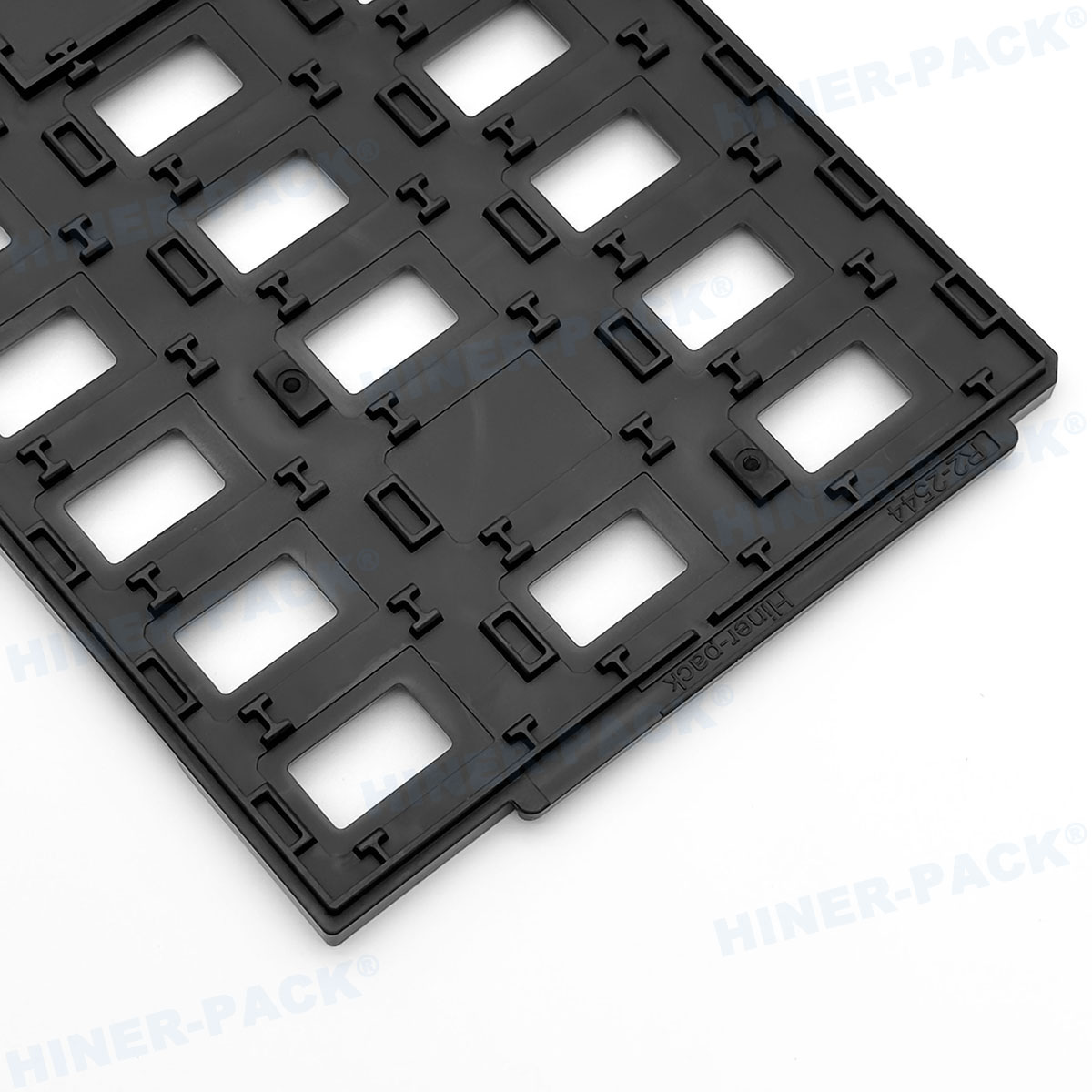
Hiner-pack provides a parametric search tool for JEDEC tray dimensions and material datasheets, ensuring that each LGA JEDEC matrix IC trays matches the automated handling environment without modification.
6. Operational Best Practices: Storage, Cleaning, and Tray Lifecycle Management
To maximize the utility of matrix trays across thousands of production cycles, follow these protocols:
Storage conditions: Keep trays in original shipping bags (ESD shielding) at 20°C–25°C, 40–60% RH. Avoid UV exposure which degrades dissipative additives.
Cleaning method: Use deionized water with mild surfactant in ultrasonic baths (max 5 min) followed by forced hot air drying (≤70°C). Never use abrasive brushes on cell cavities.
Inspection frequency: Visually inspect each tray after 50 cycles; measure flatness using a dial gauge; replace trays if warpage exceeds 0.7 mm or damaged cells found.
Recycling programs: Partner with suppliers offering take-back schemes to grind and remold trays, reducing plastic waste by 85% and meeting Scope 3 sustainability goals.
7. Frequently Asked Questions (Technical & Operational)
Q1: What differentiates an LGA JEDEC matrix IC tray from standard IC trays for QFP or BGA packages?
A1: LGA packages have a flat bottom array of pads without leads or solder balls, demanding a cell pocket with no sharp ribs that could scratch gold pads. JEDEC trays for LGA incorporate a smooth, beveled floor and tighter coplanarity control (max cell depth variation ≤0.05 mm). Additionally, LGA trays often include anti-tilt features for vacuum pickup, as pad surfaces offer less friction than solder balls.
Q2: Can JEDEC matrix trays withstand lead-free reflow temperatures if passed through a vapor phase oven?
A2: Standard trays are not designed for reflow ovens (peak >245°C). For in-process reflow applications, specialized high-temperature trays made of PPS (max 270°C) or PEI (max 230°C continuous) are available. However, most LGA LGA JEDEC matrix IC trays are intended for ambient temperature handling and burn-in (<150°C). Do not expose standard trays to reflow.
Q3: How do I verify if a tray complies with JEDEC standard MS-xxx?
A3: Check the tray body for stamped JEDEC code (e.g., MS-139, MS-153) and request a compliance certificate from the manufacturer. Key metrics include pocket pitch tolerance (±0.05 mm), tray outline dimension, stack height at 25 trays (≤60 mm), and material identification per the JEDEC JEP95 guideline.
Q4: What is the typical cost per unit for high-volume orders of custom LGA JEDEC trays?
A4: For volumes exceeding 50,000 pieces, custom-engineered trays range from $1.80 to $4.50 per unit, depending on material (PPS vs. PC) and matrix density. Standard catalog trays are 30–40% more economical. Hiner-pack provides volume pricing and engineering consultation for dedicated LGA tray designs.
Q5: How many cycles can a typical LGA Jedec matrix IC tray withstand before performance degrades?
A5: Under recommended handling conditions (ESD-safe, no chemical exposure, flat stacking), PC-based trays achieve 300–500 cycles. PPS and PEI trays often exceed 1,500 cycles. Cyclic degradation manifests as increased surface resistivity (above 10¹² Ω) or warpage. Regular testing with a surface resistance meter ensures reliability.
8. Future Outlook: Automation and Traceability in Matrix Tray Ecosystems
The next generation of LGA JEDEC matrix IC trays will integrate embedded RFID or conductive trace patterns for real-time inventory tracking and process control. Smart trays will communicate with automated guided vehicles (AGVs) to log environmental stress (humidity shocks, excessive stack pressure) and trigger quality alerts. This aligns with Industry 4.0 demands for zero-defect logistics. Early adopters already leverage tray-level data matrix codes that store batch-specific moisture sensitivity level (MSL) ratings, directly feeding into SMT line software to adjust bake-out protocols.
As LGA packaging expands into automotive ADAS and high-performance computing, the mechanical integrity of JEDEC trays becomes inseparable from functional safety (ISO 26262). Suppliers must provide full material declarations and reliability test reports. Hiner-pack supports these requirements with PPAP level 3 documentation and 100% dimensional inspection on all tray shipments.
Ready to Optimize Your LGA Handling Line? Request Technical Consultation or Free Samples
Choosing the correct JEDEC matrix tray reduces device damage, boosts throughput, and lowers operating costs. Whether you need a standard off-the-shelf tray or a custom-engineered matrix for a new LGA design, our engineering team provides full lifecycle support. Contact Hiner-pack today for a detailed quote, free of charge flatness verification, or to speak directly with a semiconductor logistics specialist.
Send your inquiry including LGA body size, desired matrix dimensions, temperature requirements, and annual volume to our sales team. We will respond within 24 hours with datasheets and commercial proposal.
Request a Quote Now – Hiner-pack Official Website