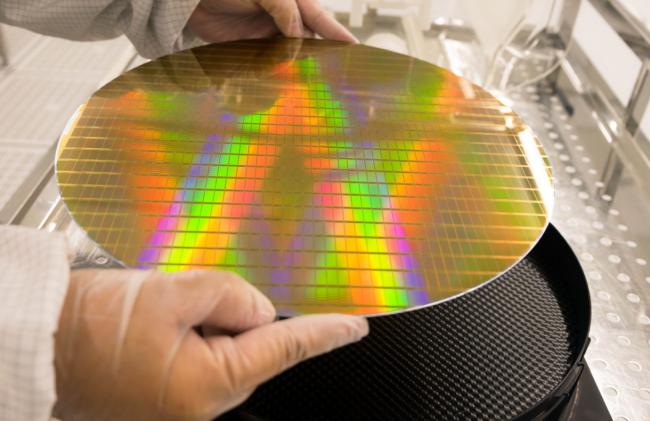
Semiconductor manufacturing is a game of yield. Every time a silicon wafer is touched or moved, the risk of defect generation increases. This risk is highest after the front-end processing is complete, when wafers are thinned, mounted on dicing tape, and prepared for assembly.
For 200mm (8-inch) production lines, particularly those handling power devices, MEMS, or IGBTs, the physical transport of these mounted wafers is a critical step. The wafers are no longer rigid disks; they are fragile, thinned sheets of silicon held in place only by adhesive tape on a metal or plastic frame.
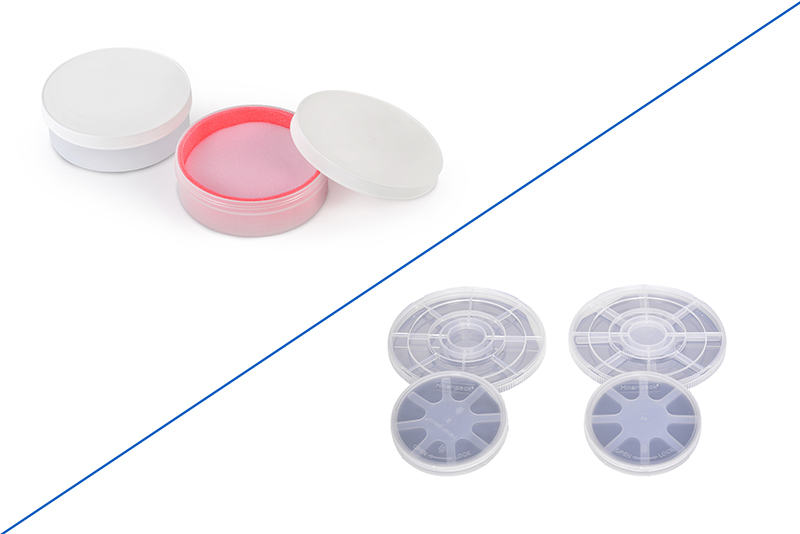
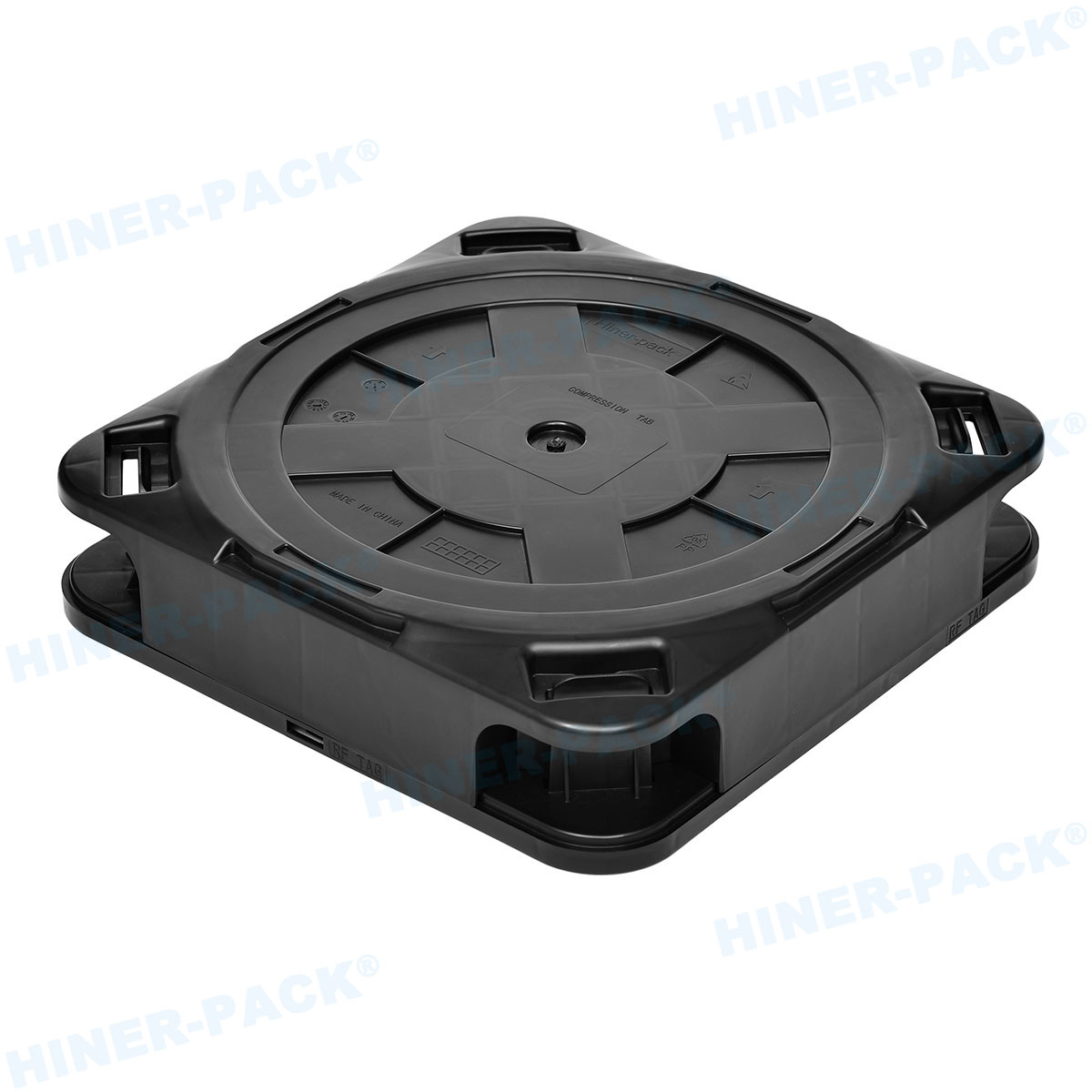
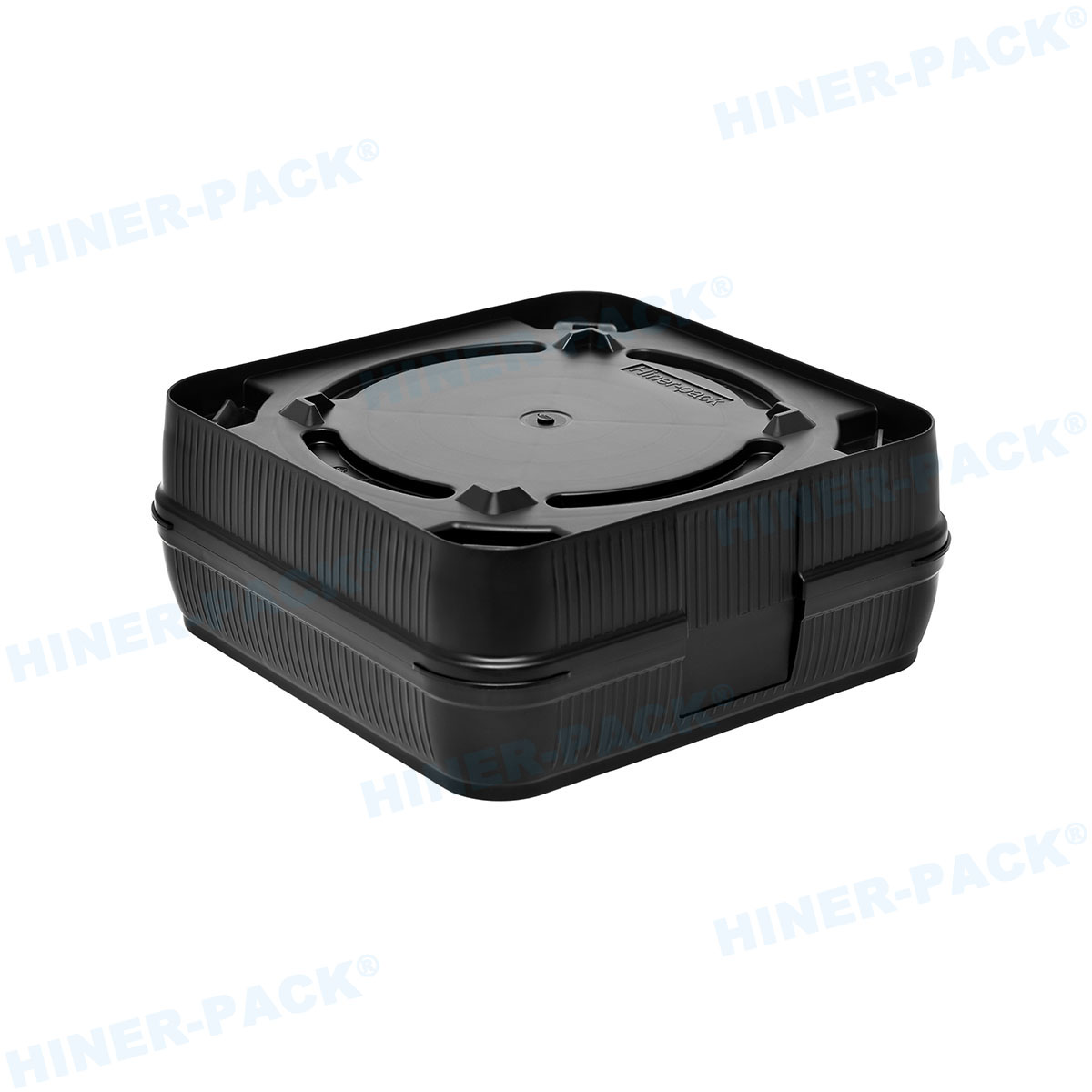
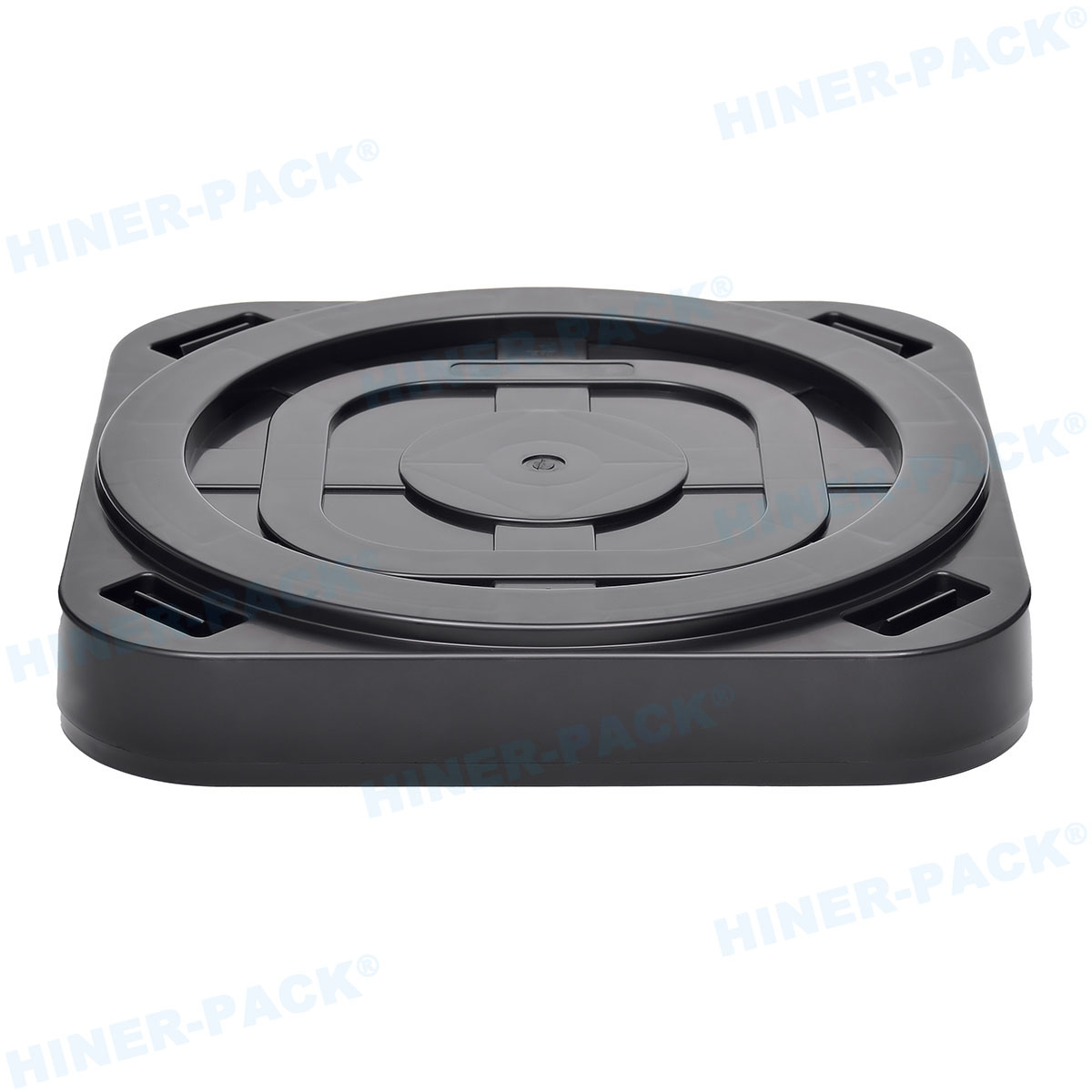
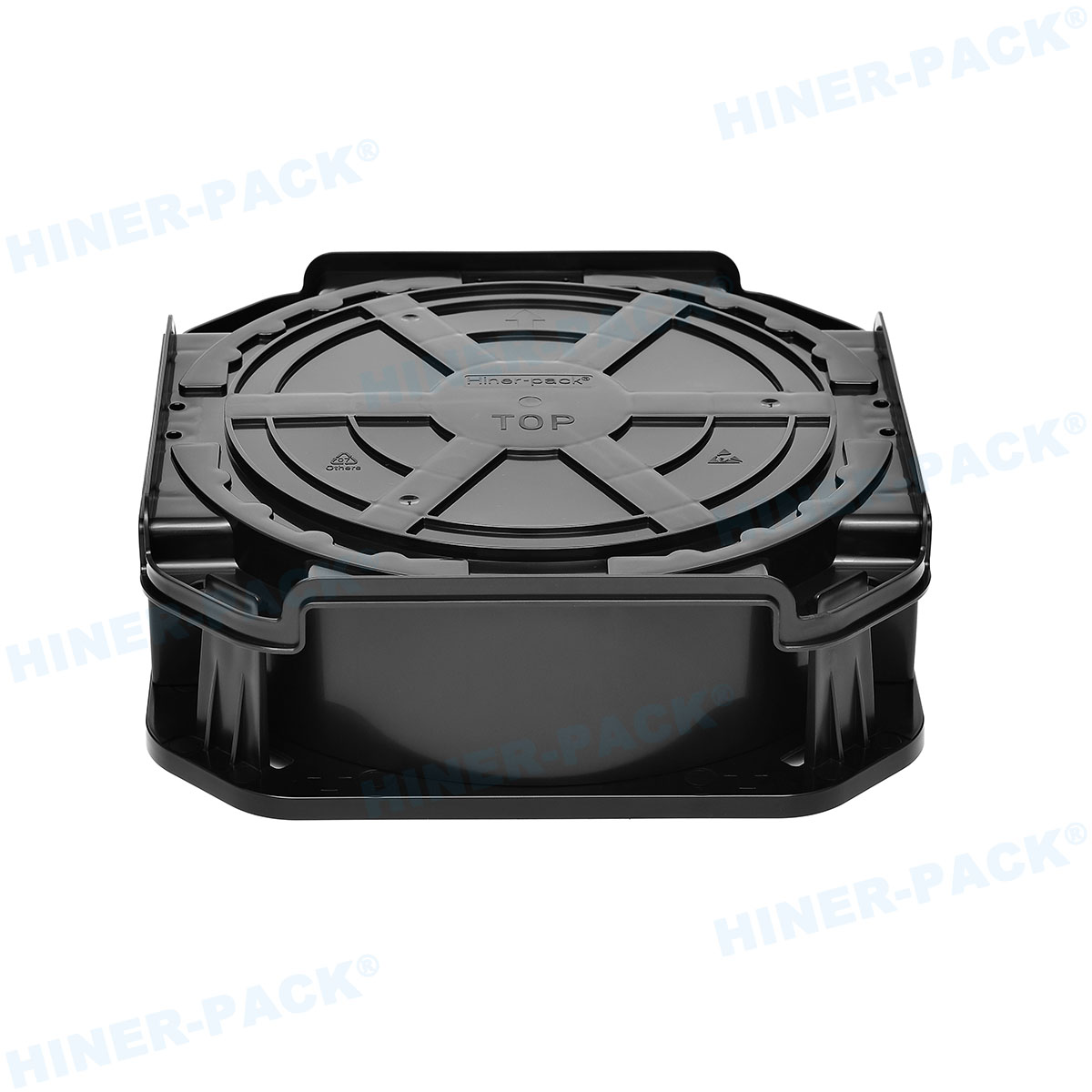
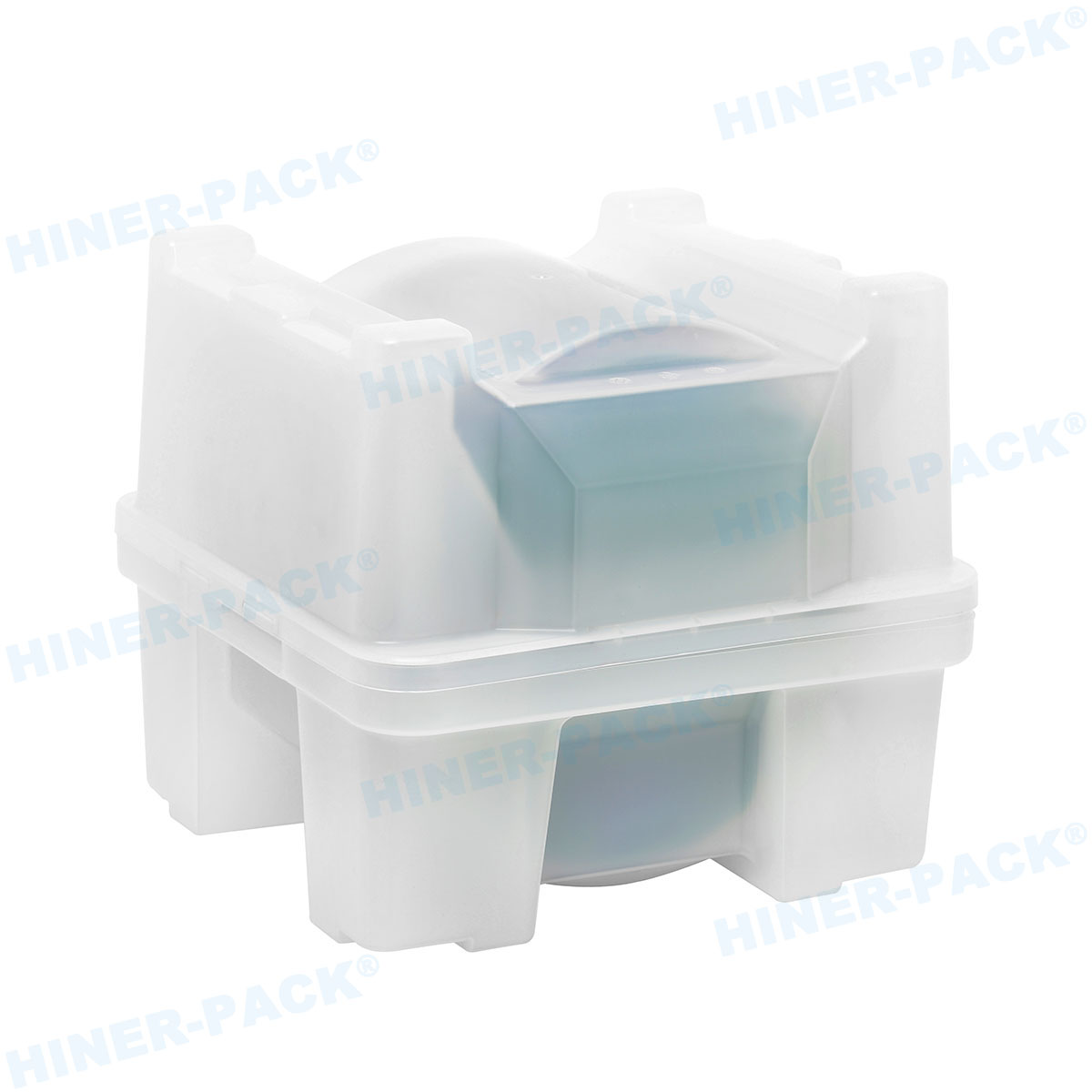
Standard coin-stack boxes are often insufficient for these delicate payloads. This is where the 8-inch Vertical Flex Frame Wafer Shipper becomes an essential tool in the supply chain. It provides a specialized environment that separates wafers, protects sensitive surfaces, and ensures that the transition from the fab to the OSAT (Outsourced Semiconductor Assembly and Test) facility occurs without breakage.
At Hiner-pack, we have observed a shift in how engineers prioritize shipping materials. The focus has moved from simple containment to active protection, specifically for wafers mounted on film frames.
The Challenge of Shipping Mounted Wafers
Once a wafer is mounted on a flex frame (also known as a dicing frame or film frame), it changes physically. The combined diameter is larger than the wafer itself, and the wafer is now susceptible to different types of stress.
If you stack these frames horizontally, gravity takes a toll. The center of the wafer, which is unsupported, can sag. If the wafer is thinned to 50 microns or less, this sagging can cause warpage or stress fractures.
Furthermore, horizontal stacking often allows for "slapping" during transport—where the frame above hits the delicate surface of the wafer below during bumps or vibrations.
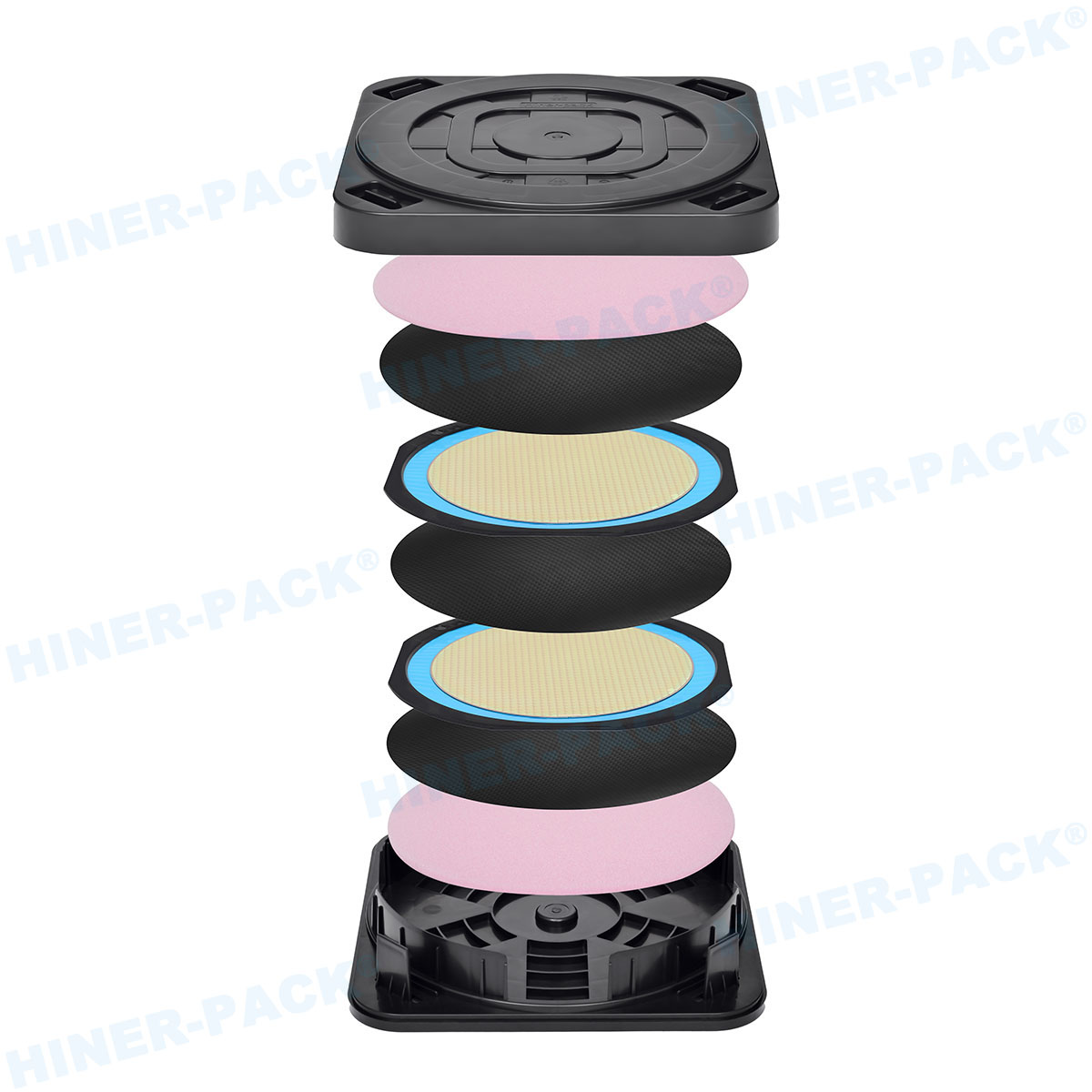
The 8-inch Vertical Flex Frame Wafer Shipper solves this by rotating the orientation. By storing the frames vertically, similar to how records are stored, the weight of the wafer is supported by the frame's edge. Gravity no longer pulls the center of the wafer down into the component below it.
Design Features of the 8-inch Vertical Flex Frame Wafer Shipper
A high-quality shipper is more than just a plastic box. It is a precision-engineered device. The internal slots must align perfectly with the standard dimensions of industry-standard film frames (such as Disco or DTF formats).
The primary mechanism of protection is the "floating" suspension. The frame edges slide into grooves that hold the assembly rigid, while the silicon wafer itself touches nothing. There is an air gap on both sides of the wafer face.
Hiner-pack designs these shippers with robust latching mechanisms. A shipper that opens accidentally during a drop test is a failed design. Our latches are engineered to absorb impact energy, keeping the lid securely fastened even under high G-force events.
Additionally, the handle design is crucial. Operators in a cleanroom are wearing double gloves. The handle of an 8-inch Vertical Flex Frame Wafer Shipper must be ergonomic and grippable to prevent drops caused by clumsiness or lack of tactile feedback.
Material Science and ESD Control
Static electricity is a silent killer in semiconductor manufacturing. When a plastic frame slides into a plastic slot, friction generates a charge. If this charge discharges into the wafer, it can blow out gate oxides or damage sensitive circuitry.
Therefore, the material used to mold the shipper is vital. Standard polyethylene or polypropylene is essentially an insulator and creates static.
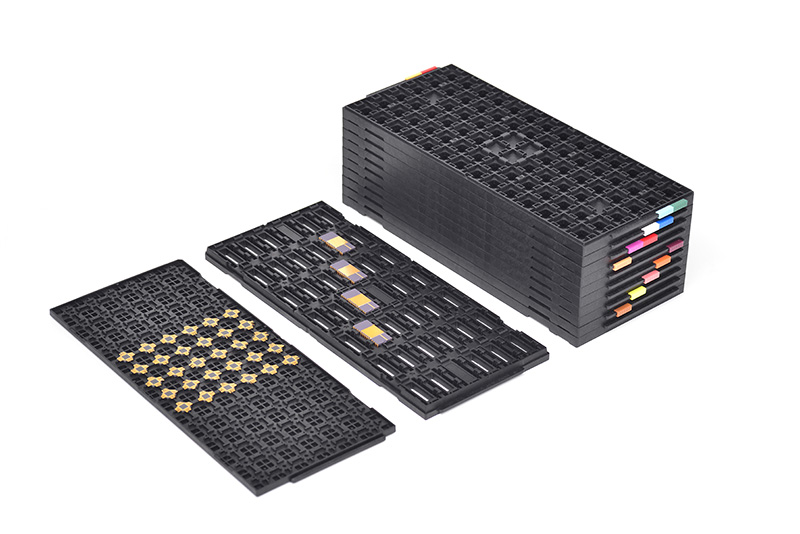
Professional shippers use Carbon-filled polymers or inherently static-dissipative (IDP) materials. These materials provide a path for the charge to bleed off slowly to the ground.
Hiner-pack utilizes advanced conductive compounds to ensure that our shipping solutions meet strict ANSI/ESD S20.20 standards. When a customer places a frame into our container, they are placing it into a Faraday cage that shields the product from external static fields.
Why 200mm Production Still Needs Innovation
The industry buzz is often about 300mm automation, but the 200mm market remains the workhorse for automotive and industrial electronics. These sectors are currently pushing the boundaries of wafer thinning.
IGBTs (Insulated-Gate Bipolar Transistors) used in electric vehicles require extremely thin silicon to reduce resistance and heat. Handling a wafer that is as flexible as paper requires specialized tooling.
You cannot put a 50-micron wafer in a standard cassette. It must be on a frame. Consequently, the demand for the 8-inch Vertical Flex Frame Wafer Shipper has grown alongside the EV revolution.
The infrastructure for 200mm is often older, meaning manual handling is more common than in fully automated 300mm fabs. This human element increases the need for robust, mistake-proof packaging. The shipper must be intuitive to open and close, reducing the chance of operator error.
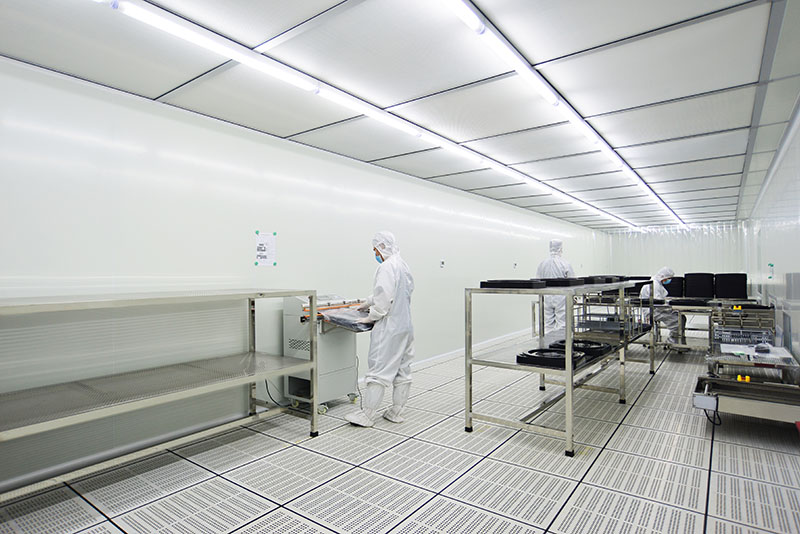
Hiner-pack’s Focus on Cleanliness and Contamination
Particles are the enemy. A shipping container that introduces dust to the wafer is counterproductive.
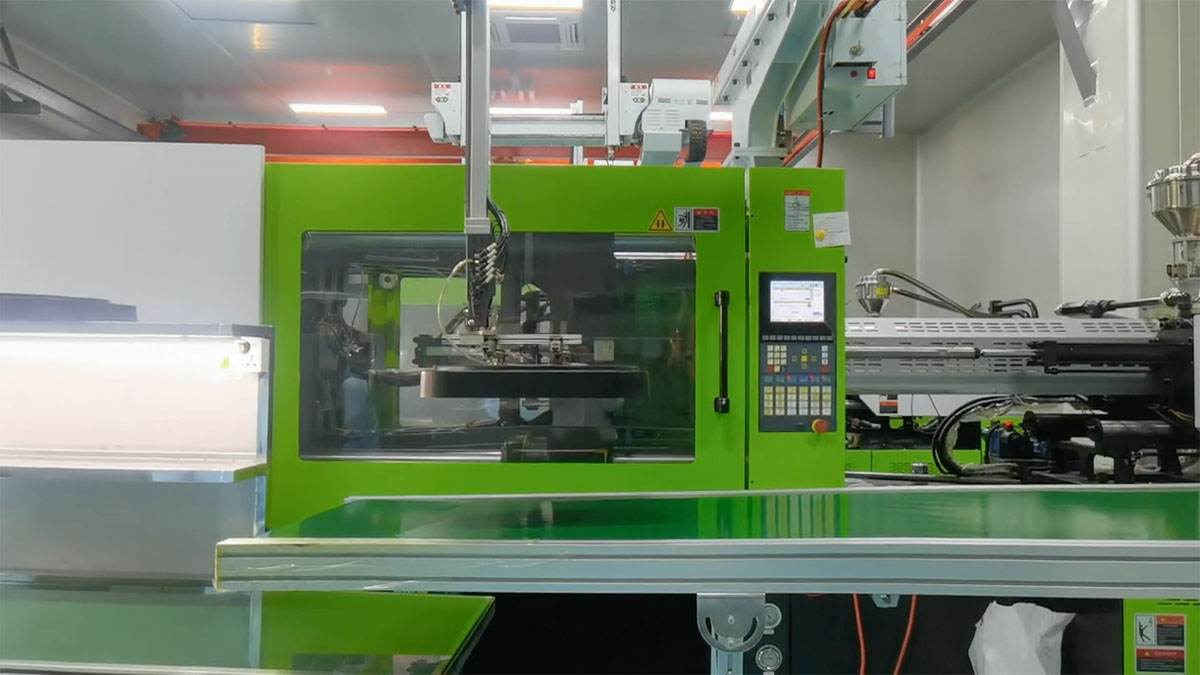
The molding process for these shippers must happen in a clean environment. If the mold release agents or plastic shavings remain in the box, they will eventually migrate to the sticky dicing tape on the frame.
Once particles are stuck to the dicing tape, they can be released during the dicing process (sawing), contaminating the die. Or, they can interfere with the vacuum chucks used in pick-and-place machines.
We ensure that every 8-inch Vertical Flex Frame Wafer Shipper leaving our facility undergoes rigorous cleaning and inspection. We prioritize low-outgassing materials to prevent volatile organic compounds (VOCs) from depositing residues on the wafer surface during long sea freight voyages.
Integration with Dicing and Sorting Equipment
The logistics container is part of the manufacturing line. The design of the shipper must account for how the frames are removed.
In many high-volume OSATs, the removal of frames from shipping boxes is semi-automated. The spacing between the slots (pitch) in the shipper matters. If the pitch is too tight, the robot end-effector cannot grab the frame without scratching the neighbor.
We design our shippers with optimal pitch to balance density (shipping more wafers per box) with accessibility. This prevents bottlenecks at the receiving dock of the assembly house.
Cost Considerations and Reusability
Shipping containers are an operating expense. Fabs naturally want to reduce this cost.
There is a temptation to use single-use, cheap cardboard or low-grade plastic solutions. However, the cost of a single scrapped wafer often exceeds the cost of a premium shipper.
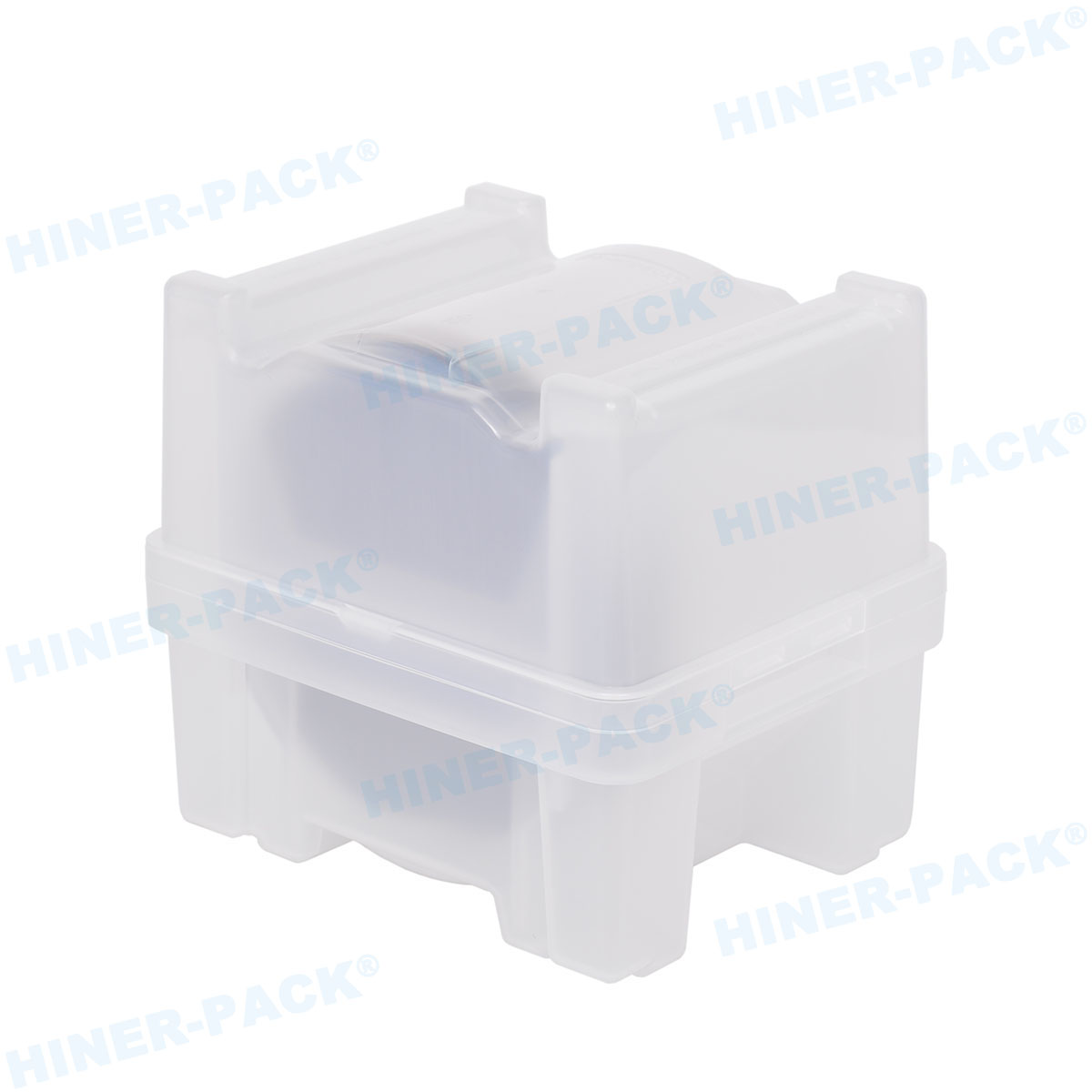
The 8-inch Vertical Flex Frame Wafer Shipper is designed for reuse. It is a returnable asset. Hiner-pack builds durability into the hinges and wall thickness so that the container can survive multiple round trips between the fab and the assembly facility.
Reuse requires washing. The plastic must withstand ultrasonic cleaning and drying temperatures without warping. We test our materials to ensure dimensional stability over dozens of wash cycles.
Reducing Vibration Damage During Transport
Trucks and airplanes vibrate. This vibration occurs at specific frequencies that can resonate with the wafer.
If the wafer frame fits loosely in the slot, it will rattle. This rattling generates particles (plastic abrasion) and can cause micro-cracks in the silicon edges.
A superior 8-inch Vertical Flex Frame Wafer Shipper features a "snug fit" tolerance. It may also include internal cushioning elements or shock-absorbing ribs on the exterior of the box.
Hiner-pack engineers analyze the shock transmission of our designs. We simulate drop tests and vibration profiles consistent with international shipping standards (ISTA) to ensure the internal suspension system dampens the energy rather than transmitting it to the silicon.
The Role of Branding and Identification
When thousands of boxes arrive at a large foundry, identification is key.
Our shippers feature dedicated areas for barcode labels, RFID tags, or document pouches. This ensures that the lot information travels securely with the wafers.
Visual management is also part of the design. Different colored latches or bodies can signify different product types or customer destinations, helping logistics personnel sort shipments visually before scanning.
The safety of semiconductor wafers during the "last mile" of their journey is crucial for profitability. As wafers become thinner and more valuable, the risks associated with transport increase.
The 8-inch Vertical Flex Frame Wafer Shipper offers the mechanical protection, ESD safety, and cleanroom compatibility required by modern fabrication standards. It transforms a high-risk logistical step into a controlled, reliable process.
At Hiner-pack, we are committed to engineering packaging solutions that protect your yield. By choosing a vertical suspension system for your mounted wafers, you ensure that the product arrives at the assembly house in the exact same condition it left the fab.
Frequently Asked Questions (FAQ)
Q1: What is the main advantage of a vertical shipper over a horizontal coin-stack shipper for frames?
A1: The primary advantage is the prevention of wafer sag and surface contact. In an 8-inch Vertical Flex Frame Wafer Shipper, the frame is supported by its edges, ensuring the thinned wafer does not touch the frame next to it. Horizontal stacking can cause the center of a thin wafer to sag due to gravity, leading to potential warping or contact damage.
Q2: How many frames can a standard Hiner-pack vertical shipper hold?
A2: The capacity varies by specific model, but the industry standard for these shippers is typically 13 or 25 frames per container. The spacing (pitch) is designed to allow safe insertion and removal by operators or robotic arms without the frames touching each other.
Q3: Is the 8-inch Vertical Flex Frame Wafer Shipper ESD safe?
A3: Yes, Hiner-pack manufactures these shippers using static-dissipative or conductive polymers. This ensures that any electrostatic charge generated during handling is safely drained to the ground, protecting the sensitive electronic components on the wafer from ESD damage.
Q4: Can these shippers be cleaned and reused?
A4: Absolutely. Our shippers are constructed from durable, high-grade plastics designed to withstand multiple loops of transport and industrial washing. They are resistant to standard cleaning chemicals and drying temperatures, making them a sustainable, cost-effective choice for long-term logistics.
Q5: What types of film frames fit into these shippers?
A5: These shippers are designed to accommodate industry-standard 8-inch (200mm) wafer frames, such as those made by Disco or various stainless steel and plastic frame manufacturers. We recommend checking the specific outer dimensions of your frames against our datasheet to ensure a secure, rattle-free fit.