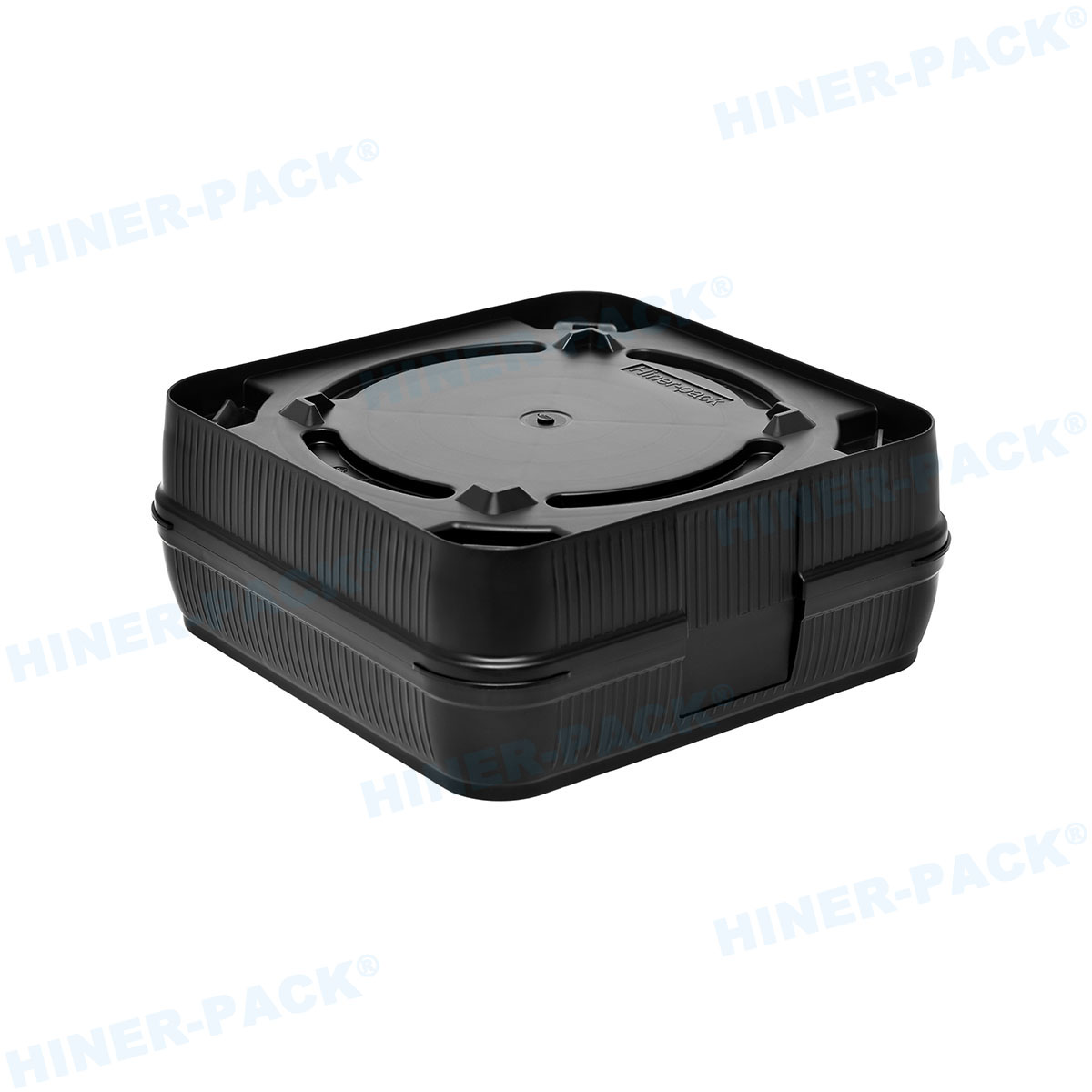
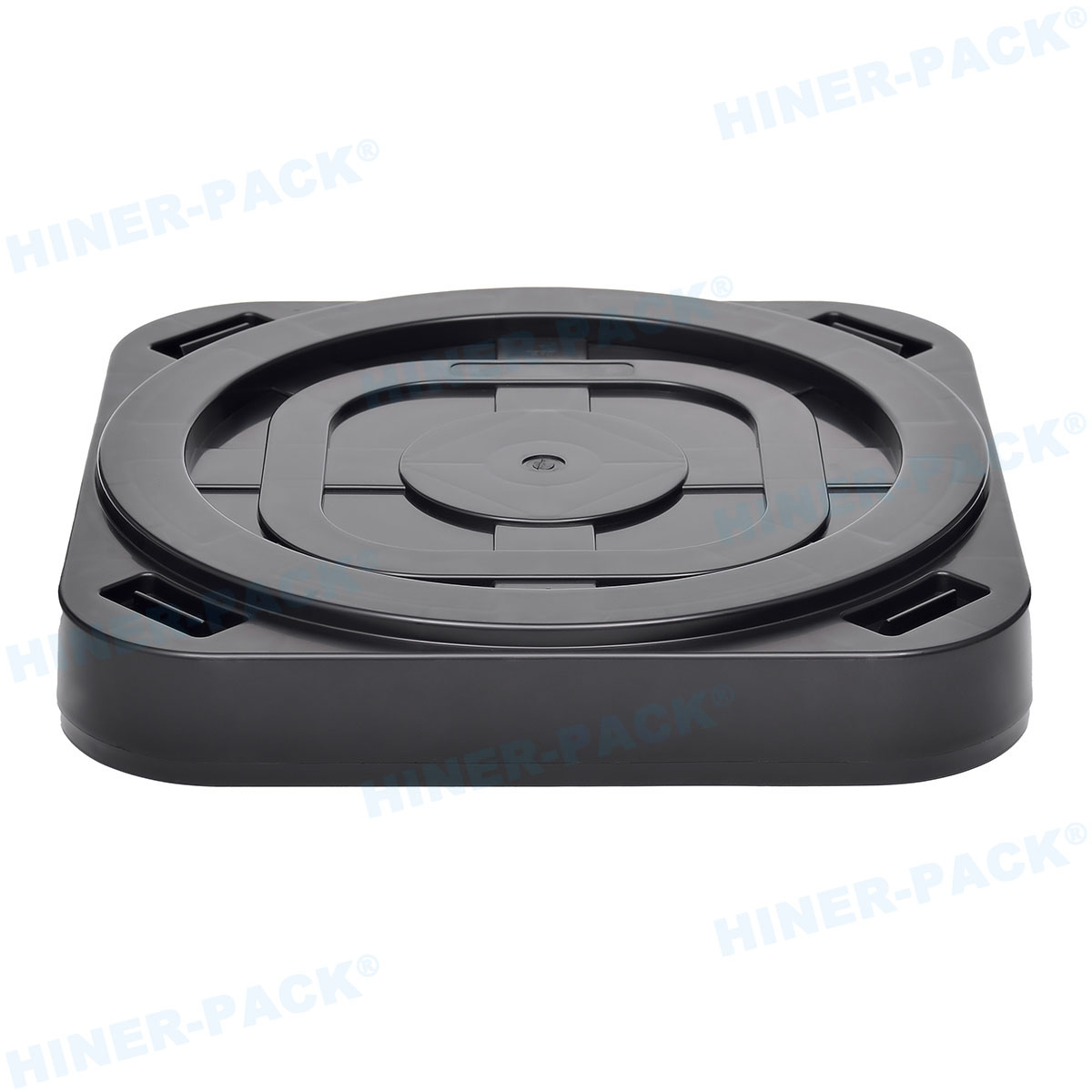
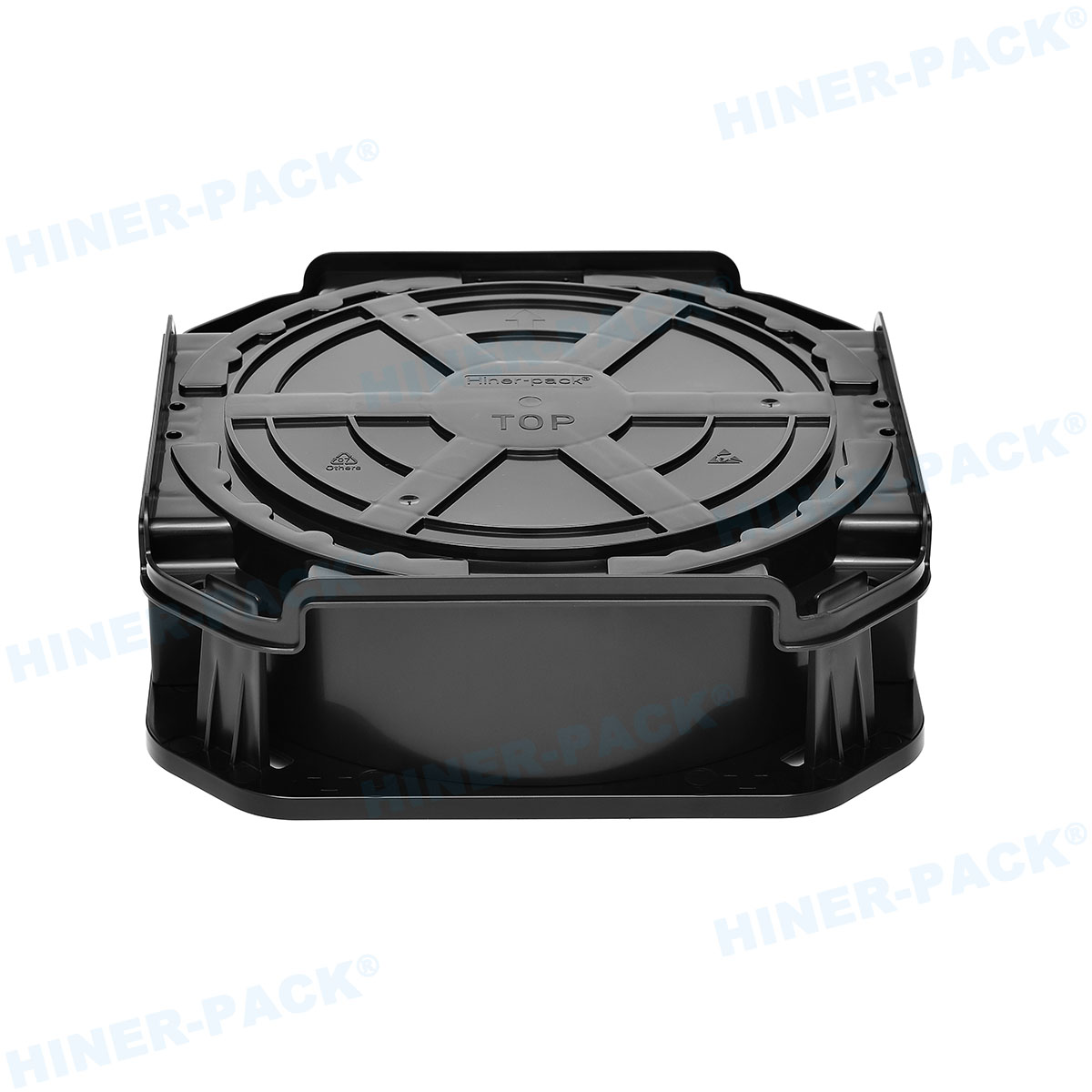
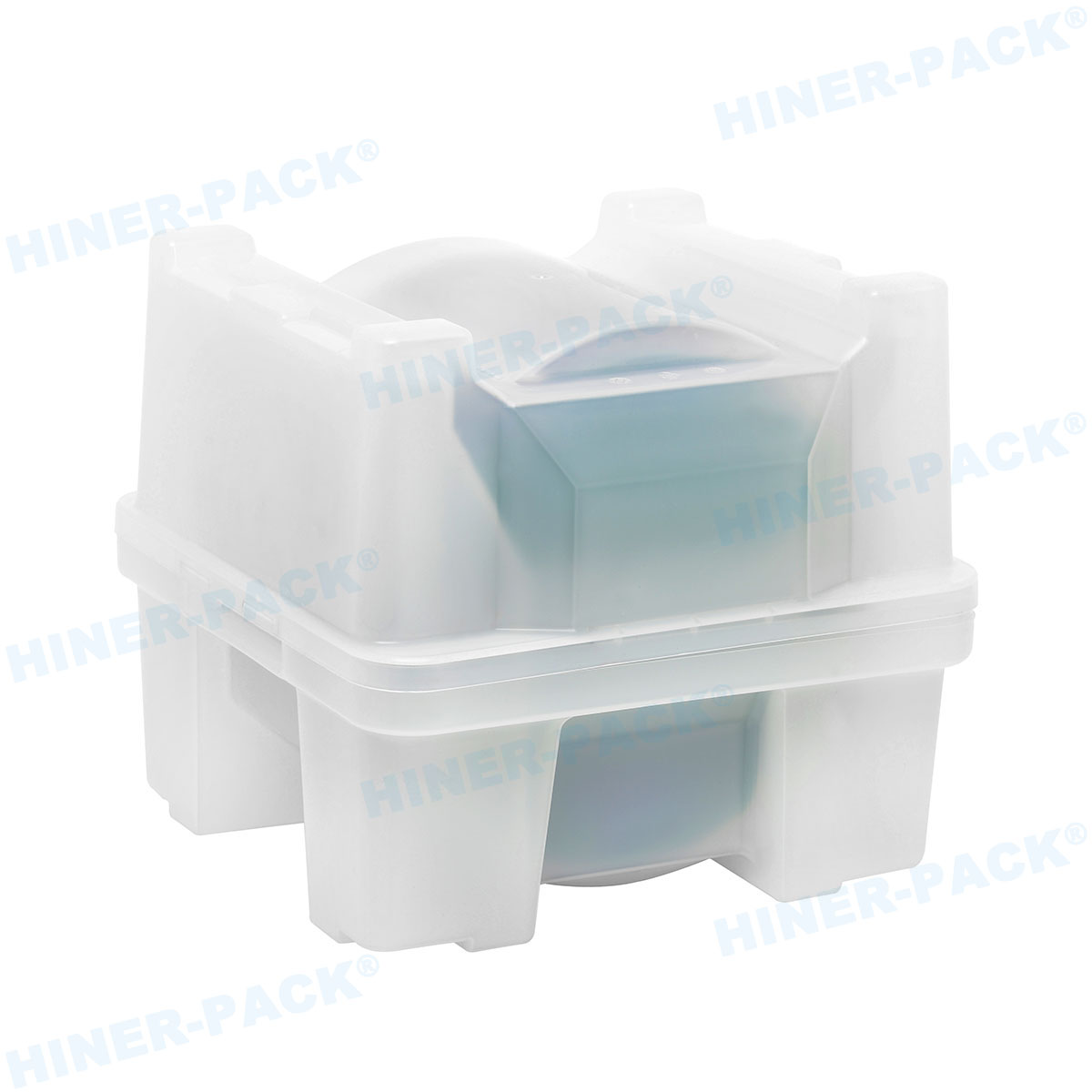
In semiconductor logistics, the safe transport of processed wafers between fabrication (fab), test, and assembly sites demands packaging that minimizes vibration, electrostatic discharge (ESD), and particle generation. Among various polymer options, polyethylene terephthalate (PET) has emerged as a preferred material for wafer shippers due to its dimensional stability, low moisture absorption, and compatibility with cleanroom environments. A well-designed PET wafer shipper integrates anti-static additives, precision-molded pockets, and foam cushioning to secure wafers during ground, air, or automated material handling system (AMHS) transport. This article examines the technical specifications, industry standards, and application scenarios for PET-based wafer shippers. As a supplier of complete wafer handling solutions, Hiner-pack provides certified PET wafer shipper systems compliant with SEMI E15, E84, and E126 standards.
1. Material Science: Why PET Outperforms Other Polymers for Wafer Shipping
Several polymers are used for wafer carriers, including polycarbonate (PC), polypropylene (PP), and PET. Each has trade-offs. PET offers a unique balance of rigidity, clarity, and chemical resistance. The following table summarizes key properties relevant to a PET wafer shipper.
Surface resistivity: PET with anti-static additives achieves 10⁶ – 10⁹ Ω/sq (static dissipative range), preventing charge accumulation that could damage gate oxides. Pure PET is insulative (>10¹² Ω/sq) – so PET wafer shipper formulations always include carbon or conductive polymer loading.
Outgassing (Total Mass Loss): Per SEMI E46, PET has TML < 0.5% and CVCM < 0.05% after vacuum bake, suitable for Class 100 (ISO 5) cleanrooms. This is critical because outgassed siloxanes can contaminate wafer surfaces, causing lithography defects.
Flexural modulus: PET's modulus (approx. 2,500 MPa) provides sufficient rigidity to prevent bowing when stacking multiple shippers, yet enough flexibility to absorb low-frequency vibration without cracking.
Water absorption: PET absorbs <0.3% moisture at 23°C/50% RH, minimizing dimensional changes and reducing the risk of corrosion on exposed metal pads.
2. Structural Design of a PET Wafer Shipper: Pocket Geometry and Cushioning
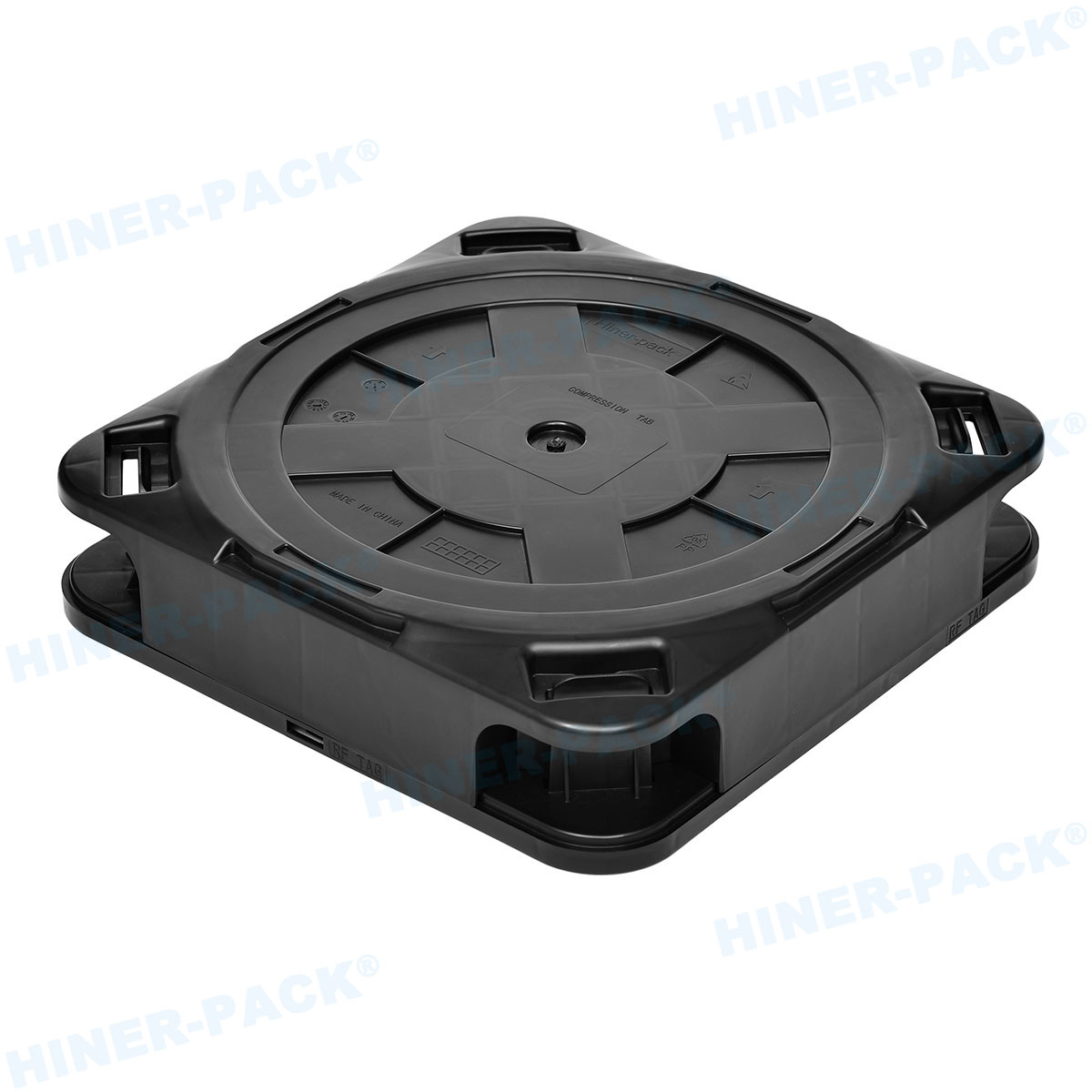
A typical PET wafer shipper consists of two main components: a base plate with wafer pockets and a lid that compresses foam or elastomeric inserts. For 300mm wafers, pockets are machined with a chamfered edge (3-5° taper) to guide the wafer without edge contact. The base includes alignment pins and stacking ribs.
2.1 Wafer Retention Mechanisms
Three common retention methods are used in PET shippers:
Foam-in-place (FIP): Conductive polyurethane foam (density 30-50 kg/m³) is molded into the lid. When closed, the foam compresses by 15-20% against the wafer's backside, providing vertical constraint. This design dominates high-volume PET wafer shipper applications because it accommodates thickness variations (675-775 µm).
Gel-pad technology: A silicone gel with low adhesion (tack-free) is embedded in the lid. Wafers are gently held by surface tension. Gel pads reduce particle generation compared to foam but are more expensive and require periodic replacement.
Mechanical clips: Spring-loaded plastic clips at the pocket edges secure the wafer. This design avoids contact with the active surface but increases loading time. Used for small-batch or R&D shippers.
2.2 Stacking and Interlocking Features
For automated cassette-to-shipper transfer, the PET wafer shipper must interface with standard load ports (e.g., FOUP loaders). Therefore, base plates include ANSI/SEMI standard locating slots and a 2mm raised rim to prevent shipper-to-shipper sliding. When stacked, the lid's recess fits over the base's rib, creating a dust-proof seal. A typical stack height for 25 wafers is 85-95 mm.
3. Industry Standards and Certifications for PET Wafer Shippers
Semiconductor fabs require documented compliance with multiple SEMI and ASTM standards. A qualified PET wafer shipper must pass the following tests:
SEMI E15 (Mechanical Interface): Dimensional accuracy of base plate to allow robotic handling. Critical dimensions: pocket pitch (for multi-wafer shippers), alignment hole positions (±0.1 mm).
SEMI E84 (ESD Test): Charge decay time < 2 seconds from ±1000V to ±50V. Also, surface voltage after tribocharging (using nylon brush) must be < 100V.
SEMI E126 (Wafer Shipping Vibration): Simulated transport profile (random vibration 1-200 Hz, 0.02 g²/Hz) for 2 hours. Acceptable particle generation: less than 10 particles ≥0.1 µm added per wafer.
ASTM D4169 (Distribution Environment): Drop test (minimum 60 cm onto concrete), compression (stack of 10 shippers at 500 kg), and vibration.
Suppliers like Hiner-pack provide a compliance certificate with each batch of PET wafer shipper, including material traceability and test data.
4. Application Scenarios and Configurations
Different wafer types and logistics routes demand specialized shipper designs. Below are four common configurations of PET-based wafer shippers.
4.1 Single-Wafer Shipper for High-Value Die
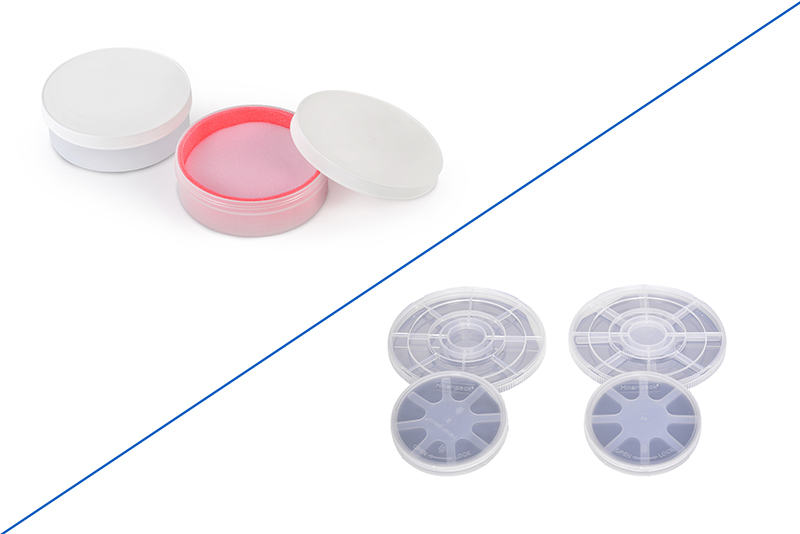
For known-good die (KGD) or GaN/SiC wafers valued above $10,000 each, a single-wafer PET wafer shipper is used. It includes a rigid outer box, inner PET tray with gel pad, and humidity indicator. The shipper is vacuum-sealed in an ESD bag with desiccant. This configuration meets ATA 300 (air transport) requirements for fragile cargo.
4.2 Multi-Wafer Stackable Shipper (13-25 wafers)
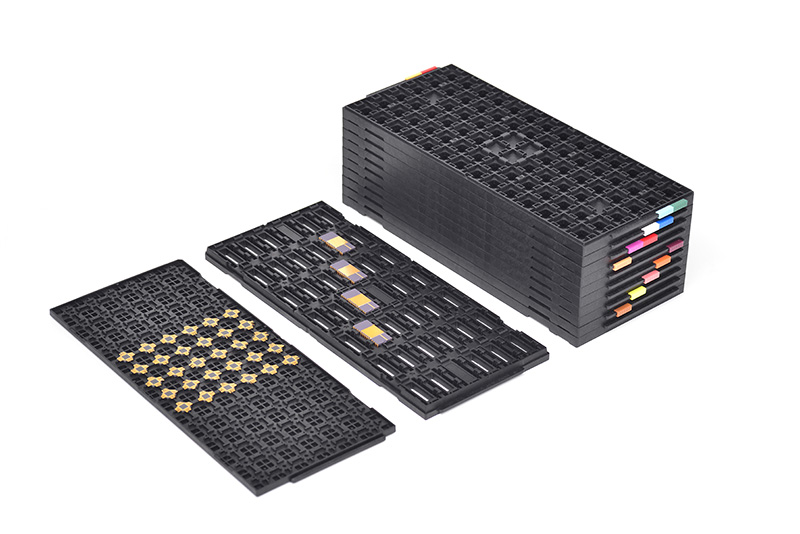
The most common format for 200mm and 300mm production wafers. A typical PET wafer shipper in this category holds 25 wafers in a 0.5-inch pitch. Each wafer pocket has individual foam inserts to prevent wafer-to-wafer contact. Stackable ribs allow 10 shippers to be palletized. This design reduces shipping volume by 60% compared to single-wafer boxes.
4.3 PET Shipper for Dicing Frames (Wafer Ring)
After dicing, wafers are mounted on film frames (8-inch or 12-inch rings). PET shippers for dicing frames have a recessed cavity that accepts the ring’s outer diameter and a foam top pad that presses on the film (not on die). The PET wafer shipper for frames typically includes antistatic foam and a lid latch to prevent accidental opening. Hiner-pack’s design (accessories page) includes frame shippers with ESD-safe hinges.
4.4 Low-Particle Shipper for EUV Mask Blanks
For extreme ultraviolet (EUV) mask blanks (substrates), cleanliness requirements are extreme: less than 0.5 particles > 50 nm per surface. PET is not directly used for the inner surface due to potential outgassing; instead, a fluoropolymer coating is applied to the PET substrate. The resulting PET wafer shipper (coated) provides mechanical rigidity and low particle shedding. The coating must pass SEMI S2 for chemical compatibility.
5. Common Failures and How to Avoid Them
Even a high-quality PET wafer shipper can cause damage if improperly used. Field data from wafer foundries identify three frequent issues:
Foam fatigue: After 20-30 cycles, polyurethane foam loses compressive strength, leading to wafer chatter. Solution: replace foam inserts every 25 cycles or switch to gel pads for long-life applications. Hiner-pack offers replacement foam kits.
ESD failure due to humidity: At low humidity (<20% RH), the surface resistivity of static-dissipative PET can increase by a factor of 10, potentially exceeding 10¹¹ Ω/sq. Solution: require that shippers are stored at 30-60% RH before use. Alternatively, specify carbon-fiber filled PET which is humidity-independent.
Particle generation from hinge wear: Hinges molded into PET can produce microscopic PET dust. Solution: use separate polycarbonate hinges attached with stainless steel pins. Inspect hinge areas under magnification every 50 cycles.
6. Cleaning and Reuse Protocols for PET Wafer Shippers
Reusable PET wafer shipper systems require validated cleaning procedures to avoid cross-contamination. The standard method per SEMI E49:
Disassemble shipper – separate base, lid, foam inserts.
Ultrasonic cleaning in deionized water with 1% non-ionic surfactant (e.g., Triton X-100) at 50°C for 15 minutes.
Rinse with 18 MΩ·cm DI water (three cycles).
Dry in a HEPA-filtered oven at 60°C for 2 hours (PET’s glass transition is ~70°C, so temperature must not exceed 65°C to prevent warping).
Reassemble in Class 100 (ISO 5) cleanroom; test ESD surface resistivity and particle count per IEST-STD-CC1246.
Hiner-pack offers a cleaning validation service, where customers can send used shippers for particle analysis and recertification.
Frequently Asked Questions (FAQ) About PET Wafer Shippers
Q1: What is the maximum temperature that a PET wafer shipper can
withstand during transport?
A1: PET has a heat deflection
temperature (HDT) of approximately 65°C at 0.45 MPa. Short-term exposure up to
60°C is acceptable for PET wafer shipper applications. For
hotter environments (e.g., parked vehicles in summer), use a thermal insulating
outer box or specify PETG (glycol-modified PET) which has HDT of 70°C.
Hiner-pack provides thermal data upon request.
Q2: Can PET wafer shippers be used for wafers with backside metal
layers?
A2: Yes, provided the foam or gel pad in the lid is
conductive and does not shed abrasive particles. Backside metal (e.g., Ti/Ni/Ag)
is soft; a rough foam surface can scratch it. Therefore, use a smooth gel pad or
a PET film interleaf. Many PET wafer shipper designs include a
thin PET liner (0.1mm) between the foam and the wafer backside – this liner is
replaced each cycle.
Q3: How do I verify the ESD performance of a received PET wafer
shipper batch?
A3: Perform two tests per SEMI E84: (a) surface
resistivity using a concentric ring probe at 100V; (b) charge decay time using a
static meter after applying ±1000V. Acceptable ranges: 10⁵ – 10¹¹ Ω/sq
(depending on specification) and decay < 2 seconds. For incoming inspection,
test three shippers per lot. Hiner-pack provides a certificate of analysis for
each batch of PET wafer shipper.
Q4: Are PET wafer shippers compatible with automated wafer transfer
equipment (e.g., those from Brooks, Hirata)?
A4: Yes, if the shipper
base conforms to SEMI E15 (standard mechanical interface). Most automated load
ports require a 2mm thick base plate with specific notch locations. However,
some older tools expect a metal cassette. Hiner-pack offers adapter plates that
convert a PET wafer shipper to a 4-inch or 6-inch cassette
footprint. Always provide the model of your handling equipment when
ordering.
Q5: What is the typical lead time for custom-molded PET wafer
shippers?
A5: Custom injection molding tooling for a PET
wafer shipper takes 8-12 weeks, with first article samples in 14 weeks.
Production volume of 1,000-5,000 units per month is typical. For small
quantities (50-200 pieces), machined PET shippers (CNC cut from sheet) can be
delivered in 3-4 weeks. Hiner-pack maintains a library of standard designs for
150mm, 200mm, and 300mm wafers that ship within 5 days.
Q6: How does a PET wafer shipper compare to a FOUP (front opening
unified pod) for inter-fab transport?
A6: FOUPs are designed for
automated intrafab handling (within a fab) and are not suitable for shipping
because they lack shock absorption and are heavy. A PET wafer
shipper is lighter (approx. 1.2 kg for a 25-wafer unit vs. 4.5 kg for a
FOUP) and includes foam cushioning. However, FOUPs provide better particle
protection in cleanroom environments. For long-distance truck or air transport,
always use a PET wafer shipper inside an ESD-safe corrugated box with
desiccant.
Need a Reliable PET Wafer Shipper for Your Semiconductor Logistics?
Selecting the correct PET wafer shipper involves matching material properties to your wafer size, thickness, value, and transport duration. Hiner-pack provides fully documented shippers with SEMI compliance, cleanroom assembly, and lot traceability. Whether you need single-wafer gel boxes, multi-wafer stackable trays, or dicing frame shippers, our engineering team will recommend the optimal configuration based on your vibration profile and ESD requirements.
Send your inquiry today – include wafer diameter (150/200/300mm), quantity per shipper, expected shipping routes (road, air, or ocean), and any cleanroom class requirements. We will respond within 24 hours with a datasheet, sample pricing, and a drawing for approval. For urgent requirements, we offer a rapid prototyping service for machined PET shippers.
Request a quote for PET wafer shippers from Hiner-pack – references available from major IDMs and OSATs.