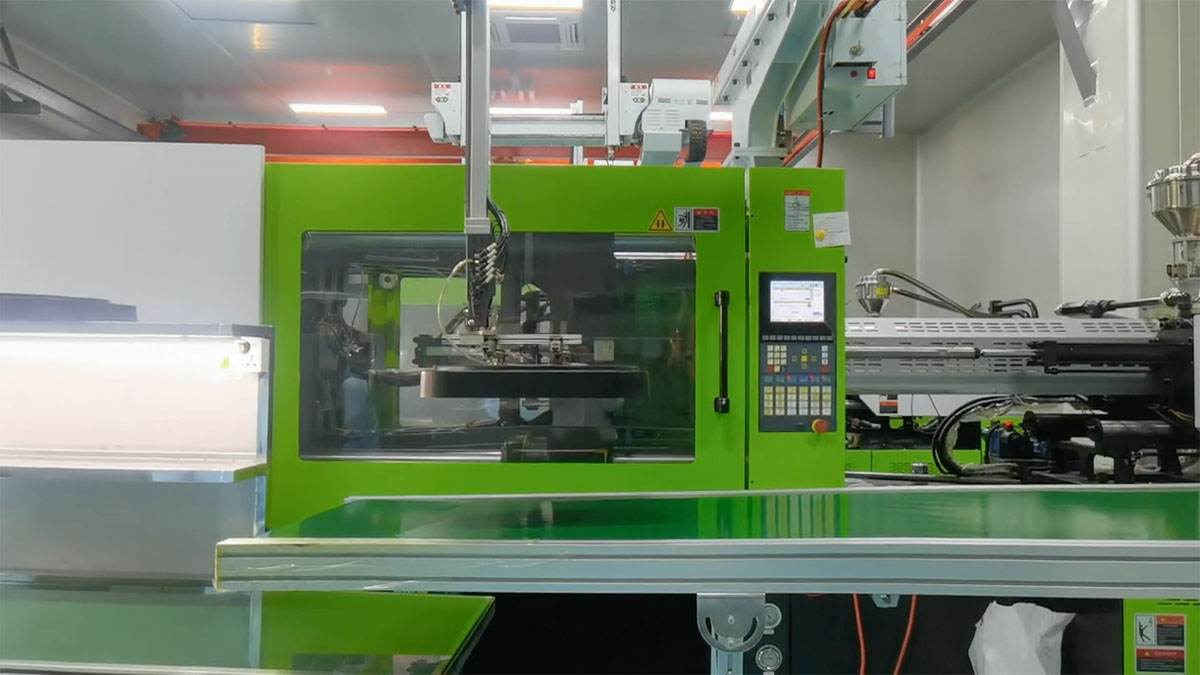
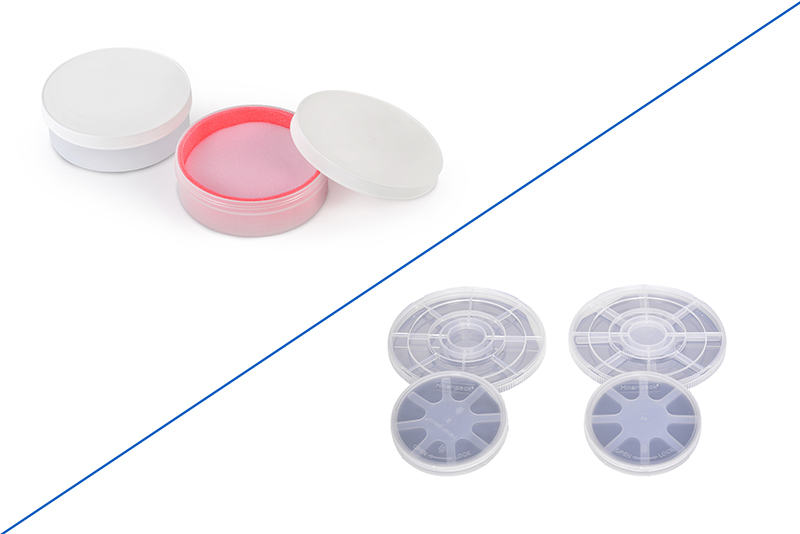
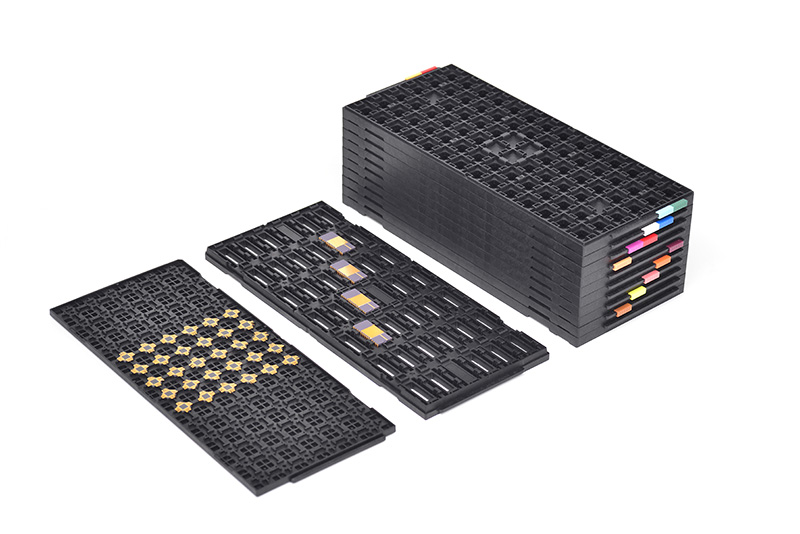
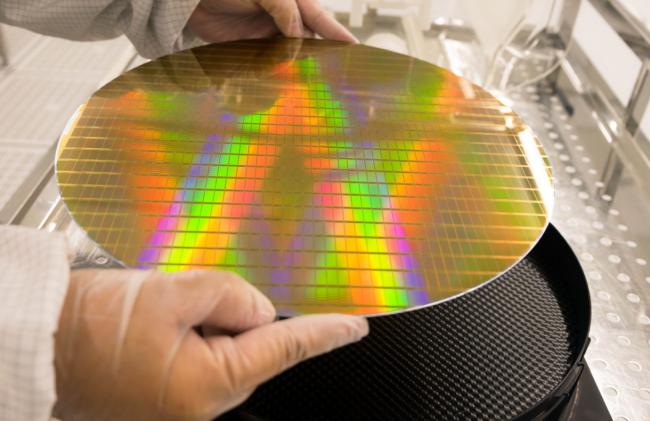
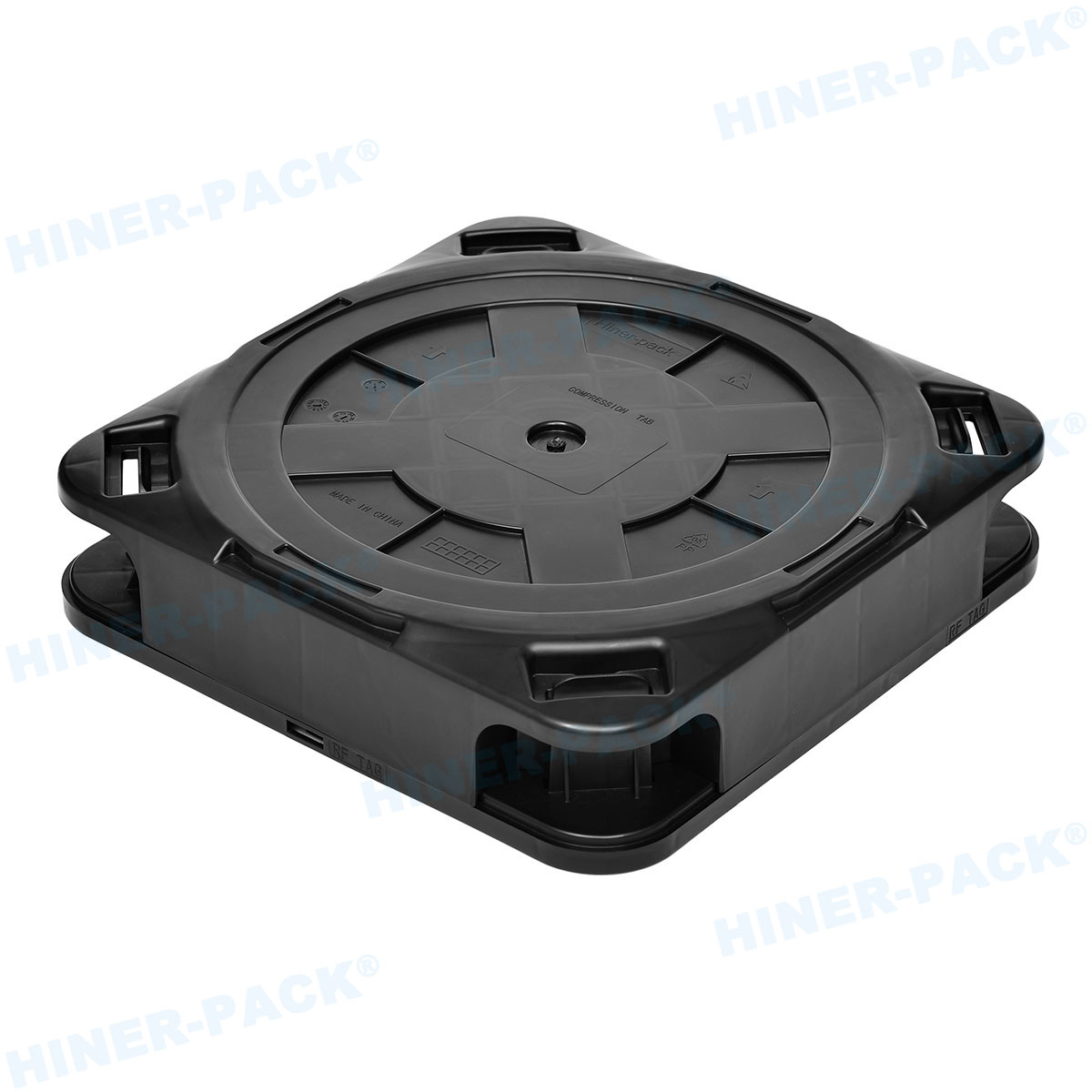
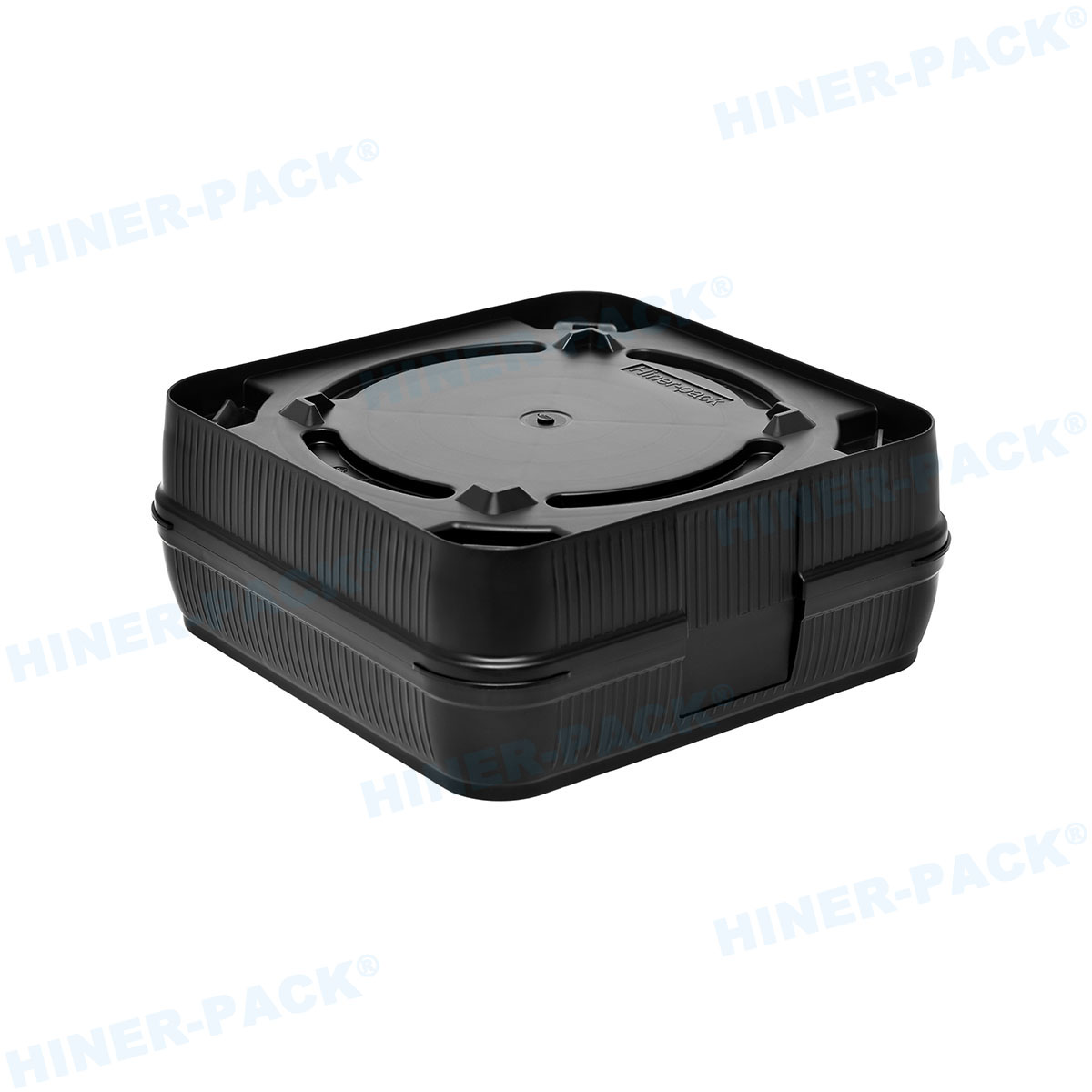
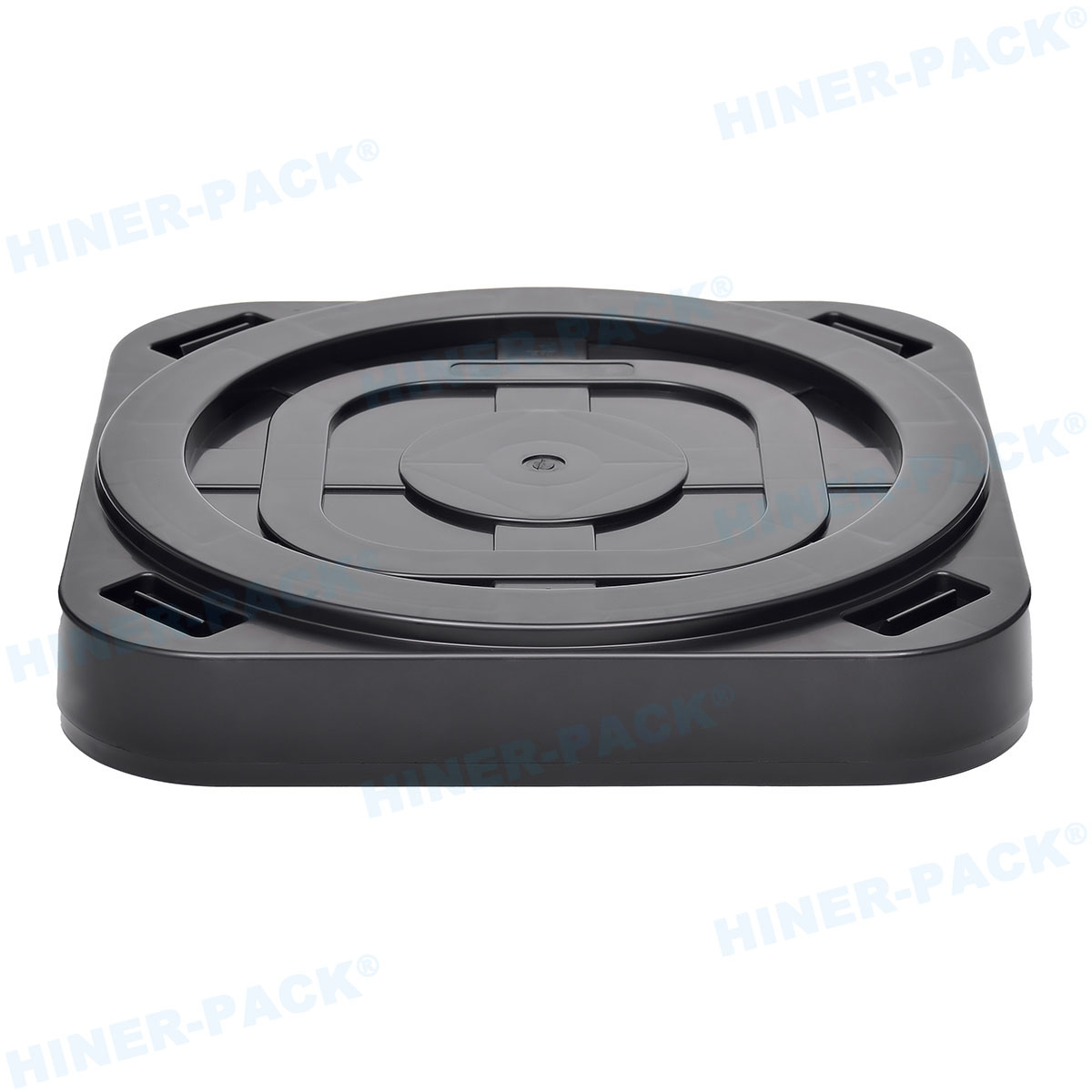
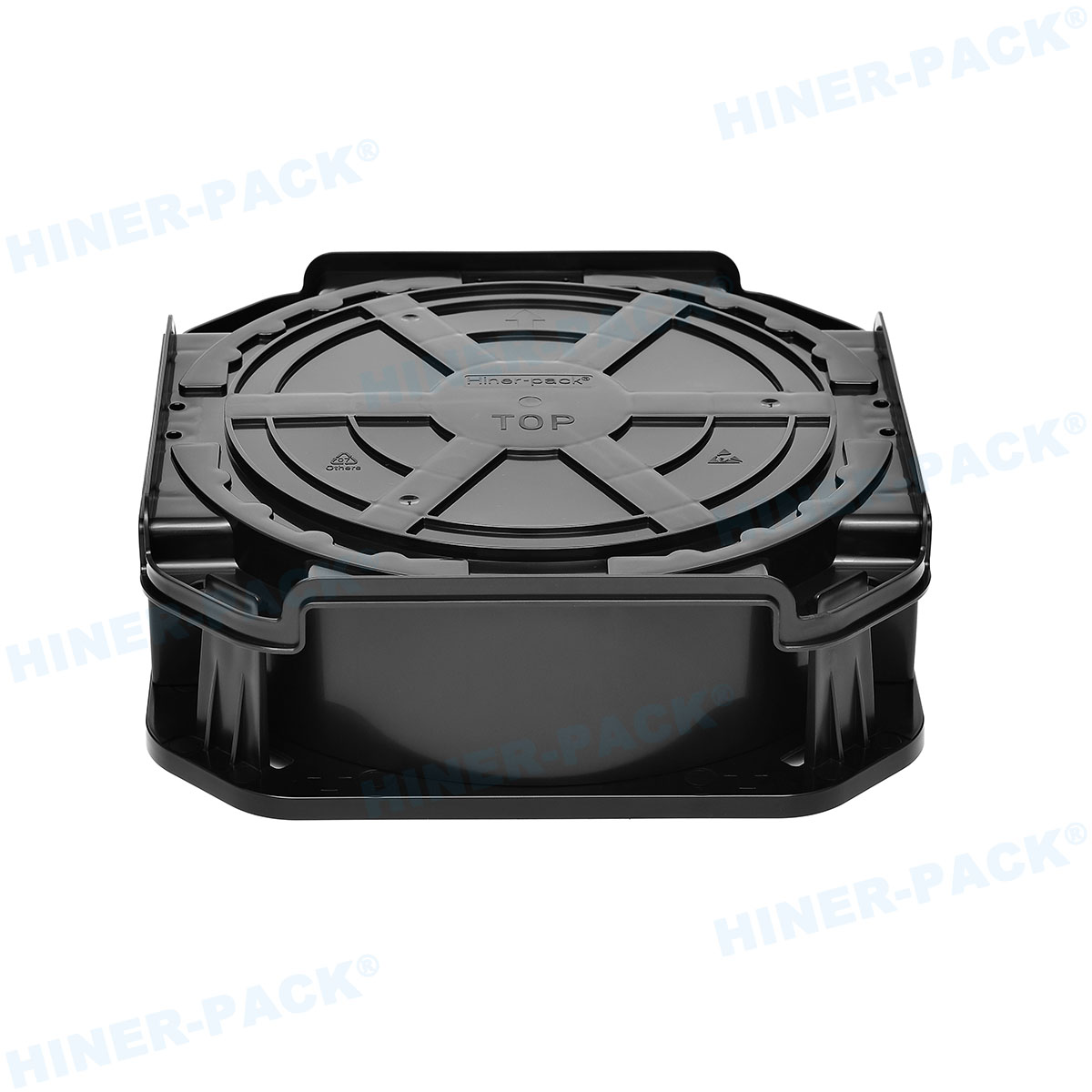
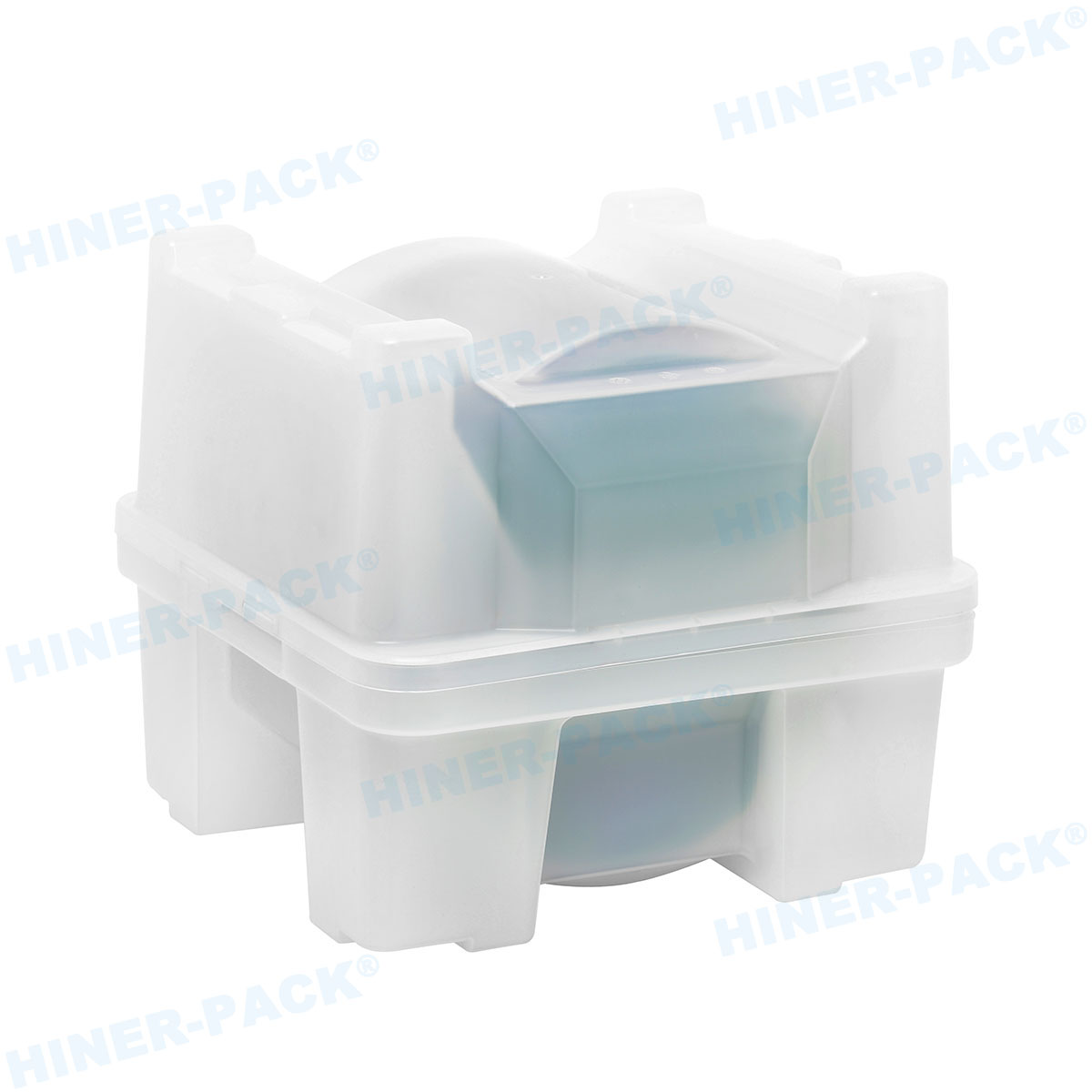
In semiconductor wet processing, diffusion, and inspection, the PP wafer cassette serves as the primary carrier for holding multiple wafers during immersion, rinsing, and drying steps. Unlike sealed shipping boxes, cassettes are open structures that allow fluid and gas flow while protecting wafers from mechanical damage. This article provides a component-level analysis of PP wafer cassette systems, covering polypropylene grades, slot pitch precision, chemical compatibility, and automated handling interfaces. Drawing on data from Hiner-pack's 15 years of manufacturing wafer carriers, we will examine how to select cassettes for 150 mm, 200 mm, and 300 mm wafers in applications ranging from wet benches (SC-1, SC-2, HF) to high-temperature furnaces (up to 135°C).
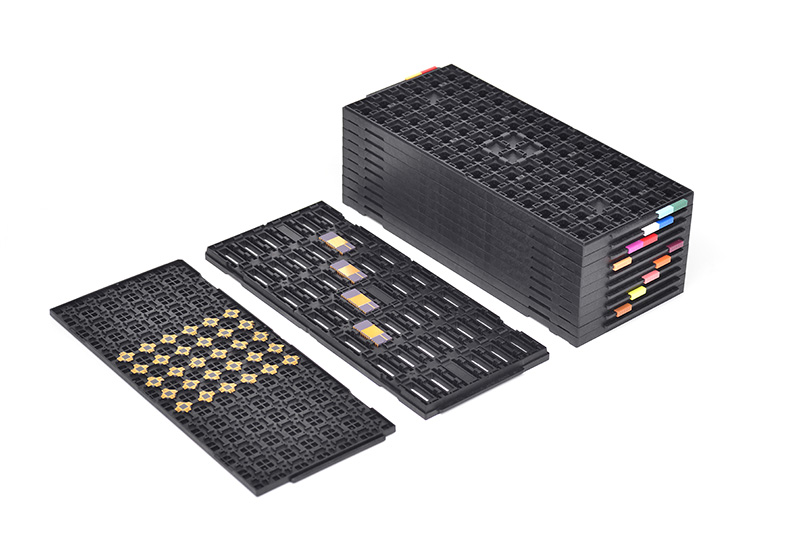
1. Why Polypropylene for Wafer Cassettes? Material Science Basis
Polypropylene (PP) is the dominant material for PP wafer cassette construction because of its intrinsic compatibility with semiconductor processes:
Chemical resistance: PP resists aggressive cleaning chemistries: SC-1 (NH₄OH/H₂O₂/H₂O), SC-2 (HCl/H₂O₂/H₂O), diluted HF, and piranha (H₂SO₄/H₂O₂). No surface degradation or weight change after 24-hour immersion at 70°C.
Low extractables: Virgin PP contains no plasticizers, stabilizers, or mold release agents that could leach into baths. Ionic contamination (by ICP-MS) shows Na, K, Ca, Fe < 0.1 ppb after 10 minutes in DI water.
ESD-safe grades: Carbon-filled or inherently dissipative (ID) PP achieves surface resistivity 10⁶–10⁹ Ω, preventing static charge accumulation that could attract particles or damage gate oxides.
Mechanical rigidity: Flexural modulus of PP (1,200–1,800 MPa) maintains slot alignment during robotic handling and centrifugation drying.
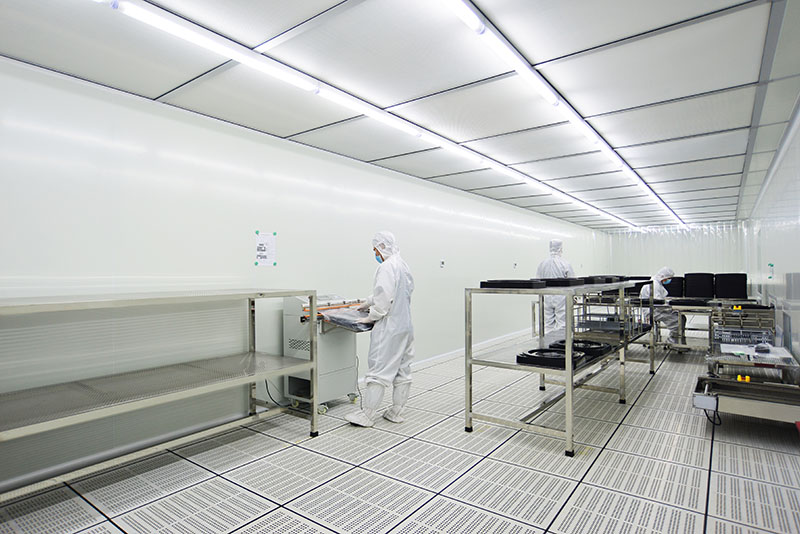
Compared to PFA or quartz carriers, a PP wafer cassette offers lower cost (60–70% less) while meeting Class 10 cleanroom standards (ISO 4). Hiner-pack uses only ultra-pure PP copolymer, molded in a certified ISO 14644-1 Class 6 cleanroom to minimize embedded particles.
2. Critical Design Parameters for PP Wafer Cassettes
Selecting the correct PP wafer cassette requires evaluating five engineering specifications.
2.1 Wafer Diameter and Slot Pitch
Cassettes are designed for specific wafer diameters: 150 mm (6 inch), 200 mm (8 inch), or 300 mm (12 inch). Slot pitch – the vertical distance between adjacent slots – must accommodate wafer thickness plus clearance for liquid drainage and robot end effectors.
150 mm wafers (thickness 0.675 mm): standard pitch 4.76 mm (3/16 inch) for 25-slot cassettes.
200 mm wafers (0.725 mm): pitch 6.35 mm (1/4 inch) for 25-slot; also available in 13-slot for thicker substrates.
300 mm wafers (0.775 mm): pitch 10 mm or 12.7 mm, often with wafer spacing guides to prevent edge contact.
Slot width tolerance must be ±0.03 mm to avoid wafer sticking or rattling. Hiner-pack's PP wafer cassette includes molded-in slot numbers for batch traceability and visual inspection.
2.2 Fluid Drainage and Drying Efficiency
Open cassette designs maximize flow of cleaning solutions and rinses. Key features:
Large side openings (> 60% open area) for bath circulation.
Bottom drain slots to prevent pooling of chemicals.
Tilted slot bottoms (5–10°) to direct droplets away from wafer edges.
Computational fluid dynamics (CFD) simulations show that optimized cassettes reduce residual liquid after spin-rinse-dry (SRD) by 40% compared to closed-box designs.
2.3 Mechanical Strength and Warpage Control
During centrifugation drying (up to 2,000 rpm), cassettes experience centrifugal forces exceeding 10 G. Reinforced side ribs and thick base plates prevent bowing. A well-designed 25-slot cassette for 200 mm wafers withstands 15 G acceleration without permanent deformation. Hiner-pack tests each mold cavity for warpage using laser profilometry – maximum deviation < 0.1 mm across the length.
3. Types of PP Wafer Cassettes by Application
Different process steps require specific cassette configurations.
Wet bench cassettes: Open sides, rounded edges to minimize chemical trapping. Compatible with automated wet stations (e.g., SEZ, Semitool). Often in white or translucent PP for visual inspection.
High-temperature cassettes (furnace): Heat-stabilized PP with antioxidant additives, rated for continuous use at 135°C. Used for oxidation, LPCVD, and annealing. Dark blue or black color to mask discoloration.
Low-particle (LP) cassettes: Molded with mirror-finish slots (Ra < 0.2 µm) and ultrasonically cleaned after production. Particle levels < 5 particles > 0.2 µm per wafer after 10 cycles (SEMI E46).
ESD-critical cassettes: Inherently dissipative (ID) PP with surface resistivity 10⁶–10⁹ Ω, used for handling wafers with feature sizes < 90 nm. Includes grounding tabs that contact wet bench ground pins.
Hiner-pack offers all four types, with custom color coding and laser marking for fab traceability.
4. Industry Pain Points and Engineering Solutions
Semiconductor fabs face recurring issues with PP wafer cassettes. Below are three common failure modes and their remedies.
Wafer edge chipping during insertion/removal: Caused by rough slot surfaces or misaligned guide ribs. Solution – use electropolished mold inserts to achieve surface roughness Ra < 0.1 µm. Hiner-pack uses nickel-coated cavities with diamond polishing.
Chemical staining (watermarks) after drying: Residual droplets due to poor drainage. Remedy – add micro-channels on slot bottoms and increase side opening area to > 70%. CFD-optimized designs reduce drying time by 30%.
Static discharge damage (ESD) during automated handling: Robots that grip cassettes at high speed can generate triboelectric charges > 3 kV. Solution – specify conductive PP (10⁵–10⁶ Ω) and ensure wet bench ground pins contact cassette grounding points.
According to Hiner-pack's field data, these solutions reduce wafer breakage by 50–70% and ESD-related yield loss by 35%.
5. Compatibility with Automated Wet Benches and Furnaces
Modern 200 mm and 300 mm fabs use automated wet stations and vertical furnaces that require PP wafer cassettes to conform to SEMI E1.9 (specifications for plastic wafer carriers). Critical dimensions include:
Bottom flange geometry: Two locating pins and a central notch for robotic arm pickup.
Side handling grips: Recesses for end effectors – depth 5 mm, width 15 mm, positioned 30 mm from base.
RFID pocket: Optional cavity for a 13.56 MHz tag (ISO 15693) that stores lot ID and process recipe.
Temperature rating: For furnace applications, cassettes must withstand 135°C without softening. Hiner-pack's high-temperature PP cassettes are validated to 140°C for short durations.
Non-standard cassettes cause misalignment and sensor errors in automated tools. Hiner-pack provides a dimensional compliance certificate for each batch of PP wafer cassettes, certifying critical dimensions to ±0.05 mm.
6. Cleaning and Maintenance Protocols for PP Wafer Cassettes
To prevent cross-contamination and extend cassette life, fabs follow SEMI E49 guidelines for cleaning PP wafer cassettes. Recommended procedure:
Pre-rinse with DI water (18 MΩ·cm) at 50°C for 2 minutes to remove bulk residues.
Ultrasonic cleaning in 2% alkaline detergent (e.g., Deconex 12) at 40 kHz, 10 minutes at 60°C.
DI water cascade rinse (3 tanks) for 5 minutes total.
Hot air drying in HEPA-filtered oven at 60°C for 30 minutes.
Final particle test (liquid particle counter) – must show < 100 particles > 0.3 µm per cassette.
Avoid using strong acids (pH < 1) or organic solvents (acetone, IPA) as they can cause surface crazing. Cassettes reused more than 100 cycles should be inspected for slot wear using a borescope; replace when slot depth variation exceeds 0.1 mm. Hiner-pack offers a recycling service where worn cassettes are reground and remolded into new carriers, reducing waste.
7. Regulatory and Quality Certifications
Suppliers of PP wafer cassettes to tier-1 fabs must provide documentation for:
ISO 9001:2015 (quality management)
ISO 14644-1 Class 6 (cleanroom manufacturing)
SEMI E46-0301 (particle performance)
SEMI E78-0998 (outgassing test for high-temp grades)
RoHS 3 (2015/863/EU) – no restricted substances
REACH SVHC compliance
Hiner-pack maintains a certified Class 10,000 (ISO 7) cleanroom for molding and assembly, with particle counters monitoring each production batch. Lot traceability allows recall of any cassette to its raw material batch.
8. Frequently Asked Questions (FAQ) – PP Wafer Cassette
Q1: What is the maximum temperature a PP wafer cassette can
withstand?
A1: Standard PP cassettes are rated for
continuous use up to 110°C. For furnace applications (oxidation, LPCVD), use
heat-stabilized PP cassettes rated for 135°C continuous, 140°C peak.
Hiner-pack's high-temperature cassettes are validated for 1,000 hours at 135°C
without deformation.
Q2: Can PP wafer cassettes be used in piranha (H₂SO₄/H₂O₂)
baths?
A2: PP has good resistance to piranha at
room temperature for short periods (< 10 minutes). However, at elevated
temperatures (> 100°C), piranha will oxidize PP. For hot piranha, use quartz
or PTFE cassettes. For room-temperature piranha, rinse cassettes immediately
after use.
Q3: How do I verify that a new PP wafer cassette is clean enough for
my process?
A3: Request a lot certificate from the
supplier including particle counts per SEMI E46 (extraction method) and ionic
contamination per SEMI E45. For critical applications, perform a dynamic
particle test: run the cassette through a wet bench with dummy wafers and
measure added particles using a wafer surface scanner.
Q4: What is the typical lifespan of a PP wafer
cassette?
A4: Under normal wet bench use (ambient
to 80°C, standard chemistries), a cassette lasts 2–3 years (200–300 cycles).
High-temperature use (135°C) reduces lifespan to 1–2 years. Replace when slots
show wear (depth variation > 0.1 mm) or surface becomes rough.
Q5: Can I autoclave PP wafer cassettes for
sterilization?
A5: Standard PP softens at 121°C
(autoclave temperature). Use heat-stabilized PP for autoclaving, but limit to 10
cycles. For sterile applications, gamma irradiation (25–50 kGy) is preferred as
it does not distort dimensions.
Q6: Are there conductive PP cassettes for ESD-sensitive
devices?
A6: Yes, Hiner-pack offers
conductive PP wafer cassettes with surface resistivity 10⁵–10⁹
Ω. These are required for wafers with feature sizes < 90 nm or for handling
MEMS, GaAs, and other static-sensitive substrates. Conductive cassettes include
grounding tabs that contact wet bench ground pins.
9. Select the Right PP Wafer Cassette for Your Process Node
Choosing the correct PP wafer cassette involves matching material grade (virgin, heat-stabilized, conductive), slot geometry, and dimensional standards to your wafer size, process chemistry, and automation requirements. Generic cassettes from non-specialized suppliers often lack SEMI certifications or cleanroom manufacturing, leading to particle contamination and tool jams.
Hiner-pack offers a complimentary engineering review including:
Material selection guide (standard PP vs. high-temp vs. conductive).
Slot pitch optimization for thin wafers (down to 0.1 mm thickness).
Drainage simulation for your wet bench chemistry.
Sample cassettes for particle testing in your fab.
Request your quotation today – provide your wafer diameter, thickness, process steps (e.g., wet etch, rinse, furnace), and annual volume. Our cleanroom engineering team will respond within 2 business days with a specification sheet and sample pricing. Click here to contact Hiner-pack’s wafer handling specialists or call+86 755 2322 9236 for immediate assistance.