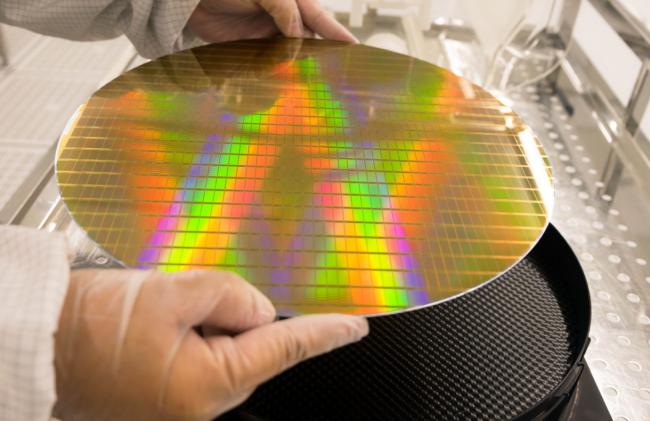
The transition from the fabrication plant to the assembly facility is one of the most financially risky moments in semiconductor manufacturing. By the time a 300mm (12-inch) wafer reaches the back-end process, it holds thousands of dollars in value. It has undergone months of lithography, etching, and deposition.
However, the modern trend toward 3D packaging and advanced integration means these wafers are often thinned down to extreme levels before shipping. Once a wafer is thinned and mounted onto a dicing tape ring, it becomes mechanically unstable. Standard Front Opening Unified Pods (FOUPs) are no longer suitable.
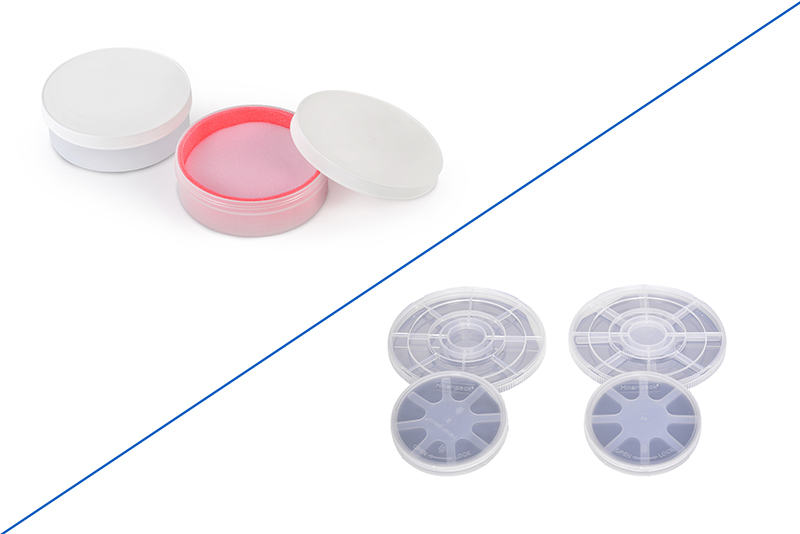
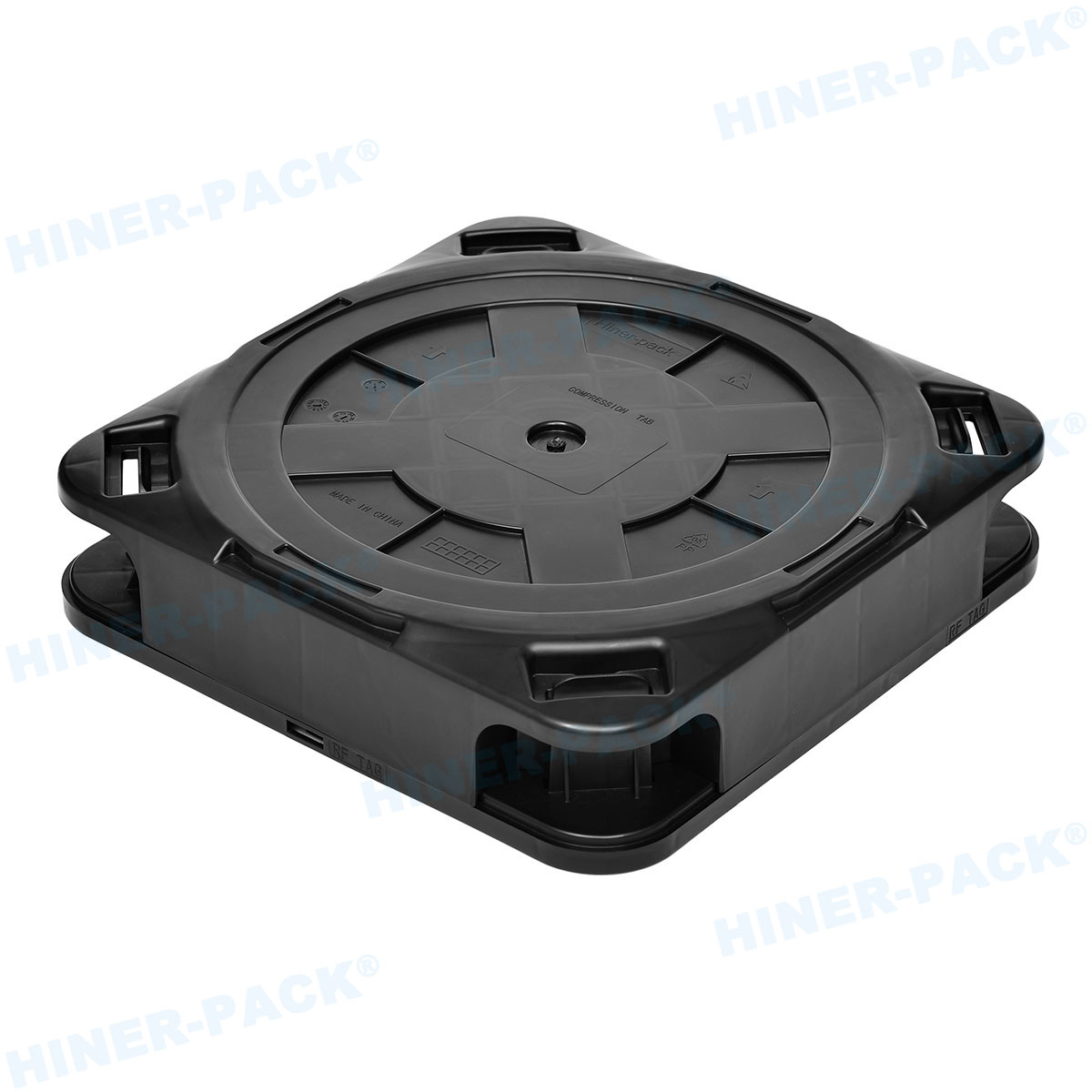
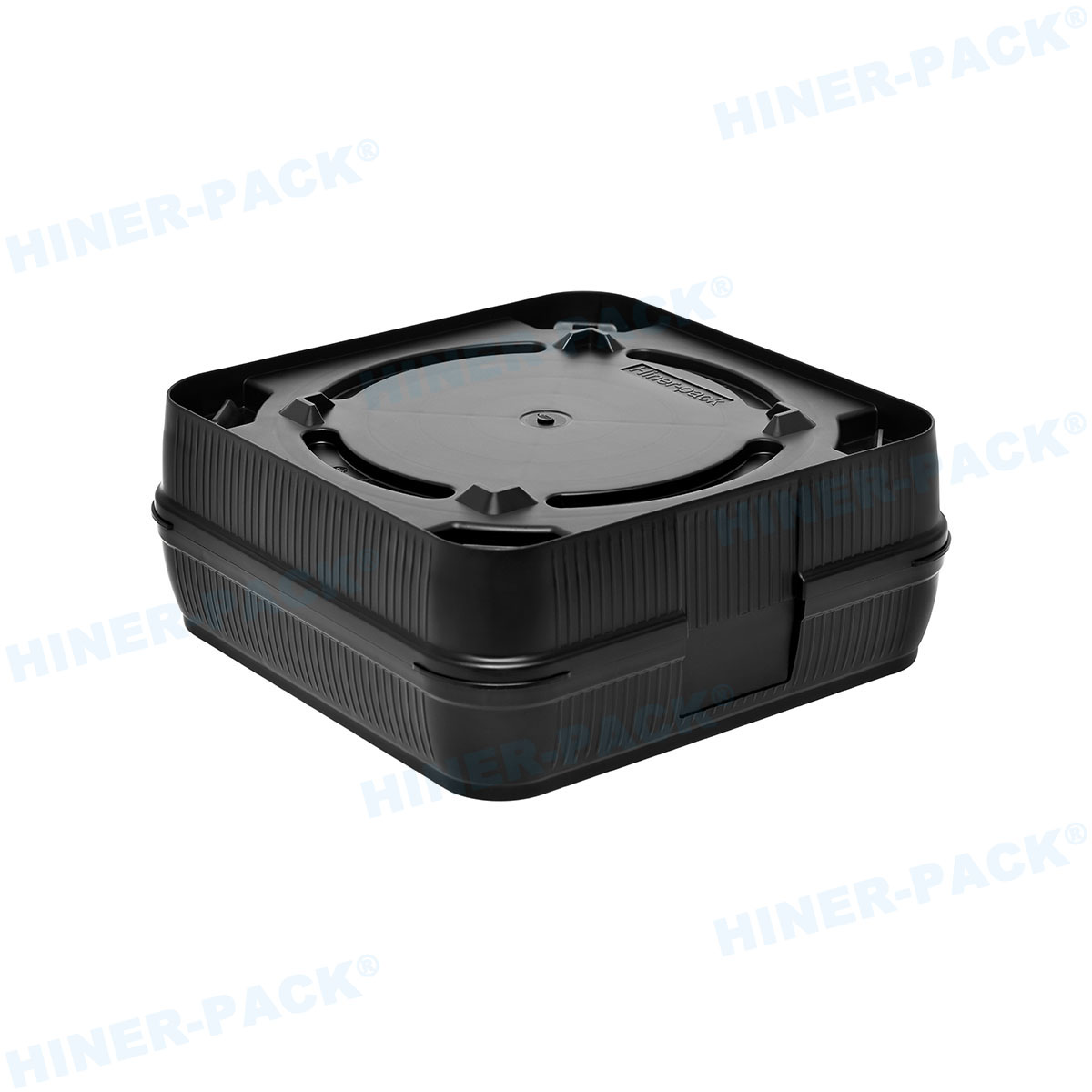
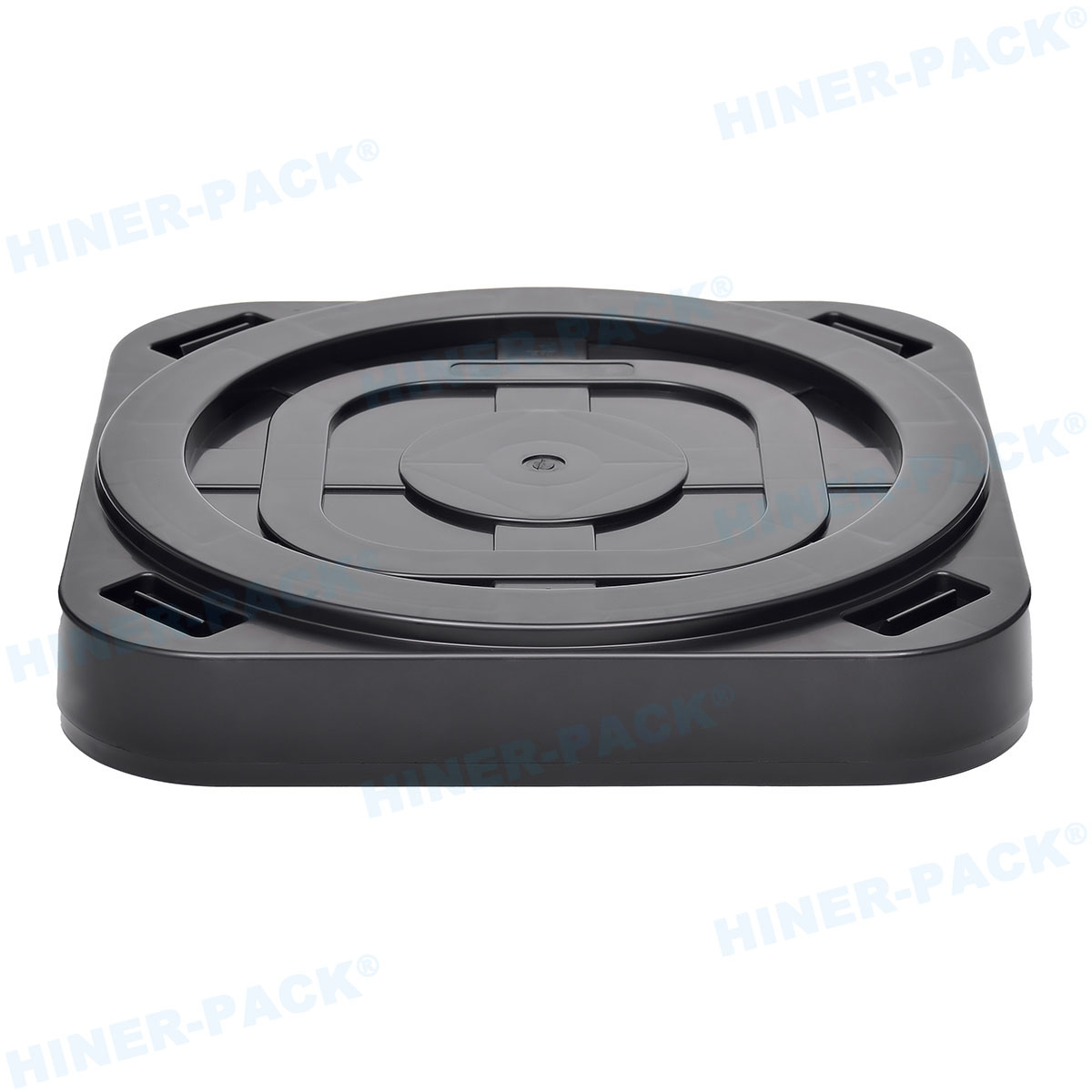
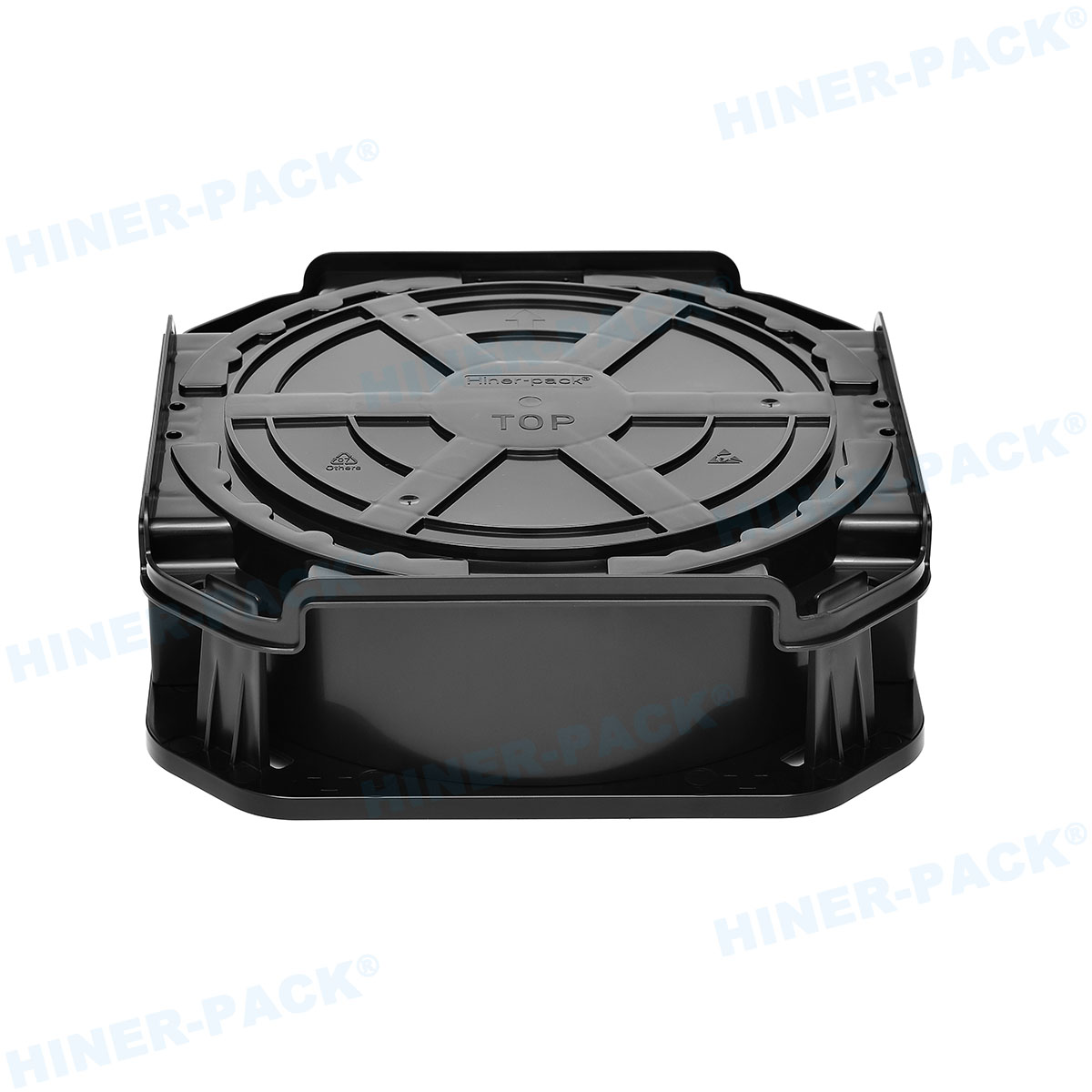
To protect these fragile assets, the industry relies on specialized packaging. The 12-inch Horizontal Flex Frame Wafer Shipper provides the necessary support and protection. At Hiner-pack, we recognize that a shipping container is not just a plastic box; it is the primary defense against micro-cracks, electrostatic discharge (ESD), and particle contamination.
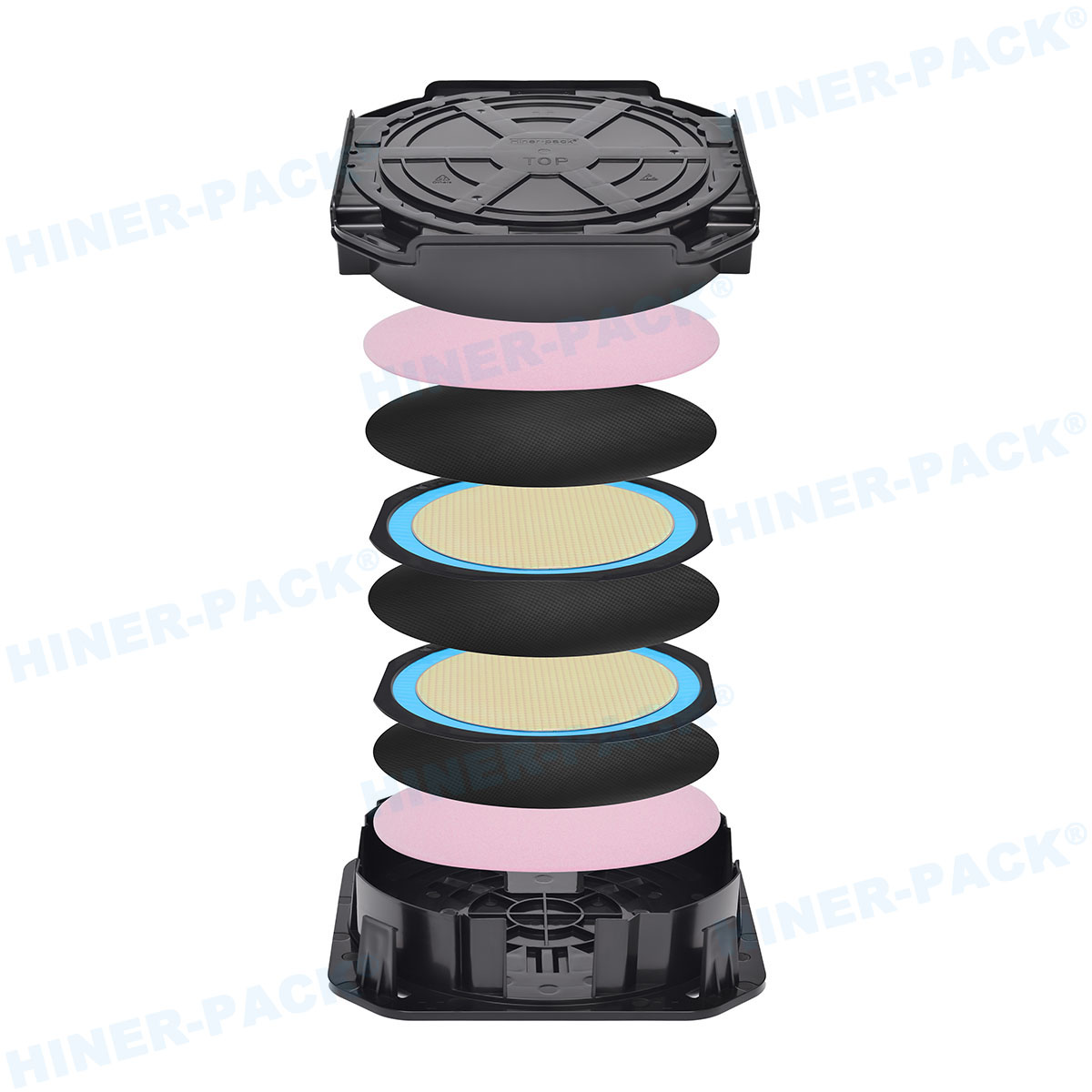
Why Horizontal Orientation is Non-Negotiable
Physics dictates the shipping method for thinned silicon. A standard thickness wafer can withstand vertical storage. However, a wafer ground down to 50 or 100 microns behaves differently. It becomes flexible.
If you place a thinned, frame-mounted wafer in a vertical cassette, gravity will cause it to bow or warp. This warping puts stress on the interconnects and can even cause the die to peel away from the dicing tape.
Shipping horizontally eliminates this gravitational stress. The wafer rests flat, supported by the tension of the tape and the rigidity of the metal or plastic frame ring.
The 12-inch Horizontal Flex Frame Wafer Shipper is designed to grip the frame, not the silicon. The contact points are engineered to hold the outer ring securely while leaving the active area of the wafer suspended in a safe air gap. This "floating" transport method ensures that no part of the package touches the sensitive circuitry.
Addressing the Electrostatic Discharge (ESD) Threat
Physical breakage is obvious, but invisible damage from static electricity is equally destructive. Moving plastic generates triboelectric charges. If a standard plastic box is used, the friction of transport can build up a charge that discharges into the wafer, destroying the gate oxides in sensitive transistors.
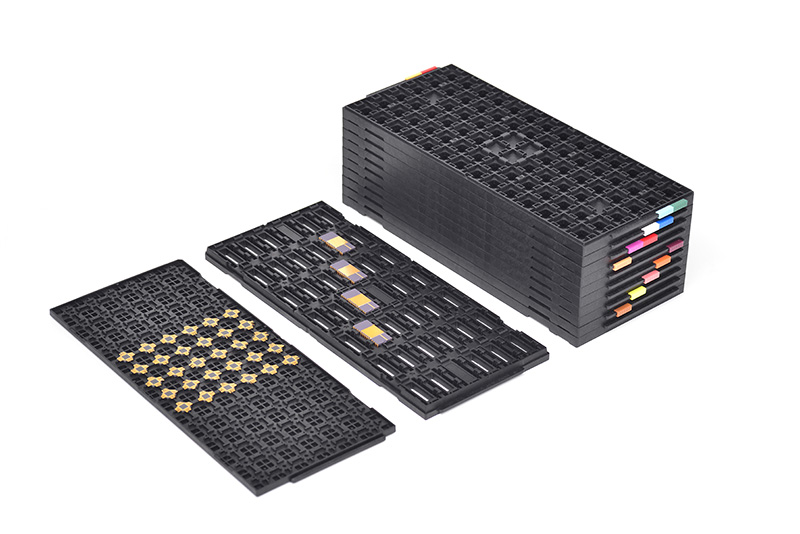
For professional logistics, the material of the shipper must be conductive or static-dissipative. Hiner-pack focuses on using Carbon-Loaded Polypropylene (PP) or specialized ESD Polycarbonate.
Carbon-loaded materials are black and opaque. The carbon network within the plastic provides a permanent path for electricity to flow to the ground. This creates a Faraday Cage effect around the wafer. External static fields are blocked, and internal charges are dissipated instantly. This is a critical specification for any 12-inch Horizontal Flex Frame Wafer Shipper intended for functional devices.
Structural Integrity and Shock Absorption
Roads are bumpy, and air cargo handlers are often in a rush. A shipper must absorb shock. The design of the box needs to transfer energy away from the wafer.
Hiner-pack engineers the corners and sidewalls of our shippers to be reinforced. We use impact-resistant polymers that are tough rather than brittle. If a box is dropped, the casing might dent, but it should not shatter. Shattering creates plastic shards that can contaminate the cleanroom and scratch the wafer.
Furthermore, the internal fit is precise. The 12-inch frame (typically conforming to Disco or ADT standards) must snap into place. If the frame has room to rattle inside the box, the vibration acts like a sander, loosening the dies. Our designs ensure a snug fit that immobilizes the frame ring completely.
The Role of Interleaves and Cushioning
Even with a perfect mechanical fit, extra padding is often required for long-haul transport. This is where "consumables" inside the shipper come into play.
Top cushioning pads are frequently used. These are usually made from anti-static pink foam or Tyvek. They fill the small gap between the frame and the lid of the box. When the 12-inch Horizontal Flex Frame Wafer Shipper is closed, the pad exerts gentle downward pressure on the frame edge.
This pressure prevents vertical movement. It acts as a shock absorber. For stacked shippers (boxes that hold multiple frames), interleaves are placed between frames to prevent the tape of one frame from sticking to the dies of the one below.
Handling Advanced Packaging: 2.5D and 3D ICs
The rise of AI chips and high-performance computing has driven the demand for CoWoS (Chip-on-Wafer-on-Substrate) and other 2.5D packaging technologies. These processes often involve interposers that are incredibly fragile.
For these applications, the 12-inch format is standard. The value of these wafers is significantly higher than standard logic or memory. Consequently, the tolerance for packaging failure is zero.
Hiner-pack works closely with OSATs (Outsourced Semiconductor Assembly and Test) to ensure our shippers meet the cleanliness standards required for these advanced nodes. We minimize outgassing—the release of chemical vapors from the plastic—which can cause haze on the wafer surface or interfere with wire bonding.
Logistics Efficiency: Stackability and Weight
Shipping air freight is expensive. The volume and weight of the packaging impact the bottom line. A bulky design wastes money.
We design our shippers to be nestable. When the boxes are empty and being returned to the fab, the lids and bases should stack efficiently to save space. When full, the boxes must interlock.
The lid of one 12-inch Horizontal Flex Frame Wafer Shipper features grooves that match the feet of the box above it. This allows for stable columns of shippers to be placed on a pallet. A stable stack reduces the need for excessive shrink wrap and lowers the risk of a pallet tipping over during forklift operations.
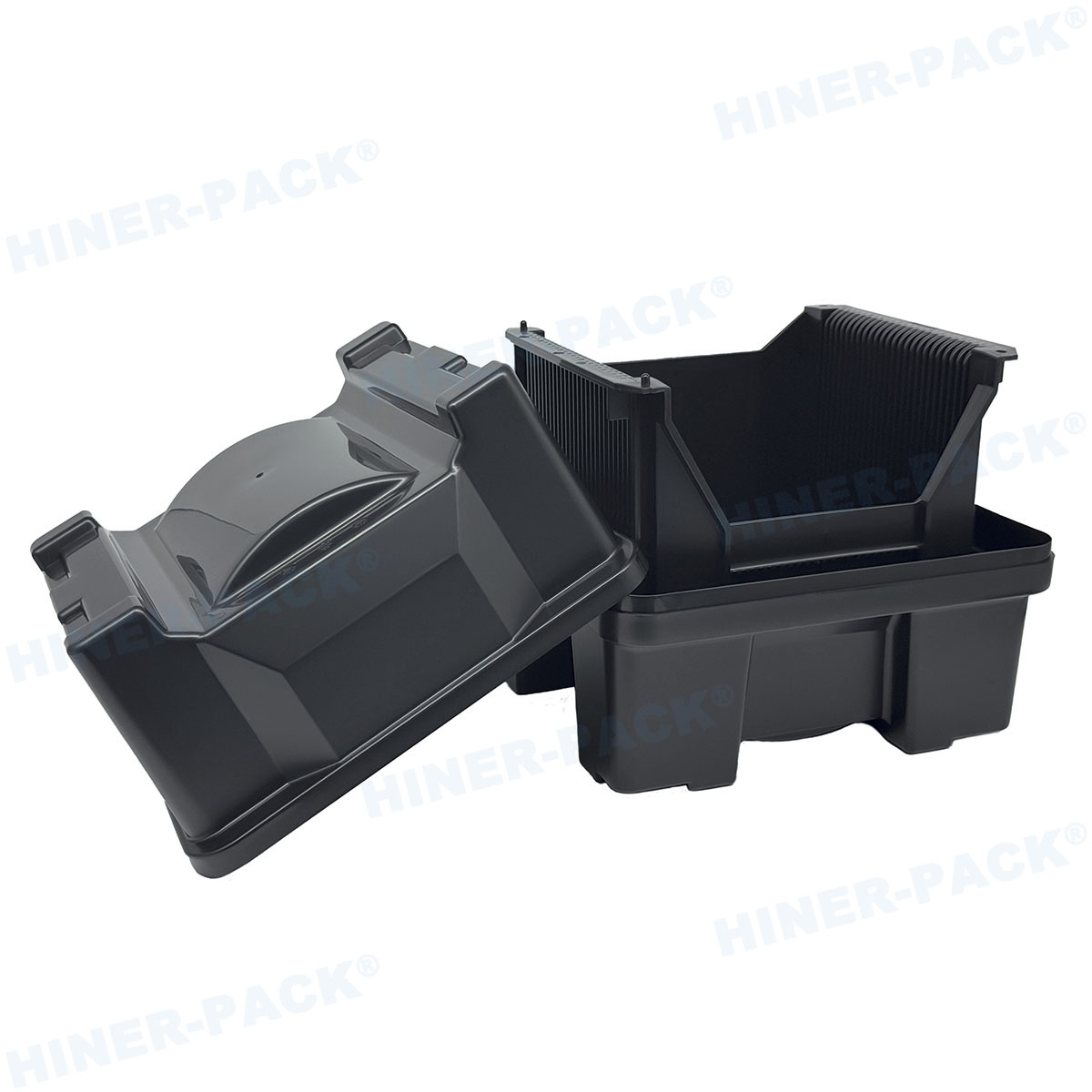
Cleanroom Compatibility and Washing Cycles
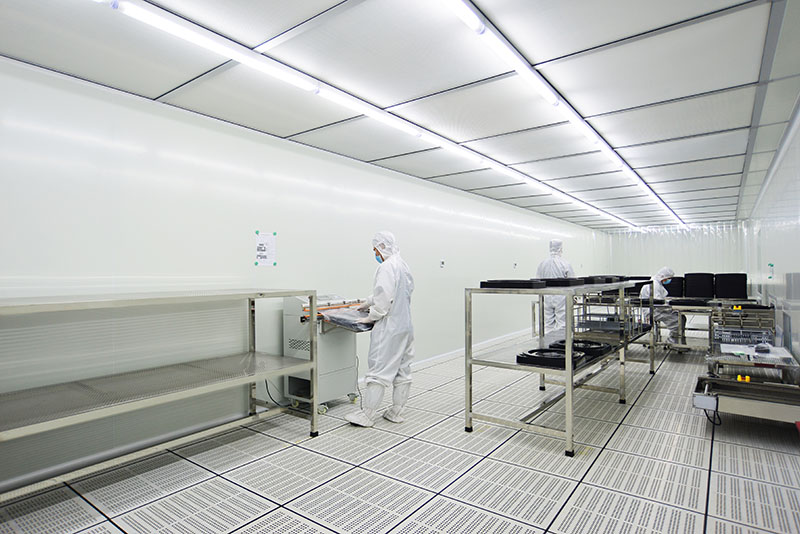
Wafer shippers are not "cardboard boxes." They enter ISO Class 4 or 5 cleanrooms. They must be free of dust, grease, and particles.
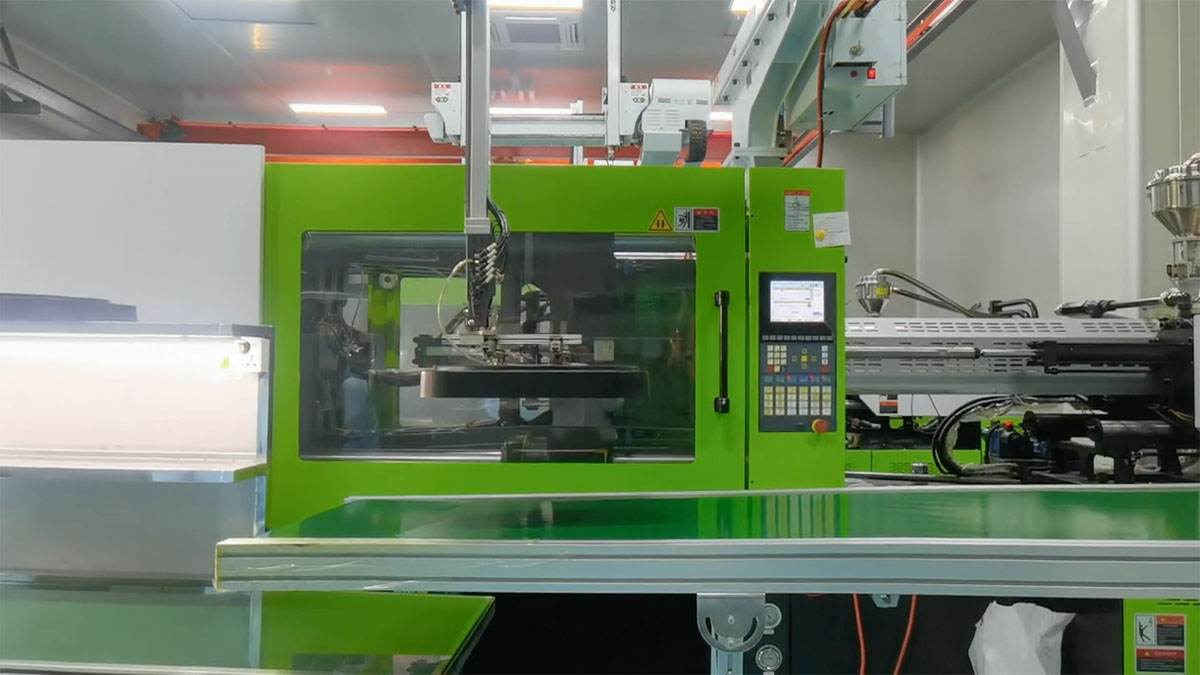
Hiner-pack manufactures and packs these shippers in controlled environments. However, the lifecycle of a shipper often involves reuse. Many IDMs (Integrated Device Manufacturers) run closed-loop systems.
To be reusable, the shipper must withstand washing. Industrial wafer box washers use ultrasonic waves, hot water, and surfactants. The plastic must not warp under heat. More importantly, the ESD properties must not wash away.
This is why coated anti-static plastics are often inferior to carbon-loaded plastics. A coating can wash off after ten cycles. Carbon loading is intrinsic to the material and lasts for the life of the box.
The Hiner-pack Advantage in Supply Chain Security
Supply chain disruptions have taught the industry the value of reliable partners. When packaging runs out, the fab line stops. You cannot stack finished wafers on a table.
Hiner-pack maintains robust inventory and mold capacity for 12-inch logistics. We understand that as fabs ramp up production, the consumption of shipping materials spikes immediately.
Our focus is on consistency. The dimensions of the shipper bought today must match exactly the dimensions of the shipper bought two years ago. This ensures that automated packing equipment and robotic handlers do not jam.
Sustainability in Semiconductor Packaging
The industry is turning green. Major semiconductor companies have strict carbon goals. Packaging waste is a significant target.
Polypropylene (PP) is a highly recyclable material. Hiner-pack encourages the recycling of damaged or end-of-life shippers. Because our black conductive material is distinct, it can be easily sorted and re-ground for use in non-critical applications, such as pallets or industrial flooring.
Moving away from single-use styrofoam or non-recyclable composites is a priority. Our durable, washable shippers support a circular economy model, reducing the total plastic waste per wafer shipped.
Customization Options
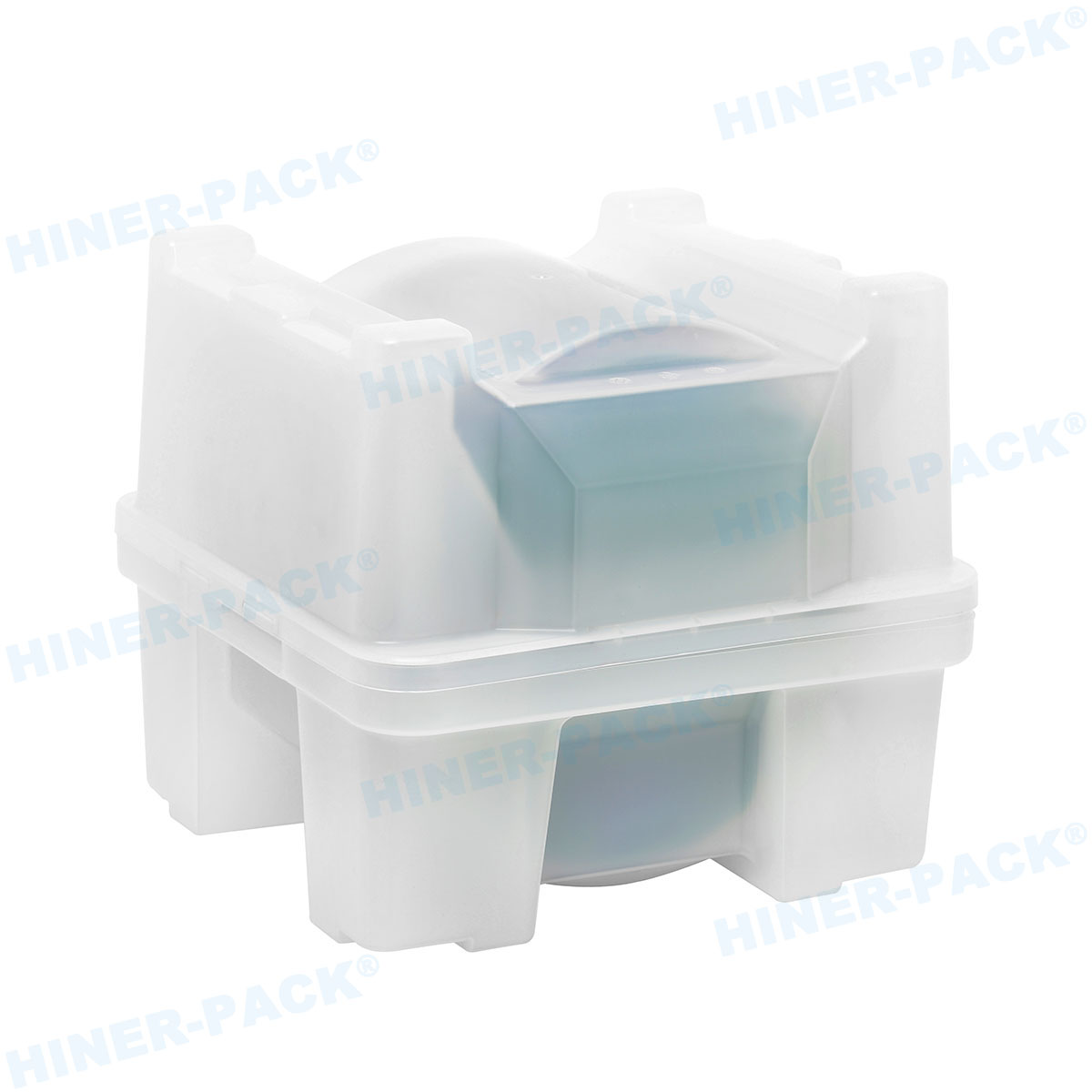
While the 12-inch size is standard, the specific needs of a fab can vary. Some require transparent windows to read barcodes without opening the box (though this challenges ESD protocols). Others need specific color-coding for different product lines.
We offer labeling surfaces that release adhesives easily. This prevents the buildup of sticky residue from old shipping labels, which is a common nuisance in logistics centers.
The semiconductor wafer is the canvas upon which the digital world is built. As these wafers become larger, thinner, and more complex, the methods we use to transport them must evolve.
The 12-inch Horizontal Flex Frame Wafer Shipper is a critical component in this ecosystem. It bridges the gap between the cleanroom of the fab and the assembly line of the OSAT. It creates a safe harbor for silicon against the threats of static, shock, and contamination.
Hiner-pack remains committed to engineering solutions that protect your yield. By combining material science with practical logistics design, we ensure that your technology arrives ready to perform.
Frequently Asked Questions (FAQ)
Q1: What is the main difference between a wafer cassette and a horizontal wafer shipper?
A1: A wafer cassette (like a FOUP or FOSB) typically holds wafers vertically and is used for processing inside the fab. A 12-inch Horizontal Flex Frame Wafer Shipper holds the wafer horizontally after it has been mounted on a dicing frame. The horizontal orientation is required to prevent thinned wafers from warping or cracking during transport.
Q2: What materials does Hiner-pack use to ensure ESD protection?
A2: We primarily use Carbon-Loaded Polypropylene (Pp) or High-lmpact Polystyrene (HiPS) for our conductive shippers. The carbon is embeddedinto the plastic matrix, providing permanent surface resistivity (typically 10* to 10% ohms/sg), which does not degrade with washing or humiditychanges.
Q3: Can these shippers accommodate different types of film frames?
A3: Yes, but they are designed for specific standards. Our 12-inch shippers are engineered to fit standard Disco and ADT style 300mm frames. It is important to verify the outer diameter and thickness of your specific metal or plastic ring to ensure it fits securely into the internal molded ribs of the shipper.
Q4: How many times can a Hiner-pack shipper be reused?
A4: This depends on the handling conditions and washing processes. Our heavy-duty conductive PP shippers are designed for multiple loops and can often withstand dozens of wash cycles. However, we recommend regular inspection for latch fatigue or particle generation to determine when a shipper should be retired and recycled.
Q5: Is it necessary to use cushioning foam inside the shipper?
A5: For long-distance shipping, especially air freight, we highly recommend using anti-static cushioning foam or Tyvek interleaves. While the 12-inch Horizontal Flex Frame Wafer Shipper holds the frame edge securely, the foam provides dampening against high-frequency vibrations and vertical shocks that occur during transit, offering an extra layer of insurance for the wafer.