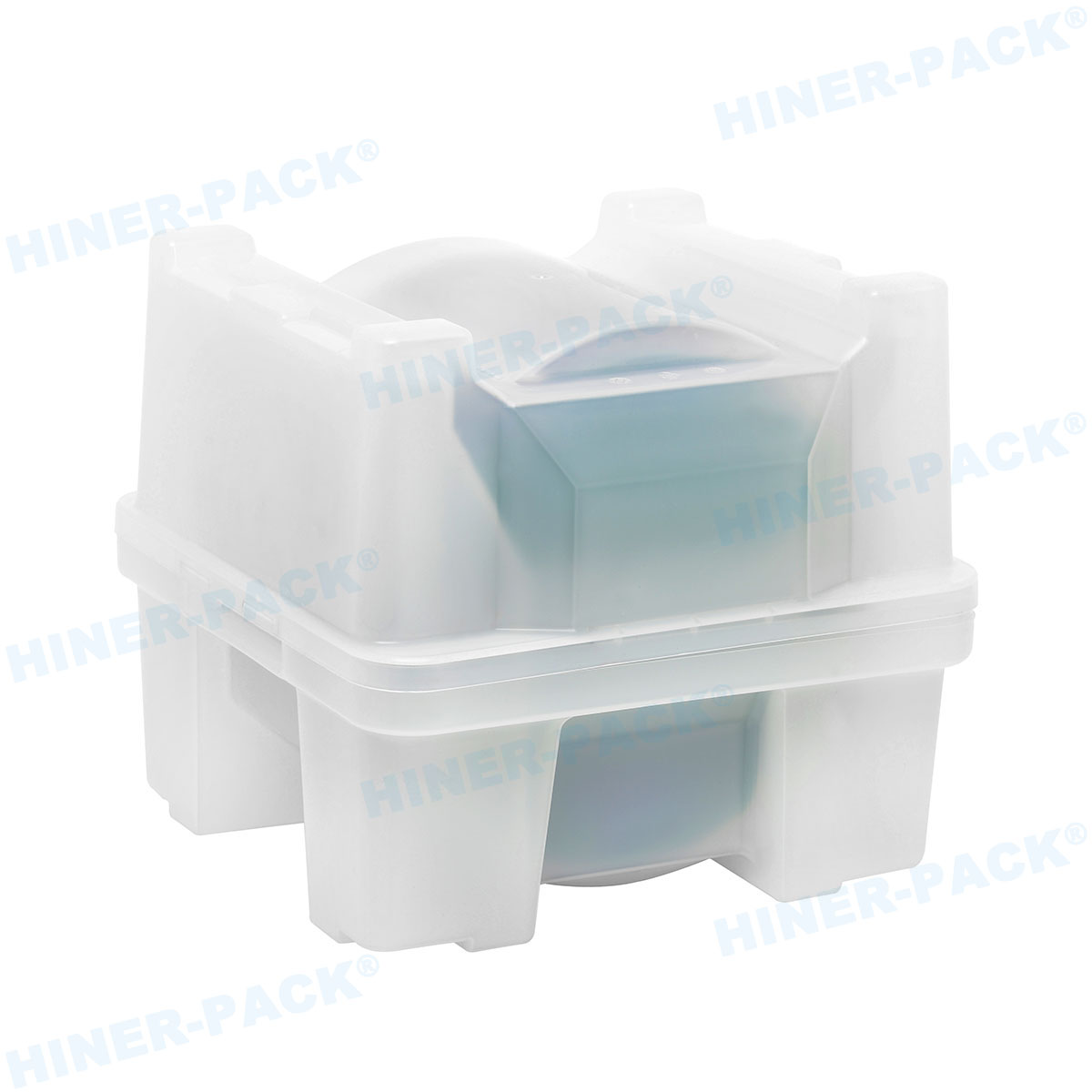
Semiconductor manufacturing depends on the flawless movement of sensitive materials. Wafer carrier handling systems are the core technology enabling this movement. These automated systems transport FOUPs, FOSBs, and other carriers between tools, stockers, and load ports. Their reliability directly impacts fab throughput, yield, and operational safety. This guide explains their function, critical design aspects, and how to select the right system.
Core Functions of Wafer Carrier Handling Systems
The primary role of these systems is to replace manual handling. They provide a controlled, repeatable method for moving valuable wafers. Key functions include:
- Transport: Moving carriers between designated points, such as from a stocker to a process tool.
- Precise Positioning: Aligning the carrier accurately onto equipment load ports with micron-level precision.
- Tracking: Integrating with Factory Automation (FA) software to monitor carrier location and status in real-time.
- Safety: Preventing collisions, drops, and unauthorized access to wafers.
Effective wafer carrier handling systems form the backbone of an automated material flow. They minimize human intervention, reducing particle contamination and handling errors.
Main Types of Handling Systems
Different areas of the fab require different handling solutions. The main categories address specific logistical needs.
Overhead Transport (OHT) Systems
OHT systems are the standard in modern 300mm fabs. They operate on a network of rails installed at the ceiling level.
- They offer direct, point-to-point transport for maximum speed and flexibility.
- Vehicles travel independently, reducing traffic congestion on the fab floor.
- This system saves valuable cleanroom space and minimizes floor contamination.
Automated Guided Vehicles (AGVs) and Rail Guided Vehicles (RGVs)
These mobile robots navigate on the fab floor.
- AGVs use lasers, magnets, or vision for free navigation along flexible paths.
- RGVs follow a fixed, embedded rail or tape path.
- They are often used for inter-bay transport or in facilities where overhead installation is not feasible.
Conveyor-Based Systems
These systems use belts or rollers to move carriers along a fixed path.
- They are typically applied for simpler, high-throughput linear movements.
- Common applications include linking metrology tools or moving carriers to/from storage areas.
- They offer robust and continuous transport for lower complexity routes.
Critical Design and Engineering Factors
The performance of a wafer carrier handling system depends on several engineered components. Each element must meet high standards.
Precision Robotics and Grippers
The robotic arm and end-effector are where physical contact occurs.
- Arms require high repeatability for accurate load port docking.
- Grippers must securely engage carrier handles without slippage or excessive force.
- Designs vary for different carrier types (e.g., FOUP vs. FOSB).
- Systems from Hiner-pack feature servo-driven robots tested for millions of cycles.
System Control and Software Integration
The control system is the intelligence behind the movement.
- It must seamlessly integrate with the fab's Host Control System (HCS) and Manufacturing Execution System (MES).
- Software manages vehicle dispatch, route planning, and traffic control.
- A clear human-machine interface (HMI) is needed for monitoring and diagnostics.
Safety and Contamination Control
Safety is non-negotiable in a high-value production environment.
- Systems include laser scanners, bumpers, and emergency stop functions.
- All materials must be compatible with cleanroom standards (low outgassing, non-shedding).
- Vibration damping is crucial to protect wafers from mechanical stress during transport.
Selecting the Right System for Your Facility
Choosing a system requires a careful analysis of current and future needs. It is a significant capital investment.
Assessing Fab Requirements and Layout
Start with a clear understanding of your operational landscape.
- Flow Volume: Calculate the required moves per hour (MPH) to meet production targets.
- Fab Layout: Analyze the distance between tools, bay layouts, and ceiling height.
- Carrier Mix: Determine the types and weights of carriers (300mm FOUP, 200mm FOSB) to be handled.
- Future Expansion: Consider if the system can be easily expanded or reconfigured.
Integration with Existing Automation
The new system cannot operate in isolation.
- Verify compatibility with your existing tool load ports (SEMI E15.1, E84).
- Ensure communication protocols (SECS/GEM, HSMS) are supported.
- Plan for integration downtime and commissioning support from the vendor.
- Hiner-pack engineers specialize in interfacing with diverse tool sets to ensure smooth integration.
Total Cost of Ownership and Support
Look beyond the initial purchase price.
- Installation: Includes structural modifications and utility connections.
- Maintenance: Consider the cost and availability of spare parts.
- Uptime Support: Evaluate the vendor's service network and mean time to repair (MTTR).
- Scalability: A modular system may have a higher initial cost but lower long-term expansion costs.
Maintenance and Reliability Best Practices
Proactive maintenance is key to achieving high system availability (>99.5%).
Routine tasks are essential for long-term performance.
- Regular cleaning of rails, sensors, and grippers to prevent particle buildup.
- Scheduled lubrication of mechanical components as specified by the manufacturer.
- Continuous calibration checks of robotic positioning and alignment sensors.
- Software updates and backup of system configuration files.
Implementing a data-driven approach prevents unexpected failures.
- Monitor system performance metrics like delivery time and error rates.
- Use vibration analysis on motors and bearings to predict failures.
- Keep a critical spare parts inventory based on mean time between failures (MTBF) data.
- Training fab technicians on basic troubleshooting is highly recommended.
Hiner-pack Integrated Handling Solutions
Hiner-pack provides more than just containers. We offer engineered solutions for carrier logistics. Our expertise in carrier design gives us unique insight into the handling process.
We develop and supply robust handling modules and subsystems. Our focus is on precision, cleanliness, and reliability. We partner with equipment integrators and fabs to deliver components that perform.
For facilities upgrading their material transport, Hiner-pack provides dependable components. Our products are built to the exacting standards required for continuous semiconductor manufacturing.
Implementing the right wafer carrier handling systems is a strategic decision. It affects daily throughput, yield, and operational costs. A system chosen for precision, seamless integration, and reliable support will deliver value for years. Careful planning with a trusted partner like Hiner-pack ensures your automation investment supports your production goals effectively.
Frequently Asked Questions (FAQs)
Q1: What is the main difference between OHT and AGV systems?
A1: OHT (Overhead Transport) systems operate on ceiling-mounted rails, saving floor space and minimizing contamination. AGVs (Automated Guided Vehicles) navigate on the fab floor using free navigation. OHT is standard for high-speed, dense 300mm fabs, while AGVs offer more layout flexibility for retrofits or specific pathways.
Q2: How critical is software integration when installing a new handling system?
A2: It is absolutely critical. The handling system must communicate flawlessly with the factory host and each tool's SECS/GEM interface. Poor integration can lead to misprocessed lots, transport errors, and significant downtime. Choose a vendor with proven integration experience.
Q3: Can a handling system be designed to manage different carrier types, like both 300mm FOUPs and 200mm FOSBs?
A3: Yes, but it requires careful planning. The system needs interchangeable grippers or a dual-purpose gripper design. The software must also recognize different carrier IDs and may need to apply different handling rules. Discuss your mixed-carrier needs with your supplier early in the design phase.
Q4: What are the most common causes of unplanned downtime in these systems?
A4: Common causes include sensor misalignment or failure, mechanical wear in grippers or drives, software communication errors, and simple obstructions on guide paths. A strong preventive maintenance program targeting these areas is the best defense.
Q5: Why would a company choose Hiner-pack for handling system components?
A5: Hiner-pack combines deep knowledge of wafer carrier mechanics with precision manufacturing. Our handling components are designed for compatibility with our carriers, ensuring a secure grip and smooth transport. We focus on durability and cleanroom compliance, providing reliable subsystems that integrators and fabs can trust.