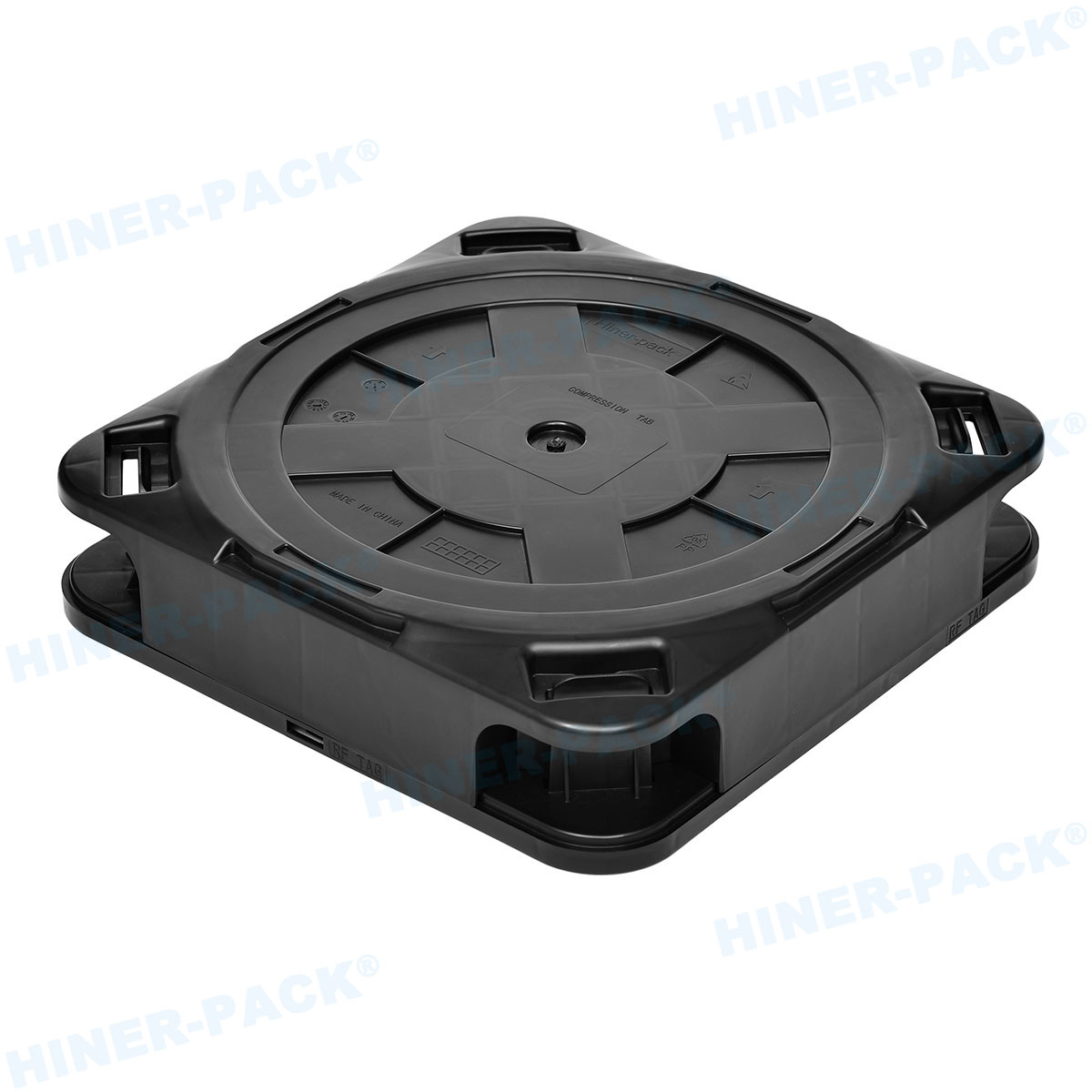
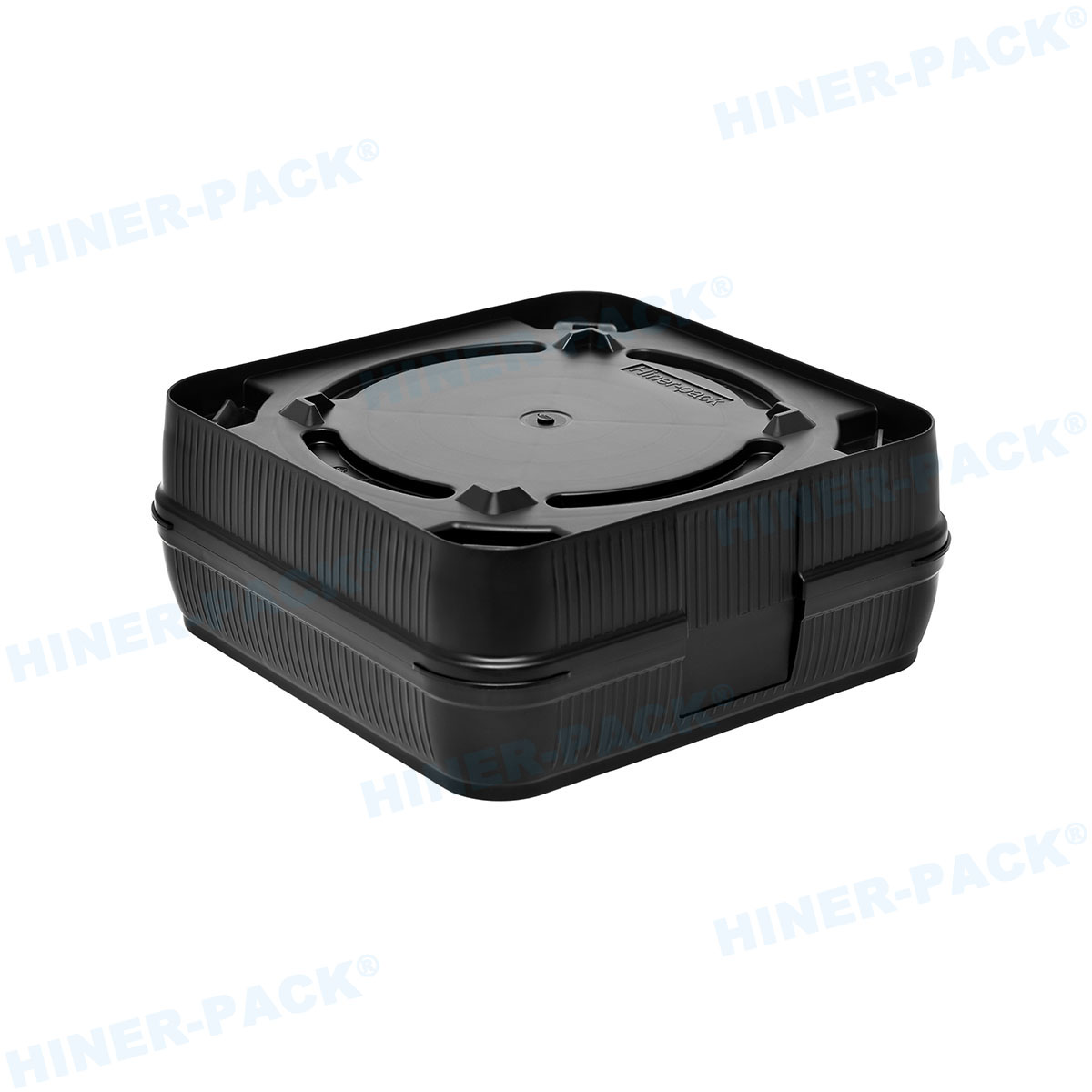
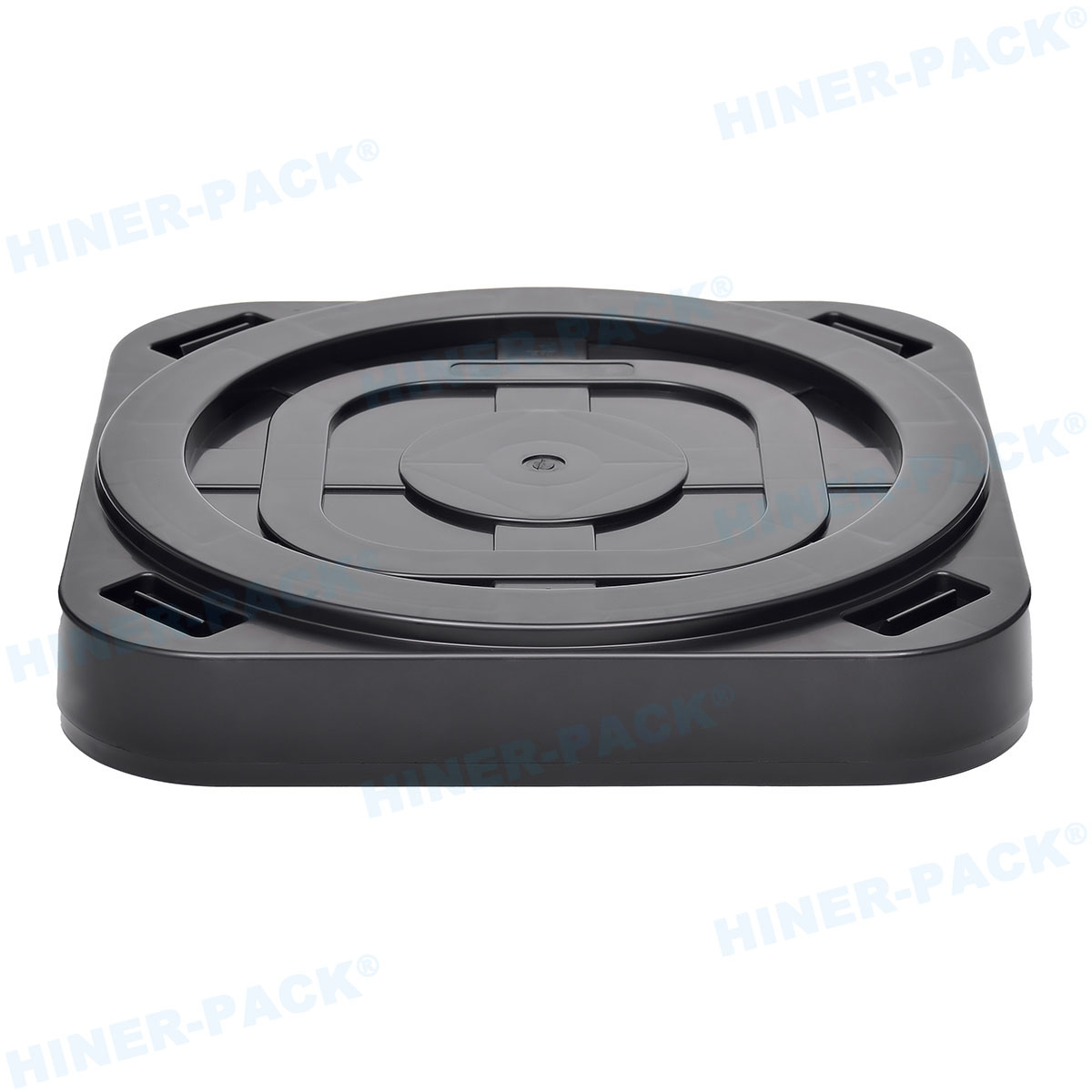
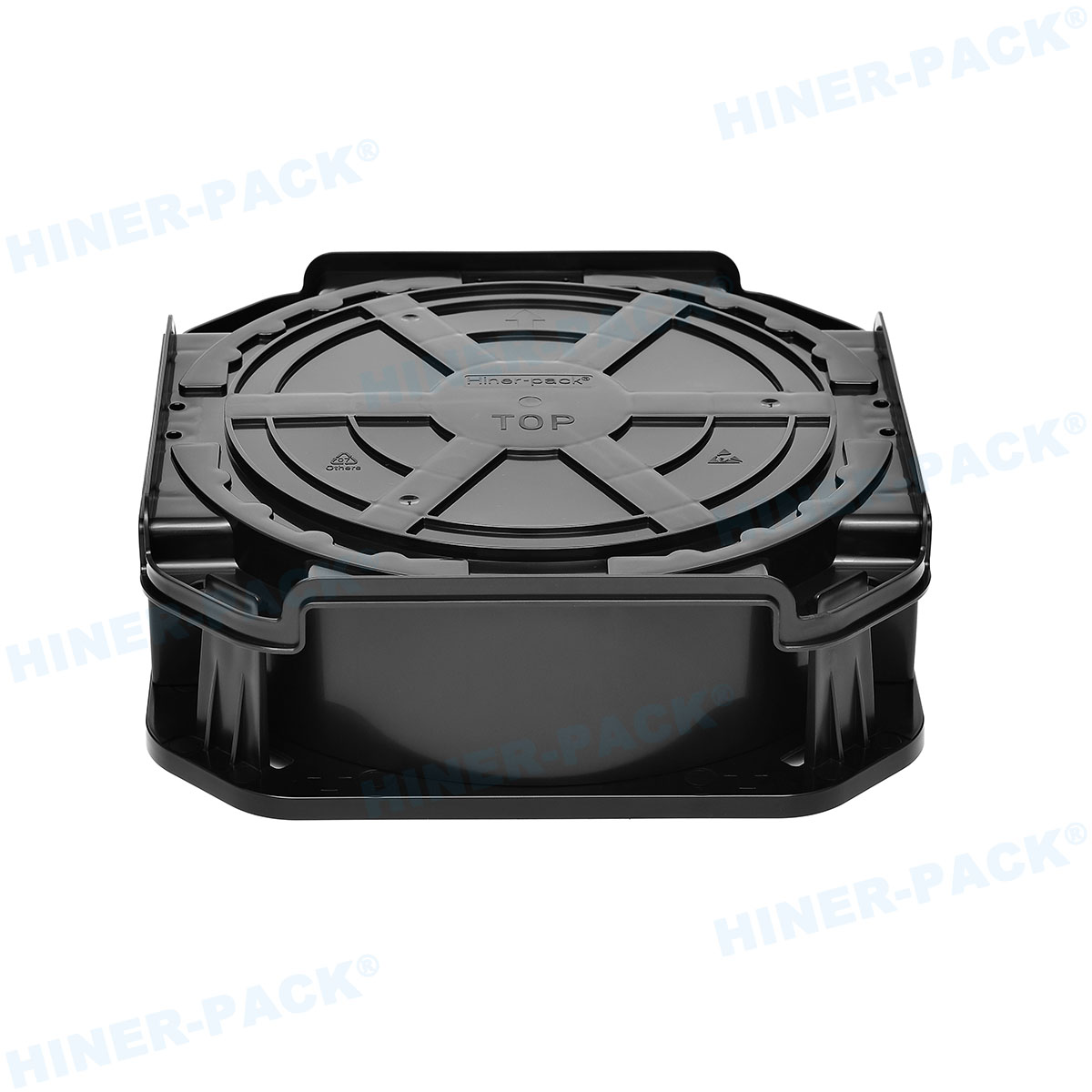
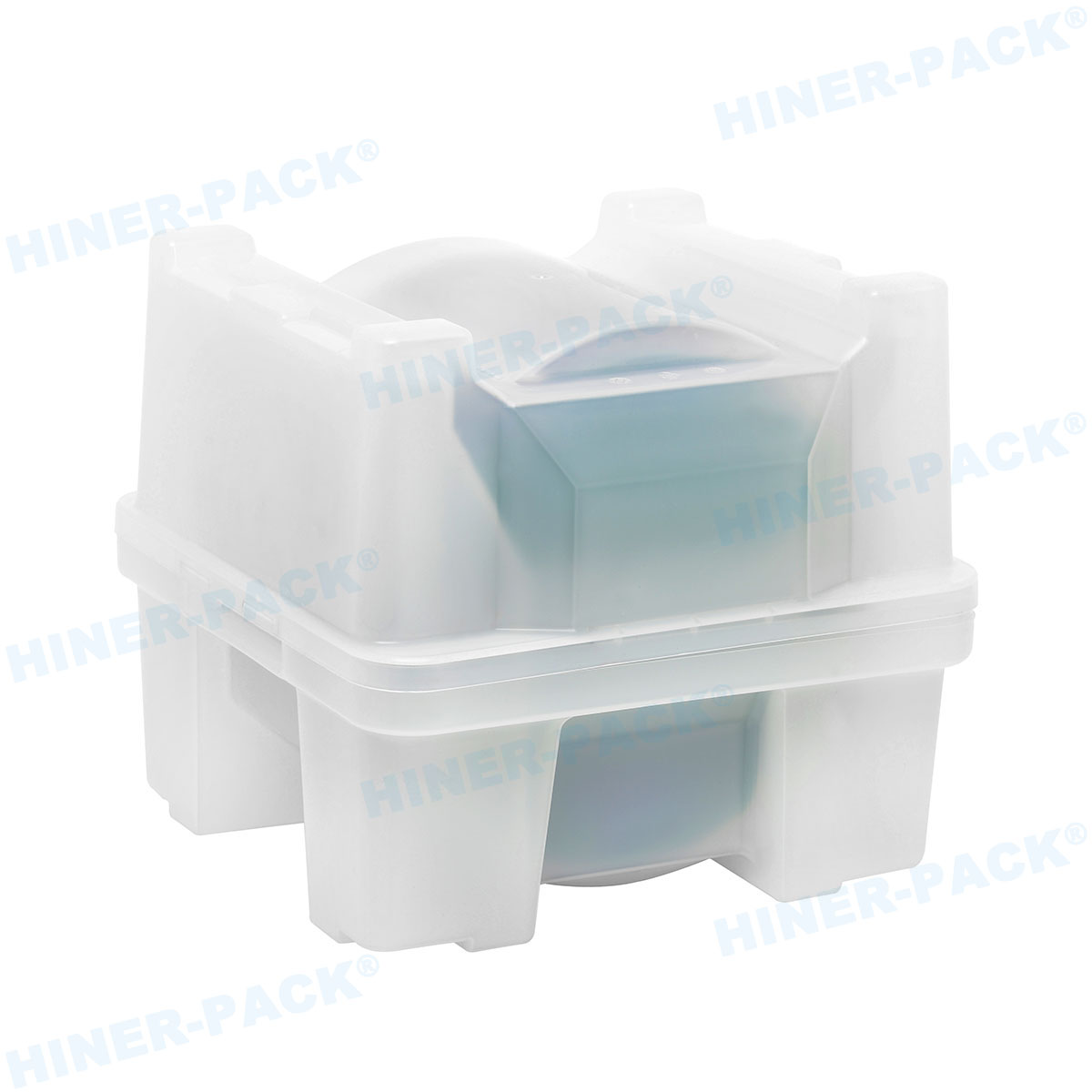
In semiconductor manufacturing, wafer cassettes (also known as wafer carriers or process carriers) are the primary interface between wafers and automated handling equipment. Unlike shipping boxes designed for transit, wafer cassettes are engineered for repeated use inside cleanrooms, enduring hundreds of wash cycles, temperature variations, and robotic gripping. A poorly designed cassette causes wafer slippage, cross-slotting, particle generation, and electrostatic damage—directly impacting yield. This article provides engineering specifications for horizontal and vertical wafer cassettes, including slot pitch accuracy (4.76 mm for 200mm, 10.0 mm for 300mm), surface resistivity (10^6–10^9 Ω/sq), and chemical resistance to standard fab solvents (NMP, acetone, IPA). Drawing on data from 25 semiconductor fabs, we compare PFA, PEEK, and static-dissipative polypropylene materials, and outline validation protocols per SEMI E15 and E1.9 standards.
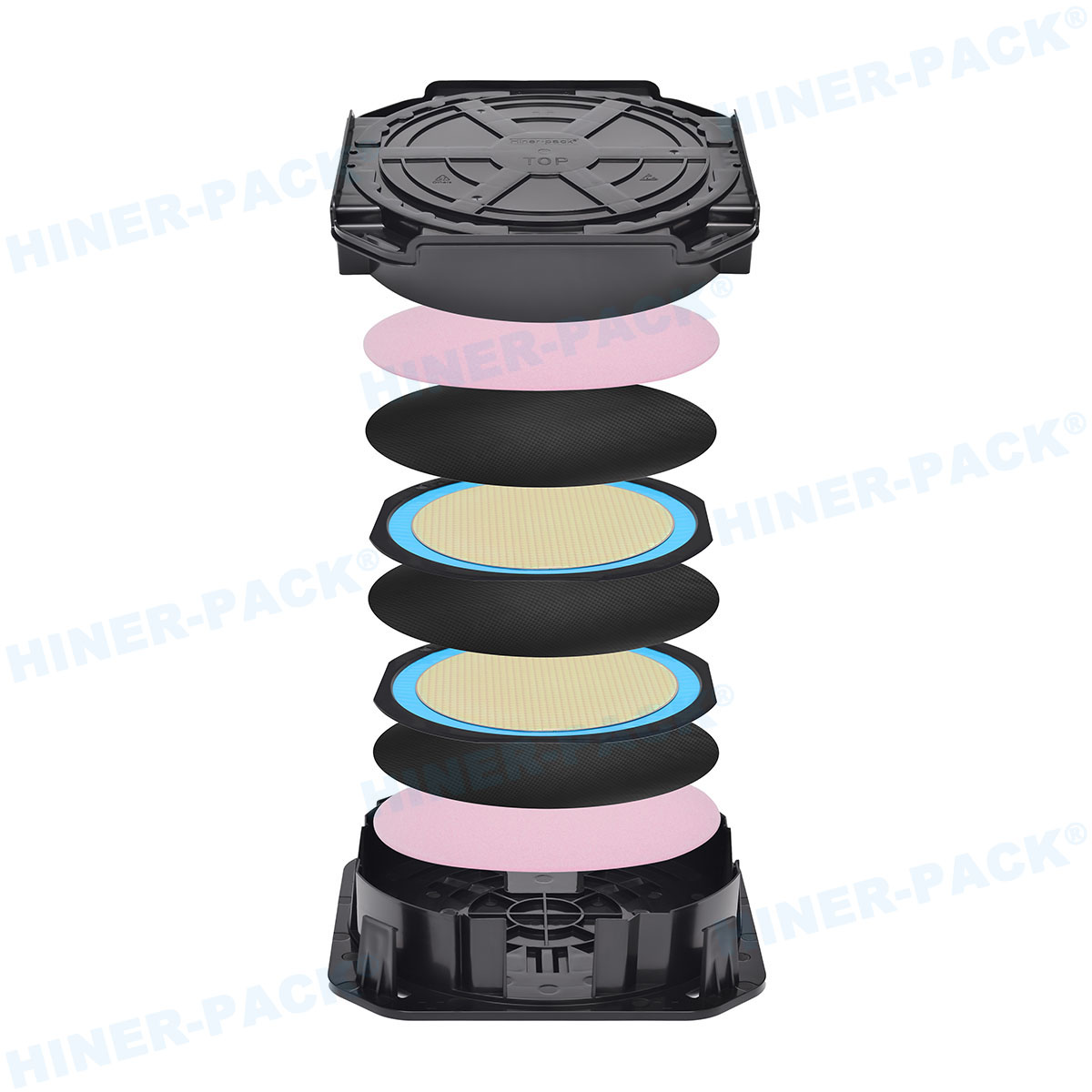
1. Core Functions and Types of Wafer Cassettes
Industrial wafer cassettes serve three primary roles: (1) in-process storage between steps (etch, deposition, lithography), (2) wet chemical processing (acid baths, rinsing), and (3) transport within a fab or between facilities. Two dominant form factors exist:
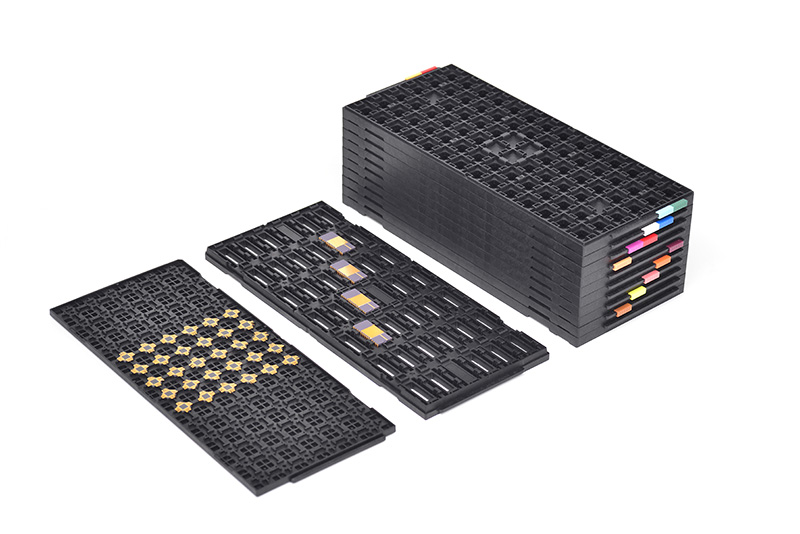
Horizontal (flat) cassettes: Wafers lie horizontally, supported by edge-grip slots. Common for 150mm and 200mm wafers. Advantages: lower particle generation due to gravity holding wafers steady. Disadvantages: larger footprint per wafer.
Vertical (upright) cassettes: Wafers stand vertically, spaced by slot ribs. Standard for 300mm front-opening unified pods (FOUPs) and 200mm open cassettes. Advantages: higher density (25–50 wafers per cassette), compatible with automated stockers. Disadvantages: requires precise slot alignment to prevent wafer tilt.
Both types must withstand up to 500 cycles of automated handling without dimensional drift. Hiner-pack manufactures vertical wafer cassettes with molded-in kinematic coupling features (three pins) that repeatably position the cassette on load ports with ±0.05 mm accuracy.
2. Material Selection for Wafer Cassettes
The material of a wafer cassette determines its cleanliness, ESD performance, and chemical resistance. Four materials dominate:
Polypropylene (PP), static-dissipative: Lowest cost, good chemical resistance (acids, bases, IPA). Surface resistivity 10^6–10^9 Ω/sq via carbon filler. Maximum use temperature: 90°C. Not suitable for high-temperature processes (>120°C).
Polyetheretherketone (PEEK): Excellent chemical resistance (all common fab solvents), temperature rating 260°C. Very low outgassing (NASA low-outgassing list). However, high cost (5–8× PP). Used for aggressive wet etching or high-temperature deposition.
PFA (perfluoroalkoxy): Similar to PEEK but with even higher purity for ultra-clean applications. Resistant to hot acids (H2SO4, HF). Often specified for 300mm FOUP components.
Polycarbonate (PC): Clear, impact-resistant, but poor chemical resistance (cracks in acetone or NMP). Limited to dry processing steps only.
A 2023 study comparing wafer cassettes materials showed that static-dissipative PP cassettes generated 80% fewer particles (≥0.1 µm) than uncoated PC after 100 wet cycles, due to reduced electrostatic attraction. Hiner-pack provides a material selection matrix based on customer’s process chemistry and temperature profile.
3. Dimensional Specifications and Slot Pitch Tolerances
Precision molding is critical for wafer cassettes. Key dimensions per SEMI E15 (for 200mm) and SEMI E1.9 (for 300mm):
| Parameter | 200mm cassette (horizontal) | 300mm cassette (vertical FOUP) |
|---|---|---|
| Slot pitch (center-to-center) | 4.76 ±0.05 mm | 10.0 ±0.05 mm |
| Slot width (clearance) | 1.2–1.5 mm | 2.0–2.5 mm |
| Wafer pocket depth | 4.0–5.0 mm | 8.0–10.0 mm |
| Cassette width (overall) | 212.0 ±0.2 mm | 326.0 ±0.2 mm |
| Maximum bow/warp over length | 0.3 mm | 0.5 mm |
Slot pitch consistency is measured using a coordinate measuring machine (CMM) with a calibrated probe. Variation beyond ±0.05 mm causes cross-slotting (wafer touching adjacent slot) or wafer edge chipping. Wafer cassettes from Hiner-pack are molded with in-cavity pressure sensors to ensure each slot replicates the master tool within ±0.02 mm.
4. ESD Protection and Cleanliness Requirements
For wafer cassettes used with sensitive devices (gate oxides, memory), ESD control is mandatory. Specifications per ANSI/ESD S20.20:
Surface resistivity: 10^5–10^9 Ω/sq (static-dissipative). Measured with concentric ring probe per ESD STM11.11. Cassettes with resistivity >10^11 Ω/sq are insulative and must be avoided.
Charge decay time: <2 seconds from 5,000 V to 10% (FTMS 101C).
Volume resistivity: 10^5–10^9 Ω·cm (ASTM D257).
Cleanliness for wafer cassettes is governed by SEMI E110 (particle shedding) and SEMI F57 (outgassing). Acceptable limits:
Particle shedding: ≤50 particles (≥0.3 µm) per 100 cm² after 10 min agitation in DI water (liquid particle count).
Outgassing: ≤10 ng/cm² of condensable volatiles (85°C for 2 hours, GC-MS). Acidic gases (HCl, HF) <0.1 ppb.
Ionic contamination: ≤0.01 µg/cm² extractable anions/cations (ion chromatography).
Many fabs require incoming inspection of each cassette lot. Hiner-pack ships wafer cassettes with a certificate of conformance showing resistivity, particle count, and outgassing data per batch.
5. Automated Handling Interfaces: FOUP and FOSB Standards
For 300mm fabs, wafer cassettes are integrated into front-opening unified pods (FOUPs) or front-opening shipping boxes (FOSBs). The cassette itself (inner carrier) must interface with the pod door and robotic end effector. Key features:
Kinematic coupling: Three precision-ground stainless steel pins (or molded equivalents) on the bottom of the cassette. These engage with V-grooves on the load port, achieving repeatable positioning within ±0.1 mm.
RFID or barcode label pocket: A recessed area for attaching an RFID tag that stores lot information. Must survive 500 autoclave cycles (121°C) without degradation.
Robot handling flange: A top lip or side slots for an overhead transport (OHT) vehicle or manual gripper. Flange thickness: 3.0 ±0.1 mm.
Door seal groove: A continuous channel for a silicone or FKM gasket to create an inert environment (nitrogen purge).
Cassettes not conforming to SEMI E1.9 may cause jamming in automated stockers. Hiner-pack supplies 300mm wafer cassettes with full dimensional reports traceable to NIST standards.
6. Common Failure Modes and Root Cause Analysis
Field data from 18 wafer fabs identify the top five defects related to wafer cassettes:
Cross-slotting (wafer placed incorrectly): Caused by worn slot ribs or warped cassette body. Remedy: Inspect cassette with a go/no-go gauge (slot pitch master). Replace if any slot exceeds tolerance by ±0.1 mm.
Particle shedding from edge contacts: Over time, carbon-filled PP can erode, releasing conductive particles. Remedy: Switch to PEEK or apply a smooth epoxy coating on contact points.
ESD failure (device damage): Cassette surface resistivity too high (>10^11 Ω/sq) due to loss of carbon filler from abrasion. Remedy: Measure resistivity every 50 cycles; if >10^10, replace cassette.
Chemical attack (cracking): Using polycarbonate in NMP or acetone baths. Remedy: Always verify chemical compatibility before selecting material. PP and PEEK are safe for most fab solvents.
Robot handling misalignment: Kinematic coupling pins worn or deformed. Remedy: Replace pins (if replaceable) or recertify cassette with CMM.
Proactive maintenance: Clean wafer cassettes every 25 process cycles using a dedicated cassette washer (DI water + surfactant, 60°C), followed by a 30 min bake at 70°C to remove moisture. Hiner-pack offers a recertification service that includes ultrasonic cleaning, resistivity testing, and dimensional inspection.
7. Process-Specific Design Variants
Different semiconductor processes require customized wafer cassettes:
7.1 Wet Etch and Clean Cassettes
Exposed to hot acids (H2SO4, HF, HNO3) at 80–120°C. Material: PFA or high-purity PP. Features: open sides for fluid drainage, ribbed slot bottoms to minimize contact area. Drainage hole diameter: 3–5 mm. Maximum fluid hold-up: <0.5 ml per cassette.
7.2 High-Temperature Deposition (CVD, PVD)
Process temperatures up to 200°C. Material: PEEK or polyimide. Cassettes must have low coefficient of thermal expansion (CTE <20 ppm/°C) to avoid warping. Metal inserts (stainless steel) for grounding are optional.
7.3 Backgrinding and Dicing Cassettes
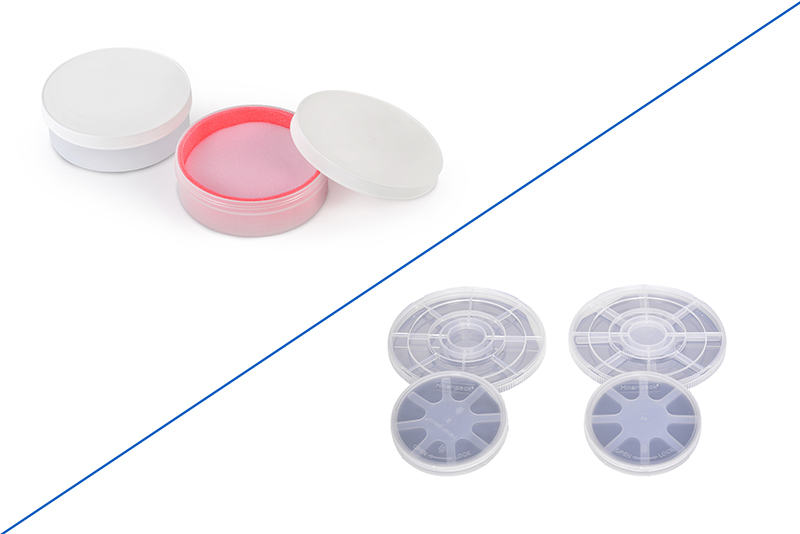
Wafers with tape frames (for dicing) require wider slots (3–4 mm pitch) and support for the tape frame ring. These wafer cassettes often include UV-transparent windows for tape inspection.
Hiner-pack provides design engineering services to customize slot pitch, materials, and handling features based on customer process flow.
8. Sustainability and Recycling of Wafer Cassettes
With over 10 million wafer cassettes in global use, end-of-life management is a growing concern. Key strategies:
Reuse: High-quality PEEK and PFA cassettes can be refurbished (cleaned, re-machined slots) for 100+ cycles. Refurbishment cost is 30–50% of new.
Material recycling: Polypropylene cassettes can be ground and remolded into non-critical carriers or shipping trays. Carbon-filled PP, however, cannot be recycled back into ESD-grade material due to filler degradation.
Alternative materials: Some manufacturers are experimenting with bio-based polyamides, but none yet meet SEMI outgassing limits.
A 2024 lifecycle analysis showed that refurbishing a PEEK cassette for 10 cycles reduces carbon footprint by 70% compared to buying 10 new cassettes. Hiner-pack operates a take-back program, offering discounts on new cassettes when returning used ones for recycling.
Frequently Asked Questions (FAQ)
Q1: How do I measure the slot pitch of a used wafer cassette to
determine if it is still in spec?
A1: Use a
dedicated slot pitch gauge (a precision-ground metal plate with teeth at 4.76 mm
or 10.0 mm spacing). Insert the gauge into the cassette; if it binds or has
excessive play in any slot, the cassette is out of tolerance. For quantitative
measurement, use a coordinate measuring machine (CMM) with a 2 mm spherical
probe. Acceptable deviation: ±0.05 mm for 200mm, ±0.07 mm for 300mm wafer
cassettes.
Q2: Can I use a wafer cassette that was previously used for 200mm
wafers for 150mm wafers?
A2: No, because slot pitch
and wafer pocket dimensions are different. 150mm wafers require 3.81 mm slot
pitch (SEMI E15). Attempting to use a 200mm cassette (4.76 mm pitch) will allow
wafers to tilt, causing edge chipping. Always use cassettes designed for the
specific wafer diameter. Hiner-pack supplies adapters that fit 150mm wafers
into 200mm cassettes, but direct loading is not recommended.
Q3: How often should I replace the foam or gel cushions inside a
wafer cassette for backgrinding?
A3: For dicing
tape frames, cassettes often use polyurethane foam liners. Replace foam after 25
cycles or when compression set exceeds 15% (measured by pressing foam to 50% of
thickness for 24 hours). Silicone gel cushions last 100 cycles. Inspect for
cracks or shedding every 10 cycles. Wafer
cassettes with worn cushions cause wafer slippage and breakage
during transport.
Q4: What is the maximum temperature that a static-dissipative
polypropylene cassette can withstand without
warping?
A4: Continuous use temperature: 90°C.
Short-term (1 hour) exposure up to 110°C is acceptable. Above 120°C,
polypropylene softens and slot pitch can change permanently. For processes above
120°C, use PEEK (max 260°C) or PFA (max 200°C) wafer
cassettes. Always pre-bake new PP cassettes at 90°C for 2 hours to
relieve molding stress before high-temperature use.
Q5: How do I clean a wafer cassette that has been contaminated with
photoresist residue?
A5: Use a two-step process:
(1) Soak in NMP (N-methyl-2-pyrrolidone) at 60°C for 30 minutes to dissolve
resist; (2) Rinse with DI water, then clean in an ultrasonic bath with 2%
surfactant (e.g., Deconex) at 50°C for 20 minutes. Final rinse with DI water (18
MΩ·cm) and dry with filtered nitrogen. Do not use acetone on polycarbonate
cassettes—it causes crazing. Hiner-pack provides a detailed cleaning protocol for
each material type.