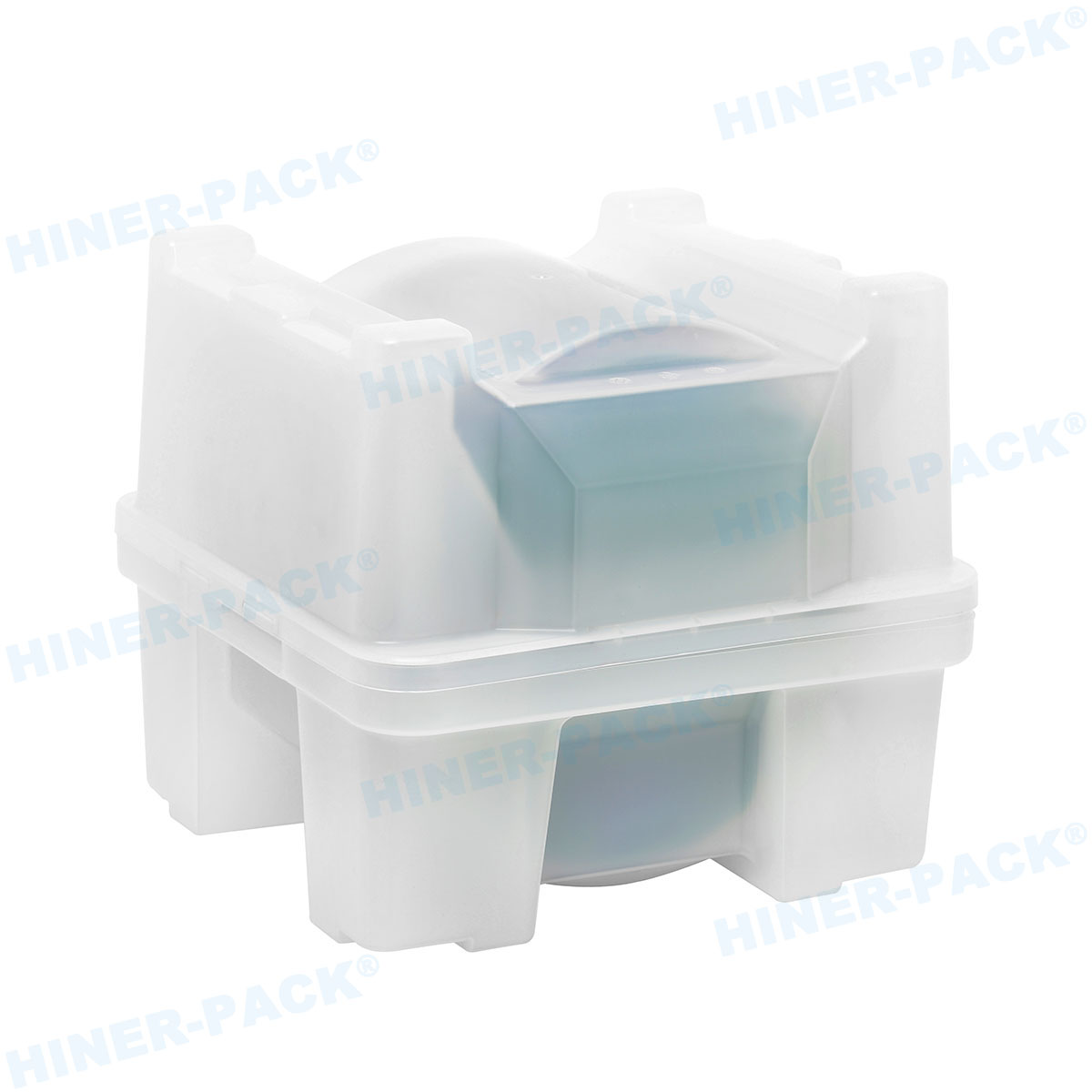
One warped slot inside a diffusion furnace running at 1200°C can destroy an entire production batch. When a wafer pinches, cracks, or sheds particles during thermal ramping, the financial hit easily runs into tens of thousands of dollars. The carrier holding those substrates is never just a passive piece of hardware.
For semiconductor fabs, choosing the right wafer boat defines the boundary between predictable line yield and continuous scrap. Fab managers and procurement teams often browse available inventory simply looking for fast replacements. However, buying hardware for front-end or wet-bench processing requires a balance between thermal endurance, dimensional tolerance, and Cost of Ownership (CoO).
At Hiner-pack, we routinely see how precision tooling directly impacts wafer handling and defect density. Whether you are ramping up a 200mm legacy line or qualifying components for a 300mm automated fab, this guide breaks down everything you need to assess before reviewing wafer boats for sale.
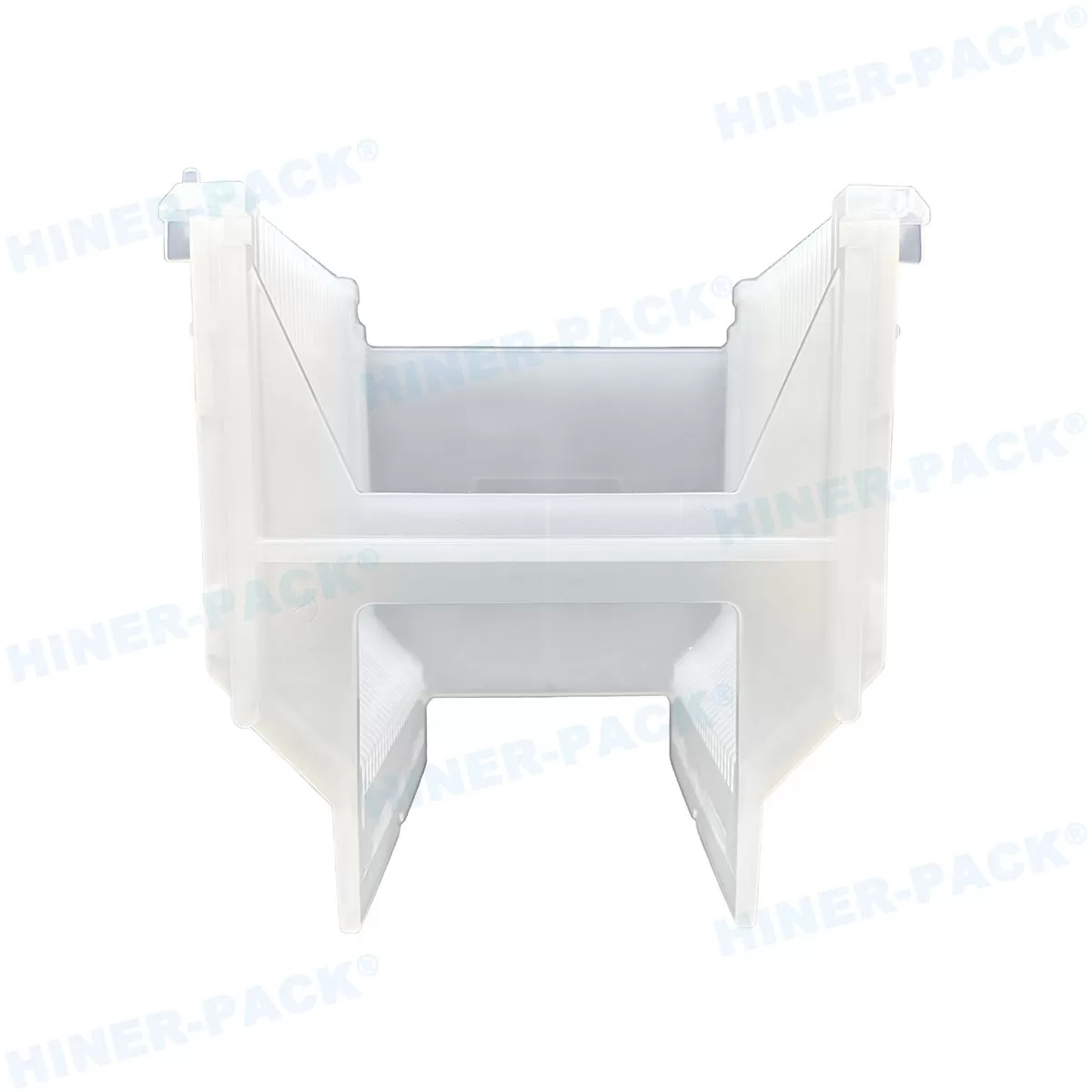
1. Material Selection: Matching the Boat to Your Process Envelope
Material failure accounts for most premature carrier retirements. Thermal shock, chemical corrosion, and structural creep will degrade the carrier if the material does not match the process chemistry.
Quartz Wafer Boats: The Workhorse for Oxidation and Diffusion
High-purity quartz remains the industry standard for oxidation, standard LPCVD, and diffusion below 1150°C. It offers high optical clarity, excellent thermal shock resistance, and relatively low upfront procurement costs.
Thermal Boundaries: Standard fused quartz begins to soften near 1150°C to 1200°C. Extended runs at elevated temperatures cause devitrification, converting amorphous silica into crystalline cristobalite. This creates micro-cracks and structural sag.
Chemical Resistance: Quartz handles hot acids exceptionally well, except for hydrofluoric (HF) and concentrated phosphoric acid.
Application Fit: Ideal for atmospheric oxidation, annealing, clean drive-in steps, and standard wafer cleaning racks.
Silicon Carbide (SiC) Boats: High-Temperature Rigidity and Advanced Nodes
When processes push past 1200°C, or when runs require zero structural deformation, silicon carbide becomes mandatory. Most silicon carbide (SiC) wafer boat manufacturers supply two variants: Chemical Vapor Deposition (CVD) coated SiC and direct sintered or recrystallized SiC.
Mechanical Strength: SiC exhibits extreme rigidity with minimal thermal creep, even during repeated cycles at 1350°C. It stops the sagging problems common to quartz over long runtimes.
Particle Control: Dense CVD SiC surfaces produce almost zero micro-flaking or particulate shedding. This protects narrow-pitch gate dielectric and diffusion operations.
CoO Profile: Although initial purchase costs are substantially higher than quartz, the operating lifetime often exceeds quartz by four to five times, lowering total Cost of Ownership.
Silicon Boats and Specialty Materials
For zero-CTE (Coefficient of Thermal Expansion) mismatch, virgin silicon boats hold prime silicon wafers without differential expansion scratching. In wet-bench and strip processing, engineering polymers like PEEK, PTFE, and PVDF replace ceramics entirely, providing broad acid resistance without ionic contamination.
2. Engineering Specifications: The Fab Engineer's Checklist
Submitting an RFQ without precise mechanical and purity tolerances often leads to parts that jam automated load locks or scratch production substrates. Keep this checklist on hand when evaluating wafer boats for sale.
Wafer Size and Automation Integration (AMHS)
A boat must interface smoothly with your wafer transfer systems, boat loaders, and furnace paddles. Verify these critical parameters:
Diameter Standards: Standard tooling formats cover 100mm (4-inch), 150mm (6-inch), 200mm (8-inch), and 300mm (12-inch).
End-Effector Clearances: Robotic arms and cassette-to-boat transfer chucks need exact pocket depths. A variance of 0.2mm can trigger load-error alarms or drop wafers during high-speed batch transfers.
Orientation Control: Verify whether your tool requires horizontal ladder boats or vertical tower boats designed for automated push-pull mechanisms.
Slot Design, Pitch, and Mechanical Tolerances
Wafer pitch dictates throughput, but tighter pitch increases the risk of thermal shading and process non-uniformity across the wafer surface.
Slot Profile: Choose between V-groove, flat-bottom, or contoured teeth. Contoured teeth distribute support stress, avoiding edge slip and mechanical micro-fractures during thermal ramps.
Slot Pitch Tolerances: Precision operations require slot-to-slot tolerances within ±0.05mm. Inconsistent pitch leads to uneven process gas dynamics in LPCVD runs.
Tilt and Parallelism: Wafer lean must remain within strict limits (typically under 0.5 degrees). Tilted wafers disrupt laminar gas flow and cause film thickness gradients.
Cleanliness, Trace Metals, and Packaging
A carrier is only as clean as its final manufacturing and packaging stages. Raw parts straight off a grinding or welding jig will contaminate an entire furnace tube.
Trace Metal Contamination: Demand trace metal levels below industry thresholds. Critical elements (Fe, Cu, Ni, Na, K) should measure within low parts-per-billion (ppb) ranges under Inductively Coupled Plasma Mass Spectrometry (ICP-MS) testing.
Pre-Shipment Cleaning: Ensure the vendor executes multi-stage cleanroom acid leaching (RCA cycle) and high-resistivity DI water rinses.
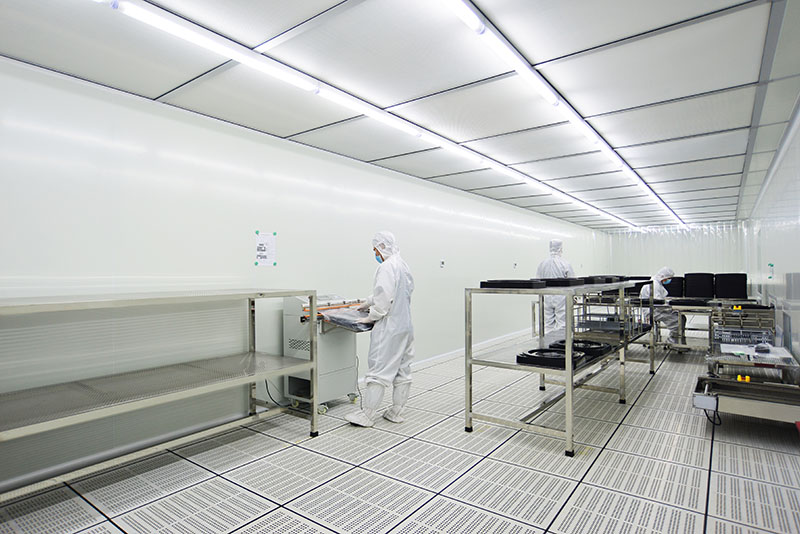
Cleanroom Packaging: Parts must be vacuum-sealed in double or triple-layer polyethylene packaging inside a Class 10 or Class 100 cleanroom environment.
3. Off-the-Shelf vs. Custom Wafer Boats
Fabs often debate whether to purchase standard catalog inventory or commission custom-machined carriers. The best path depends strictly on your volume, tool modifications, and delivery schedules.
When to Buy Standard Off-the-Shelf Boats
Off-the-shelf carriers suit standard horizontal furnaces, academic cleanrooms, pilot lines, and emergency tool recovery. If your equipment uses standard legacy recipes and process tubes from major OEMs, buying catalog items reduces lead times from months to days.
Standard inventory minimizes design expenses. It provides a fast, reliable supply when an operational carrier breaks during preventative maintenance.
When to Invest in Custom Design
High-volume commercial fabs often outgrow catalog limitations. Custom fabrication becomes necessary when attempting to:
Increase Batch Density: Designing narrower, high-precision slot pitch allows you to load 150 to 200 wafers per run instead of 100, immediately increasing furnace capacity without buying another tool.
Improve Gas Dynamics: Adding specialized gas-flow cutouts or modified support rails eliminates film thickness variations near the carrier edges.
Accommodate Non-Standard Substrates: Processing ultra-thin wafers, bonded pairs, or compound semiconductors like GaN and SiC often requires custom pocket depths and reduced contact points.
At Hiner-pack, we assist engineering teams with custom carrier optimization, turning CAD models into cleanroom-certified solutions that align directly with specific furnace automation layouts.
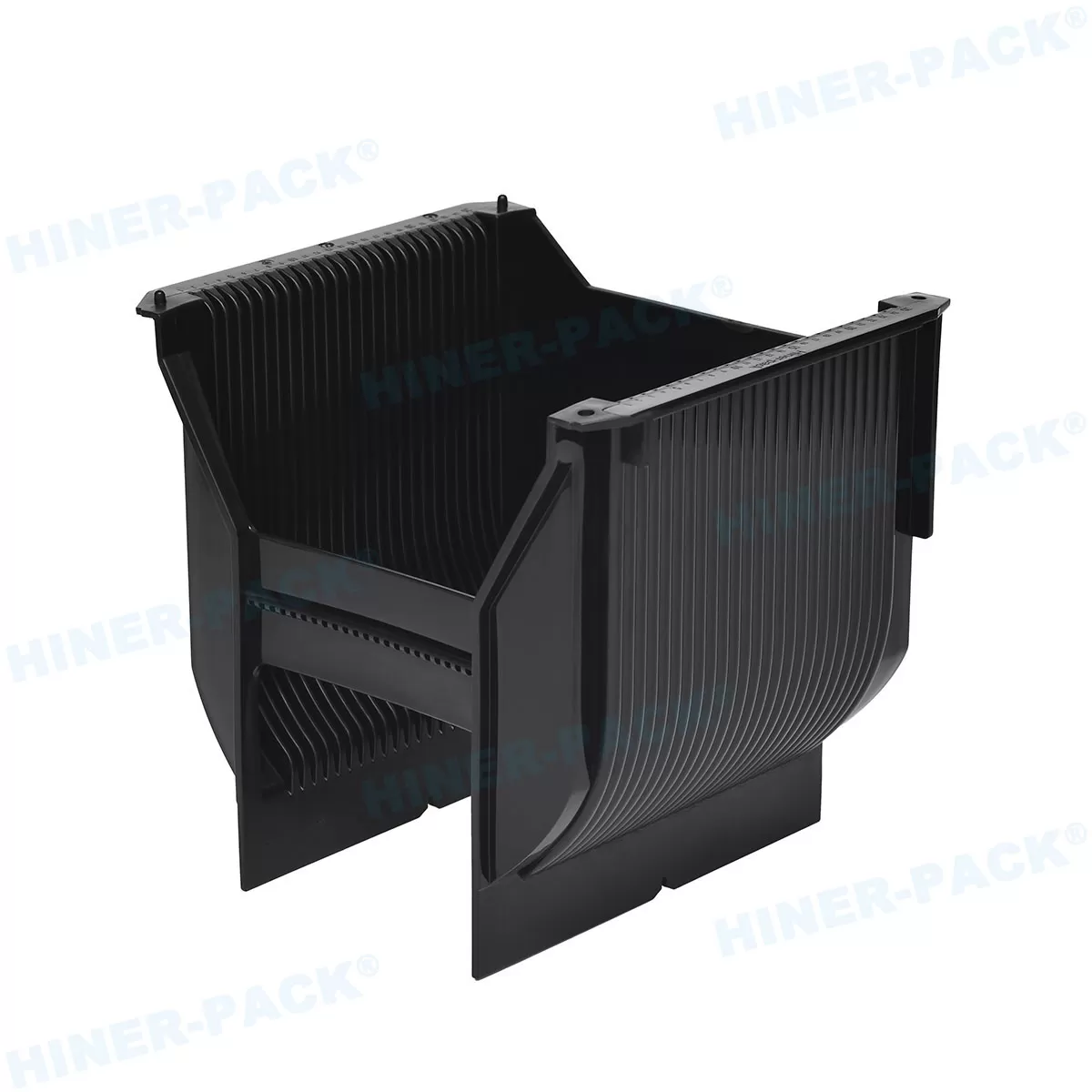
4. How Procurement Teams Should Vet a Semiconductor Wafer Boat Supplier
Finding vendors with wafer boats for sale online is straightforward; locating a reliable semiconductor wafer boat supplier that meets quality standards is harder. Procurement teams should run every new vendor through this vetting protocol.
Dimensional Verification and Metrology
Do not accept visual inspection as proof of quality. Your supplier must provide Coordinate Measuring Machine (CMM) reports with each production lot. These reports must document slot pitch, tooth height, overall bow, and rail parallelism across the carrier body.
Purity and Material Traceability
Every batch requires a Certificate of Analysis (CoA). For quartz, verify raw material sourcing to confirm low hydroxyl (OH-) content, which improves devitrification resistance. For SiC, verify density benchmarks (typically >3.10 g/cm³) and ask for regular ICP-MS surface analysis data.
Supply Chain Resilience and Buffer Programs
Ceramic and quartz component supply chains face volatility. Lead times for high-grade quartz and sintered SiC can stretch past 20 to 30 weeks during market peaks. Look for suppliers offering managed inventory agreements, local safety stock, or blanket order fulfillment structures.
Post-Sale Rework and Refurbishment Services
Wafer boats pick up heavy film deposition over their operating life. Ask if the vendor provides controlled chemical stripping, fire-polishing, and recleaning services. Proper refurbishment extends carrier life and noticeably reduces your annual consumables spend.
5. Frequently Asked Questions (FAQ)
Q1: How often should quartz wafer boats be replaced in a diffusion line?
A1: Replacement intervals depend on operating temperatures and cleaning cycles. Quartz running continuously above 1100°C typically lasts between 6 to 12 months before thermal deformation or cristobalite devitrification demands retirement. Wet cleaning in aggressive HF baths also thins the structural rails over time, requiring periodic dimensional audits.
Q2: Why are CVD SiC boats preferred over recrystallized SiC for advanced nodes?
A2: Recrystallized SiC has inherent surface porosity, which can trap chemical residues and shed micro-particles during thermal cycles. CVD SiC features a theoretical density near 100% with an ultra-smooth, non-porous surface. This eliminates outgassing, reduces particle formation, and provides far superior resistance to aggressive plasma and acid chemistries.
Q3: Can a 200mm quartz boat be dropped directly into an automated AMHS line?
A3: Only if it meets SEMI automation standards. Manual-load boats lack the precise locating notches, bottom-flange clearances, and tight weight envelopes required by robotic end-effectors. Always verify automation compatibility with your equipment manufacturer's interface drawings before purchasing standard custom wafer carrier 200mm 300mm units.
Q4: What causes wafer sticking or slot welding during high-temperature furnace runs?
A4: Wafer sticking occurs when the substrate and the carrier material chemically interact or diffuse into one another under sustained high temperatures. It also happens when thermal expansion forces a silicon wafer tight into an undersized slot groove. Using boats with contoured contact points, applying high-purity coatings, or switching to SiC carriers eliminates this issue.
Q5: How do trace metal impurities in a wafer boat degrade chip performance?
A5: Mobile ionic contaminants like sodium (Na) and potassium (K), along with heavy metals like iron (Fe) and copper (Cu), easily diffuse into silicon bulk at furnace temperatures. These impurities create deep-level traps within the semiconductor bandgap, resulting in gate oxide breakdown, excessive leakage current, and permanent threshold voltage shifts.
6. Secure Your Semiconductor Process Carriers
Carrier failure is an avoidable source of fab yield loss. Whether you need reliable quartz wafer boats for high-temp diffusion or need to source structural components from seasoned silicon carbide (SiC) wafer boat manufacturers, matching hardware specs to line chemistry protects your production targets.
Hiner-pack supplies precision-machined, cleanroom-packaged semiconductor handling equipment engineered to tight fab tolerances. Our team reviews design constraints, inspects automation footprints, and supports high-volume runs with consistent lot-to-lot traceability.
Ready to upgrade your thermal process reliability or replace worn furnace tooling? Contact our technical sales engineering team today at rainbowzhu@hiner-pack.com to review specifications, request a formal quote, or upload your CAD drawings for a fast engineering assessment.